
Bank of Canada governor takes direct aim at US fiscal policy
'Economy growing strongly, but deficit is enormous'
US fiscal deficit at $2 trillion; spending reaches $7.4 trillion
Canada raises benchmark interest rate for first time in over 3 years
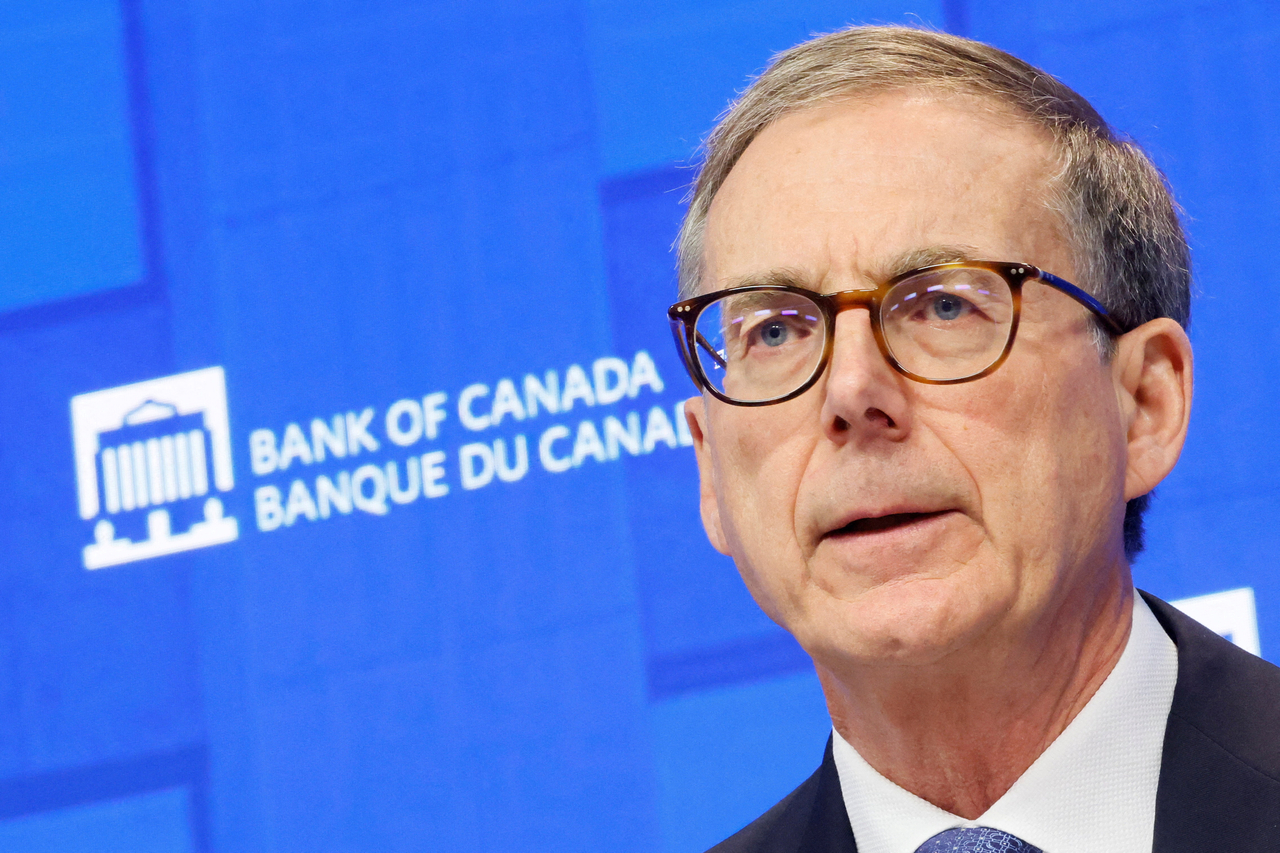
The governor of the Bank of Canada issued an unusually direct rebuke of the United States' massive fiscal deficit Wednesday, warning that the country is "not heading in a sustainable direction." The remarks came as the US fiscal deficit expanded to around $2 trillion, with rising long-term borrowing costs on US government bonds beginning to ripple into Canadian financial markets.
According to Bloomberg, Bank of Canada Governor Tiff Macklem said in an interview Wednesday (local time) that "the sustainability of US fiscal policy is a concern," adding that "the economy is growing strongly, but the deficit is enormous."
Macklem went on to say that US fiscal policy "is not heading in a sustainable direction" and stressed that it "needs to move toward a sustainable path."
It is unusual for a central bank governor to directly criticize another country's fiscal policy. Macklem raised the issue of the US federal government's fiscal health while responding to questions about the Treasury Department's interventions in bond and foreign exchange markets.
The US federal government's fiscal deficit for fiscal year 2026 — covering October 2025 through September 2026 — expanded to around $2 trillion. Federal spending over the same period rose roughly 6 percent to $7.4 trillion.
Macklem assessed that the United States has the economic capacity to reduce its deficit.
Macklem said the US has "had good economic growth and relatively low tax rates," adding that "there is clearly room to reduce the deficit."
Macklem said the issue is "a matter of political will" — meaning the conditions exist to improve US fiscal health, but the political resolve to act on them is what is needed.
Macklem also expressed concerns that the US fiscal situation could affect the Canadian economy. Because Canadian financial markets are closely tied to those of the United States, rising US long-term borrowing costs are feeding into Canada's own funding costs to some degree, Macklem said.
Meanwhile, the Bank of Canada raised its benchmark interest rate by 25 basis points Wednesday, from 2.25 percent to 2.50 percent annually — its first rate increase since July 2023, a gap of more than three years.
The hike is aimed at preventing inflationary pressure from a sharp surge in energy prices from spreading more broadly through the economy.
As the Bank of Canada tightens monetary policy in response to high oil prices, Macklem also sounded the alarm over the broader impact of the US fiscal deficit on long-term interest rates and the financial markets of neighboring countries.
sjy@heraldcorp.com




