
Proprietary technology moves a 70-kg rear door
B-pillar removed without sacrificing safety
Roof withstands 14-ton load in internal testing
World's first production roof airbag
Road noise lower than the G90 sedan
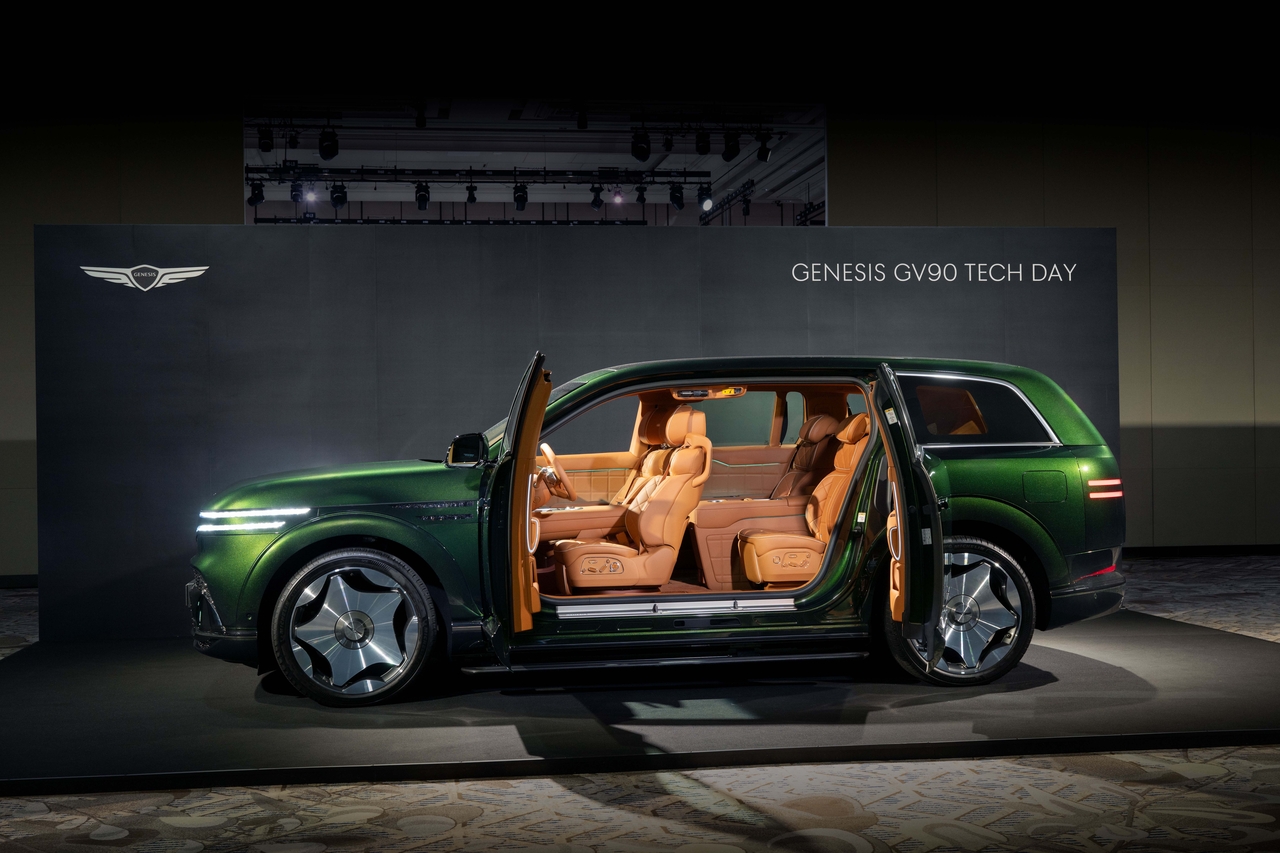
The B-pillar is gone — but safety was never negotiated. Genesis eliminated the structural column between the front and rear doors of its flagship electric SUV, the GV90, and still engineered a body that withstood more than 14 tons of downward force in internal roof-crush testing. The result reflects a determination to refuse any trade-off between space, safety, design and performance.
Genesis held a GV90 Tech Day on Wednesday at the Inspire Entertainment Resort on Yeongjongdo, Incheon, unveiling the core technologies and development process behind the full-size electric SUV.
"Engineering is often called the art of compromise, but the GV90 reversed that order — we set the standards we could never concede for our customers first, and held to them to the end," said Heo Gwang-hun, executive director of Genesis development.
Proprietary tech moves a 70-kg rear door — B-pillar gone, safety intact
The standout feature is the GV90 Neo Lune's "Neo Lune Arch Gate." Removing the B-pillar between the front and rear doors, the coach-door configuration allows each door to open and close independently. To make this possible, Genesis developed a new "dual-motion hinge" that slides the rear door outward before rotating it open.
"There was no precedent for combining a swing and a sliding motion into a single automated mechanism, so we went back to university kinematics textbooks and even visited furniture trade shows," said Nam Jin-woo, part leader of the Genesis Closure Design Team. "The decisive hint came from outside the automotive world."
The development team found the solution in a "linear motion guide," a precision component used in industrial robots and similar machinery. A new technology that simultaneously controls the locking mechanisms at the top and bottom of the door was also incorporated.
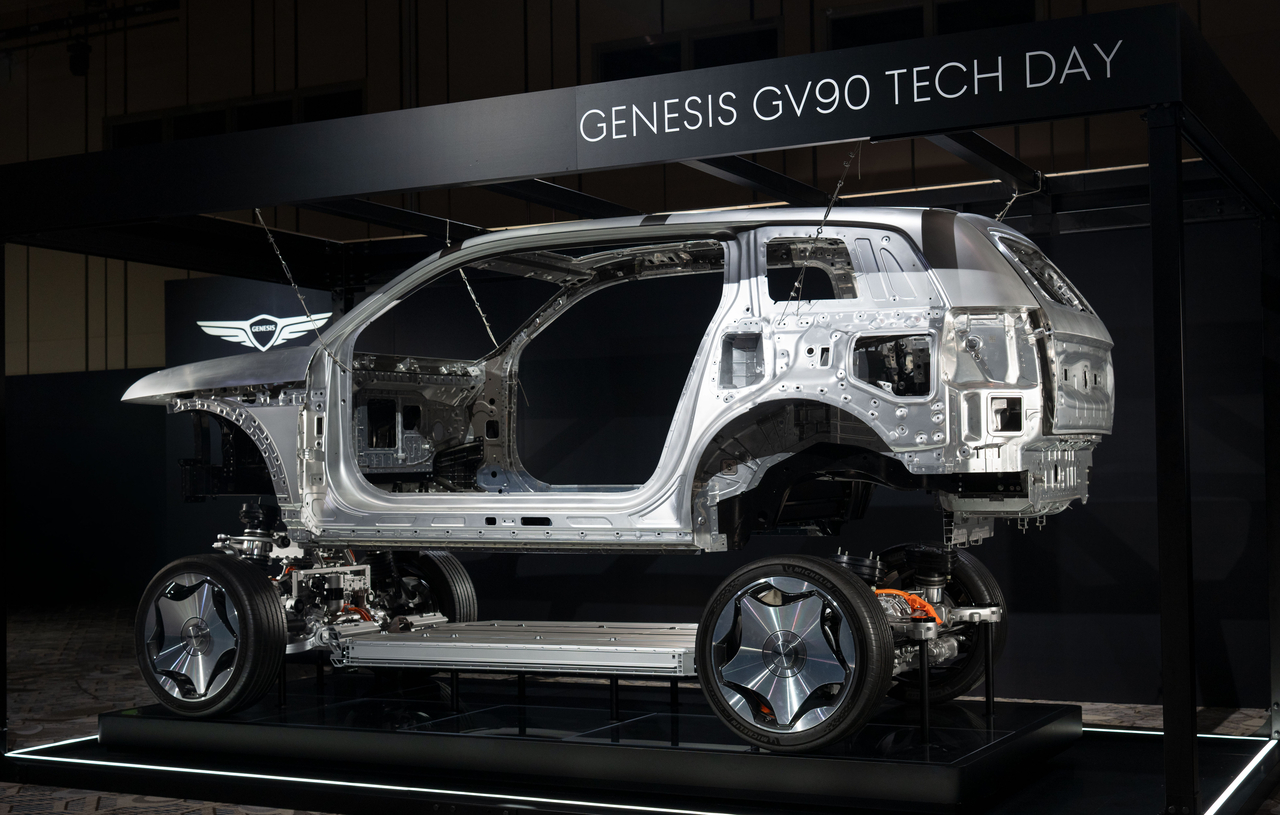
The safety concerns arising from removing the B-pillar were addressed through a "hidden roll cage" — an arrangement of high-strength steel structures inside the body. High-strength steel tubes measuring 2.5 meters run through the skeleton up to the roofline, and the interior of the doors was reinforced as well.
As a result, the body withstood more than 14 tons of downward force in internal roof-crush testing. In a side-impact test at 60 kilometers per hour, a minimum survival space of 320 millimeters was secured for occupants.
New crash structure for a 3-ton-plus body — roof airbag for rollovers
The GV90 rides on a dedicated electric vehicle platform called eMP, designed to deliver both a spacious cabin and crash safety. The charging system and climate-control unit were moved to the front of the vehicle, and the seat rails were recessed beneath the floor to create a flat interior surface.
The front seats can swivel to face the rear seats, a feature designed to let the cabin serve as a lounge or workspace for families and business travelers alike.
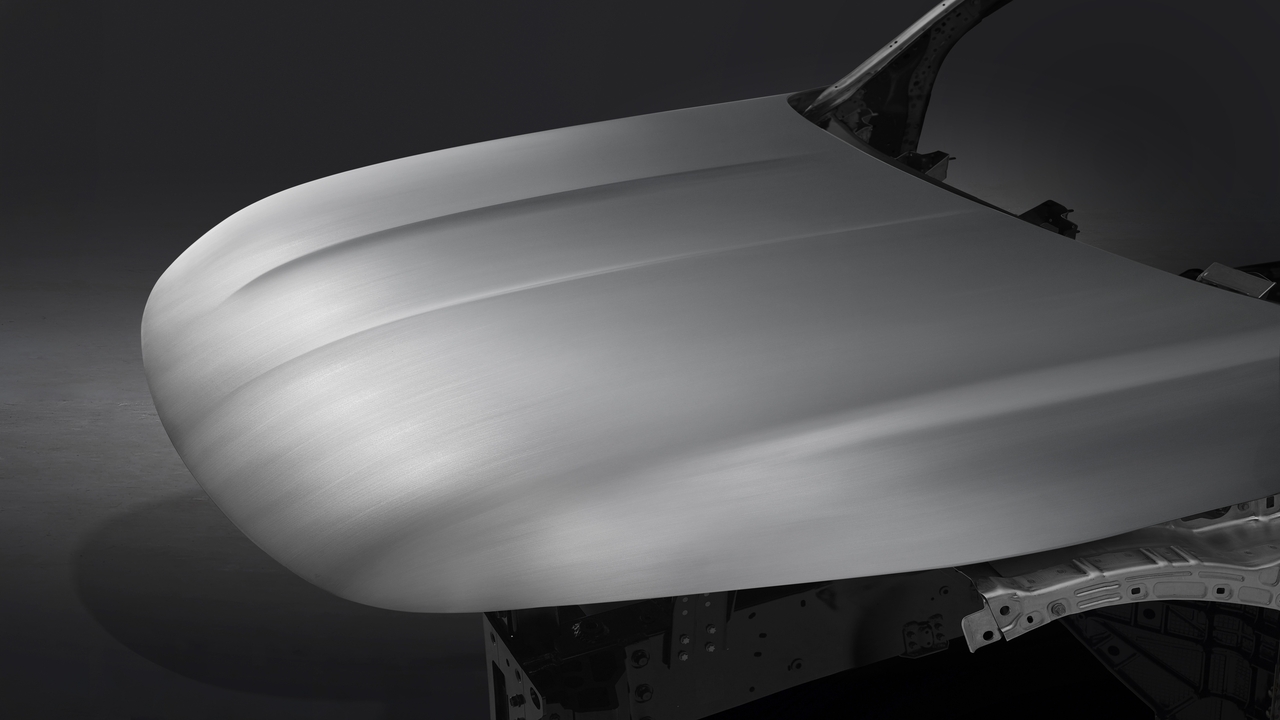
Aluminum accounts for 72 percent of the body structure. In a collision, the design channels impact forces sideways and directs drivetrain components to slide beneath the battery rather than into the cabin.
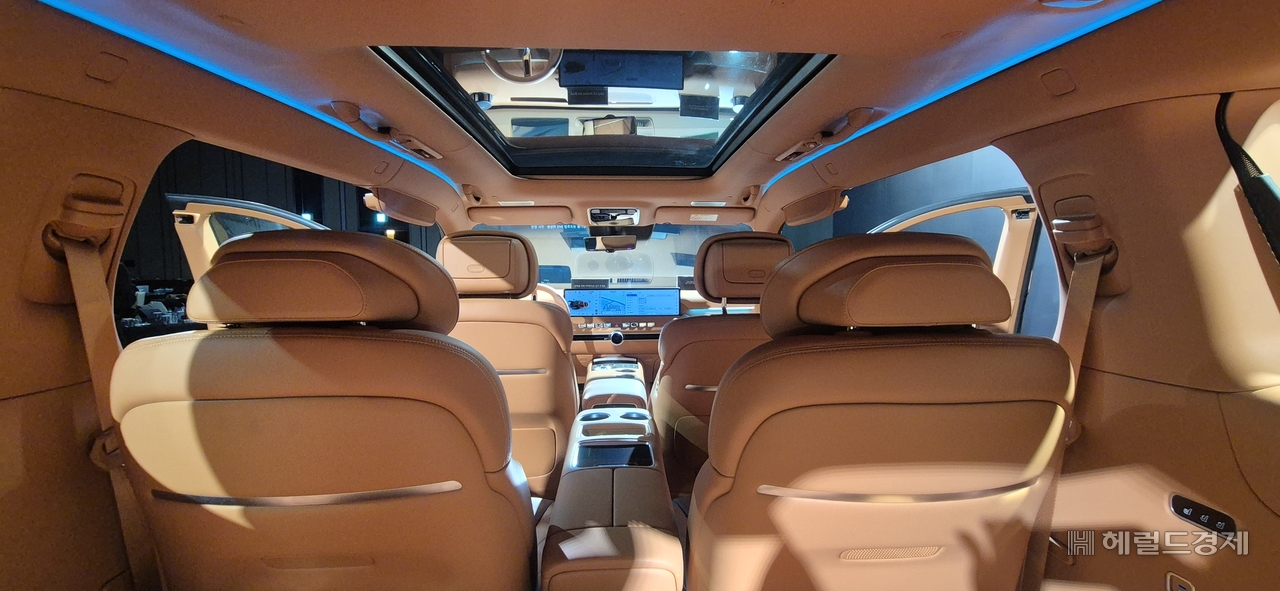
Also drawing attention is a roof airbag — the first of its kind to enter mass production anywhere in the world. In a rollover accident, it deploys along the ceiling in 0.08 seconds to prevent occupants from being ejected from the vehicle. The system underwent more than 300 airbag unit tests and was validated on 40 production vehicles.
"We wanted to prepare not only for the scenarios covered by official safety ratings, but also for the accidents customers might actually encounter," said Son Yu-ji, principal researcher on the Occupant Safety Systems Design Team.
To verify safety, Genesis conducted stage-by-stage evaluations during development at nearly three times the usual frequency. Should a crash cut power to the vehicle, occupants can still open the doors manually using an emergency release lever.
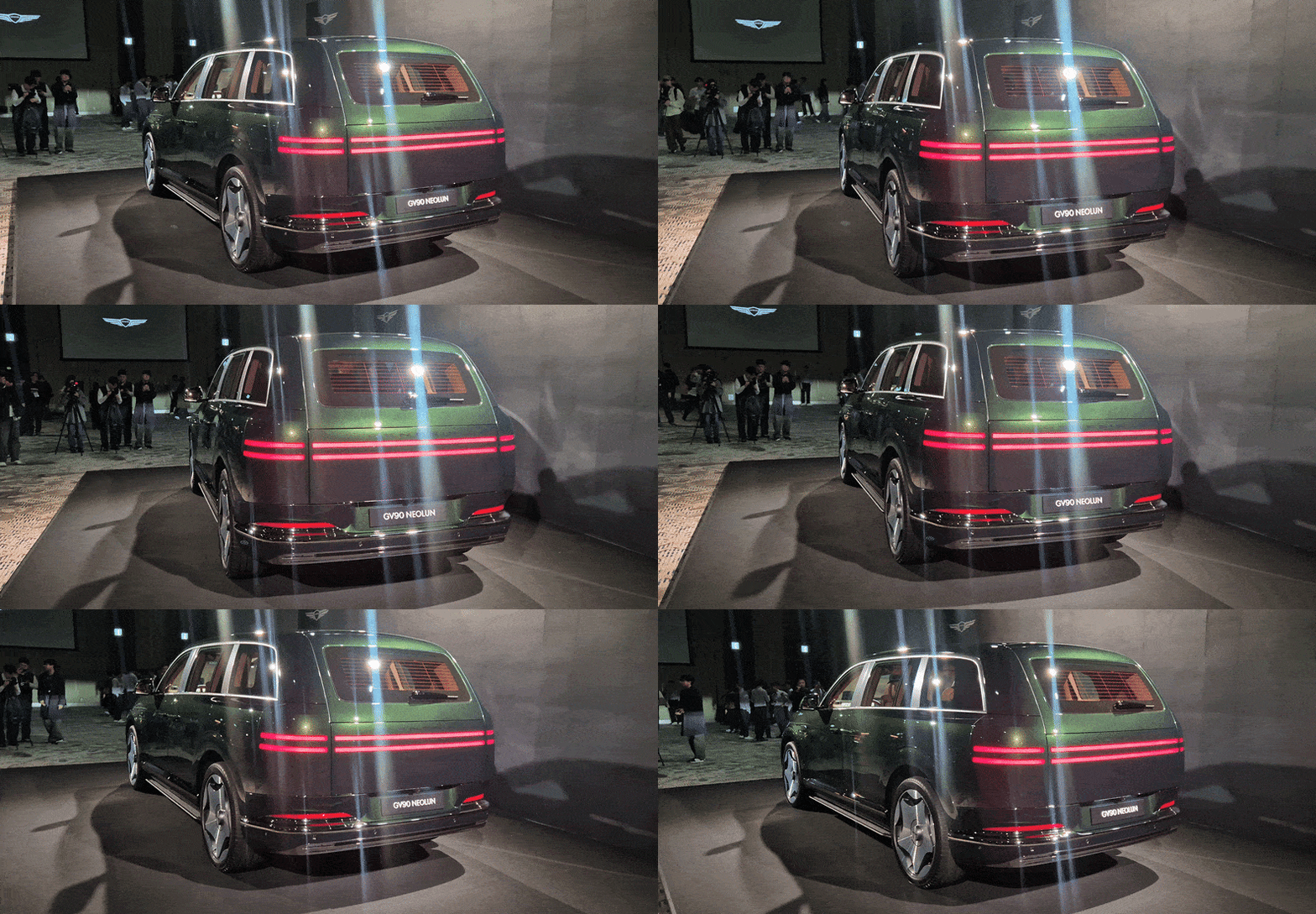
Moon-jar curves — headlamps to paintwork, all developed from scratch
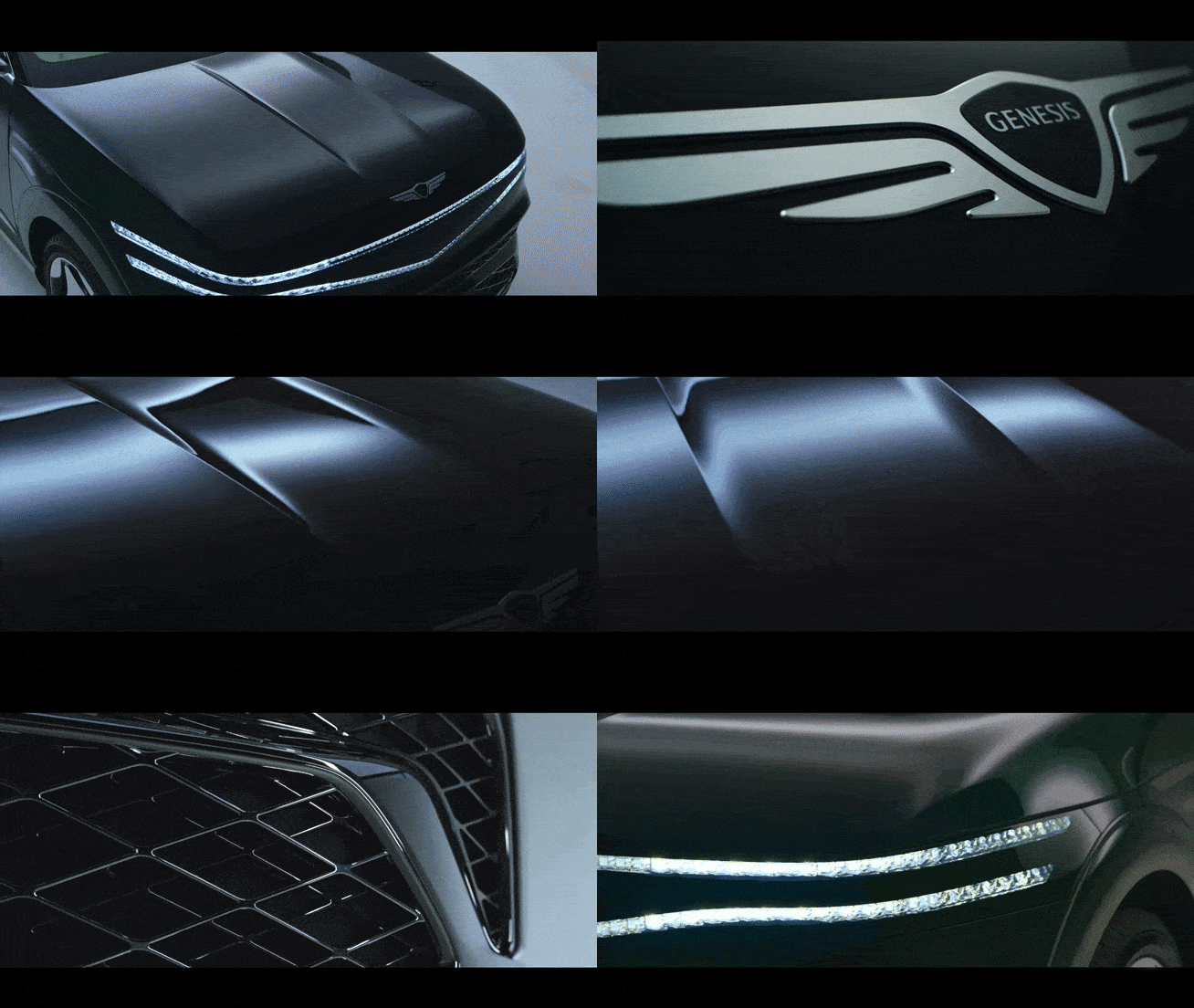
Considerable effort went into achieving an exterior and interior free of visible seams, evoking the smooth, unbroken surface of a traditional Korean moon jar. The headlamps are painted in the same body color, and only the light-emitting areas are carved away by laser — a "cutless" process that minimizes visible boundaries between lamp and body.
Genesis calibrated the laser-processing conditions separately for each of the 16 exterior color options. At the dedicated electric vehicle factory in Ulsan, fine adjustments were made 48 times per color to reduce color variation between components.
The lamps are about 20 percent narrower in height than those on the existing G90, yet deliver improved light distribution. The design also allows damaged sections to be replaced individually rather than requiring a full lamp assembly swap.
The interior features natural materials — real wood, real stone and wool cashmere. More than 200 samples of wool cashmere were durability-tested, and the rear-seat wooden floor was engineered to withstand even the spikes of golf shoes.
"We focused on preserving the inherent beauty of natural materials while meeting the durability standards required of a flagship model," said Nam Taek-seong, head of the Genesis CMF Team.
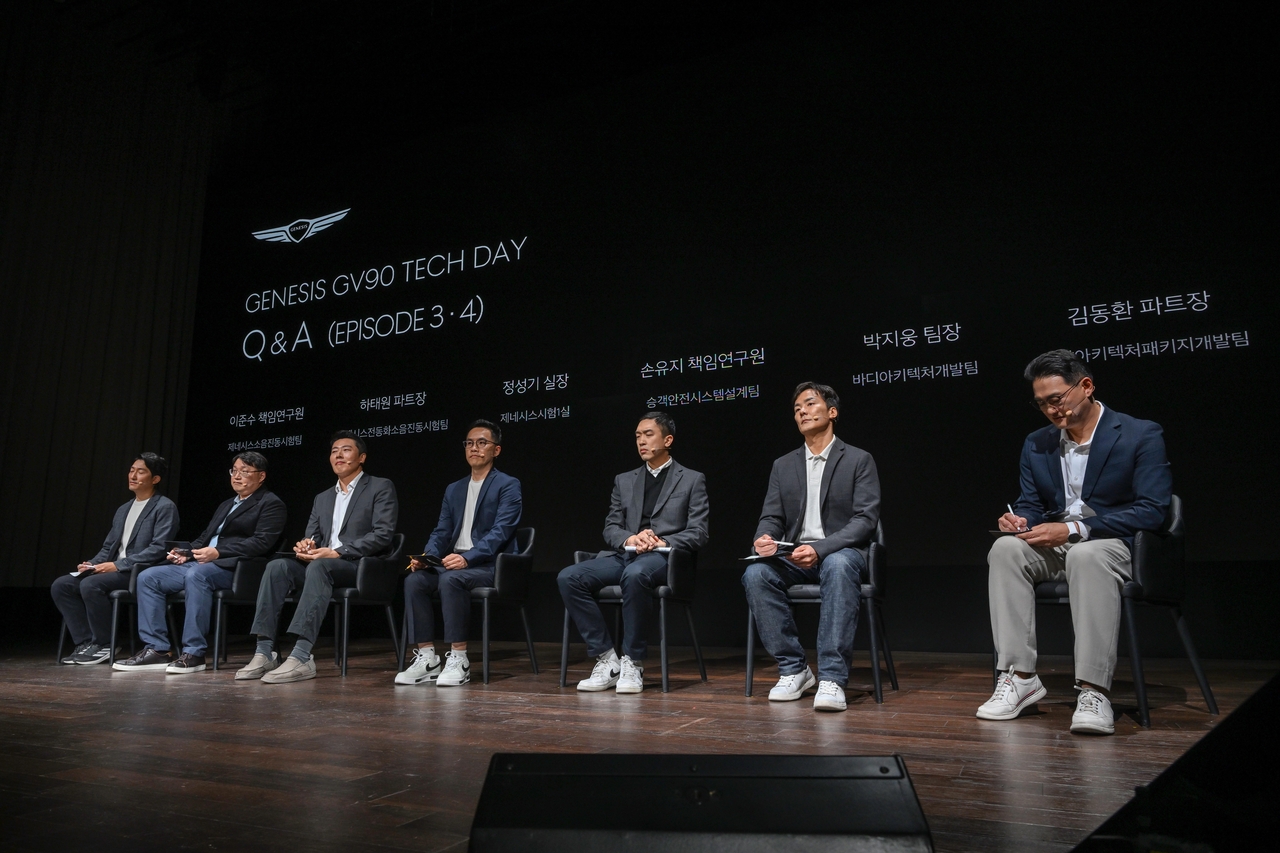
Quieter than the G90 — agile dynamics sought despite the massive body
Driving performance was tuned around Genesis's design philosophy of "dynamic elegance." Air suspension and precise torque-vectoring across all four wheels reduce body roll during hard acceleration and cornering.
"We refined the suspension and steering performance without gaps, across diverse roads and test tracks around the world," said Jeong Seong-gi, director of Genesis Test Division 1.
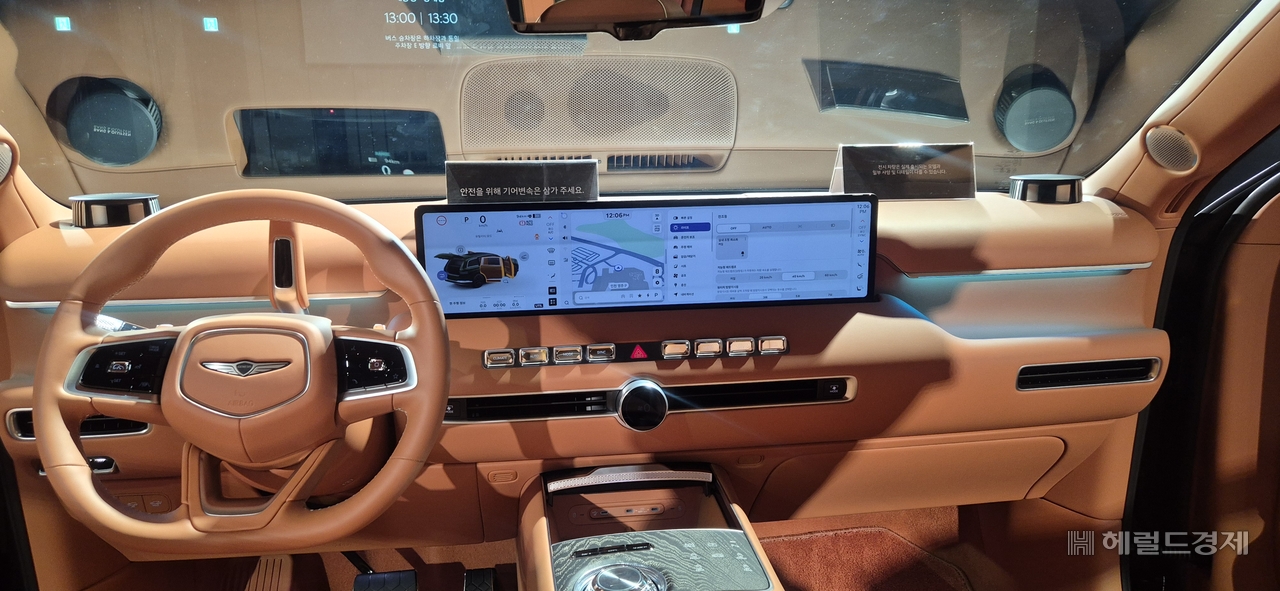
Cabin quietness was also a priority. Motor-induced vibration forces were cut by up to 40 percent, acoustic glass was applied extensively throughout the interior, and the thickness of the sound-insulating film on the front and rear door glass was doubled compared with the previous generation. Sound-absorbing and insulating materials, along with foam-injection techniques, were used to block noise transmission paths through the body structure.
Wind noise came in 2 decibels below the initial target, and road noise was brought to a level lower than that of the flagship G90 sedan.
"Just as a master craftsperson spends long hours in focused concentration shaping a moon jar, the GV90 carries the time and effort of countless developers," said Ahn Se-jin, executive director of Genesis Project Division 2. "The GV90 is the product of the most contemporary craftsmanship completed through technology — one that delivers an entirely new experience through innovative engineering."
kwater@heraldcorp.com




