
SME exports hit record $33.43 billion in Q3
Manufacturing output falls 4.0% despite export gains
September employment growth slows; startups drop 9.5%
Loan delinquency rate reaches 1.00%
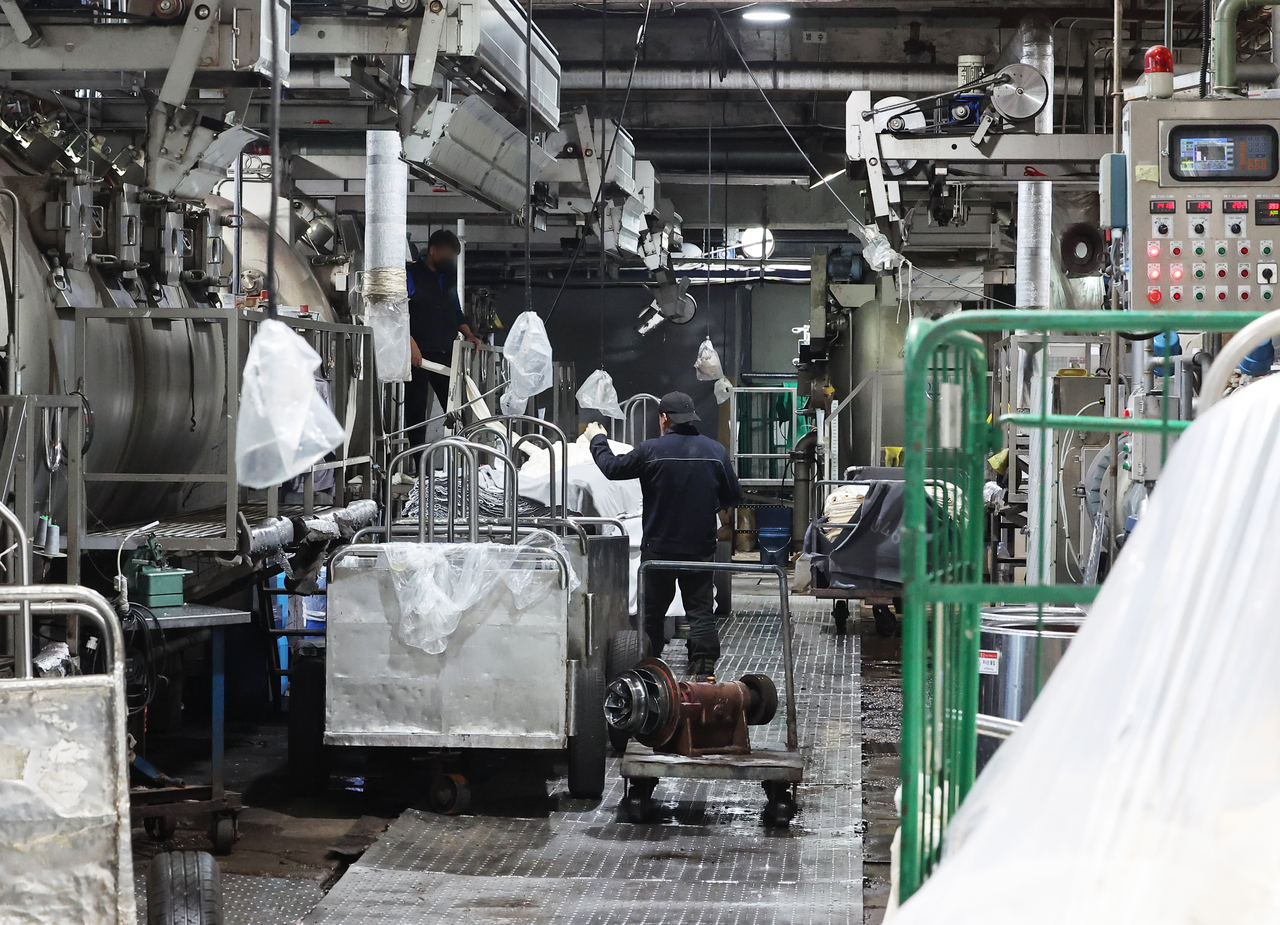
Small and medium-sized enterprises posted record third-quarter exports, but manufacturing output fell into negative territory, underscoring an uneven recovery across sectors.
According to the October 2026 edition of the KOSI SME Trends report released Thursday by the Korea Institute for Small and Medium Business, SME exports reached $33.43 billion in the third quarter, up 8.8 percent from a year earlier — the highest figure ever recorded for a third quarter.
Cosmetics and semiconductor exports drove the overall gain even as working days shrank from 71.5 to 67.5 compared with last year and automobile exports fell 42.4 percent. Cosmetics exports rose 28.6 percent year-on-year and semiconductor exports surged 68.8 percent, with analysts attributing the gains to the global popularity of K-beauty products and a boom in the AI industry.
By destination, exports to China grew 12.9 percent, led by semiconductors and manufacturing equipment, while exports to the United States rose 19.6 percent, driven by cosmetics and secondary-battery storage products.
Manufacturing output, however, told a different story. SME manufacturing production fell 4.0 percent year-on-year in August, reversing gains of 3.6 percent in June and 1.1 percent in July.
Strikes at major automakers and summer holidays weighed on output, particularly in the automobile and rubber and plastics sectors. Large-company manufacturing output also declined 1.8 percent over the same period, but the contraction among SMEs was steeper.
Small-business services held up better. SME services output rose 2.2 percent year-on-year in August, sustained by growth in professional, scientific and technology services as well as information and communications.
Domestic demand indicators showed some improvement. Retail sales in August reached 54.4 trillion won ($41.1 billion), up 1.3 trillion won, or 2.5 percent, from a year earlier. Sales of non-durable goods rose 4.9 percent and semi-durable goods 1.5 percent, while durable goods sales fell 2.0 percent.
Online shopping transactions totaled 24.2 trillion won, up 7.3 percent year-on-year. Food and groceries (up 9.8 percent), travel and transportation services (up 8.7 percent) and food delivery services (up 7.6 percent) led the increase, while clothing transactions fell 4.4 percent.
SME employment continued to grow but at a slower pace. The number of workers at businesses with fewer than 300 employees stood at 25.819 million in September, up 69,000 from a year earlier — roughly half the 129,000 gain recorded the previous month.
The startup market also contracted. The number of newly established companies fell 9.5 percent year-on-year in August to 81,171, with declines across manufacturing (down 11.2 percent), services (down 10.0 percent) and construction (down 3.2 percent). Technology-based startups bucked the trend, however, rising 10.1 percent to 18,547.
Financial pressure on small businesses persisted. The average SME lending rate at deposit banks climbed 0.16 percentage points from the previous month to 4.38 percent per annum in August, while the SME loan delinquency rate rose 0.09 percentage points to 1.00 percent.
While some indicators — particularly exports and services — showed improvement, manufacturing output, employment growth and startup activity all weakened. Rising borrowing costs and delinquency rates suggest the export-led recovery has yet to reach small businesses broadly.
"SME exports set a record for the third quarter and services output and retail sales maintained their upward trend, but a recovery gap between sectors is emerging as manufacturing output turned negative and employment growth slowed," the Korea Institute for Small and Medium Business said. "The financial burden on small businesses from rising costs and interest rates continues, and close monitoring is needed."
boo@heraldcorp.com




