Iran threatens all Sinokor vessels with sanctions
'Most violations of transit rules in past 3 months'
Shipper carried 37% of Hormuz crude oil last month
Seven of its tankers hit by missile, drone strikes
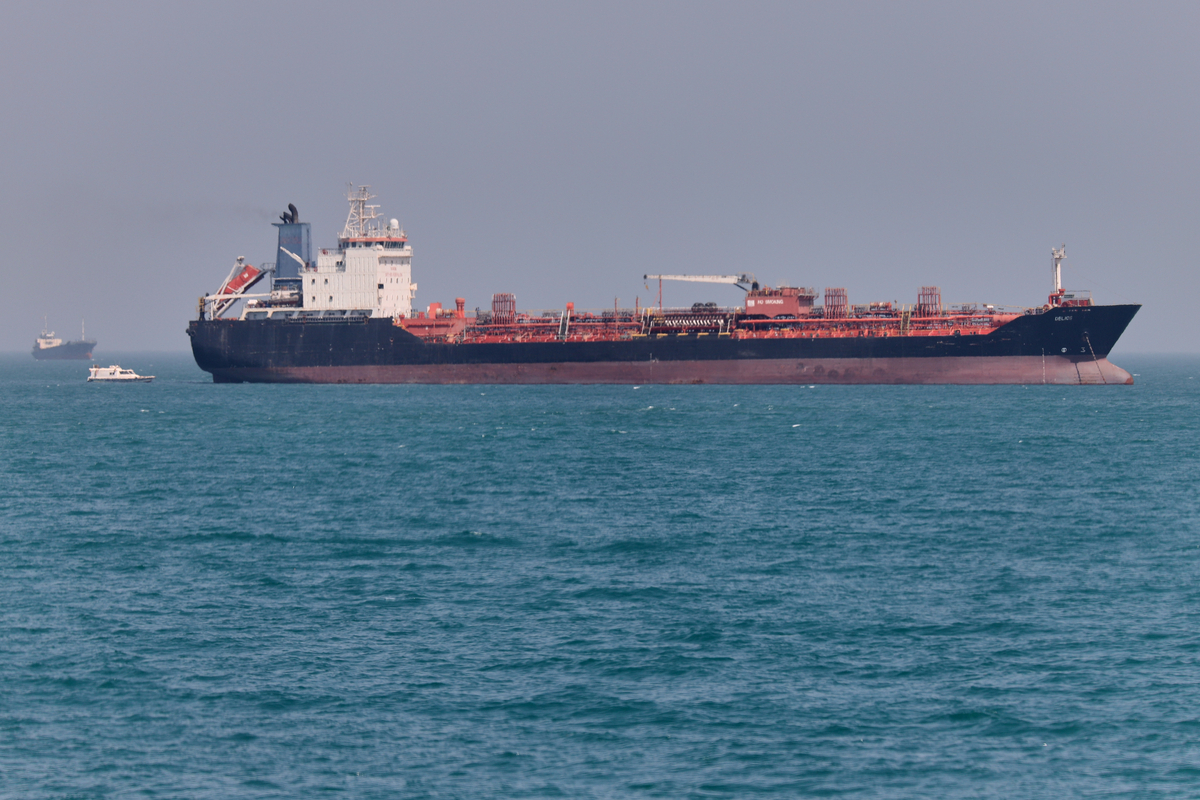
Iran has warned of legal action against South Korean shipper Sinokor Merchant Marine, a unit of Sinokor Group, which carried 37 percent of all crude oil transported through the Strait of Hormuz. The threat comes after Sinokor tankers repeatedly violated Iranian transit regulations. With seven of the company's vessels already reported to have sustained damage from missile and drone strikes, concerns are growing that further Iranian measures could significantly disrupt shipping through the strait.
Iran's Persian Gulf Strait Authority (PGSA), established to manage transit through the Strait of Hormuz, announced the threatened legal action against Sinokor vessels on Tuesday (local time) via X, formerly Twitter.
"Sinokor vessels committed the most violations of transit regulations over the past three months, and corresponding enforcement measures have already been taken against at least seven of its ships," the PGSA said.
It then warned "all cargo owners, stakeholders and insurers," adding that "legal action will be taken against all vessels belonging to this company starting Nov. 1."
The authority did not specify what measures it intends to take.
Iran has tightened its control over vessels passing through the Strait of Hormuz since the war with the United States, applying its own transit regulations to ships using the waterway.
The PGSA has previously published lists of vessels it accused of violating its transit rules, warning that those ships could face fines, detention or seizure if they attempt to pass through the strait in the future.
The authority first announced a list of 45 sanctioned vessels on Aug. 24, then expanded it to 77 in September and to 122 this month.
Sinokor vessels were included in the initial list published in August.
Sinokor has drawn attention as the shipper with the largest share of crude oil transport through the Strait of Hormuz in recent months.
Bloomberg analyzed vessel-tracking data from maritime intelligence firms Vortexa, Equasis and Signal Ocean and found that Sinokor-owned tankers transported 105.6 million barrels of crude oil through the Strait of Hormuz last month.
That figure represents about 37 percent of the 286.3 million barrels of total crude oil that passed through the strait during the same period.
Sinokor alone carried more than one in every three barrels of crude oil transiting the Strait of Hormuz.
The volume also exceeded the combined 97.3 million barrels transported by the second- through fourth-ranked shippers — Saudi Arabia's state-owned Bahri, Kuwait Oil Tanker and the shipping arm of Abu Dhabi National Oil Company (ADNOC).
According to Lloyd's List, a British maritime trade publication, Sinokor vessels accounted for 47 percent of all very large crude carrier (VLCC) transits through the Strait of Hormuz last month.
That share surpassed 50 percent in the first 10 days of this month.
More than one in every two supertankers passing through the Strait of Hormuz was a Sinokor vessel.
In the process, seven Sinokor-owned tankers were reported to have sustained damage from missile or drone strikes.
Sinokor assembled a large tanker fleet through purchases of secondhand vessels and time-charter agreements shortly before the outbreak of the Iran war.
The company has since concentrated its tankers on short-haul shuttle runs — loading crude inside the Persian Gulf, transiting the Strait of Hormuz and offloading at ship-to-ship transfer points in the Gulf of Oman.
By repeatedly traversing the strait rather than undertaking long-haul voyages, the company has increased its overall crude oil transport volumes.
Iran's threat of legal action against all Sinokor vessels has significantly increased uncertainty over the company's future operations.
Attention is now focused on how far Iran will go in practice, particularly given that the PGSA has previously warned of the possibility of detention or seizure for vessels that violate its transit rules. The legal measures are set to take effect Sunday, though the specific form of sanctions has yet to be disclosed.
sjy@heraldcorp.com