Kang, Hegseth meeting likely Wednesday
OPCON transfer, nuclear submarine on agenda
Two sides divided over FOC verification
S. Korea-Japan defense talks also expected
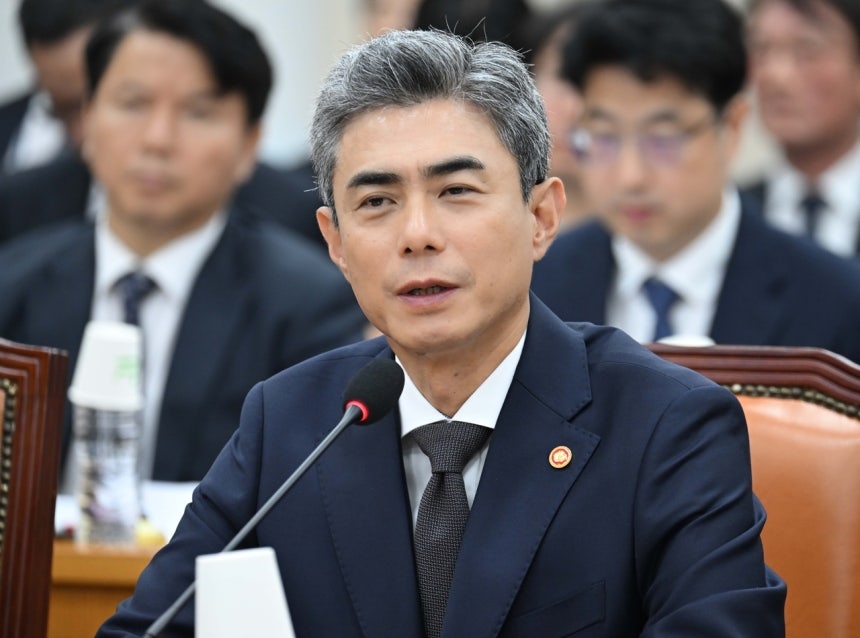
South Korea's Minister of National Defense Kang Shin-chul and US Secretary of Defense Pete Hegseth are expected to hold their first face-to-face talks in the Philippines. With the two countries at odds over the conditions for transferring wartime operational control, attention is focused on whether the meeting between the two defense chiefs can break the deadlock in negotiations.
According to the Defense Ministry on Tuesday, Kang will attend the 13th ASEAN Defence Ministers' Meeting-Plus, or ADMM-Plus, in Cebu, Philippines, on Thursday. It will be Kang's first appearance at an international conference since he took office on Sept. 22.
During his stay in the Philippines, Kang is scheduled to hold an introductory first meeting with Hegseth. The exact schedule remains fluid, but Wednesday is considered the most likely date.
Before departing, Kang told reporters that the alliance would be the central topic of discussion. "We will basically talk about the alliance, and I think the transfer of wartime operational control will naturally come up as well," he said. "I will consult closely."
Other major defense issues — including South Korea's push to acquire nuclear-powered submarines — could also be on the table. Kang said he would also discuss the schedule for the Security Consultative Meeting, or SCM, if needed, as the date has yet to be confirmed.
The central issue at the talks will be the transfer of operational control, known as OPCON. Seoul has set a goal of completing the verification of the Future Combined Forces Command's full operational capability, or FOC, at this year's SCM and presenting both presidents with a recommended "Year X" — the target date for the OPCON transfer.
However, even after completing a joint assessment scheduled for this year, the two sides are said to remain divided over whether the conditions for completing FOC verification have been met.
US military authorities have maintained that the conditions for OPCON transfer must be assessed with caution. USFK Commander Gen. Xavier Brunson recently said publicly that the benchmarks for determining whether transfer conditions are met could shift as the security environment changes.
Against this backdrop, there is speculation that Seoul may seek a so-called top-down solution — using direct talks between the two defense ministers to narrow the gap.
Typically, OPCON transfer issues are discussed through the Permanent Military Committee between the USFK commander and South Korea's Joint Chiefs of Staff chairman, then the Military Committee Meeting between the two countries' chiefs of staff, before reaching the SCM attended by both defense ministers.
At present, however, the PMC schedule has not been confirmed, and the MCM appears likely to be delayed beyond early next month as originally anticipated. This has fueled the view that the defense leadership may first build consensus on key issues before proceeding with working-level consultations.
On the sidelines of the conference, Kang is also scheduled to hold bilateral talks with defense ministers from Japan and other key regional countries to discuss expanding defense exchanges and arms industry cooperation.
According to Kyodo News, Japanese Defense Minister Koizumi Shinjiro plans to meet separately with his counterparts from South Korea, the United States and the Philippines at the conference. A South Korea-Japan defense ministers' meeting is therefore expected to take place as well.
At the main ADMM-Plus session — attended by the 11 ASEAN member states and dialogue partners including South Korea, the United States and China — Kang plans to outline Seoul's efforts to promote peace and stability on the Korean Peninsula and seek the international community's support.
He is particularly expected to highlight the illegitimacy of North Korea's recent planting of landmines south of the MDL in the demilitarized zone. Seoul intends to raise international awareness of North Korea's military provocations while underscoring the need for continued dialogue to ease tensions on the peninsula.
The Defense Ministry said it also plans to stress the need for international cooperation to maintain regional peace and to propose concrete ways to expand defense cooperation with ASEAN member states.
sjy@heraldcorp.com