Jung called the US handling of his visa 'deeply regrettable'; Lee fires back that Washington's entry authority deserves the same respect Seoul claims for itself
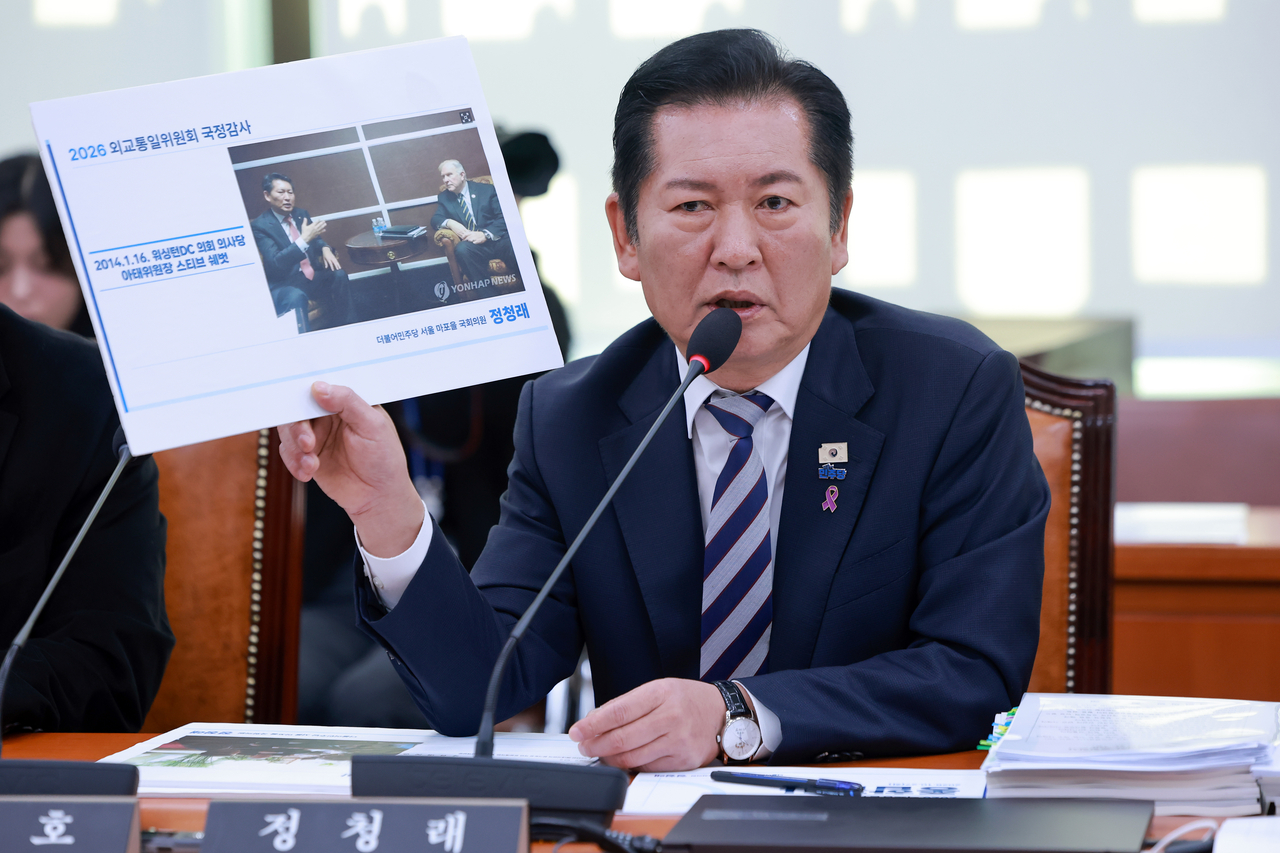
Reform Party lawmaker Lee Jun-seok pushed back Tuesday against Democratic Party of Korea lawmaker Jung Chung-rae, who said the ruling and opposition parties should jointly criticize and protest the US government's handling of his visa application. Lee questioned whether the United States could be expected to overlook Jung's past involvement in the occupation of the US ambassador's residence.
In a Facebook post Tuesday, Lee said Jung "has a criminal record, including a conviction for preparation for arson, stemming from the occupation of the US ambassador's residence," adding, "Just because the activist movement considers that kind of history a badge of honor doesn't mean the United States has to see it that way."
Lee then said South Korea itself has restricted the entry of US citizen Steve Yoo. "Even if the two cases differ in their circumstances, if we claim the right to control entry into our own country, we must recognize that same right for the United States — that is the only consistent principle," he said.
He also defended the US approach, saying that Washington continuing to review the application rather than issuing an outright denial was "actually a sign of caution that takes the alliance into consideration." "Respecting an ally begins with respecting the other country's sovereignty," he said.
Jung had made a personal statement earlier Tuesday at the National Assembly's Foreign Affairs and Unification Committee audit, saying he had been unable to join the Americas-bound national audit delegation because his US visa had not been issued. "I find the conduct of the US administrative authorities deeply regrettable," he said.
Jung said his activities in the United States had been normal and that he had done much to promote South Korea-US friendship, making it all the more frustrating that his visa was neither denied nor approved but simply left "under review." "I was worried I might not be able to conduct the national audit at all, so I switched to the Europe delegation," he said, explaining his decision to join that group instead.
He then addressed the opposition, saying, "We should be criticizing and protesting this kind of conduct by the US administrative authorities, but I am quite regretful that it has instead turned into a controversy suggesting the South Korea-US alliance has broken down and that the national interest has somehow been harmed."
"This is something we should protest to the United States on a bipartisan basis, transcending the ruling and opposition divide — it is not material for attacking our own government," Jung said. "I also hope my US visa issue does not end up causing further damage to the South Korea-US alliance."
People Power Party lawmaker Kim Dae-sik, who leads his party's side on the Foreign Affairs and Unification Committee, rebuffed Jung in response, saying, "That is precisely why we are asking whether the South Korea-US relationship is truly solid right now." "It is simply unacceptable for a member of the National Assembly traveling on official national audit business to have a visa denied or put on hold," he said.
jshan@heraldcorp.com