Remarks made at expert meeting on expanding modular housing, held Tuesday
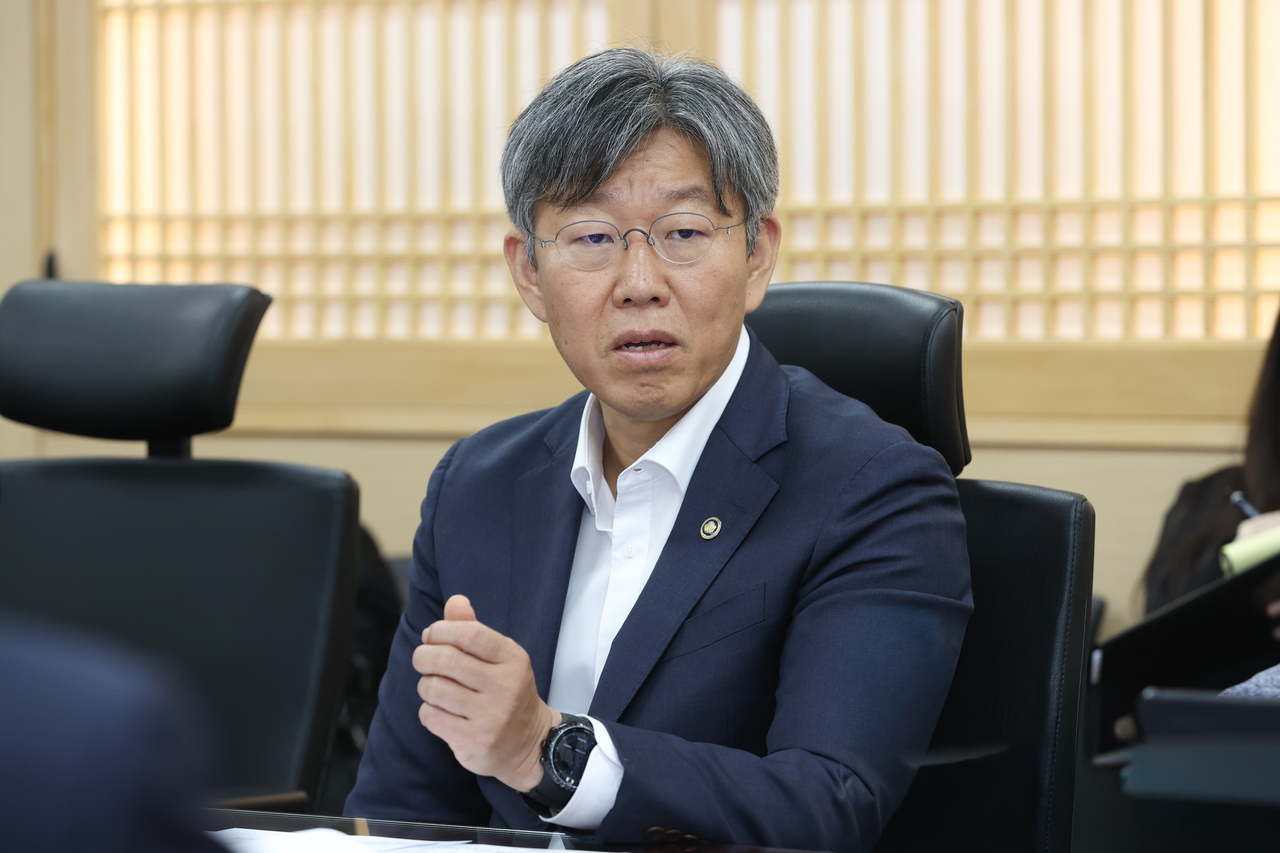
"Modular housing is the key to solving the challenges facing the construction industry — declining productivity, workforce structure and safety management."
Kim I-tak, first vice minister of Land, Infrastructure and Transport, made the remarks Tuesday at an expert meeting held at the National Land Development Exhibition Hall, attended by representatives from the Korea Land and Housing Corporation (LH), Gyeonggi Housing and Urban Development Corporation (GH), the Korea Institute of Civil Engineering and Building Technology, and industry groups.
The Ministry of Land, Infrastructure and Transport said it plans to expand the use of modular construction — a method in which key structural components and individual housing units are prefabricated at a factory, then transported to the site for installation and assembly. The ministry said the approach can cut construction time by 20 to 30 percent and offers advantages in quality control, labor reduction and accident prevention.
The government plans to raise the target number of modular public housing units to be ordered between 2027 and 2030 from 12,000 to 20,000, and is pursuing a pilot project for high-rise buildings of 20 stories or more. These measures were previously announced as part of the Aug. 13 housing rapid supply plan.
At Tuesday's meeting, academics briefed participants on the progress of pilot projects to build high-rise modular housing complexes in Uiwang Chopyeong and Hanam Gyosan, as well as broader industry trends. LH, GH, the Korea Institute of Civil Engineering and Building Technology and industry representatives shared their plans for public housing orders through 2030 and raised concerns about obstacles they face.
In response, the ministry said it plans to subsidize the additional construction costs incurred when using modular methods over conventional ones — 35 million won ($26,500) per unit — and to enact a special law on promoting modular construction that would provide tailored exemptions and incentives.
Kim urged that "the public sector must serve as a catalyst for revitalizing the modular housing market through the seamless implementation of the Aug. 13 measures," and pledged that "the government will spare no effort in providing the policy support needed to resolve difficulties through continued communication with the industry."
smh@heraldcorp.com