Ajou University-led team uncovers how CB1R receptor in macrophages worsens psoriatic skin inflammation
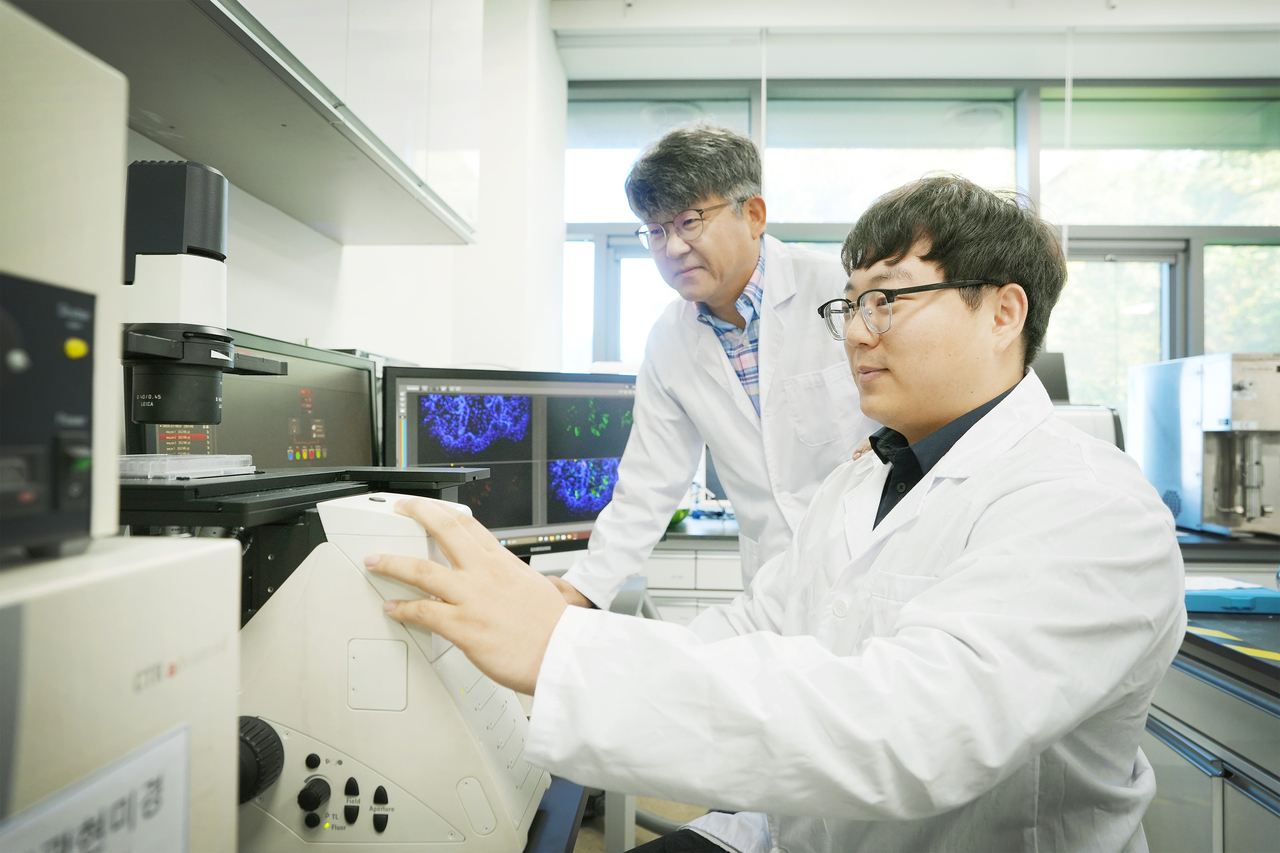
South Korean researchers have identified a new molecular mechanism that drives the worsening of psoriasis, a chronic inflammatory skin disease. The team confirmed that suppressing the mechanism alleviates psoriasis symptoms, raising prospects for its use in developing new treatments.
Ajou University said Tuesday that a research team led by Kim Wook, a professor in the Department of Molecular Science and Technology at the university's College and Graduate School of Advanced Biotechnology and Convergence, had identified that the cannabinoid 1 receptor (CB1R) in macrophages promotes skin inflammation in psoriasis. The team also mapped the underlying mechanism, which they termed the "CB1R-AUF1-NLRP3 immunometabolic regulatory axis."
The findings were published in the international journal Advanced Science under the title "Targeting Cannabinoid 1 Receptor in Macrophages Alleviates Psoriatic Skin Inflammation through the AUF1-NLRP3 Axis." Choi Hong-seo, a researcher at Ajou University's Institute for Advanced Bioconvergence, served as first author. Collaborating teams included those of Professor Lee Eun-kyung at the Catholic University of Korea College of Medicine, Professor Kim Jeong-woong in the Department of Life Sciences at Chung-Ang University, and Professor Josephine M. Egan at the National Institute on Aging, part of the US National Institutes of Health.
Psoriasis is a chronic inflammatory condition characterized by recurring red rashes and thick scaly patches on the skin, and is frequently accompanied by obesity, type 2 diabetes and cardiovascular disease. Of late, psoriasis has come to be recognized as a systemic inflammatory disease, but the molecular mechanisms linking metabolic abnormalities — such as obesity, type 2 diabetes and cardiovascular disease — to skin inflammation remain poorly understood.
Biological agents that block inflammatory cytokines — signaling proteins secreted by immune cells such as macrophages that promote and mediate inflammatory responses in the body — including IL-17 and IL-23, are widely used to treat psoriasis. However, the risk of relapse after treatment is discontinued and the financial burden of long-term therapy have highlighted the need for new treatment strategies.
The research team turned its attention to CB1R, which regulates energy metabolism and immune responses in the body. CB1R has been studied as a therapeutic target for metabolic diseases such as obesity and diabetes, and macrophages — major white blood cells responsible for innate immunity that engulf and break down bacteria, viruses and cancer cells, acting as the immune system's "scavengers" — are known to use CB1R to promote metabolic inflammation. The role and mechanism of macrophage CB1R in chronic inflammatory skin diseases such as psoriasis, however, had not been clearly established.
Analyzing human psoriatic skin tissue and two animal models of psoriasis, the team found that CB1R expression increased in inflamed skin, with a particularly marked rise in macrophages that had infiltrated the lesions. The researchers also observed that CB1R expression rose progressively as skin inflammation advanced in the animal models.
To verify CB1R's function, the team administered rimonabant, a CB1R inhibitor. Redness, scaling, epidermal thickening — a condition in which the outer surface of the skin becomes abnormally thick — and the production of inflammatory cytokines all decreased significantly in the psoriasis animal models. Psoriasis symptoms were also substantially alleviated in mice with CB1R gene deletion in myeloid cells, including macrophages, whether the deletion was systemic or cell-specific. The team further confirmed the key role of macrophage CB1R in driving psoriatic inflammation through experiments in which macrophages were depleted and then replenished with either normal or CB1R-deficient macrophages.
The team also identified the specific molecular mechanism by which CB1R worsens inflammation. When CB1R in macrophages is activated, expression of AUF1 — a protein that regulates RNA stability — decreases, leading to increased activity of the NLRP3 inflammasome, which induces a potent inflammatory response. Conversely, inhibiting CB1R raises AUF1 levels, which accelerates the degradation of the messenger RNA needed to produce NLRP3 protein, thereby suppressing inflammasome activity and the production of the inflammatory cytokine IL-1β. The findings show that CB1R promotes psoriatic inflammation through a previously unrecognized pathway involving RNA stability regulation.
The team also found evidence for developing alternatives to rimonabant, the CB1R inhibitor used in the study. Rimonabant was originally developed as an obesity treatment but was withdrawn due to neuropsychiatric side effects. The researchers applied several peripherally restricted CB1R inhibitors — designed to limit drug entry into the brain — to psoriasis animal models and confirmed their effectiveness in suppressing skin inflammation. The results suggest the potential of a new treatment strategy that modulates CB1R in peripheral immune cells while reducing effects on the central nervous system.
The study is significant for establishing that CB1R, which is involved in inflammatory responses in metabolic diseases, also plays an important role in psoriasis, and for mapping the molecular mechanism behind that role. It is particularly notable for proposing a new immunometabolic link that helps explain the connection between psoriasis and metabolic conditions such as obesity and diabetes, and for identifying a therapeutic target that could complement existing cytokine-targeted therapies.
"This study is meaningful in that it reveals a new molecular mechanism through which CB1R — associated with metabolic diseases such as obesity and diabetes — worsens psoriatic inflammation," Kim said. "In particular, we confirmed that inhibiting CB1R can alleviate psoriatic inflammation, presenting a new therapeutic target that could complement existing treatments."
He added, "Since we also confirmed a psoriasis-suppressing effect with peripherally restricted CB1R inhibitors that limit drug entry into the brain, we hope this will lead to the development of new treatments that can effectively control psoriatic inflammation while reducing central nervous system side effects."
The team plans to further refine therapeutic strategies targeting macrophage CB1R and to investigate the role of CB1R in cases where psoriasis occurs alongside metabolic conditions such as obesity and diabetes.
The research was supported by the National Research Foundation of Korea's Basic Research Program — including the Global Basic Research Laboratory Program and the Core Research Program (Type C) — as well as the National New Drug Development Project and the Gyeonggi Province Regional Research Center program.
fob140@heraldcorp.com