First full model change since 2023, just four years after second generation
Domestic production set for March, North America for August; production sites reshuffled
Kona has never outsold Seltos in South Korea since 2019
Pleos Connect infotainment system, pricing and SDV features seen as key battlegrounds
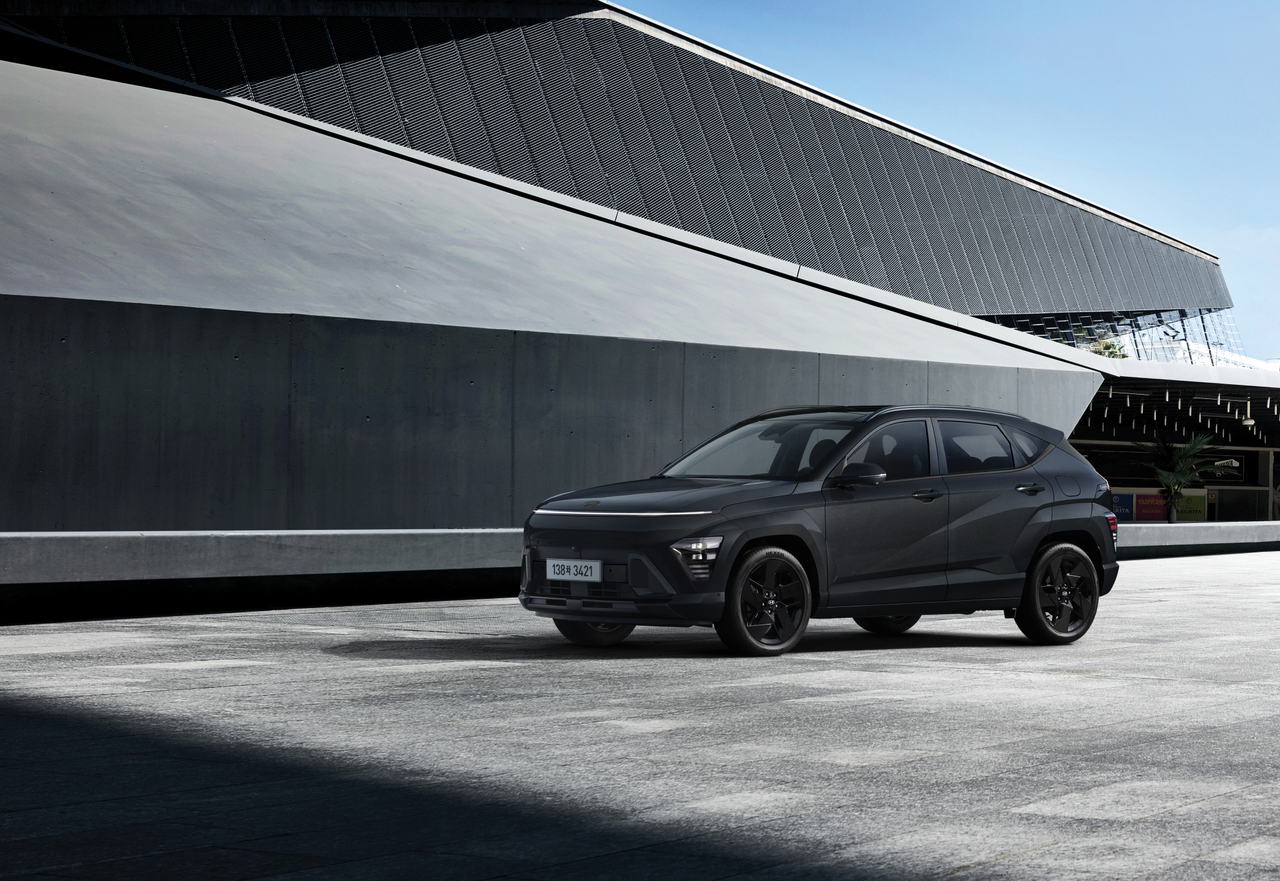
Hyundai Motor will launch the third-generation, fully redesigned Kona compact SUV in March next year — a generational change that comes roughly four years after the second-generation model debuted in 2023, well ahead of the typical five-to-seven-year replacement cycle. The move is widely seen as a bold bid to challenge Kia's Seltos, which has dominated the domestic compact SUV segment for years.
According to industry sources, Hyundai Motor plans to discontinue the current Kona, produced at Ulsan Plant 1, and split production of the new model between Ulsan Plants 2 and 3. The domestic variant is set to roll off Plant 3 from March next year, while the North American variant will be built at Plant 2 starting in August of the same year. The production realignment is part of a broader reshuffling of manufacturing lines tied to the reconstruction of Ulsan Plant 1.
The third-generation Kona will skip a mid-cycle refresh and go straight to a full model change. The decision reflects a calculated move to fundamentally lift the vehicle's competitiveness in a fiercely contested compact SUV market, with a comprehensive overhaul of its design, powertrain and overall user experience.
The new Kona is expected to take on a more pronounced SUV character. Camouflaged test vehicles recently spotted in Europe show a boxier body silhouette than the current model, with a more upright hood and rear end. The design appears to be moving away from the current model's curved lines toward a more traditional SUV look defined by horizontal lines and sharp edges. The body length is expected to grow by about 76 millimeters, while the wheelbase is projected to expand by around 25 millimeters to 2,685 millimeters.
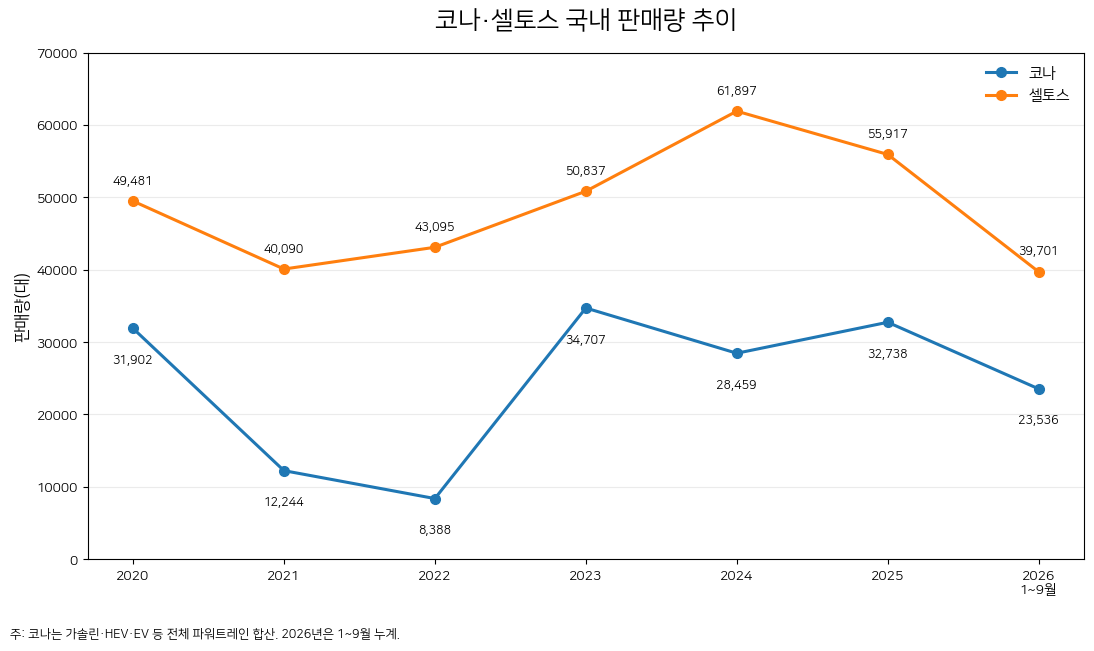
The Kona has not outsold the Seltos in annual domestic sales even once since Kia launched the Seltos in July 2019. In 2020, the Kona sold 31,902 units in South Korea, trailing the Seltos at 49,481. By 2022, the gap had widened sharply, with the Kona managing only 8,388 units against the Seltos's 43,095.
Even when the second-generation Kona launched in 2023 and sales rebounded to 34,707 units, it still fell short of the Seltos's 50,837. Last year the Kona sold 32,738 units, again behind the Seltos at 55,917. The gap has persisted this year, with the Kona at 23,536 units and the Seltos at 39,701 units through September.
In the United States, the Kona outsold the Seltos last year — 74,814 units versus 56,798 — but the tide has been turning this year. Through September, Seltos sales jumped 45.3 percent to 58,207 units, while Kona sales fell 8 percent to 52,948.
The Kona built out an electrified lineup early but has not fully capitalized on its first-mover advantage. It launched an electric vehicle in April 2018 and a hybrid in August 2019, entering the electrification race eight years ahead of the Seltos.
Yet through September this year, domestic sales of the Kona hybrid fell 13.8 percent year-on-year to 5,354 units, while the electric variant edged up just 0.9 percent to 3,411 units.
Over the same period, hybrids accounted for 34 percent of total domestic vehicle sales, and new electric vehicle registrations jumped 74.8 percent year-on-year. The Kona's early-mover edge in electrification is also eroding as the Seltos added a hybrid option for the first time in its second-generation full model change this year.
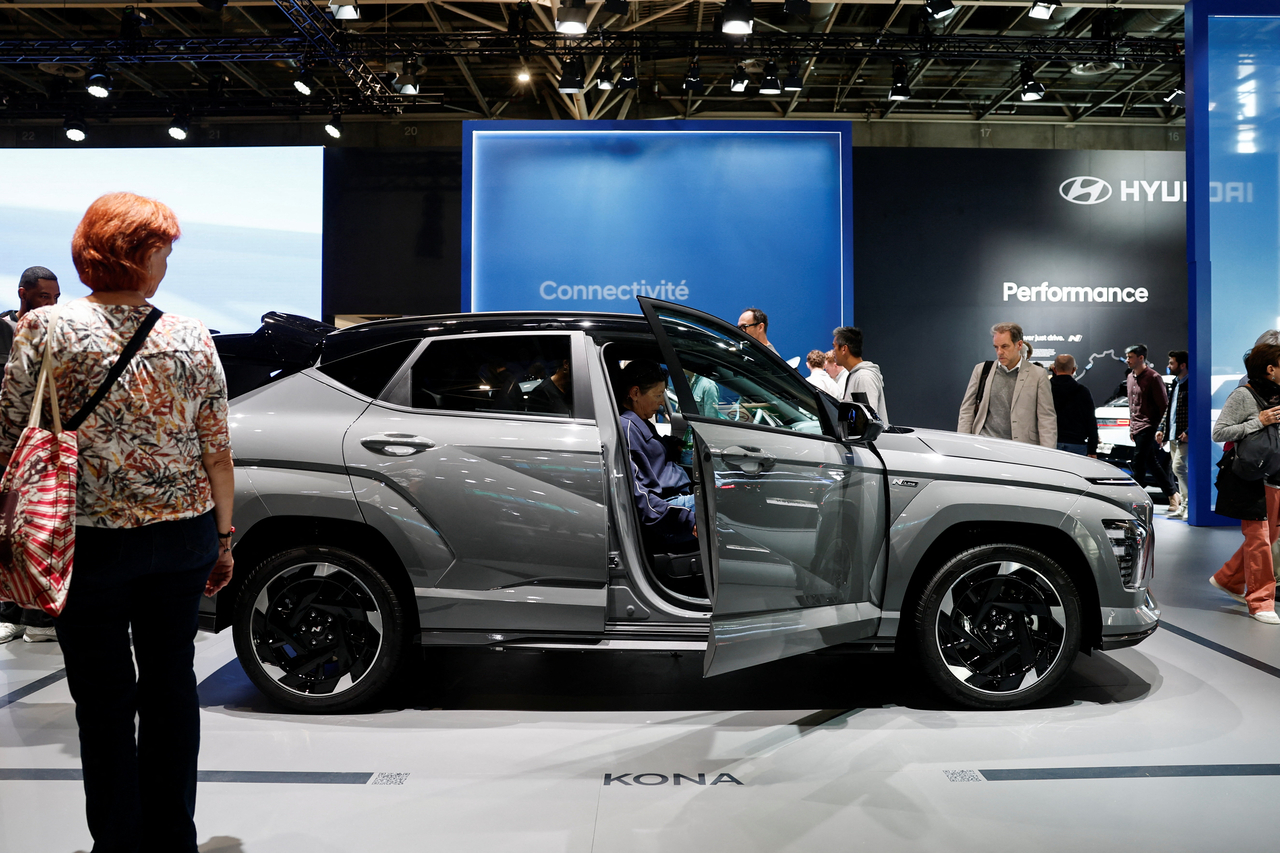
The new Kona's key differentiator is expected to be its software-defined vehicle, or SDV, capabilities. The model is widely expected to feature Pleos Connect, Hyundai Motor Group's next-generation infotainment system, which comes with a large-format display, an AI voice assistant called Gleo AI, and an open app marketplace.
Because the current new Seltos still runs on the older ccNC-based infotainment platform, the new Kona could carve out a clear advantage in user experience if it becomes the first compact SUV in the segment to adopt Pleos Connect.
"It will not be easy to flip the market dynamic in a short time, given that the Seltos and other rivals have been raising their game by adding hybrids," an industry official said. "But the Kona has a loyal customer base, and if the new model delivers a clear edge in interior space and price competitiveness, it has a real shot."
kwater@heraldcorp.com