Actor Choi Dae-hun cast as brand face; sales topped 100 billion won mark last year for first time; UDCA shown to prevent gallstones after gastric surgery and ease long COVID symptoms
Daewoong Pharma's Ursa, a liver health brand that has accompanied Koreans through fatigue management for more than half a century, is returning to television screens with its first new TV commercial in six years.
The campaign follows the brand's milestone of surpassing 100 billion won ($75.5 million) in annual sales last year for the first time in its history, and signals a renewed push to connect with consumers across all generations on the strength of accumulated clinical evidence.
Daewoong Pharma announced Tuesday that it has unveiled a new TV advertising campaign featuring actor Choi Dae-hun. The last time Ursa ran a new TV commercial was in 2020.
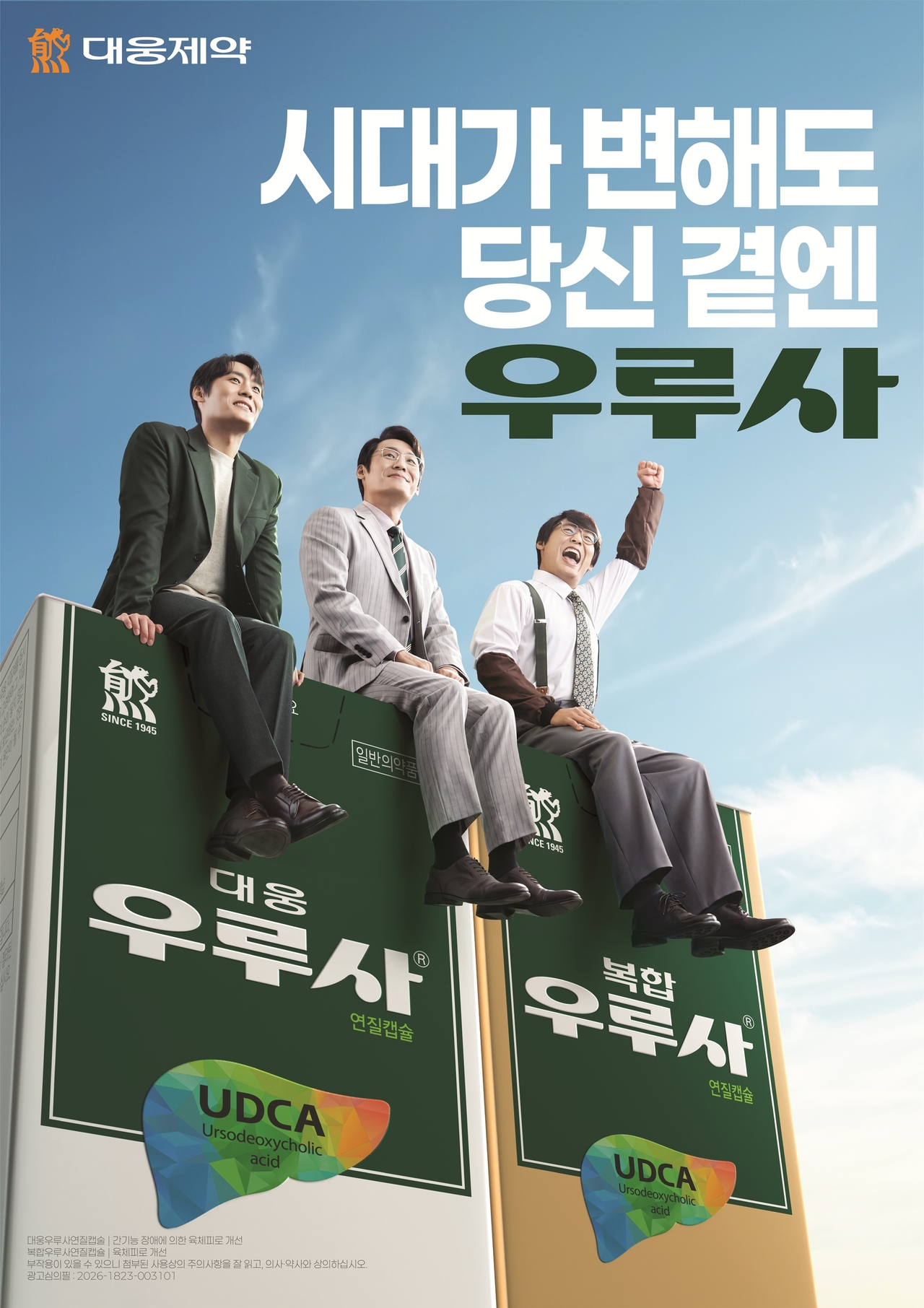
The campaign's core slogan is "Times change, but Ursa stays by your side." The concept draws on the observation that while working styles and office environments have changed dramatically over the decades, the fundamental nature of workplace fatigue has not.
The ads portray office workers across three eras with a light touch — the six-day workweeks of the 1980s, the accelerated pace brought by digital technology in the 2000s, and the AI-driven demands of 2026 — building a sense of shared experience that spans generations.
The rollout also reflects a deliberate platform strategy suited to today's fragmented media landscape. Beyond terrestrial and cable television, the campaign extends to 15- and 30-second YouTube cuts and Netflix, significantly broadening the brand's reach among younger working-age viewers.
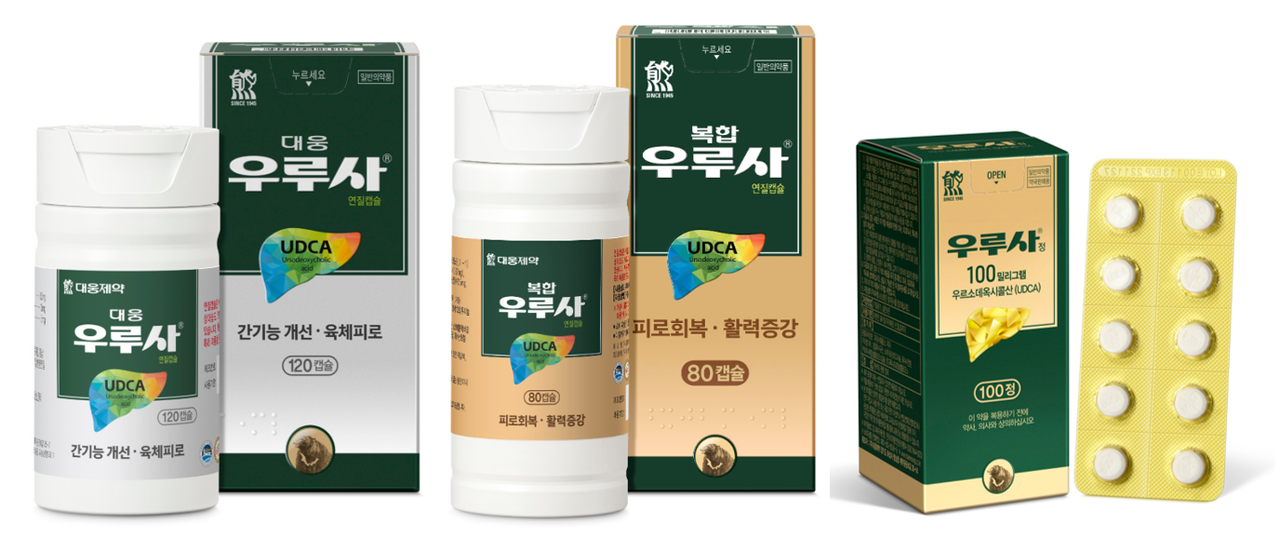
The ads feature two over-the-counter products: Daewoong Ursa, which targets physical fatigue and general malaise associated with impaired liver function, and Bokhap Ursa, a combination formula blending dried ginseng extract with vitamin B1 to aid recovery from illness and restore vitality.
First launched in 1961, Ursa has built a stable portfolio spanning both over-the-counter and prescription products. Last year, the brand recorded combined sales of 100.4 billion won across its full product range — the first time in its history that annual sales crossed the 100 billion won threshold.
Behind Daewoong Pharma's decision to mount its most ambitious brand campaign in six years is not only the brand's strong sales trajectory but also a growing body of academic and clinical research that has continued to validate the medical value of Ursa's core active ingredient, ursodeoxycholic acid, or UDCA.
UDCA is a non-toxic bile acid naturally present in the human body, where it protects liver cells and exerts anti-inflammatory effects. Daewoong Pharma has built a broad base of clinical evidence for the compound that extends well beyond its use as a general liver supplement, reaching into surgical complication prevention and infectious disease.
A landmark example is the large-scale Phase 4 extension study known as PEGASUS-D, published in the International Journal of Surgery (impact factor 10.3). Researchers from Seoul National University Hospital, Seoul National University Bundang Hospital, Samsung Medical Center and Asan Medical Center tracked 431 gastric cancer patients who had undergone gastrectomy and found that a 12-month course of UDCA conferred gallstone-prevention benefits lasting up to 80 months — six years and eight months — even after the medication was discontinued.
At the 80-month mark, the placebo group showed a gallstone incidence of 26.21 percent, compared with 10.00 percent among patients who had taken 300 milligrams of UDCA daily and 12.83 percent among those on 600 milligrams — a reduction in gallstone formation risk of up to 67 percent. The findings demonstrate that a single year of oral UDCA can provide long-term protection against the serious gallstone complications that arise after gastrectomy due to nerve damage and rapid weight loss. The research team expects the data to serve as a key basis for significantly raising the recommended level of UDCA in future clinical guidelines issued by the Korean Gastric Cancer Association.
UDCA's potential in infectious disease has also received formal confirmation. A KDCA-funded study led by Professor Kim Sung-han of the infectious disease department at Asan Medical Center, published in the Annals of Internal Medicine, found that administering UDCA to patients experiencing early long COVID symptoms two to six months after infection produced a symptom improvement rate of 81.6 percent, compared with 57.1 percent in the placebo group — a statistically significant difference of roughly 43 percent. The study also detected signs of reduced inflammatory markers, pointing to broader potential in the treatment of infectious diseases.
"Ursa is a brand that has grown over many years on the trust of consumers as a leading liver health product," said Lee Chang-jae, chief executive of Daewoong Pharma. "We will continue to expand our touchpoints with consumers through diverse media channels while sustaining medical research into UDCA, our core ingredient, to further strengthen the brand's competitive position."
The new campaign pairs an emotionally resonant appeal to shared fatigue across generations with the scientific credibility of UDCA's internationally published clinical findings — a strategic move to reposition Ursa not merely as a long-lived household brand but as an evidence-based treatment of choice.
silverpaper@heraldcorp.com