K-beauty fills Japanese H&B stores from @cosme to Plaza
Korean brands dominate category rankings nationwide
'They now reach out to us first,' industry insiders say
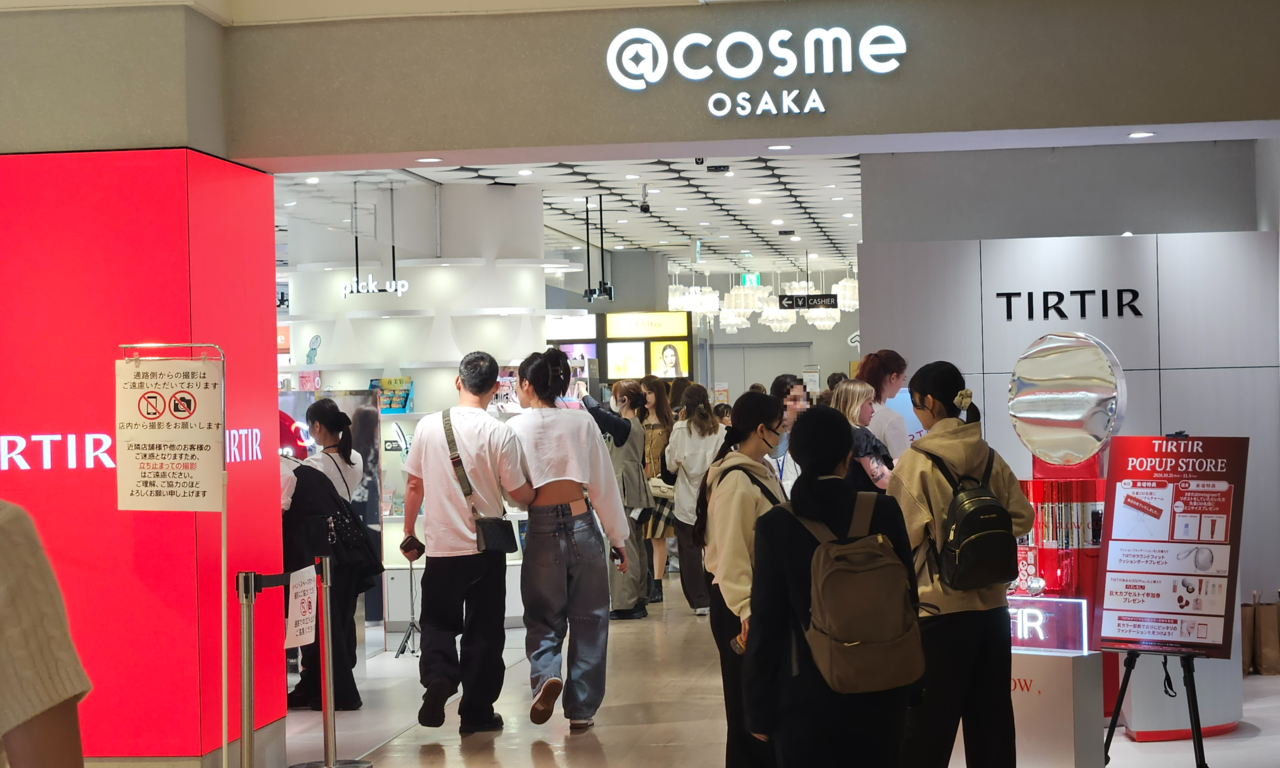
"This is our most popular product right now."
The words came from a staff member at @cosme, a Japanese health-and-beauty store on the third floor of Lucua 1100, a shopping complex in the heart of Umeda — Osaka's busiest commercial district — on Wednesday (local time). The employee dabbed a Numbers In Pha+ Skin Prep Bubble Mask onto the back of a local customer's hand and worked it in, prompting a gasp of delight.
K-beauty brands filled every corner of the store in a way that recalled CJ Olive Young back home. The color cosmetics section featured floor-to-ceiling, four-tier display shelves for major brands including Innisfree, Laneige, 3CE and Fwee. Separate stands were set up for Daisy-k, Clio, Jung Saem Mool and Too Cool for School. Skincare products from brands well known in Korea — Medicube, Rejuran, Torriden, CNP and Numbers In — were also on prominent display.
@cosme is known for its ranked shelves that let shoppers see which products are trending by category. K-beauty brands featured heavily in the "Best Cosme Award" display that lined the wall near the entrance. The top essence for the first half of the year was Anua's Vitamin 10 Pore Strikes Whitening Toning Serum, while Fwee's 3D Voluming Gloss took first place in liquid lipsticks. Innisfree's Green Tea Ceramide Barrier Cream came in second in the face cream category.
On the "Osaka Sales Ranking" shelf — which highlights top sellers in the Osaka area — a Numbers In product claimed the No. 1 spot in the mask pack category. D'Alba's Tone-Up UV Essence and Aestura's Atobarrier 365 Cream topped the sunscreen and face cream categories, respectively. None of the displays made any point of advertising the products as Korean.
A Tirtir pop-up that opened in the store that day also drew a steady crowd. The brand's operator, Goodai Global, promotes Tirtir, Joseon Beauty and Skin1004, among other major brands, in Japan. Goodai Global posted consolidated sales of 1.47 trillion won ($1.11 billion) last year, of which 170.8 billion won came from Japan — a 175 percent jump from the year before.
"Japanese consumers scrutinize product quality and texture carefully and place great weight on reviews and word of mouth when making purchases," a Goodai Global official said. "Japan is an important market where we can build brand awareness and trust alongside sales growth."
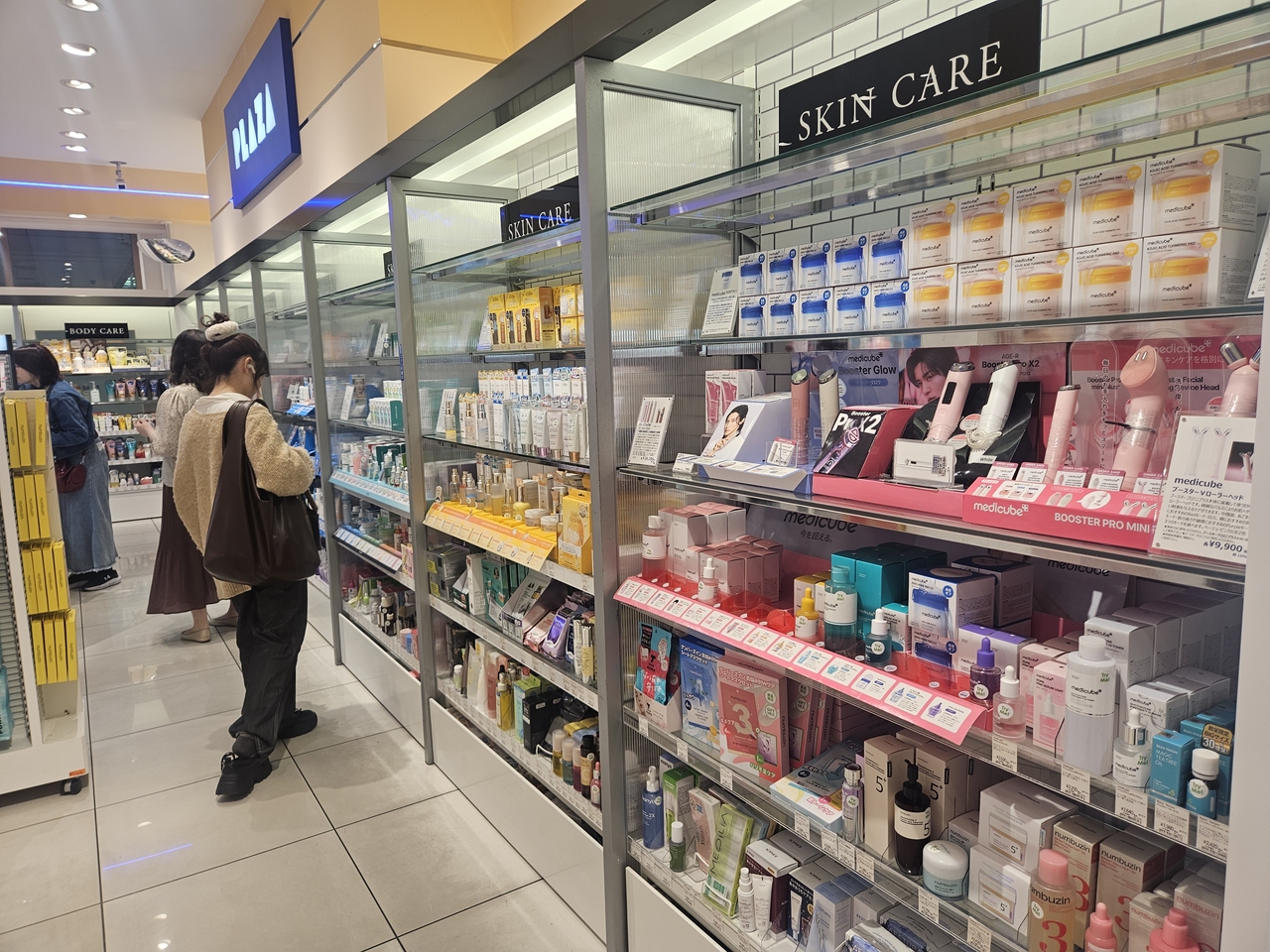
The mood was much the same at Plaza, another H&B store on the sixth floor of the nearby Lucua Osaka. Beyond skincare and color cosmetics, the store had a dedicated K-nail section featuring Ohora, Dashing Diva and Fingersoot — brands known for their "idol nails."
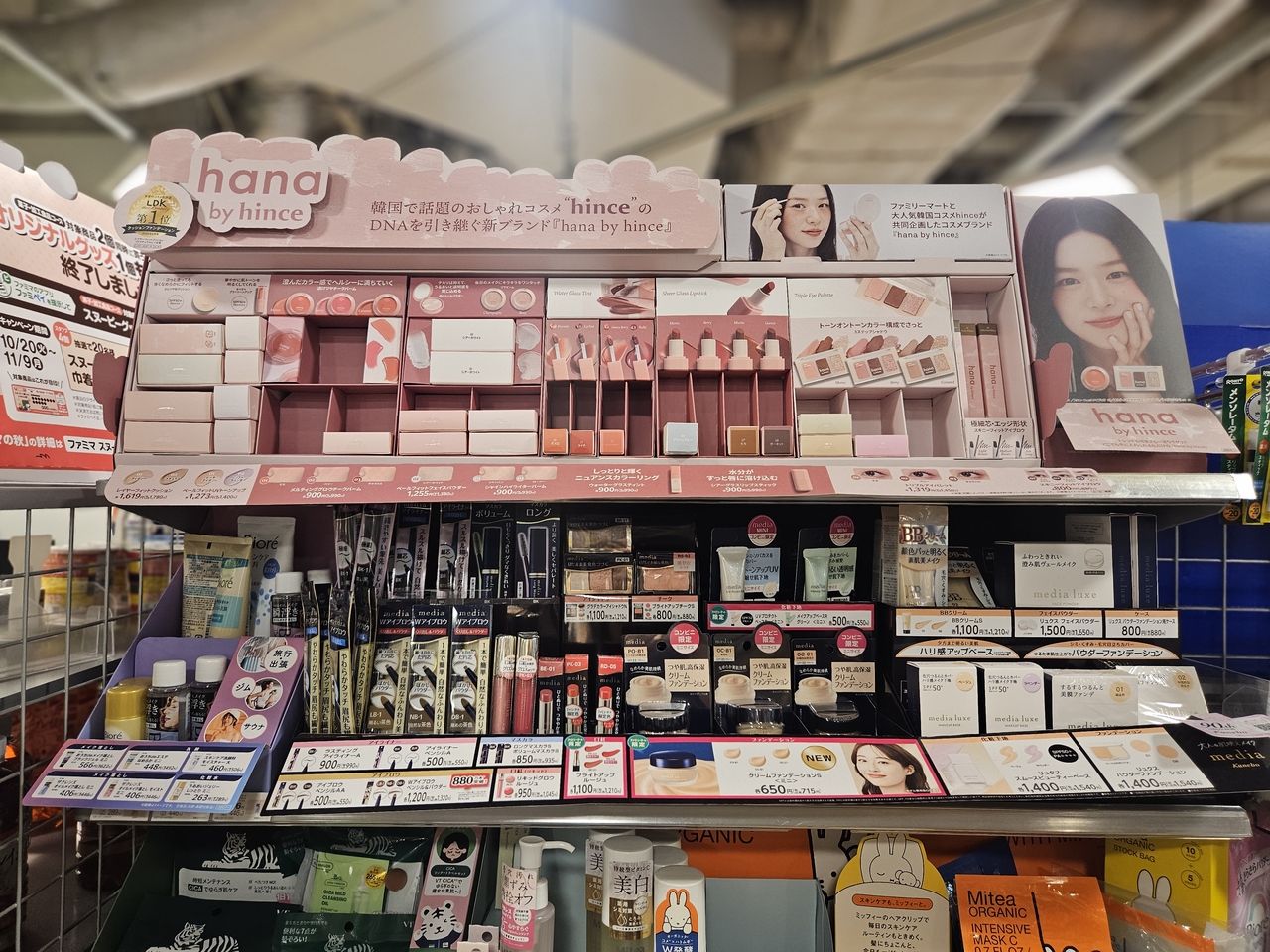
At FamilyMart, a convenience store chain with 16,466 locations across Japan, Hana by Hince had its own dedicated shelf alongside mask packs from Anua and Numbers In. Hana by Hince is a FamilyMart-exclusive beauty brand launched last year by Hince, a color cosmetics label under LG H&H subsidiary Viva Wave. LG H&H said the brand "maintains Hince's signature sensibility and quality while offering mini sizes at accessible prices, earning strong popularity among local consumers in their teens and 20s."
Yuni, a 20-year-old local consumer, said K-beauty brands were enormously popular. "I admire Korean aesthetics, so it started with curiosity about what Korean people actually use, and I just kept adding things one by one," she said. She added that she personally favors Hera and uses an Es Nature face cream every day. "I recently bought a Baiol BOH product and I've been really happy with it," she said.
For the domestic industry, the Japanese beauty market had long been a place to build brand recognition rather than turn a profit. That is changing as demand for K-beauty grows. According to the Korea Cosmetic Industry Institute, exports to Japan from January through September this year reached $991.22 million, putting full-year exports on track to surpass last year's $1.09 billion. Japan ranks third among importers of K-beauty after the United States and China; while its share of total export volume has edged down, the actual volume shipped continues to rise.
"Japan was a tough market for K-beauty to crack, given the dominance of global players like Shiseido and the distinct preferences of local consumers," one industry official said. "The atmosphere has shifted as younger consumers have grown more interested in Korean culture." The official added that local retail channels were now actively seeking out K-beauty brands, accelerating the pace at which Korean companies — including indie labels — were seeing results.
soho0902@heraldcorp.com