A visit to Henkel Korea's Songdo factory
Henkel holds the global top spot in adhesive solutions
Korea semiconductor investment drives Songdo's rise as a key hub
Product portfolio expands to target high-value chips
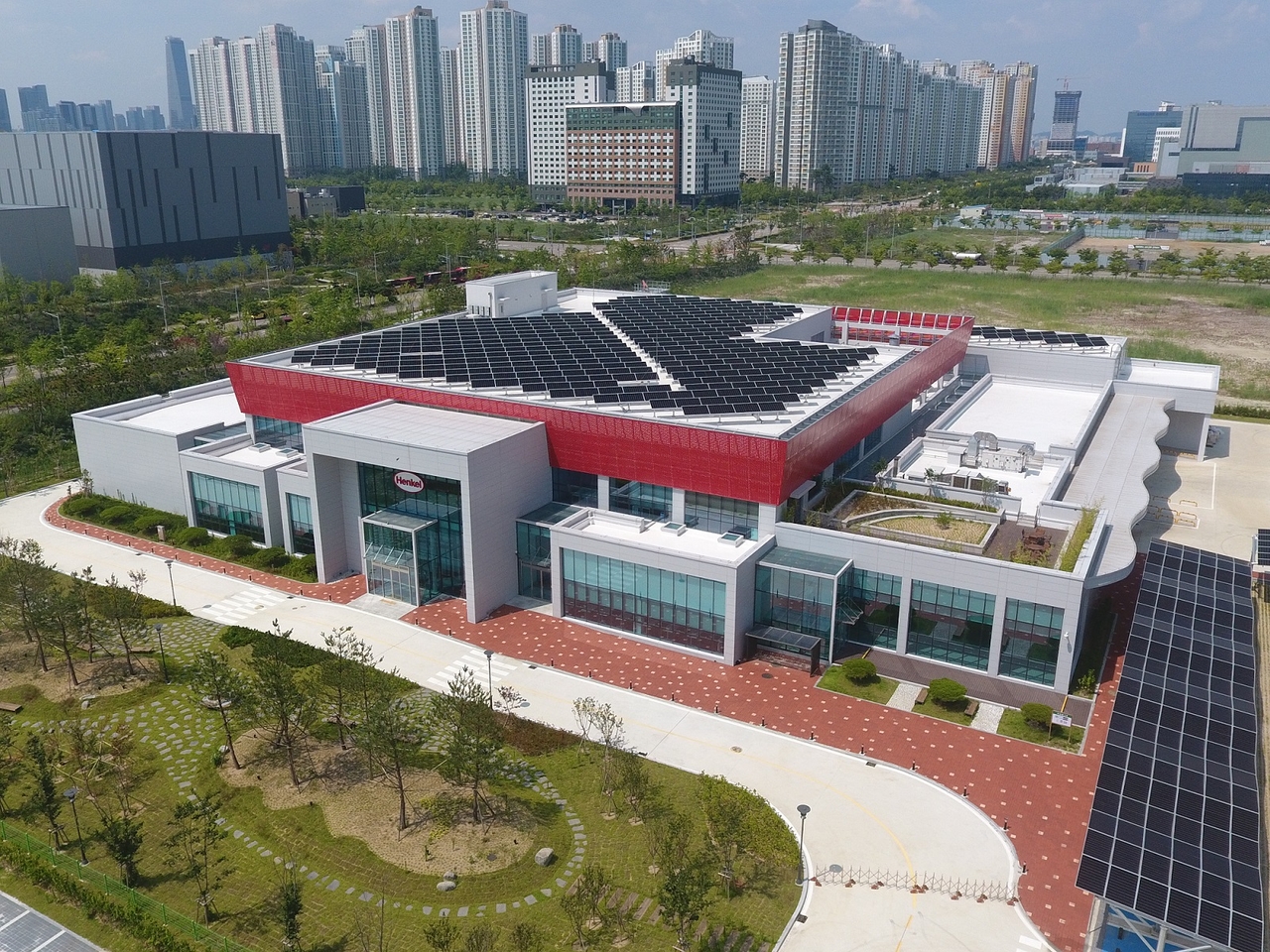
"The Henkel Korea Songdo factory serves as an Asian hub, supplying advanced adhesive solutions for semiconductors to Korean customers while also providing products to global clients."
A visit to the Henkel Korea Songdo factory on Thursday revealed a facility spanning 10,144 square meters that looks, from the outside, like an unremarkable two-story building. Step inside the ground floor, however, and cleanrooms — a fixture of semiconductor manufacturing — immediately come into view. Workers in cleanroom suits were producing semiconductor adhesives inside. Some of the cleanrooms were bathed in yellow light: ultraviolet rays had been filtered out of the lighting to prevent unwanted chemical reactions during the adhesive manufacturing process.
"Because we are making materials that go into semiconductor processes, the cleanrooms are virtually dust-free, and temperature and humidity are kept under strict control," said Kim Se-hyun, plant manager and executive director of the Henkel Korea Songdo factory.
The Songdo factory broke ground in 2019 and was completed three years later in 2022. Construction alone cost 35 million euros ($39.3 million). The facility can produce up to 250 metric tons of semiconductor adhesives per year. Of the four factories Henkel Korea operates in the country — in Songdo, Ansan, Eumseong and Cheonan — Songdo is the only one that manufactures semiconductor adhesives.
Semiconductor adhesives are a critical material that supports chip reliability by, among other functions, managing the heat chips generate. Henkel's semiconductor adhesives are supplied across the entire value chain — from integrated circuit design and wafer fabrication to semiconductor packaging, module manufacturing, board assembly and final devices.
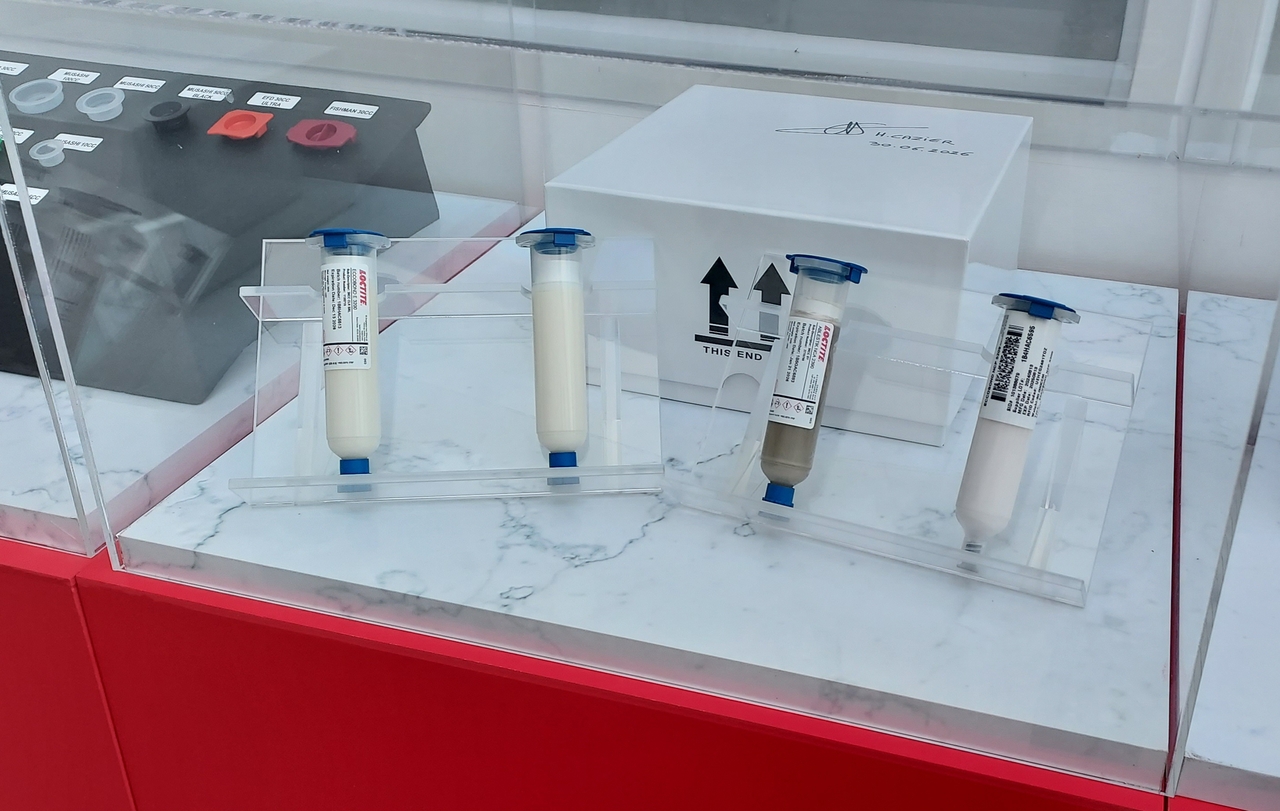
Henkel's adhesive solutions are produced through seven steps: raw material inspection, raw material weighing, intermediate mixing, additive grinding, finished-product mixing, outgoing quality inspection and syringe packaging. The finished adhesives are packed into syringe-like cylinders and shipped to both Korean and global customers.
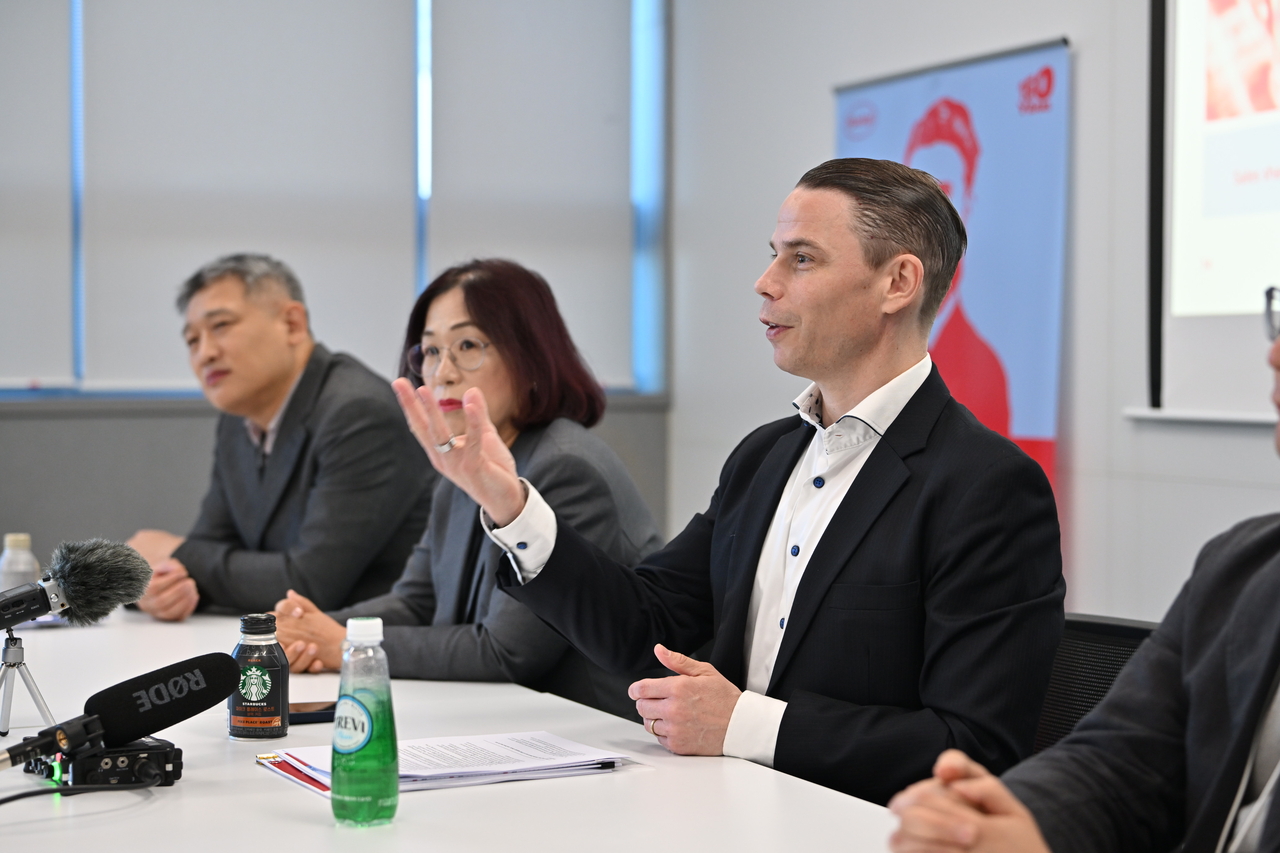
The Songdo factory's rise as Henkel's Asian hub owes much to its transport links. The factory is only about 30 minutes from Incheon International Airport. "Products made at the Songdo factory are shipped primarily by air," said Kim Young-mi, chief executive of Henkel Korea. "The competitive air cargo rates offered by major Korean carriers were a positive factor in our decision to establish a production base in Songdo."
'Songdo factory's role set to grow on strength of Korea's semiconductor industry'
Henkel, the German conglomerate, marks its 150th anniversary this year. Its core businesses are consumer brands — including the detergent Persil — and adhesive solutions. Last year, the consumer brands and adhesive solutions divisions posted sales of 9.8 billion euros and 10.7 billion euros, respectively.
Adhesive solutions in particular has built a strong position both in Korea and globally. About three in four smartphones sold in Korea incorporate Henkel's solutions, and its semiconductor products are supplied to top-tier global chipmakers. "Henkel holds the No. 1 global position in adhesives and functional coatings," said Hendrik Kohleick, Henkel's president for Asia-Pacific.
Henkel entered the Korean market in 1989, and Korea has since become one of its most strategically important markets. Korea ranks second only to China in its share of Henkel's Asia revenue. To sharpen the competitiveness of products made in Korea, Henkel has built an integrated operation covering research and development, trial production, process validation and full-scale mass production.
Henkel's keen focus on Korea stems from the country's booming semiconductor investment. Samsung Electronics and SK hynix both announced large-scale semiconductor investment plans this year to keep pace with the global AI trend — a development that presents a direct opportunity for Henkel as a mass producer of semiconductor adhesives.
"Henkel has built a solid business foundation over nearly 40 years since entering the Korean market," Kim Young-mi said. "We expect the Songdo factory's role to grow in importance, driven by the expansion of the global AI market and the strong performance of Korea's semiconductor industry."
Henkel is expanding its portfolio of advanced adhesive solutions — including die-attach materials and encapsulants — for customers developing high-value semiconductors. As part of that effort, the company unveiled a new next-generation, high-thermal-conductivity die-attach product for communications applications this year. Die-attach materials are used to firmly bond semiconductor chips to substrates.
"As a global semiconductor materials company, Henkel is expanding its position as a key partner to chipmakers," Kim Young-mi said. "The Songdo factory plans to further strengthen collaboration with customers as an advanced semiconductor materials supply hub and to develop long-term partnerships."
yeongdai@heraldcorp.com