Cho Seong-jin's Berlin Philharmonic debut came as a last-minute stand-in
Bernstein, too, rose to fame by stepping in for Bruno Walter
A substitute slot can confirm talent more than a planned debut
But the pressure is immense — extreme nerves and real risk come with the territory
Skill, reputation and booking networks all determine who gets the call
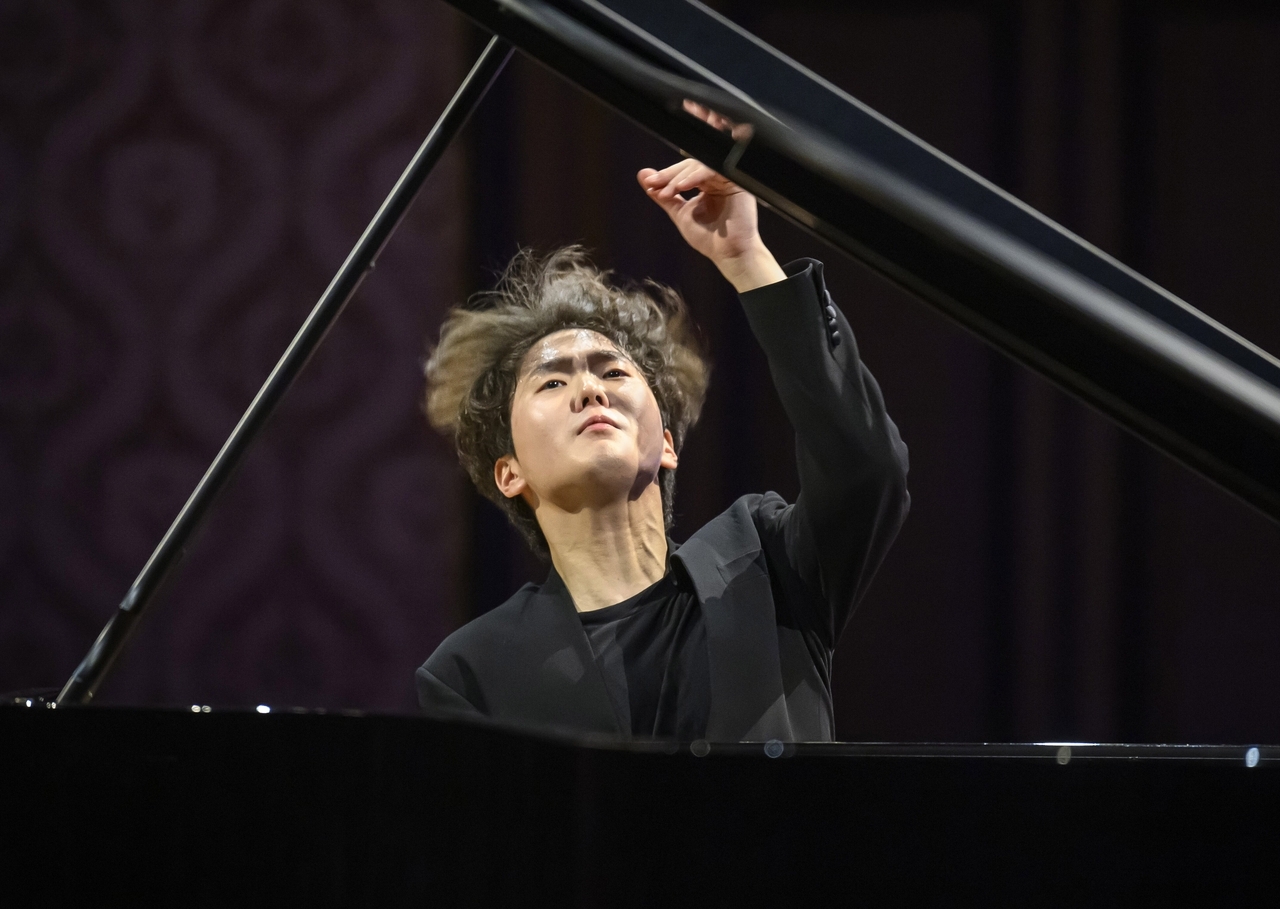
Carnegie Hall, New York, February 2022. In the immediate aftermath of Russia's invasion of Ukraine, conductor Valery Gergiev and pianist Denis Matsuev abruptly withdrew from a Vienna Philharmonic concert, plunging the program into an unexpected crisis with only hours to go — both the conductor's podium and the soloist's bench suddenly empty.
The emergency replacements were substitute conductor Yannick Nézet-Séguin and pianist Cho Seong-jin. Cho received the call the previous day, practiced late into the night in a hotel lobby, then caught an early-morning flight. The work he was to perform — Rachmaninoff's Piano Concerto No. 2 — was one he had not played on stage since 2019. He had little more than a sandwich to sustain him, and the rehearsal time he was given was woefully short. Even so, Cho performed the entire piece from memory.
In the classical music world, one person's absence is another person's opportunity. Yet an emergency substitution — known in the industry as a "jump-in" — is a nerve-shredding challenge even for world-class performers. What Cho's dramatic story reveals goes beyond superhuman preparation and prodigious musicianship.
In a moment of crisis, who gets the call, and how? For a performer already in orbit, stepping in as a substitute can be a springboard to a new level. For the presenter who must keep the show going, it is a practical safety valve against the losses that come with cancellation.
"The need to find a replacement always arrives as an emergency," a South Korean music industry insider said. "You have to weigh the artist's schedule, their reputation, audience expectations and the prospect of refund requests — all at once."
How a master's absence becomes someone else's opportunity
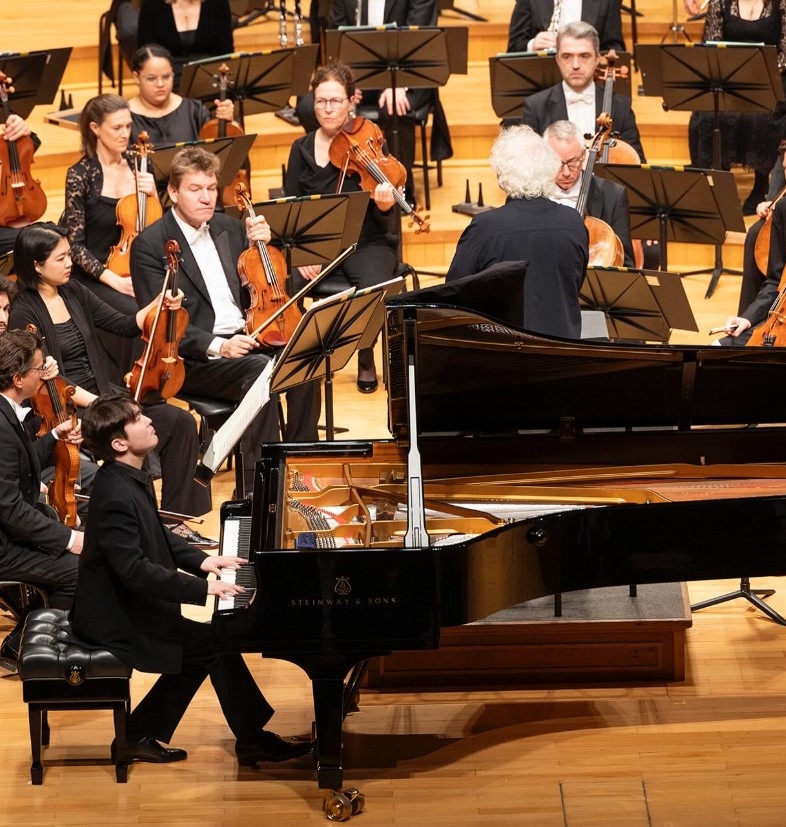
Cho, who became a classical music star as the first Korean winner of the Chopin Competition in 2015, has another pivotal substitute credit to his name. In 2017, when Lang Lang was forced to withdraw from the Berlin Philharmonic's Asia tour with tendinitis in his left arm, the then-23-year-old Cho stepped in — marking his debut with the orchestra.
The booking process illustrates how an emergency substitution can carry meaning well beyond a simple schedule swap. Behind Cho's appearance was a recommendation from a master: pianist Krystian Zimerman, himself a former Chopin Competition winner, had put Cho's name to conductor Simon Rattle.
"When a replacement has to be found, the orchestra, the conductor and the music director all mobilize their networks," a South Korean orchestra official said. "The music director's personal connections and the trust they carry are what really drive the process."
Cho was hardly an unknown quantity — his Chopin Competition victory had already established his international credibility. The episode is better described as a case where accumulated skill and reputation translated into a real stage opportunity at a moment of urgency.
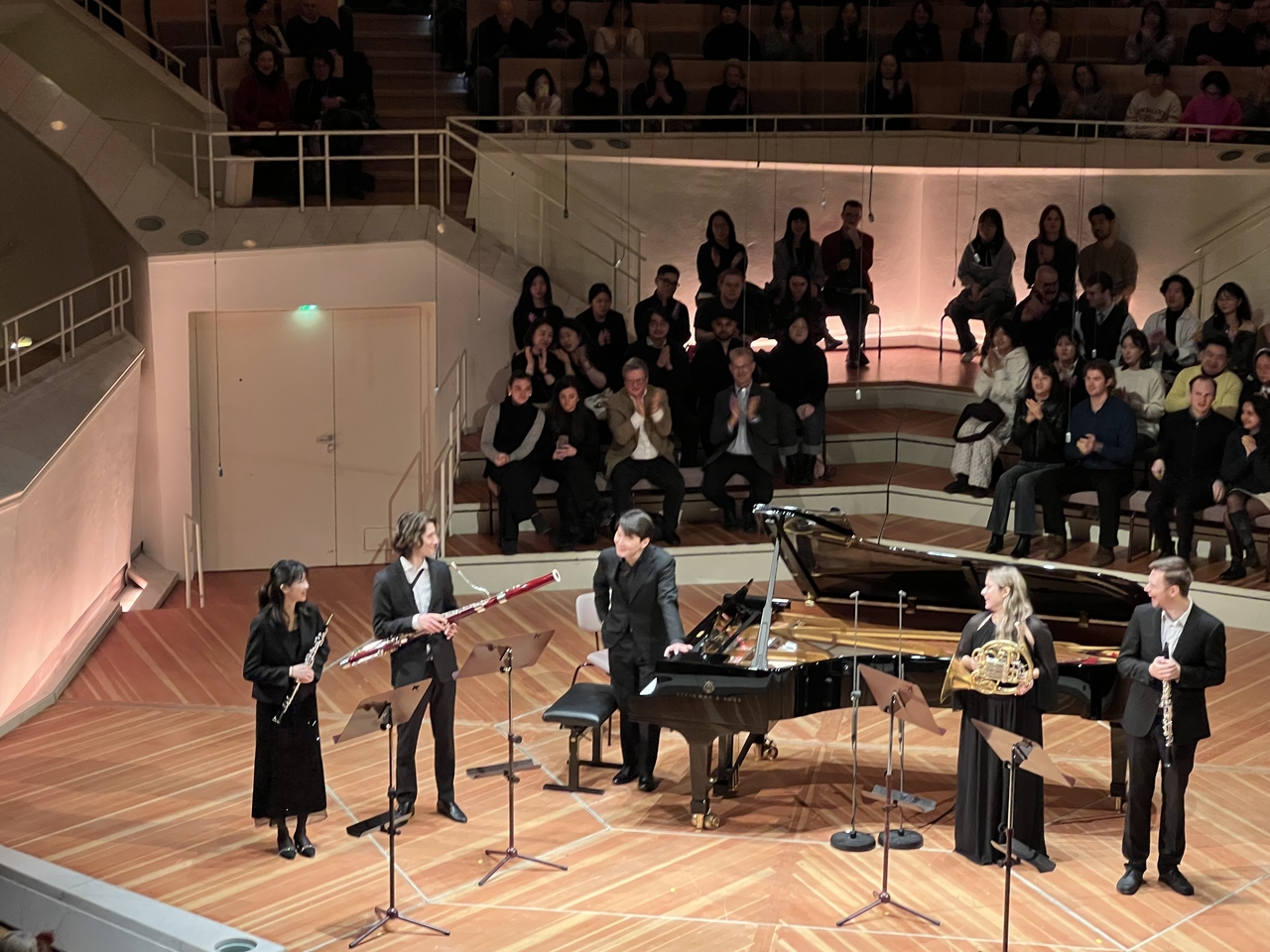
The encounter with the Berlin Philharmonic did not end as a one-off. Cho went on to collaborate with the orchestra in an online concert in 2020 and a Seoul performance in 2023. It would be too simple to attribute all of that directly to the 2017 substitution, but it is worth noting that a high-pressure performance — one that let the orchestra verify a musician's true worth — became the foundation for a lasting relationship. Cho even served as the Berlin Philharmonic's artist-in-residence for the 2024–2025 season, and last summer he shared a chamber music stage with members of the ensemble.
"If you cannot find a replacement who will satisfy the audience, you risk a wave of mass cancellations," one music industry official said. "Ticket-selling power — the ability to hold the house — becomes the overriding factor in the search."
History is full of cases where a substitute appearance transformed a performer's career. At Carnegie Hall in 1943, a 25-year-old Leonard Bernstein — who would go on to define American musical life in the 20th century — took the podium. Stepping in for an ailing Bruno Walter to conduct the New York Philharmonic, he performed in a concert broadcast live by radio across the United States. The New York Times gave his conducting prominent coverage the following day. The performance launched Bernstein into the spotlight, and he served as music director of the New York Philharmonic from 1958 to 1969.
That dramatic story was not the myth of an unknown young man's sudden stroke of luck. Bernstein was already the orchestra's associate conductor — an insider who understood the ensemble from within. The emergency stage was not a bolt of lightning striking an empty field. It was the moment a carefully cultivated talent caught fire.
The same holds true for Lang Lang in 1999. Then 17 years old, he stepped in for André Watts at the Ravinia Festival, performing Tchaikovsky's Piano Concerto No. 1 with the Chicago Symphony Orchestra under Christoph Eschenbach. In 2007, a 20-year-old Yuja Wang took the stage with the Boston Symphony Orchestra under Charles Dutoit as a last-minute replacement for Martha Argerich.
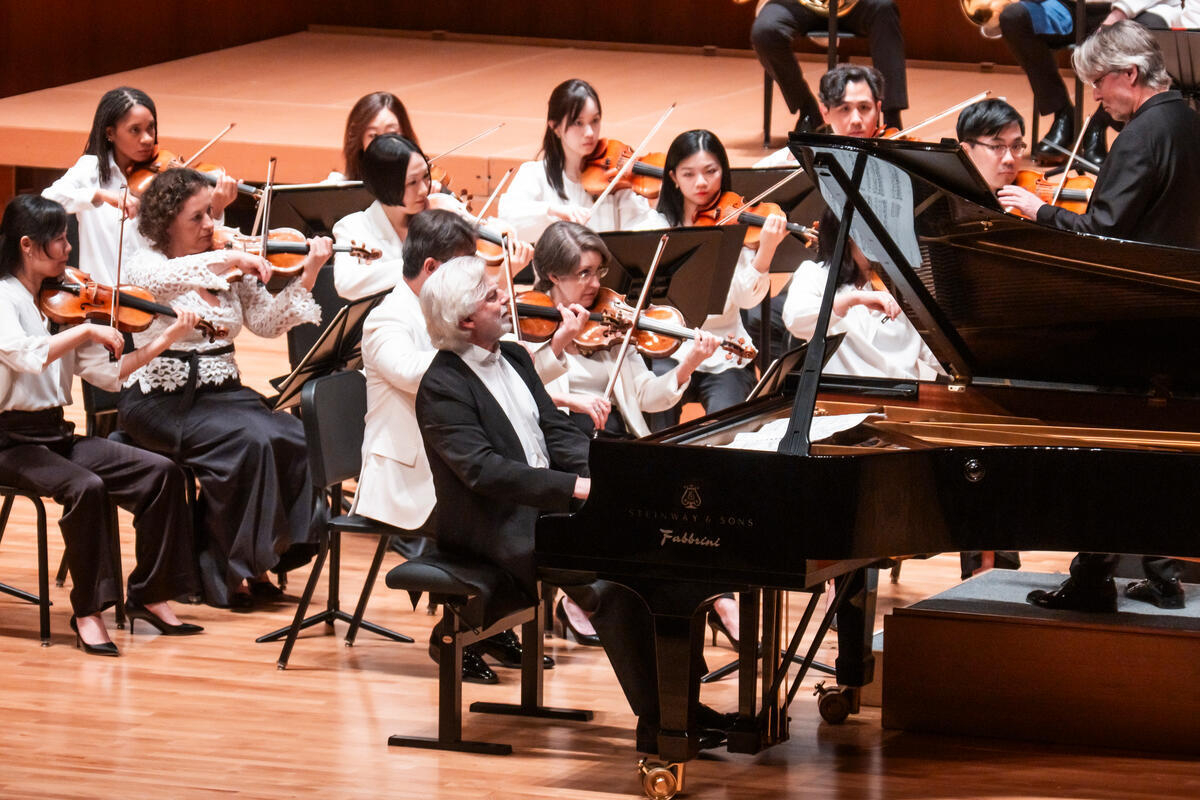
Neither pianist was a raw newcomer. Both had been quietly building their technique and stage experience, and the substitute slot gave them a chance to display that accumulated ability with sudden, concentrated force.
"Stepping in as a replacement can add public recognition to a career that has already been built, and it can trigger a wave of international invitations," one music industry official said.
Substitute appearances have also grown into long-term artistic partnerships. The Scottish Chamber Orchestra appointed Maxim Emelyanychev as its principal conductor for the 2019–2020 season after he stepped in for Robin Ticciati in 2018. Collaborations on tours and recordings followed, and his contract has since been extended through 2031.
Esa-Pekka Salonen similarly used a 1983 substitute appearance — stepping in for Michael Tilson Thomas to conduct the Philharmonia Orchestra in Mahler's Symphony No. 3 — as a springboard to international prominence. He later served as the orchestra's principal conductor and artistic advisor from 2008 to 2021. His conducting career had begun in 1979, however, meaning he was already an established conductor before the London stage. The substitute slot was less a starting point than a launchpad to a wider world.
A single crisis encounter does not guarantee a long-term contract. But a substitute performance can give orchestra members a direct experience of an unfamiliar conductor's real-time problem-solving and leadership. It is a chance to confirm potential — and a first meeting that can open the door to future collaboration.
What a performer must carry the moment they walk onstage
The spotlight does not always lead to a triumphant success story. An episode involving Portuguese pianist Maria João Pires at the Amsterdam Concertgebouw in 1999 illustrates the burden a substitute must bear.
Pires was in Paris when she received a late-night call and agreed to step in for a concert the following day. She believed she would be playing Mozart's Piano Concerto No. 23, K. 488. When she walked onstage, however, the orchestra launched into a different work entirely — Mozart's Piano Concerto No. 20, K. 466. It happened during an open rehearsal in front of roughly 2,000 audience members. The last time Pires had played that concerto was some 10 to 11 months earlier. Conductor Riccardo Chailly encouraged her to continue, and the music did not stop.
That performance cannot be explained by a gifted pianist's extraordinary preparation alone. What the moment demanded was not just the ability to recall the score, but the presence of mind to listen to the orchestra, read the situation and keep playing through the unexpected. A substitute slot can become a test of everything a musician is capable of when the unexpected strikes.
In December 2022, the Seoul Philharmonic Orchestra faced its own emergency when Music Director Osmo Vänskä suffered a fall. Unable to conduct Beethoven's Symphony No. 9 after sustaining a fracture, Vänskä was replaced by conductor Kim Sun-wook.
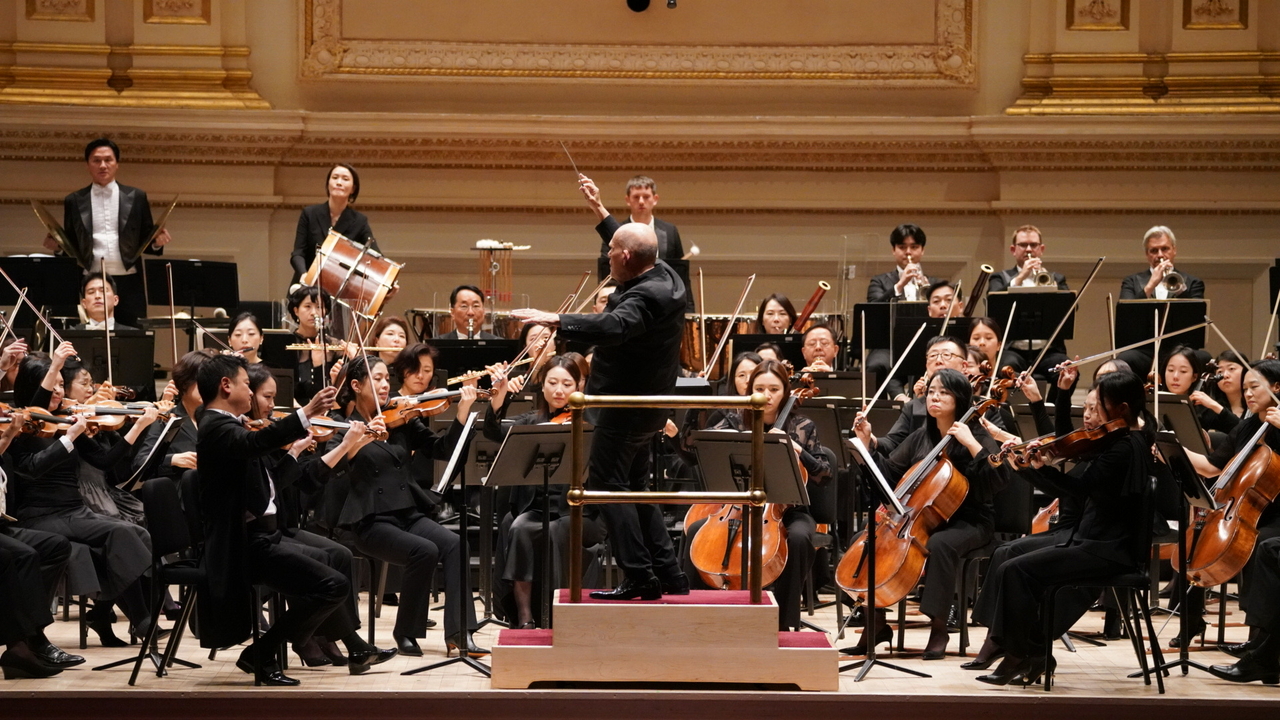
About a week before the concert, on Dec. 7 of that year, Kim was on his way to the airport to board a flight to Germany when the Seoul Philharmonic reached him. After deliberating, he accepted — and later said that conducting Beethoven's Ninth had long been a dream of his. He turned back from the airport, and with the time remaining, he spent four days in intensive study of the score.
Kim had already been building his conducting career, and the sudden offer added a significant new stage to the path he had been forging. He went on to become artistic director and principal conductor of the Gyeonggi Philharmonic Orchestra in 2024, though it would be an overstatement to attribute that appointment directly to the Seoul Philharmonic substitute performance.
A substitute appearance is a test where glory and burden coexist. With less preparation time than a scheduled concert allows, the performer must endure sleep deprivation and extreme nerves while still delivering a complete performance. "The replacement has to absorb the risks that come from having less time to prepare than a normal concert would allow," a concert production official said. "It's a stage you walk onto knowing that even a flawless performance is only what was expected."
The substitute's opportunity is not open to everyone
Not every musician gets the chance to step in for a major orchestra. When a crisis hits, who is the first person a presenter calls? "Finding a replacement means mobilizing the personal networks of everyone involved," a concert production official said. "The candidates are performers who are already inside the management network and from whom you can expect a certain level of quality and box-office draw, even in an unfamiliar setting."
When Evgeny Kissin withdrew from a performance in Bologna, Italy, in November 2025 due to health problems — with Andrei Boreyko conducting in his place — the pianist who took the stage was Julius Asal. It was his Bologna debut, but he was already a well-known artist: a Deutsche Grammophon recording artist and a BBC New Generation Artist.
Familiarity with the specific repertoire matters as much as general reputation. For a Beethoven piano concerto, a musician with strong experience in that work would naturally rise to the top of the list. But in a tight timeframe, the replacement's existing schedule and travel availability also have to be factored in, as does the budget. Music industry insiders note that finding a substitute sometimes requires adjusting the program as well.
Even a supremely talented performer who sits outside the industry's booking network will find the door to a major vacancy hard to open. The more urgent the situation, the more likely presenters will turn first to musicians whose ability, availability and reliability can be quickly confirmed. Substitute slots can serve as a pathway for talent to emerge — but that pathway is not equally accessible to every performer.
A substitute performance carries significant risk for the orchestra and the presenter, not just the musician. When a performer or program changes after tickets have already been sold, it affects what audiences expected when they made their choice. Presenters must communicate the change and, depending on the applicable standards, put a refund process in place. When Cho replaced the original soloist for the Berlin Philharmonic's Hong Kong concert, audiences were informed of their right to a refund.
In South Korea, when a significant performer change or other material departure from the original contract occurs, consumer dispute resolution guidelines require a full refund of the ticket price plus compensation of 10 percent of the ticket price. In practice, however, the actual application varies depending on the nature and circumstances of the change.

For presenters, finding a replacement the audience will accept is paramount — it is the surest way to limit refund exposure. In that search, a musician with comparable or greater name recognition than the original performer may be considered. In May 2024, a Seoul Philharmonic concert scheduled to feature pianist Son Yeol-eum saw the soloist change during rehearsals — replaced by none other than violinist Hilary Hahn. Music Director Jaap van Zweden's personal network made it possible for Hahn to fill the vacancy left by Son. The fact that a violinist stepped in for a planned piano concerto was itself highly unusual.
Finding a substitute and getting them onstage is not simply a matter of filling an empty seat. It is a crisis-management process that requires weighing audience expectations, the likelihood of refund requests, the reputations of the presenter and the orchestra, and the performer's schedule and capabilities all at once.
Cho's encounters with the world's top orchestras show that a substitute appearance need not end as a one-time engagement. After performing with the Vienna Philharmonic at Carnegie Hall in 2022, Cho appeared with the orchestra again at a Seoul concert in 2024 — and performs with them again on Sunday. It would be too simple to say that a single emergency booking created every collaboration that followed, but it is clear that a substitute slot can be the beginning of a new relationship.
"The process of finding a substitute and putting them onstage is crisis management — it means winning back the audience, checking consumer protection standards and safeguarding the credibility of the presenter and the orchestra all at the same time," one music industry official said. "It is not simply a matter of filling a vacancy. It is a complex, carefully considered decision."

shee@heraldcorp.com