Chinese germanium prices up 110% this year
China's germanium exports down 73% in two years
Korea Zinc committed 140 billion won to production last year
Output schedule moved up two years; first sales set for next year
US government and JPMorgan take note of strategic value
Korea Zinc's decision to invest early in germanium production is drawing fresh attention as prices for the critical mineral have more than doubled this year, driven by China's export controls and surging demand from advanced industries. The company committed 140 billion won ($106 million) to building a germanium refining facility last year and has since moved up its production schedule, drawing praise for its swift response to a reshaping of global supply chains.
According to raw materials data platform CBC Metal on Friday, China's price for metallic germanium stood at 28,750 yuan ($4,310) per kilogram as of Thursday, up about 110 percent from the start of the year. Over the same period, the price of germanium dioxide rose 121 percent to 19,900 yuan per kilogram.
Germanium prices had already more than doubled from around 9,000 yuan per kilogram in August 2023 to 19,000 yuan in 2024 before undergoing a period of consolidation, but the upward trend has steepened again this year.
The sharp price surge stems largely from a supply structure heavily concentrated in China. According to global market research firm S&P Global, China accounted for 91 percent of the world's primary metallic germanium production last year. The remaining 9 percent comes mostly from Umicore, a Belgium-based company, leaving the supply base extremely limited.
Wielding such dominant influence over the global germanium market, China introduced an export licensing requirement in August 2023 as its technology and semiconductor rivalry with the United States intensified. In December 2024, Beijing raised the stakes further by announcing a ban on germanium exports to the US.
China's germanium exports have since fallen sharply. Shipments dropped from 41.2 metric tons in 2023 to 25.3 metric tons in 2024 and just 11.1 metric tons last year — a decline of about 73 percent in two years. Exports for the first eight months of this year totaled only 6.0 metric tons, down 10.8 percent from the same period a year earlier.
As China's export controls drag on, major companies are moving aggressively to secure germanium stockpiles. That scramble, combined with rising demand from AI data centers, fiber optics and the defense industry, and the metal's resistance to substitution, is intensifying upward pressure on prices.
Demand is also growing steadily. Germanium is a rare metal with semiconductor properties and infrared transparency, used in optical fiber, night-vision equipment, thermal imaging cameras and solar cells for satellites. S&P Global estimates global germanium demand reached 343 metric tons last year, with fiber-optic applications accounting for 40 percent of that total. Expansion of AI data center and fiber-optic infrastructure is providing additional demand support.
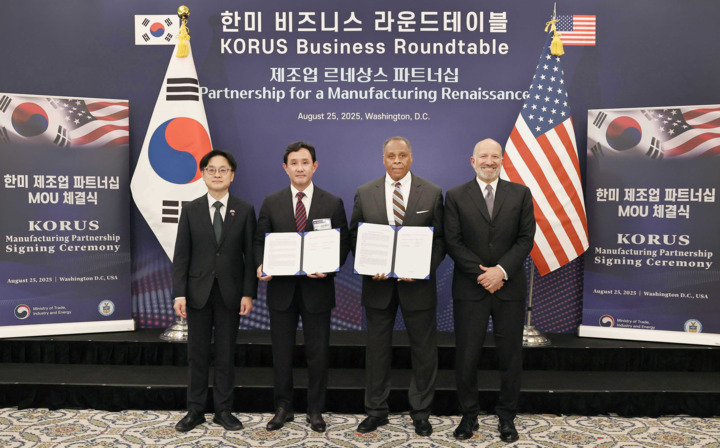
Korea Zinc is positioning itself to offer an alternative to the China-dominated germanium supply chain. Last August, the company announced plans to invest a total of 140 billion won to build a germanium refining facility at its Onsan Smelter in Ulsan. That same month, it signed an MOU with US defense contractor Lockheed Martin for a long-term germanium supply agreement.
Korea Zinc had originally targeted full commercial production by 2028, but as supply chain disruptions from China showed no sign of easing, it moved the schedule forward. Using existing equipment at Kemco, its secondary battery materials subsidiary, the company began producing crude germanium — an intermediate product — in August.
Korea Zinc aims to begin selling the intermediate product in the first quarter of next year and to launch commercial production of high-purity germanium dioxide — at 99.999 percent purity — in the second half of next year. The company is also in talks with major US customers on long-term purchase agreements.
Korea Zinc's competitive edge lies in its ability to recover germanium as a byproduct of its existing smelting operations. The rare metal can be extracted during the refining of non-ferrous metals such as zinc.
Rising prices are also lifting earnings expectations. Park Gwang-rae, a research analyst at Shinhan Securities, said that if Korea Zinc secures an annual production capacity of 12 metric tons of germanium, it could generate between 80 billion and 130 billion won in annual sales, assuming a selling price of $5,000 to $8,000 per kilogram.
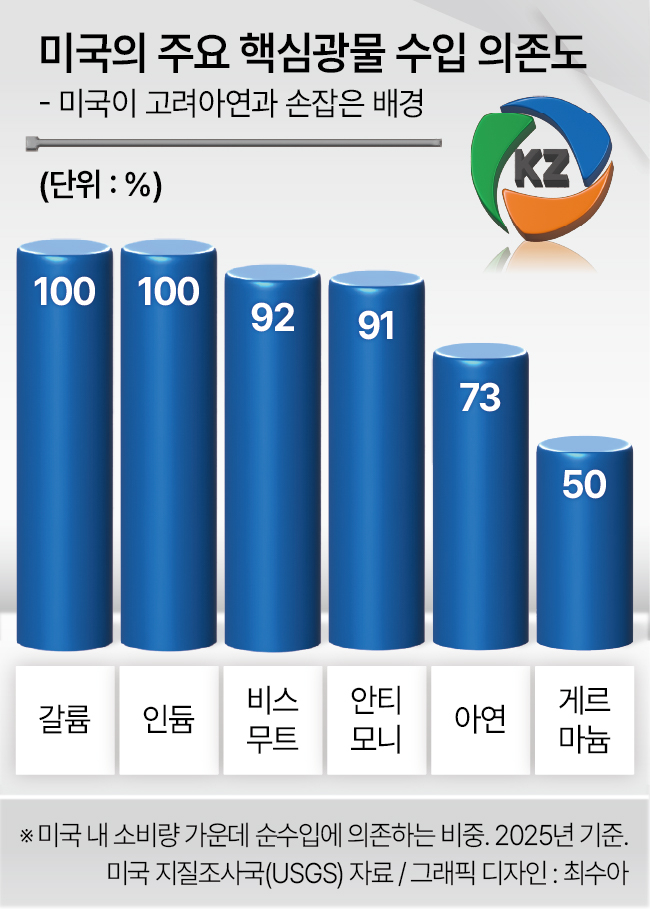
Beyond germanium, Korea Zinc is expanding into other strategic minerals including gallium, indium and antimony. Last October, the company announced plans to invest about 55.7 billion won to build a gallium recovery process at the Onsan Smelter, targeting commercial production in the first half of 2028.
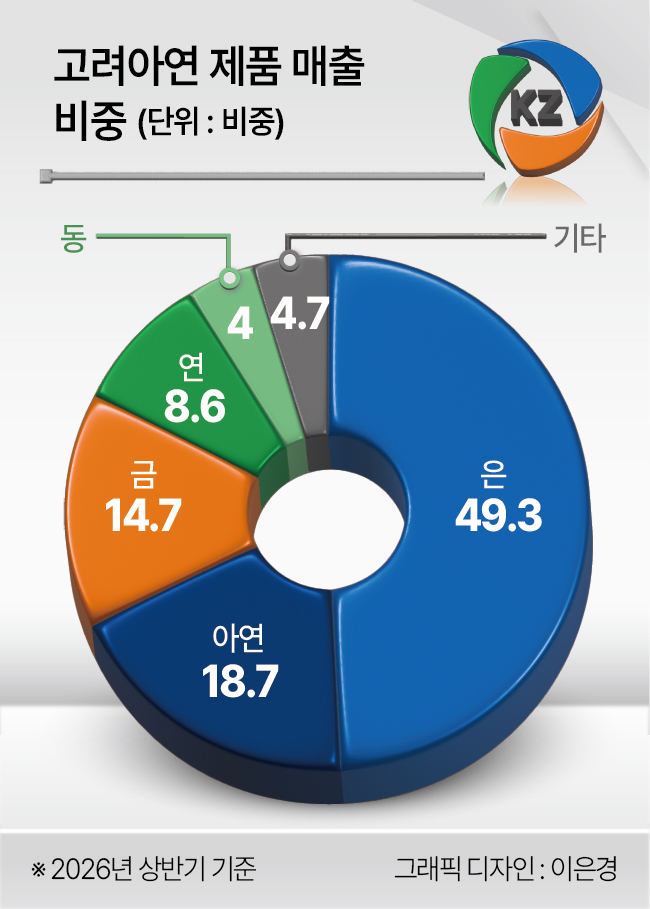
The strategic minerals business has already become a meaningful contributor to Korea Zinc's profitability. Sales from rare metals reached 97 billion won in the second quarter of this year, up about 23 percent from 79 billion won in the previous quarter. The gross profit margin for the segment reached 78.5 percent.
Expanded cooperation with the United States is seen as another medium- to long-term growth opportunity. Korea Zinc plans to produce germanium, gallium and other minerals at Project Crucible, an integrated smelter it is developing in Tennessee. The venture aligns neatly with Washington's push to reduce dependence on Chinese critical minerals and Korea Zinc's own expansion strategy.
Industry observers say the latest price surge will further highlight the value of Korea Zinc's strategy to diversify rare metal production. Analysts see the company as well-placed to broaden its role from a zinc and lead smelter into a supplier of strategic minerals essential to advanced industries.
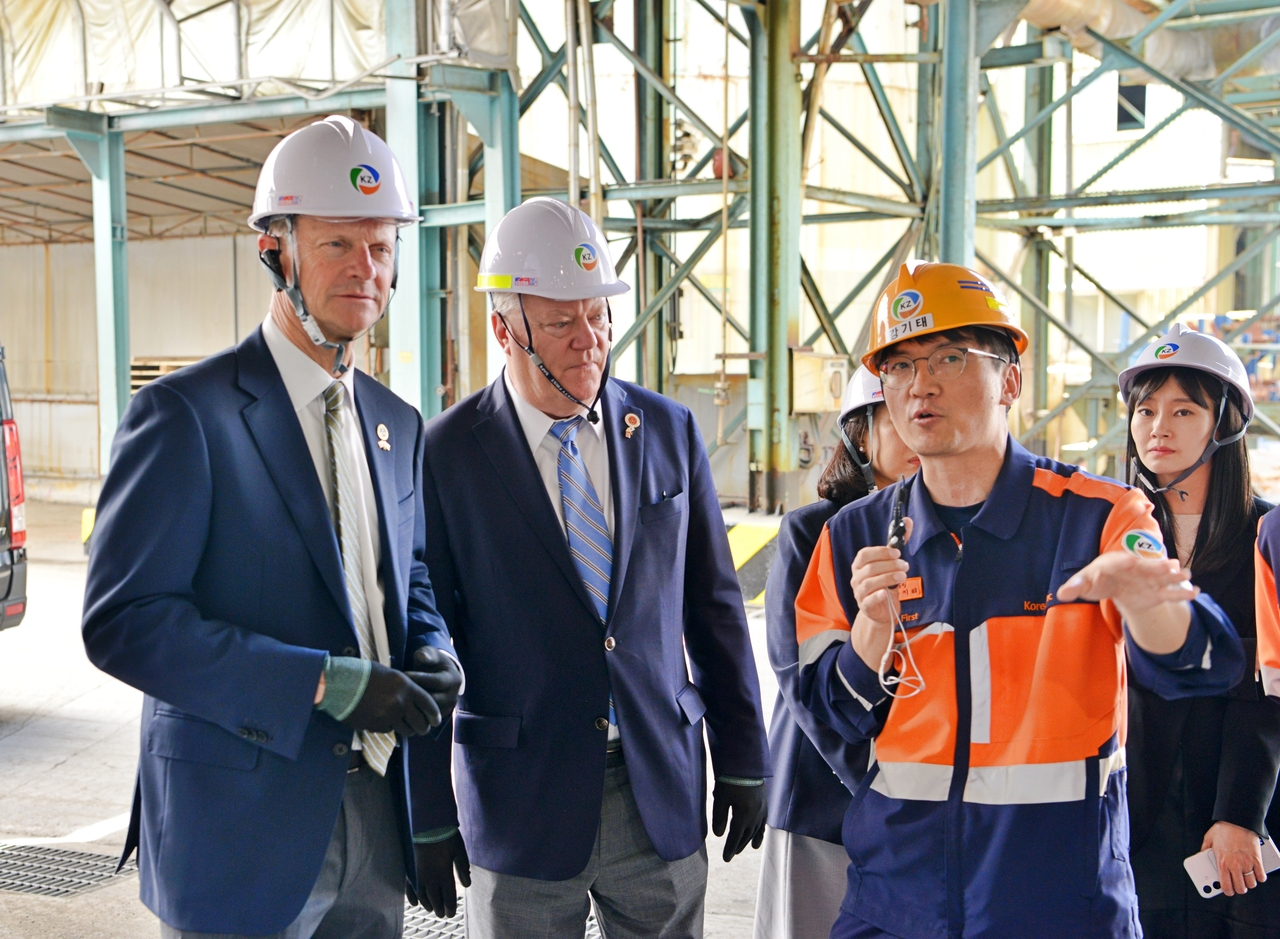
Korea Zinc's strategic value is also winning recognition in the United States, where senior government officials have offered a string of positive assessments. President Donald Trump, speaking at an event in Clarksville, Tennessee, on Oct. 10, cited Korea Zinc's local investment plans directly and said the project would create 740 jobs. Commerce Secretary Howard Lutnick described Project Crucible last December as "a transformational deal for America."
The US financial sector has taken note as well. JPMorgan, the largest US bank, highlighted Korea Zinc's American smelter project as one of its flagship cases when it released its economic security financing results on Oct. 19. In a separate report published the following day, JPMorgan said it had provided a loan financing commitment of up to $4.7 billion for the project and was serving as financial adviser and loan arranger.
kwater@heraldcorp.com