Acquittal eases uncertainty for urban renewal projects
Fast-track planning, Moatown programs gain momentum toward 2031 goal
Hong-Oh meeting to resume, sharper policy clashes expected
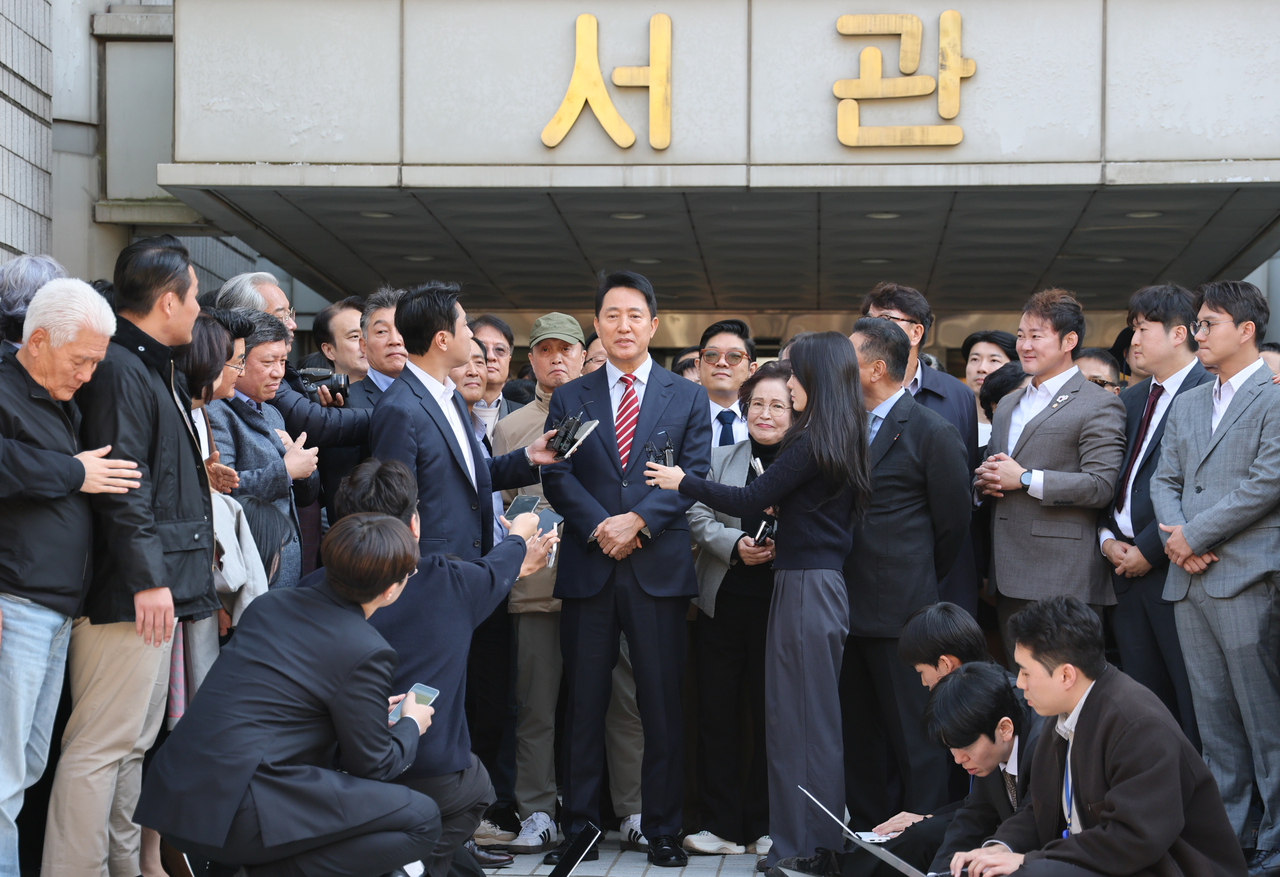
Seoul Mayor Oh Se-hoon's acquittal on appeal in the Myung Tae-kyun polling-fee case has secured the continuity of the city's housing policy agenda. Oh has staked his administration on normalizing urban renewal through programs such as fast-track integrated planning and Moatown, and the redevelopment industry welcomed Friday's verdict with relief. With a meeting between Oh and Land, Infrastructure and Transport Minister Hong Ji-sun set to resume soon, the city is expected to take a harder line on outstanding issues including the use of Yongsan Park for housing supply and the transfer of permitting authority to district offices.
Fast-track planning, Moatown gain momentum toward 310,000-unit goal; industry says uncertainty has eased
The Seoul High Court's Criminal Division 7, presided over by Judge Gu Hoe-geun, overturned Oh's first-instance conviction Friday afternoon and acquitted him of charges of violating the Political Funds Act. Because the appeal examined the facts of the case, the ruling was widely seen as a strong preview of how the Supreme Court would ultimately decide.
With the legal risk now substantially reduced, Seoul is expected to accelerate its drive to break ground on 310,000 housing units by 2031. Oh has pursued expanded supply through fast-track integrated planning, which sharply cuts the time needed for urban renewal, and through Moatown, a small-scale redevelopment program. The industry had been watching Oh's political survival closely, given that even after a renewal zone is designated, projects must still clear a series of approvals — including association formation, project implementation authorization and management and disposal plan authorization.

"We have seen policy direction change repeatedly depending on the political situation, so there was real concern about that," said one redevelopment industry official. "We will have to wait for the Supreme Court ruling, but the major worry has been lifted."
The precedent most often cited is what happened after Oh was replaced by the late former Mayor Park Won-soon: a large number of renewal zones were subsequently dissolved. A white paper the city released recently, titled "Twenty Years of Seoul Housing Supply Policy: Assessment and Reflection," noted that 389 of 683 renewal zones — about 57 percent — were dissolved during Park's tenure from 2012 to 2020.
Starting with three pilot new-town sites in 2002, the city under Oh's first term drew up plans to supply a total of 309,000 units across 35 new-town and balanced-development promotion districts and 297 renewal zones. The dissolution of those zones, the city argues, cost Seoul the opportunity to deliver 430,000 units.
In practice, some complexes had already been racing to clear key city reviews before Oh's legal troubles deepened. The Mokdong Apartment Reconstruction Federation, which coordinates reconstruction efforts across 14 complexes in the Mokdong New Town area, had even gathered petitions asking the court to show leniency toward Oh.
Real estate community forums buzzed with reactions on Friday — "What a relief" and "The project can go ahead as planned" were among the common refrains. Kim Je-kyung, director of Toomi Real Estate Consulting, said the acquittal at the appeal stage — which he described as offering a decisive hint to the Supreme Court — had led the industry to conclude that ongoing projects would proceed as planned. "Because the mayor holds not only permitting authority but also the power to designate renewal zones and conduct various architectural and integrated reviews, this ruling carries greater significance the earlier a complex is in the development process," Kim said.
Clashes loom over Yongsan Park, Taereung CC and devolution of authority; Seoul's bargaining power set to grow
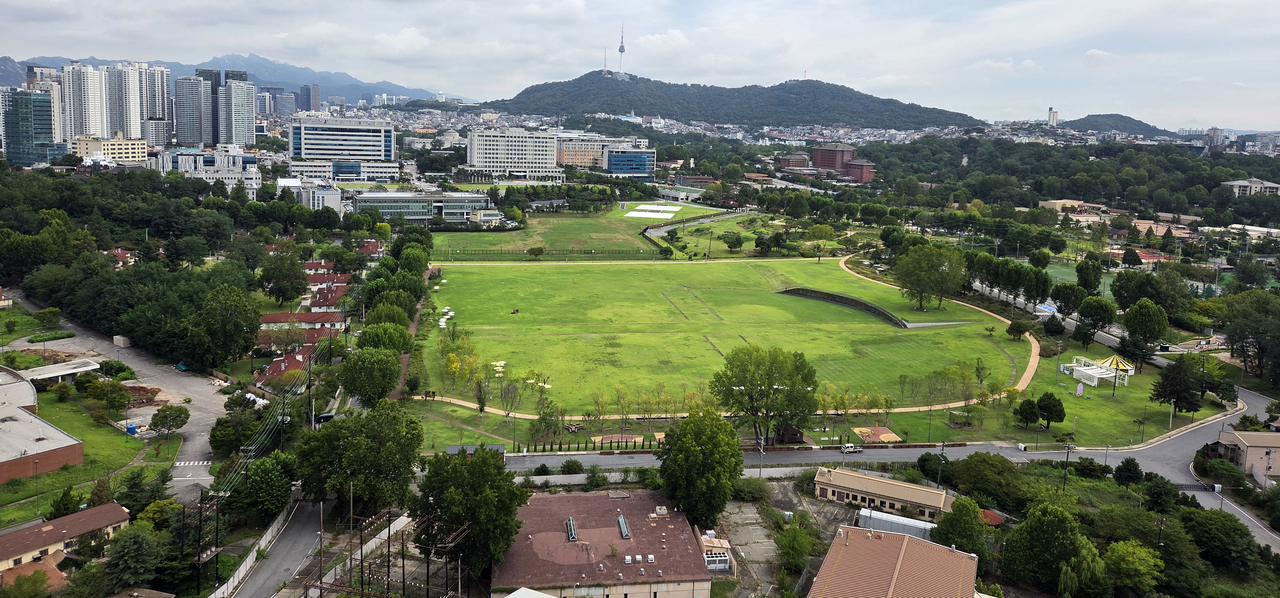
As Oh's signature housing programs gain speed, the city's policy clashes with the central government are also expected to sharpen. Oh is anticipated to take a firm stance on multiple issues when he meets Land, Infrastructure and Transport Minister Hong Ji-sun — a meeting expected to resume shortly.
At a National Assembly audit of the Ministry of Land, Infrastructure and Transport held Friday, Hong drew a line against Oh's remarks about reaching a comprehensive housing supply deal in November, responding to a question from Democratic Party of Korea lawmaker Kim Nam-geun. Hong said the intent was "to proceed with what cannot be agreed upon as it stands, and to start with what can be agreed upon first."
Differences between the city and the government persist, however, over housing supply at Yongsan Park as well as the development of Taereung Country Club. The Democratic Party of Korea is pushing to amend legislation to rezone part of Yongsan Park for residential use, and Hong has left open the possibility of using the park for housing supply. Oh, by contrast, has taken a hard line, saying he opposes giving up "not even one centimeter," citing the impossibility of breaking ground under the current administration.
Disagreements are equally stark over Taereung Country Club, where the government has announced a plan to supply 6,800 units, with the dispute intertwined with the redevelopment of Sewoon District 4. Both Seoul and the People Power Party have stepped up their criticism of the government, arguing that it is blocking development of Sewoon District 4 — which lies outside a historic and cultural preservation zone — while pressing ahead with Taereung Country Club development.
Seoul has also pushed back against a government plan to transfer authority over redevelopment and reconstruction projects involving 500 units or fewer to district offices, citing concerns about supply delays and uncoordinated development.
The Seoul Urban Renewal Project Federation held a press conference in front of City Hall earlier this month, saying that since the introduction of fast-track integrated planning, the time needed to designate a renewal zone had been cut to around two years. "If Seoul's permitting authority is handed over to district offices, confusion will grow," the federation said.
Kim Je-kyung said the government would find it difficult to push through changes unilaterally, given that Seoul's cooperation — for instance on rezoning Yongsan Park — would be essential for projects to proceed smoothly. "With conflicts over Taereung Country Club and other housing supply sites already ongoing, this acquittal will amplify Seoul's voice and strengthen its negotiating power," he said.
lucky@heraldcorp.com