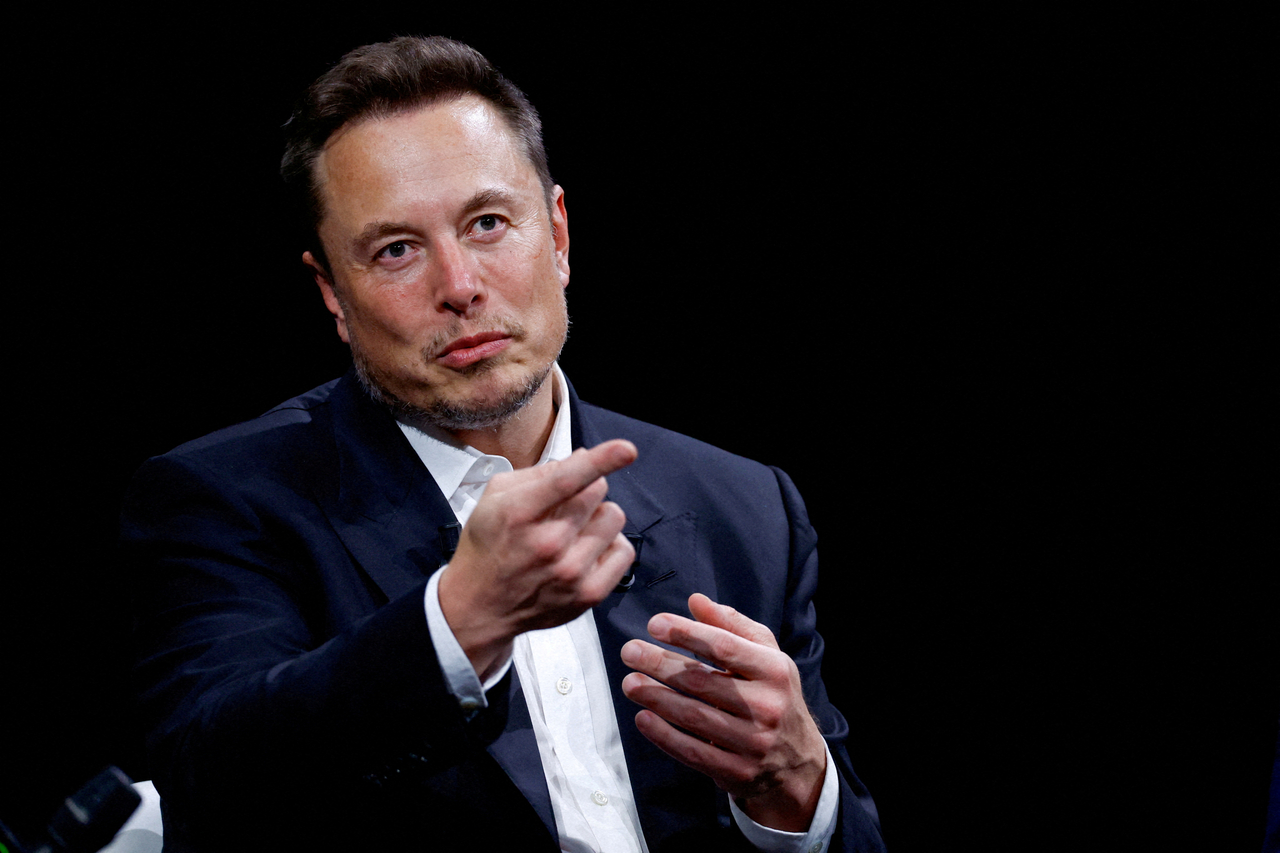
Elon Musk officially announced Tuesday (local time) during a SpaceX conference call that the company is exploring a merger with Tesla, drawing intense attention to the timeline and structure of what would be the largest corporate deal in history.
Bloomberg reported Wednesday (local time), citing people familiar with the matter, that SpaceX and Tesla are moving to announce a merger by the first half of next year in order to close the deal while Donald Trump remains in office.
A combination of the two companies would create the largest corporate transaction in history, with their combined market capitalization reaching approximately $3.7 trillion. Even without a merger premium — based on a simple sum of their market caps — the combined entity would rank as the world's fifth-largest company by market cap, behind Nvidia, Apple, Alphabet and Microsoft.
People familiar with the matter said the timing of any announcement depends on when Tesla's board becomes comfortable with the key variables involved.
Musk said Tuesday that SpaceX and Tesla had each formed independent special committees to review the merger proposal, adding that he would not participate in either because of his conflict of interest.
Bloomberg said the two companies are expected to move quickly, citing the possibility that the political and financial environment could shift.
Musk had a falling-out with Trump roughly a year ago but has since repaired the relationship and returned to good standing with the White House and the Republican Party. That alignment means Congress and regulators are broadly inclined to take a favorable view of his moves.
Trump, however, is now in the latter half of his final term, with midterm elections less than two weeks away. If Democrats take control of either chamber, they could launch investigations into Musk's business activities and potentially complicate approval of the merger. Musk is a major donor to Republicans in the midterms, having poured approximately $369 million into the party's campaigns.
Market volatility also poses a risk for both companies. SpaceX went public in June, and its share price fell well below the $135 offering price before rebounding 47 percent since Aug. 5. Nicholas Owens, an analyst at Morningstar, said a drop in SpaceX's share price "could complicate the acquisition terms."
Shareholder approval from Tesla investors is expected to be the biggest obstacle to a merger. SpaceX should face little difficulty on that front, as Musk controls more than 80 percent of its voting rights.
Tesla is a different story: Musk holds only about 20 percent of its shares. The board and shareholder base approved a $1 trillion compensation package for him less than a year ago, and now he would need to go back to shareholders again to win support for a major merger.
Musk himself acknowledged the difficulty, warning when he announced the review that persuading Tesla shareholders could prove challenging.
On the regulatory side, SpaceX's defense contracts could clash with Tesla's large and profitable manufacturing base in China. Tesla has secured significant cost advantages by producing vehicles at its Shanghai factory, which serves as a key production hub underpinning the company's overall profitability. Last year, the Shanghai plant shipped about 851,000 vehicles, accounting for 52 percent of Tesla's total deliveries.
SpaceX, by contrast, holds numerous contracts with US government agencies. This year it won a $2 billion contract to supply satellites for a military communications network under the Golden Dome missile defense program.
Rajat Gupta, an analyst at JPMorgan, cited these dynamics as "conflicting core mechanics" between the two companies' business directions.
The two companies are already working to generate synergies, including through a shared supply chain. They are jointly building a semiconductor factory in Texas called Terafab.
Bloomberg noted particularly that AI is emerging as a common operational foundation linking the two companies.
According to people familiar with the matter, Tesla has been pushing its engineers to shift coding work — previously done using tools such as Anthropic's Claude — to Grok 4.5 and other models from SpaceXSI (formerly xAI), a SpaceX subsidiary. All of the companies involved are owned and run by Musk.
On Oct. 15 (local time), Tesla drew global attention by demonstrating a "levitating" Roadster sports car designed with SpaceX rocket technology.
If the merger goes through, estimates based on the Bloomberg Billionaires Index suggest Musk's net worth — currently around $1.04 trillion — could grow by more than $110 billion.
Andrew Rocco of Zacks Investment Research said the combination would give the two companies "a magic elixir."
kate01@heraldcorp.com