122 of KRISO's 215 research and technical staff concentrated in shipbuilding, mechanical and marine engineering
Per-researcher funding load 31% above NST average, raising concerns over staffing for future projects
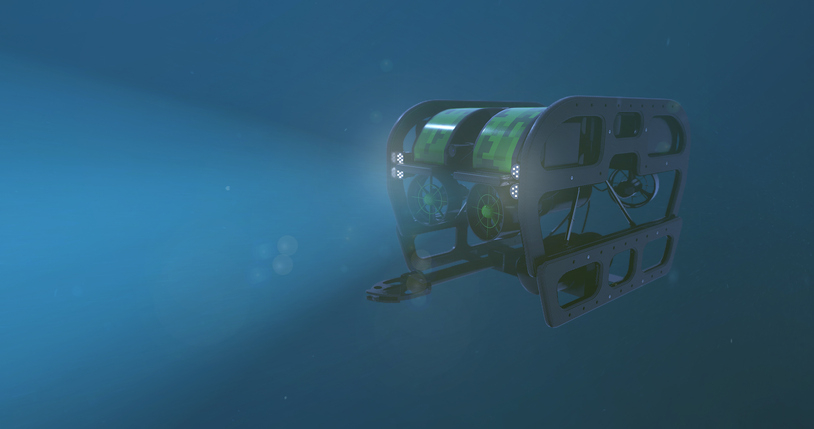
South Korea's marine research and development is expanding into future technologies such as AI, autonomous navigation and eco-friendly vessels, yet the research workforce remains concentrated in traditional fields such as shipbuilding and mechanical engineering. Data show that 56.7 percent of research and technical staff at the Korea Research Institute of Ships and Ocean Engineering (KRISO) belong to conventional shipbuilding, mechanical and marine engineering disciplines, prompting calls for the institute to secure specialized personnel before launching new research projects.
The figures were presented Friday by Moon Geum-ju, a Democratic Party of Korea lawmaker on the National Assembly's Agriculture, Food, Rural Affairs, Oceans and Fisheries Committee, during a national audit of the Korea Institute of Ocean Science and Technology (KIOST). According to the data, KRISO has a total workforce of 320, of whom 215 are research and technical staff.
By field of study, naval architecture and marine engineering accounts for the largest share at 61 people, or 28.4 percent of all research and technical staff. Mechanical engineering follows with 39 people (18.1 percent), and ocean and ocean systems engineering with 22 (10.2 percent). Combined, the three fields account for 122 staff members, or 56.7 percent of the total.
Meanwhile, the research projects KRISO plans to pursue are expanding into convergence technology areas — AI-based autonomous shipping and port operations, maritime communications and navigation, and eco-friendly hybrid propulsion and power systems. Research requiring expertise outside traditional shipbuilding and mechanical engineering is also growing, including work in AI, big data, and systems and reliability engineering.
KRISO is reviewing new R&D initiatives in AI, autonomous navigation and eco-friendly propulsion for 2028 and 2029, but the number of specialists needed for each project has yet to be determined. Concerns have been raised that bringing in staff only after a project has already launched could make it difficult to carry out research in a timely manner.
Comparisons with major overseas research institutions also highlight a gap in staffing levels. The US Naval Surface Warfare Center has a research staff of 1,947, while China's CSSRC Research Institute 702 has 1,800. Norway's SINTEF Ocean employs 353 researchers and the Netherlands' MARIN has 450. All of these institutions are expanding their research into eco-friendly, autonomous navigation, AI and digital fields, in addition to their core shipbuilding and marine work.
The workload on existing researchers was also flagged as a concern. KRISO's per-researcher funding stood at about 395 million won ($298,000), roughly 31 percent above the 302 million won average for institutes under the National Research Council of Science and Technology (NST). If staffing fails to keep pace with the scale of research funding, individual researchers could find themselves managing more projects, potentially leading to delays and reduced impact.
"The technological competition in the maritime industry is rapidly shifting from a focus on shipbuilding and mechanical engineering to convergence technologies such as AI, autonomous navigation, eco-friendly energy and smart ports," Moon said. "It will be difficult to compete in future marine technology if we simply pile new research projects onto the existing workforce structure."
Moon called on KRISO to develop a five-year staffing expansion plan covering 2027 to 2031 that would assess demand for specialists in each future marine technology field and link hiring, retraining and industry-academia-research collaboration. She said new R&D projects in particular should include a pre-assessment of required personnel from the planning stage, so that staffing, team formation and project launch proceed in sequence.
Moon also said KRISO should strengthen interdisciplinary research units in key future areas — including AI, big data, autonomous navigation, digital twins, smart ports and logistics, eco-friendly vessels and energy, safety and reliability, and international standards — and expand joint research and researcher exchanges with overseas specialist institutions.
adastra@heraldcorp.com