Agricultural sector raises concerns over potential damage to farming and fisheries, warns of food security risks
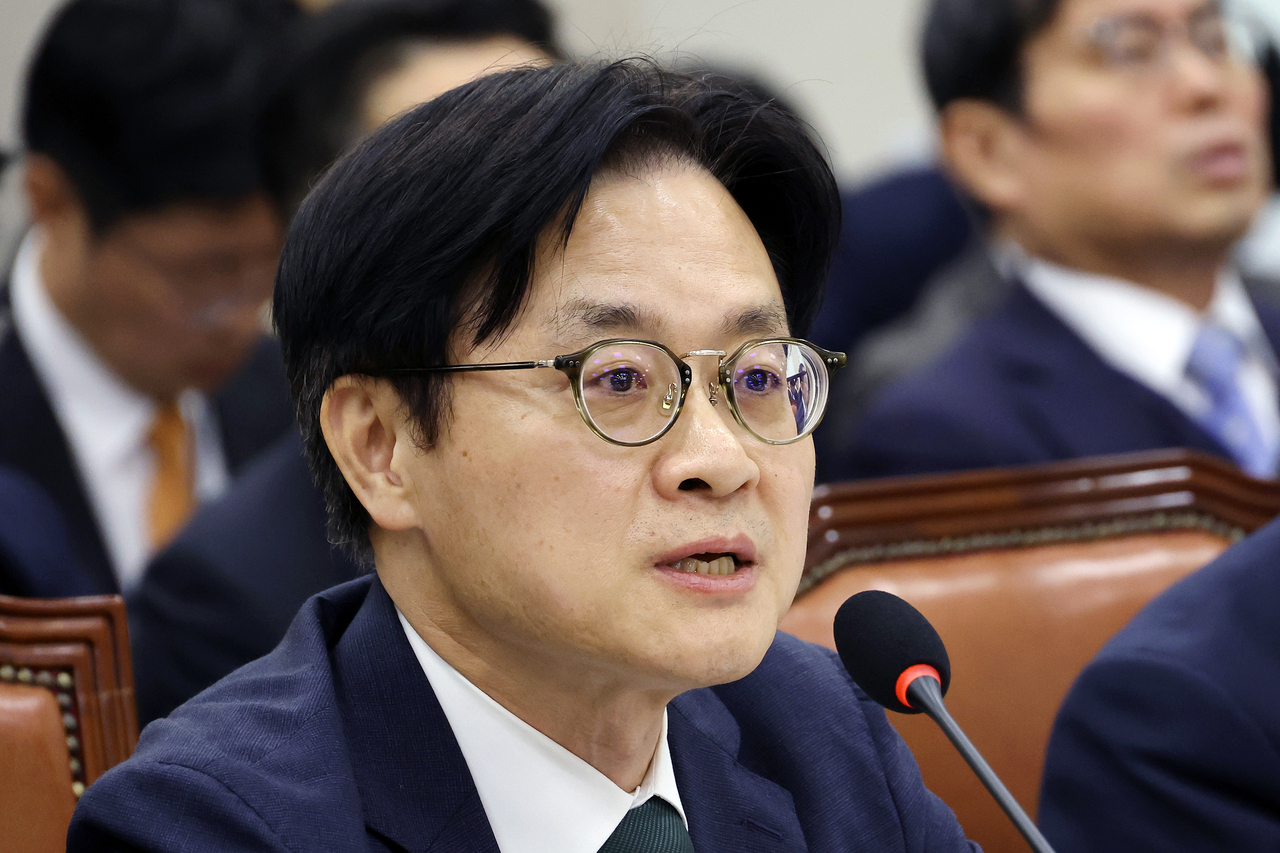
Minister of Trade, Industry and Energy Kim Jung-kwan expressed strong commitment Thursday to securing South Korea's accession to the Comprehensive and Progressive Agreement for Trans-Pacific Partnership, saying President Lee Jae Myung also clearly supports joining the pact.
"As the minister in charge of trade, I will make sure South Korea joins the CPTPP," Kim said at the comprehensive national audit of the National Assembly's Trade, Industry, Energy, SMEs and Startups Committee on Thursday.
Kim has consistently maintained that CPTPP membership is necessary to expand export markets and stabilize supply chains.
However, the government — which had begun discussions on accession — recently decided against submitting a membership application this year, following a directive from President Lee.
The plan is to continue dialogue with stakeholders, including the farming and fishing industries, who have expressed concerns about CPTPP membership, without setting a deadline.
People Power Party lawmaker Yoon Han-hong said it took the United Kingdom about four years from its membership application to the agreement's entry into force, adding that telling the government not to apply this year effectively means the Lee administration will not pursue it at all.
Yoon also claimed that Lee had unilaterally halted accession discussions after the farming community pushed back over a farmland investigation, and asked Kim whether he had urged the president to proceed when the order to stop came. "You couldn't, could you?" Yoon said.
Kim said his position and the president's were essentially the same in broad terms. "The president clearly has the will to join the CPTPP," he said.
"However, I understand the intent is to engage more thoroughly with the farming, forestry and fishing sectors — to listen and communicate more carefully," he added.
Kim said he would not prejudge the timing of accession and would go through a process of gathering opinions from the farming, forestry and fishing industries.
"I feel a sense of urgency," he said, "but I will do everything I can in the remaining months of this year to have an open and honest conversation with our farmers and fishermen and try to bring them on board."
The CPTPP is a multilateral free trade agreement formed by Asia-Pacific nations that took effect in 2018. Its 12 members — Japan, Canada, Australia, New Zealand, Mexico, Chile, Malaysia, Vietnam, Singapore and others — include the United Kingdom, which joined in December last year.
The 12 member states account for roughly 14 percent of global GDP. Their combined trade volume exceeds the individual economic output of either the United States or China, and the bloc accounts for about 25 percent of South Korea's total goods trade, underscoring its significant economic weight.
The CPTPP continues to expand. Costa Rica announced the substantive conclusion of its accession negotiations in May. Uruguay is also in accession talks, and Indonesia, the Philippines and the UAE are pursuing membership as well.
The CPTPP goes beyond simple tariff reductions on goods, aiming to standardize trade rules broadly. In terms of market opening, it requires the elimination of tariffs on 95 to 100 percent of product categories — including sensitive agricultural, livestock and fisheries items, not just manufactured goods.
Because the CPTPP's tariff elimination rate is far higher than that of existing free trade agreements, there are concerns that even sensitive products grown by small-scale farmers — such as chili peppers, garlic and onions — could be fully opened to imports. This could rapidly erode the market position of domestically grown produce in supermarkets and food ingredient markets.
Food security is another concern. If the country's food self-sufficiency rate falls over the long term, South Korea could become more vulnerable to external shocks in the event of a global food crisis.
oskymoon@heraldcorp.com