Court dismisses all damages claims filed by Young Poong, MBK Partners
Directors' decision-making recognized as within bounds of business judgment
Korea Zinc decries 'massive lawsuits' as interference with normal operations
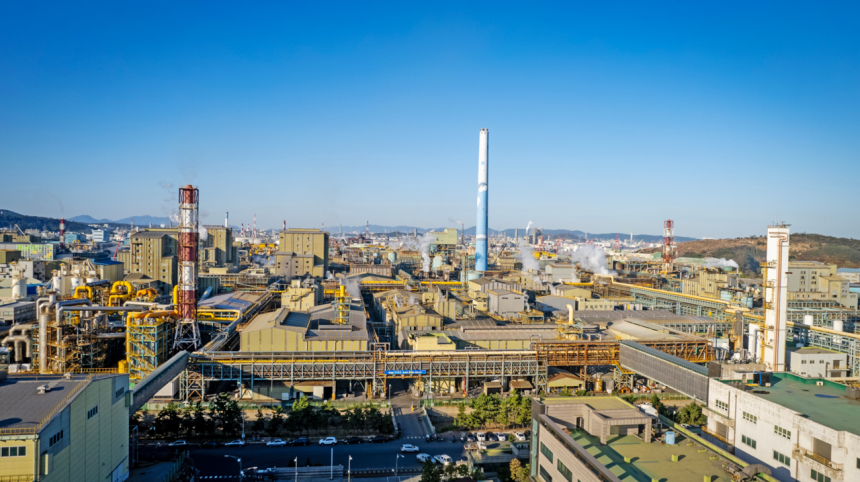
Korea Zinc has prevailed in an 830 billion won ($626 million) shareholder derivative lawsuit filed by Young Poong and MBK Partners, after a court ruled that the company's board acted within the bounds of reasonable business judgment when it launched a self-tender offer during the 2024 management control dispute.
The Seoul Central District Court's 30th Civil Division, presided over by Judge Kim Seok-beom, dismissed all claims brought by Young Poong and MBK Partners against Korea Zinc Chairman Choi Yun-beom and nine other directors on Thursday. The court also ordered the plaintiffs to bear litigation costs.
The lawsuit stemmed from the board's decision to conduct a self-tender offer during the 2024 management control dispute.
Korea Zinc had launched the self-tender offer to counter a competing bid by Young Poong and MBK Partners. The two sides then filed the shareholder derivative suit, seeking about 830 billion won in damages and alleging that the directors had caused substantial harm to the company.
The court, however, found it difficult to conclude that the board's decision-making had been unreasonable enough to warrant damages liability.
The court held that if directors gathered and reviewed sufficient information within the bounds permitted by law and reasonably concluded that a decision served the company's interests, that decision could not be deemed a breach of the duty of care or loyalty unless it was manifestly unreasonable.
The court also took into account that Korea Zinc's board had sought legal counsel and reviewed related injunction filings before proceeding with the self-tender offer. It further found that the decision violated neither the Commercial Act nor the company's articles of incorporation.
Earlier, a court had rejected Young Poong's injunction request to halt Korea Zinc's self-tender offer, ruling that the offer could not be deemed unlawful simply because it included a management defense purpose.
Thursday's ruling extended that logic from an injunction to a full merits judgment, giving Korea Zinc an additional legal basis affirming its board's business decisions.
Korea Zinc issued a statement shortly after the ruling, saying the court had respected the board's reasonable decision-making in connection with the self-tender offer.
The company criticized what it called the use of "massive lawsuits to pressure directors and management and obstruct normal business operations," and said an environment must be created in which it can focus on long-term growth strategies and enhancing shareholder value.
In practice, when hundreds of billions of won in damages suits are filed against individual directors during a management dispute, responding to litigation can consume significant time and resources. Observers note that if such burdens recur, boards may become reluctant to make important decisions — such as committing to long-term investments or pursuing new business ventures.
Korea Zinc said the ruling confirmed that directors can make independent decisions in the interests of the company and its shareholders even under external litigation pressure.
The company also expressed concern that corporate energy was being diverted toward securing management control and fighting legal battles rather than toward concrete business strategies for growth.
Korea Zinc is currently extending a streak of 106 consecutive profitable quarters while pursuing major new businesses, including expanding its critical minerals supply chain and building a smelter in the United States. The company has emphasized that these projects carry significance not only for the competitiveness of South Korea's nonferrous metals industry but also for economic security cooperation between South Korea and the United States.
Particularly notable is Project Crucible, a plan to build an integrated smelter in Tennessee with a total investment of $7.4 billion. The project aims to produce nonferrous metals such as zinc and copper as well as critical minerals including antimony, germanium and gallium at the US site.
Korea Zinc said it intends to focus on strengthening its core competitiveness — expanding critical minerals production and building a global supply chain — rather than expending resources on legal battles tied to the management dispute.
The company added that it would use the ruling as an opportunity to ensure its directors, management and employees can pursue long-term business strategies without disruption and concentrate on raising corporate and shareholder value.
Meanwhile, Young Poong and MBK Partners expressed regret over the first-instance ruling and said they would appeal immediately. They said the financial burden incurred during the self-tender offer and the resulting damage to shareholder value had not been adequately reflected in the judgment, and that they would seek a ruling from a higher court.
kwater@heraldcorp.com