
Small executive board with no delegate council pushes special assessment of up to 30,000 won per member
Second general strike postponed after court curbs action and participation falls to 37%
Members demand executive board resign en masse if levy vote fails
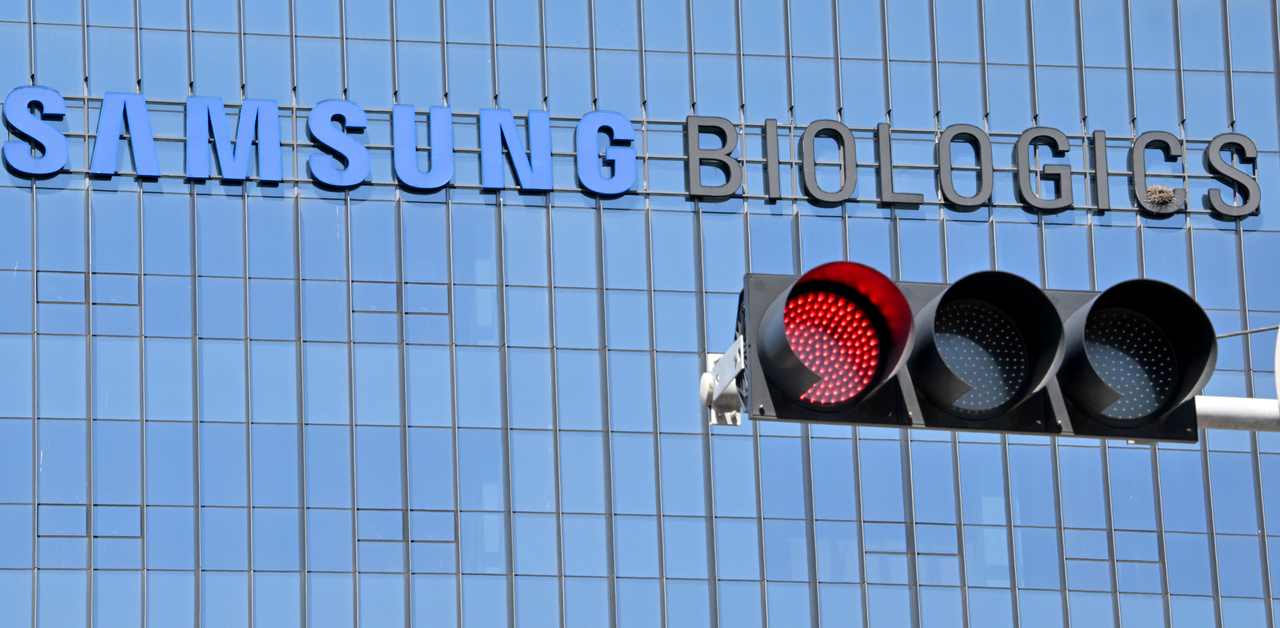
The Sangsaeng labor union at Samsung Biologics is facing a wave of internal backlash after moving to collect up to 1.2 billion won ($905,000) in strike funds from its members — a push that came just as the union suspended its second general strike following a court order restricting industrial action.
Discontent had already been building over a closed decision-making structure dominated by a small executive board and a perceived lack of strategy. The fund drive, which would effectively pass the cost of the strike onto rank-and-file members, has brought that frustration to a head.
According to industry sources, the union opened a second extraordinary general meeting Thursday at noon via mobile electronic vote, with balloting running through Sunday at 6 p.m. The agenda item calls for the creation of a strike fund and the imposition of a special assessment tied to a change in strike format.
The proposal would levy a base amount of 20,000 won per member, with an optional additional 10,000 won, for a maximum of 30,000 won each. If applied to all 4,008 union members, the drive could raise up to approximately 1.2 billion won.
In the notice convening the meeting, the union said the funds were needed because "the form of the strike must be adjusted in light of the court's injunction ruling," adding that the purpose was "to share the burden of the strike across all members and to compensate participants for lost wages and support their livelihoods."
The backlash, however, was ignited by remarks made at an online member briefing Wednesday evening. A senior executive board official announced that contributions would be collected through automatic CMS bank withdrawals and said that members who refused would be considered to have violated union guidelines — and should "face disciplinary action or withdrawal, and express their personal wishes first."
Many members had already absorbed significant wage losses from the first strike, driven by what they described as the executive board's reckless pursuit of hardline tactics. Demands for a second round of contributions have now unleashed a torrent of criticism directed at the leadership.
One member wrote on Blind, an anonymous workplace community app, that "fewer than 2,000 votes were cast in favor of the strike, yet the leadership is trying to force losses onto all members." The member added: "Supporting the struggle and being obligated to pay 20,000 won are separate issues — if there are penalties for not paying, is that really a way of respecting members' wishes?"
The anger has also dredged up longstanding grievances about the executive board's conduct and integrity, including a controversy from the first strike in May in which union chairman Park Jae-sung reportedly used personal leave during the walkout to avoid wage losses.
Some members have been blunt in their criticism of the leadership's strategic failures. "Is the strategy just to call a strike with no plan?" one wrote. "You demand accountability from the company but go easy on your own failures," said another. Others called on the executive board to resign en masse if the levy vote fails.
Labor observers inside and outside the union have described the crisis as a foreseeable rupture born of a closed decision-making structure centered on a small executive board. Unions typically rely on a delegate council — composed of elected representatives from each workplace unit — to check and validate major decisions, but the Sangsaeng union has operated without such a body, with the executive board driving strike and action schedules on its own. The second general strike was also pushed forward without a separate member vote on whether to proceed, drawing criticism over procedural legitimacy.
Strategic miscalculations have compounded the problem. On Friday, the First Civil Division of the Seoul High Court's Incheon bench recognized all nine core production processes — from cell culture to filling — as legally protected "security work" under labor law and banned industrial action affecting them. The ruling reversed a lower court decision that had recognized only three processes, and ordered a penalty of 20 million won per violation.
Strike momentum collapsed after the ruling. A participation survey — since suspended — drew responses from only 1,515 of the union's 4,008 members, a rate of 37.8 percent, with more than 60 percent indicating they would not take part even after the union issued daily participation guidelines. The union subsequently canceled a rally that had been scheduled for Wednesday and postponed the second general strike, which had been set for Monday.
With participation stuck in the 30 percent range, some members see the strike fund proposal as a face-saving exit strategy. "Putting the 20,000 won levy to a vote right after postponing the strike — if it fails, isn't that just laying the groundwork to blame members' lack of participation for the loss of momentum, rather than taking responsibility themselves?" one member said.
A labor sector official said the union "ran into the wall of legal restrictions and lost internal momentum by clinging to a hardline approach without a representative body to gather broad member opinion," adding that "a unilateral fund collection that ignores members' fatigue and eroded trust risks deepening the fractures within the organization."
silverpaper@heraldcorp.com




