Sound collective Transients — Yoon Ji-young and Jo Ye-bon
Sonic Nomads at Seoul National University's old boiler room through Sunday
From Seoripul Park to mountain pastures — a record of sound
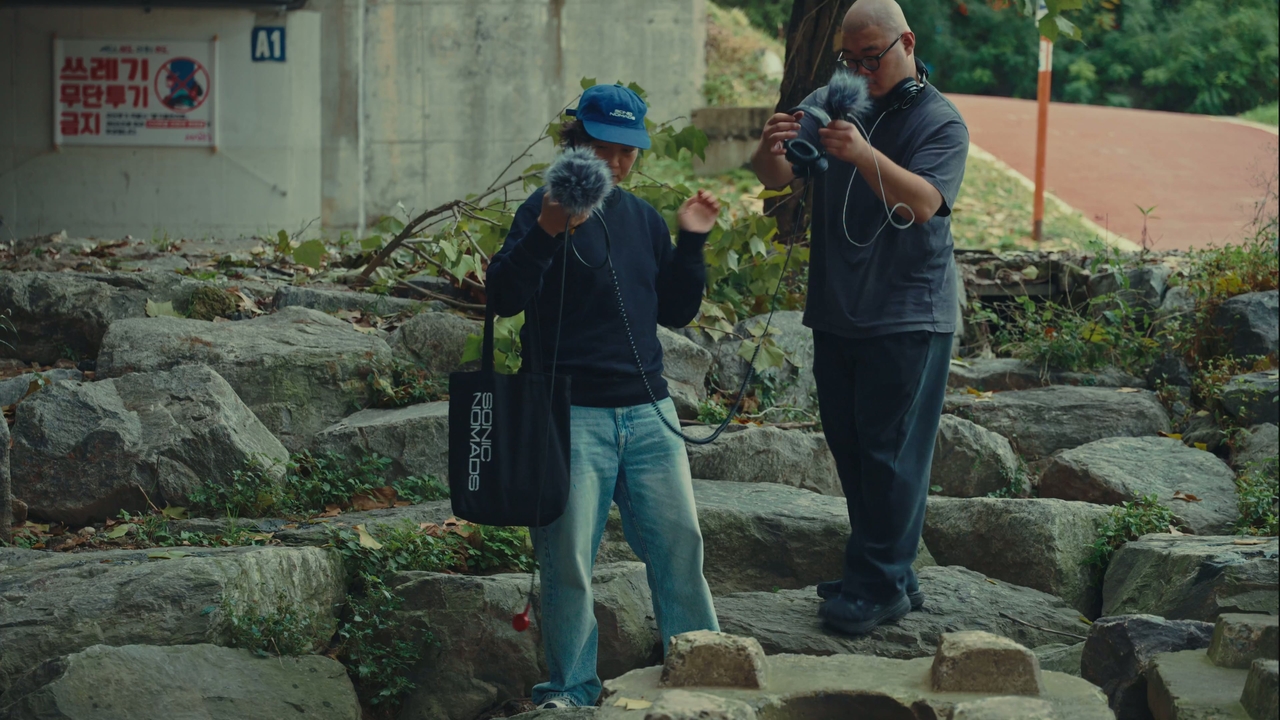
Cowbells rang out across a peaceful Swiss meadow. The sound — the finishing touch on a pastoral scene — was enough to make a recorder switch on by itself. They had come looking for the sounds of nature.
"When the sounds of nature and the bells around the cows' necks blended together, I thought it was truly beautiful," Yoon Ji-young recalled.
It began as a lighthearted impulse, sharpened by the joy of discovery. But Yoon heard something beneath the surface. "When I thought about how cowbells are a sound humans use to control animals, I couldn't feel entirely good about hearing them," she said. The bells she recorded that day found their way into "Seuichim" (Brushing Past), the new work by Transients — the duo of Yoon and Jo Ye-bon. The piece is woven from sounds of cattle, goats, sheep and insects gathered in Seoul's Seoripul Park and in grasslands across Switzerland, Mongolia and Jeju.
Transients is a sound art collective that practices field recording — venturing into forests, train stations, construction sites and crowds with microphones and recorders to capture the sounds of those places. It is a practice entirely unlike carefully staged or intentionally shaped sound. "Field recording is about collecting the sounds around us, the sounds of everyday life, the sounds of reality exactly as they are," Yoon explained. The sounds of nature that sound engineer Sangwoo captured in the film "One Fine Spring Day," and the sounds singer Dun recorded at Gyeongbokgung Palace on the variety show "I Live Alone," are both products of field recording.
The two artists turn their ears toward every sound the world has to offer — sounds too familiar to notice, sounds heard but dismissed as unimportant, sounds hidden behind whatever has always taken center stage. Sixty-eight works drawn from sounds gathered by creators in 26 countries fill Seoul National University's First Power Plant through Sunday. It is the second edition of Sonic Nomads, the sound art festival the duo founded.
Meeting Yoon (42) and Jo (34) recently in Seoul's Seocho-dong, the pair said they sense a shift in how people think about field recording. Transients attributes it to two forces: growing fatigue with an overabundance of visual media, and the fact that field recording remains a domain AI has yet to replicate.
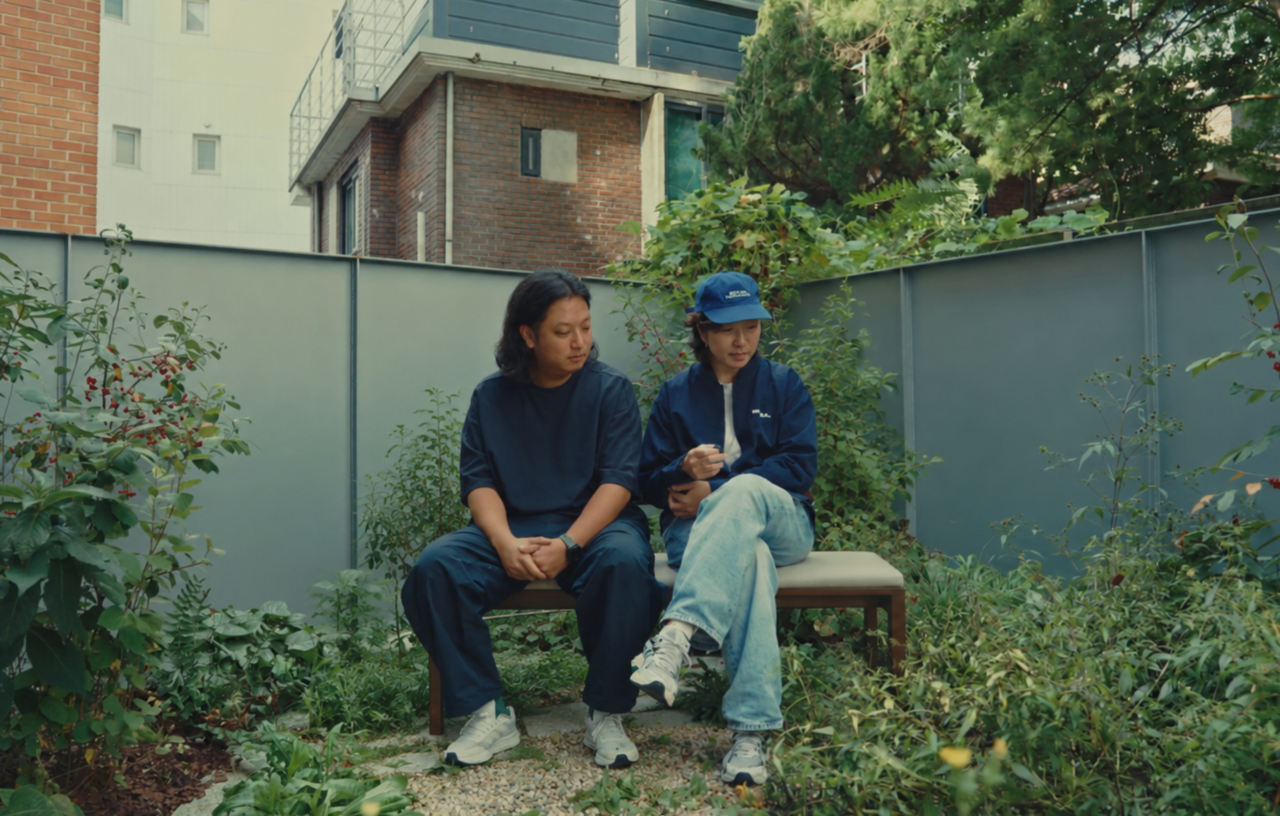
Once they picked up a microphone, the world sounded different
"One wall here is floor-to-ceiling glass and the other side is open," Jo observed. "In a space like this, the way sound travels changes, so the timbre sounds different too."
It is an occupational habit. The longer they listen, the sharper their ears become. Even in a cafe with the latest playlist playing, Jo's first instinct was to read the acoustics of the room. Yoon nodded in agreement. "My sense of hearing feels more open, and I find myself picking up sounds other people don't pay attention to," she said. She has even turned around and walked out of rooms the moment she opened the door and felt the reverb was too heavy.
The two arrived at their near-superhuman hearing by very different paths. For Yoon, who studied life sciences, the revelation came through minimal techno — music with no melody and no lyrics. "I started thinking: something doesn't have to be harmonic to be received as music."
The decision crystallized on a predawn morning in Germany. At 3 a.m., she waited in the dark with a friend and a professor, all of them studying sound together, for the birds to wake up. "Small birds were making sounds, and then a very large bird passed overhead — everyone held their breath and just listened." Yoon said that morning she felt "field recording is truly wonderful, and I knew I had no choice but to keep doing it for the rest of my life."
For Jo, the musical staff had long been her playground. Her foundation was the intricate world of rules and melody that great composers had built over centuries. Then, at university, she encountered acousmatic music — a practice of placing recorded sounds along a timeline to construct a space. For a composer who had only ever worked with notes on a staff, the entire physical world became a score. "From that point on, I started thinking that any sound at all could be material for music."
The day she first walked out with a recorder is still vivid. In 2015, during her second year of university, she went to Seoul Station and Dong Seoul Bus Terminal. "I wanted to capture spaces where lots of people gather and move through," she said. "The act of recording itself felt like it was giving me something new, and after that I just kept carrying a microphone around."
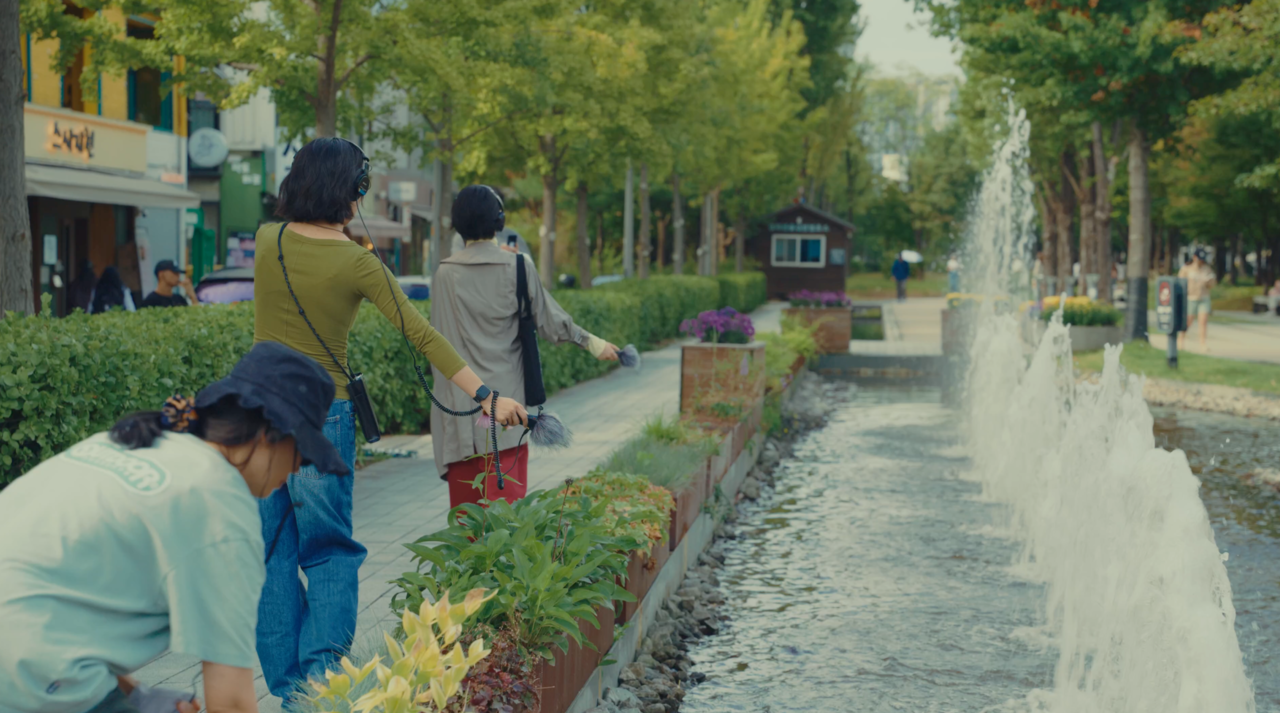
The two met as seniors and juniors at the Korea National University of Arts and spent 2023 as researchers at the Sound Lab of the National Asian Culture Center in Gwangju, moving through Asian cities and collecting sounds. That experience became the root of Transients, which they founded the following year, and of Sonic Nomads — the "sound nomads" festival.
"We often go through life not realizing how many sounds surround us," Yoon said. "When you do field recording, you start to feel that you're actually living inside a world that is incredibly full of life."
Jo shares that feeling. For her, field recording is compelling as an act in itself — the sheer act of gathering sound. The moment a wall of undifferentiated noise splits into its individual textures, every sense in the body wakes up.
"You tend to think, 'It'll probably sound like birdsong,' or 'It'll sound like a space with a lot of water,'" Jo said. "But those sounds create small differences depending on how they exist in a given space. Natural sounds carry an enormous resolution — I often feel they are creations beyond anything we can approach."
Sounds that went unheard, sounds that are disappearing
The two differ slightly in what triggers them to press record. For Yoon, it is the moment multiple sounds layer over one another to form a single environment — a feeling of "something interesting is happening here; I want to capture this, I want to document it." Jo listens to the space itself. The same location sounds different from one day to the next, from day to night. When a place changes, the contrast becomes even more dramatic. Walking a mountain path in Seoul's Seoripul Park, where the forest absorbs sound, she can take two steps uphill and suddenly the noise of the Express Bus Terminal reconstruction and passing traffic comes rushing back all at once. Jo confirms those vivid acoustic boundaries with her ears.
Some sounds carry history within them — because they will eventually disappear. Transients records those sounds, inscribing soundscapes erased by urbanization and climate change, bearing witness to what has been lost.
"A market area in Seoul's Gwanak-gu was originally a waterway," Yoon said. "The place where water once flowed is now filled with the sounds of people." In Gwangju, she recorded the sounds of an elderly woman — the last remaining resident of an old apartment building slated for redevelopment — moving out. That apartment has since been demolished.
The archive is also built collectively. In a field recording app created by Transients, anyone can record the sounds of wherever they are standing and upload them, and listen to sounds others have shared — from parks in Seoul to streets in Europe, stacked in the order they were recorded.
Ultimately, it is a human ear that decides what to capture and what to let pass. "The human perspective is extremely narrow," Yoon said. "There is an inherent limitation in that I can only choose from my own point of view." That is why she sets herself a guiding principle.
"I try to think not from a human standpoint but from the perspective of the owner of that sound — the living creature or the environment that is making it," Yoon said.
Jo's first thought is for the people who inhabit a place. "I find myself being mindful of the people who spend a long time in that location," she said.
Even the sounds of nature can now be mimicked by machines. "Seuichim," the new work set to premiere as a live performance on Saturday, incorporates AI-generated birdsong trained on real bird calls. The two predict that distinguishing machine-made birdsong from real birdsong by ear will become increasingly difficult — even if it is not yet the case. Even so, their reason for not putting down the recorder is clear.
"AI cannot go to a place and hear what I heard there," Yoon said.
An age of solitary listening, an experience of listening together
A small space in Yeonhui-dong that felt full with 50 people inside — that is where Sonic Nomads was born. In an era of hyper-personalization, where people plug in earphones and explore their own private worlds, the festival arrived with a proposition: communal listening. The impulse came when the COVID-19 pandemic shut down the performing arts. Yoon, then studying in Germany, rediscovered a forgotten sensation sitting in the audience at a school concert.
"I realized it had been so long since I had listened to music at full volume," she said. "I thought then that music is originally meaningful when you listen to it loudly, together."
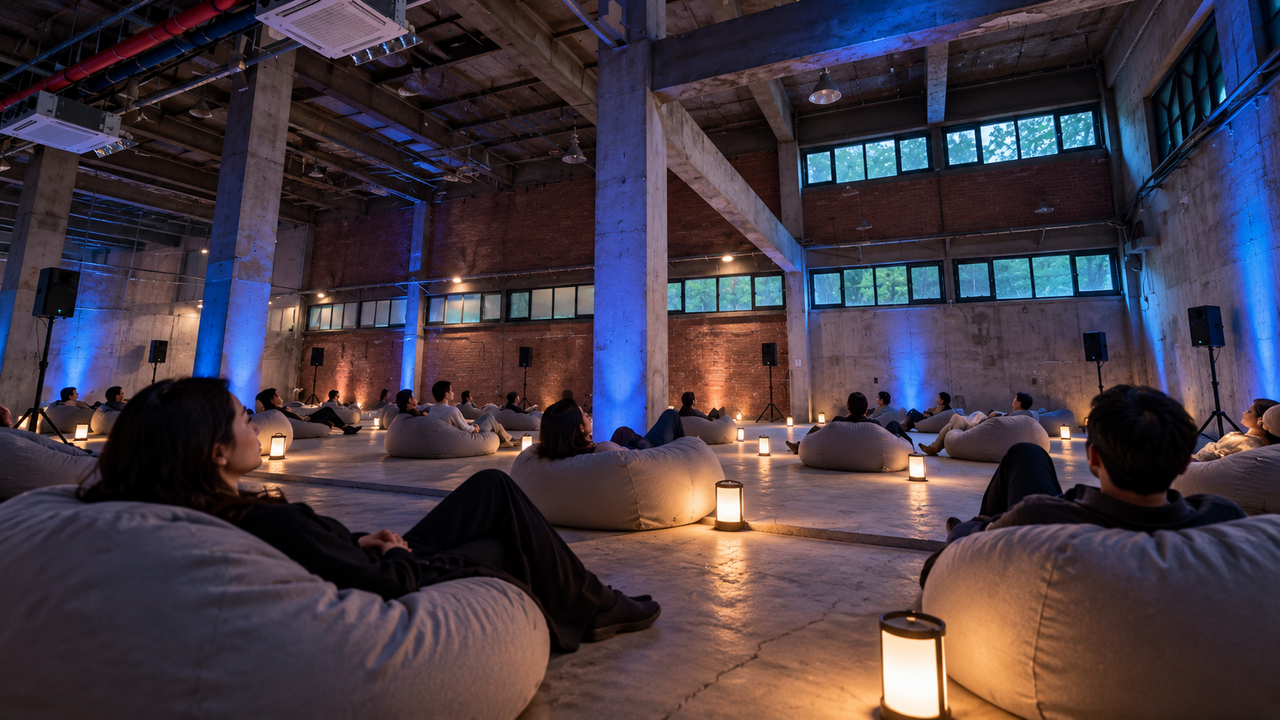
That insight became the starting point for this year's festival theme, "Listen with." The venue has moved to Seoul National University's old boiler room, built in 1975. Its ceiling, more than 10 meters high, and its concrete walls add a layer of the space's own resonance on top of the sounds of the places where the recordings were made.
The way audiences listen changes too. Eight speakers surround the audience, with 60 beanbags scattered among them. A typical electronic music concert has a "sweet spot" — a specific position where you can hear exactly what the composer intended. Yoon said she eliminated that sweet spot. "We move from the center toward the decentralized in how we listen to the music." A listening booth is also available, where visitors can put on headphones and work through all 68 pieces alone. "I wanted to leave every possibility open," she said.
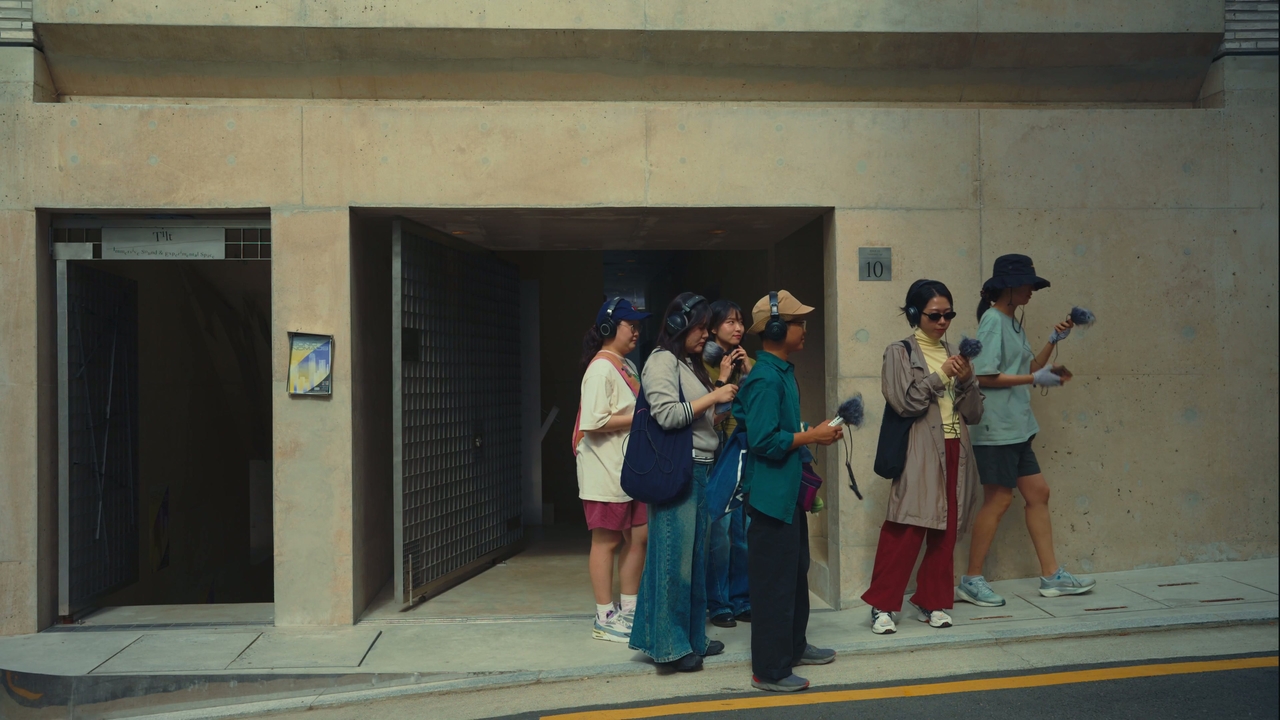
The sound of clipping nails, the electronic tones of an ATM, the machinery of a printing shop in Euljiro facing demolition — in this space, all of it becomes music. "I don't think there are any limits or boundaries on the materials that go into making music," Jo said.
Across the four-day festival, the two have specific pieces they urge visitors not to miss. Opening the deep listening session on Friday is "Insectarion" by Lidia Zielinska, a veteran of Polish studio electronic music. British composer Jonty Harrison's "Crushed" brings together the sound of a rusted Icelandic grinder and distant seabirds in a single work. The two encourage listeners to hear "how a rough, heavy metallic sound and a faraway birdsong meet within one piece." Closing the session is "Nullius in Verba" — a Latin phrase meaning "take nobody's word for it" — by American composer Robert Scott Thompson.
The piece closest to both their hearts is "Clermont Horns" by British composer Pete Stollery, built from layers upon layers of car horns. "When we first listened to this piece together — almost no editing, almost no synthesis — I got goosebumps," Jo said. Since hearing it, even the horns outside Yoon's studio window sound different to her. "If I leave the window open here in Seocho-dong, there are a lot of loud horns. Before, they were just sounds I hated without thinking. After hearing that piece, I hate them a little less," she said.
Jo hopes the festival becomes a space for reflecting on listening itself. "There are probably many people who have never once been conscious of what listening is," she said. "I hope they experience many different kinds of listening at this festival."
Like its name — "sound nomads" — Sonic Nomads dreams of becoming a festival that wanders the cities of the world. "Because we received a Western-centered music education, we ended up learning music that developed in the West, and our ways of listening became Western-centered too," Yoon said. "There is inevitably something imperialistic embedded in that. I want to strip that away as much as possible." That is why Asian cities top their list of destinations. Whether in Seoul or somewhere else in Asia, the sounds the two strain to hear are the small and the faint. In those sounds, Yoon sees the place of human beings.
"We too are very small, fragile presences within the environment we belong to," she said. "Listening to what surrounds you, and then thinking about yourself as part of that surroundings — I think that is fundamentally important."
shee@heraldcorp.com