Hyundai Motor sold about 40,000 vehicles, Kia 56,000
Combined sales dipped 1.7% despite 10.2% market growth
January–September market share stands at 7.3%
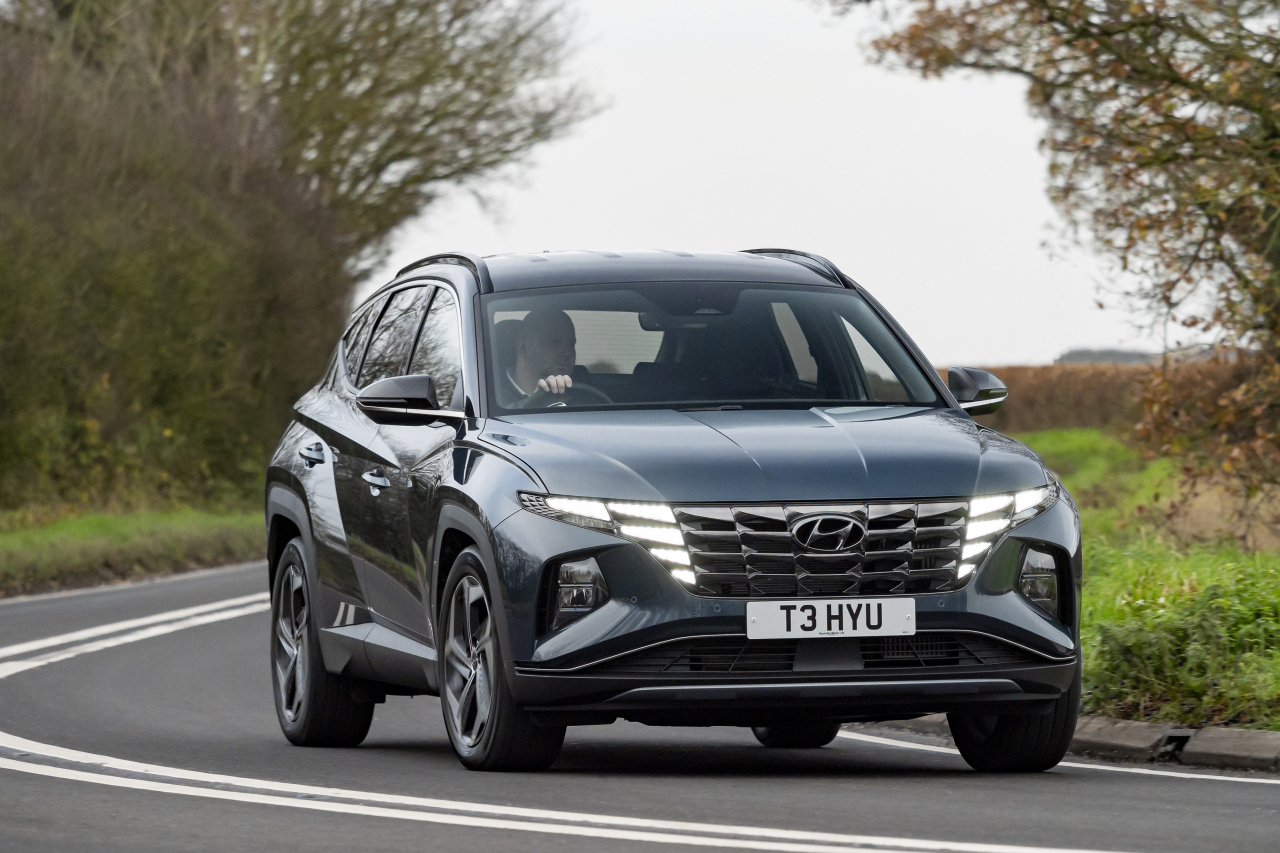
Hyundai Motor and Kia posted sharply divergent results in the European automotive market in September, with Hyundai Motor's sales falling nearly 18 percent year-on-year while Kia's climbed about 14 percent — even as the broader European market recorded double-digit growth.
According to the European Automobile Manufacturers' Association (ACEA), Hyundai Motor sold 39,821 vehicles in Europe in September, down 17.5 percent from the same month last year. Kia, by contrast, sold 56,437 vehicles over the same period, a 13.7 percent increase.
The divergence began in August, when Hyundai Motor sold 26,228 vehicles — a 30.0 percent year-on-year decline — while Kia recorded 36,392 units, up 15.5 percent. Although Hyundai Motor's rate of decline narrowed somewhat in September, Kia extended its double-digit growth to a second consecutive month.
The contrast is sharpened by the overall European market's strong performance. Total European sales in September reached 1,363,210 vehicles, up 10.2 percent year-on-year. Yet the combined sales of Hyundai Motor and Kia came to 96,258 units, actually falling 1.7 percent. Unable to keep pace with market growth, the two brands' combined market share slipped 0.9 percentage points year-on-year to 7.1 percent — also down 0.4 percentage points from August's 7.5 percent.
The brands' individual market shares also moved in opposite directions. Hyundai Motor's share fell 1.0 percentage point year-on-year to 2.9 percent, while Kia's rose 0.1 percentage point to 4.1 percent. Kia gained ground on both sales volume and market share, while Hyundai Motor retreated on both measures.
The same trend carried through to cumulative figures.
Hyundai Motor's January–September European sales totaled 348,928 vehicles, down 13.2 percent from the same period last year. Kia, meanwhile, sold 421,867 vehicles, up 6.6 percent.
Their combined sales for the nine-month period came to 770,795 vehicles, a 3.4 percent decline from a year earlier. Over the same stretch, the overall European market grew 6.3 percent to 10,555,351 vehicles. The market's expansion was not enough to offset Hyundai Motor's weakness, even with Kia's growth factored in.
As a result, the two brands' combined January–September market share fell 0.7 percentage points year-on-year to 7.3 percent. Hyundai Motor's share dropped 0.7 percentage points to 3.3 percent, while Kia held steady at 4.0 percent, matching last year's level.
Among Hyundai Motor's individual models, the Tucson compact SUV led all nameplates with 94,757 units sold in the January–September period. The Kona followed with 62,503 units, and the i20 subcompact hatchback recorded 41,293 units.
Both the Tucson and the Kona posted particularly high shares of eco-friendly vehicle sales.
Of the 94,757 Tucson units sold, 58,630 were eco-friendly variants — comprising 45,658 hybrids (HEV) and 12,972 plug-in hybrids (PHEV) — accounting for about 61.9 percent of total Tucson sales. Conventional internal-combustion models accounted for 36,127 units.
The Kona showed an even higher eco-friendly ratio. Hybrid models led with 30,766 units, followed by battery electric vehicles at 20,668 units. Together, the two powertrains accounted for 51,434 units, or 82.3 percent of total Kona sales. Conventional internal-combustion models were limited to 11,069 units.
The Inster — a compact electric vehicle sold in Europe under the name Casper Electric in South Korea — also posted 24,777 units in sales from January through September this year.
kwater@heraldcorp.com