Minister cites need for exceptions to 52-hour workweek rule at national audit
On split energy policy: 'Industry and energy must go together in the long run'
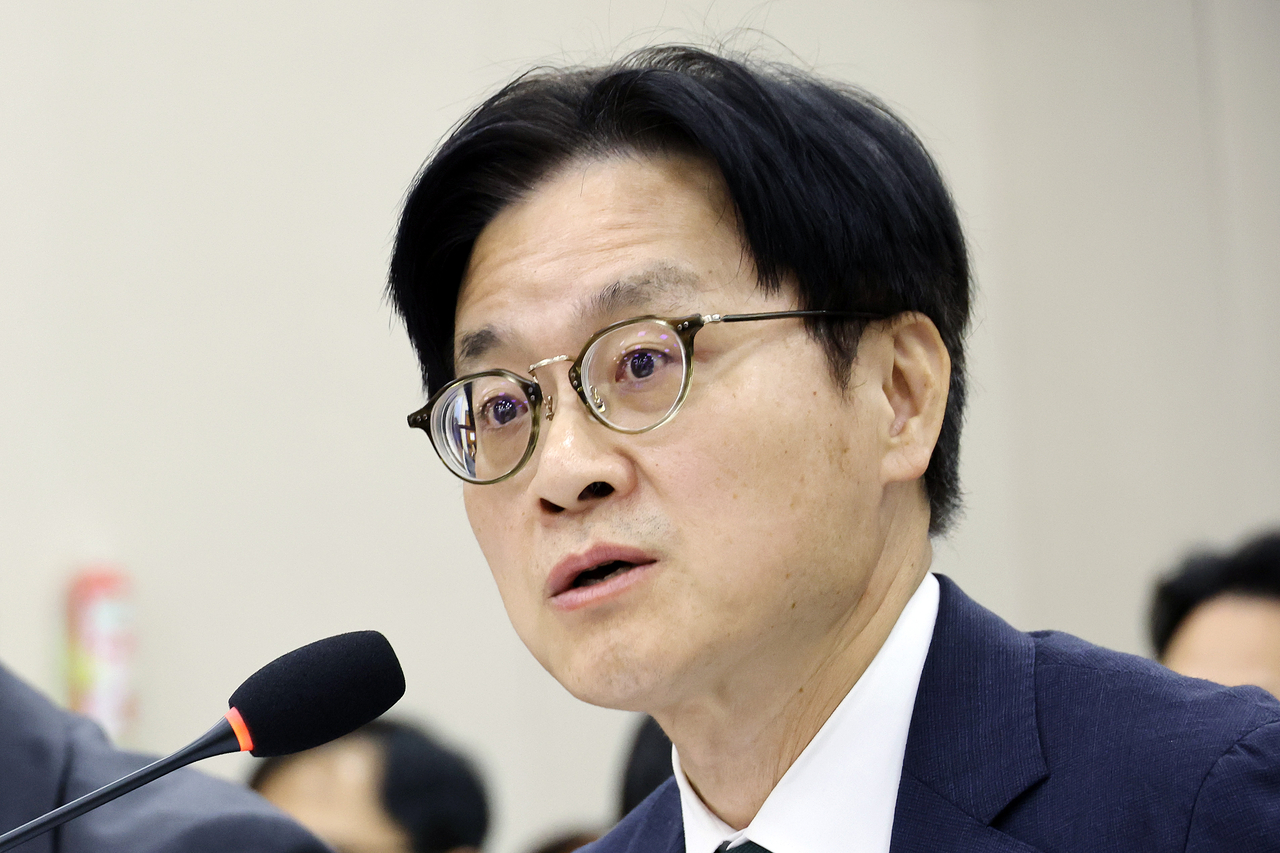
Trade Minister Kim Jung-kwan said Thursday that legislation establishing mega special zones to support large-scale national projects must include labor exemptions, among them exceptions to the 52-hour workweek rule.
Kim made the remarks at the comprehensive national audit of the National Assembly's Trade, Industry, Energy, SMEs and Startups Committee, responding to a question from People Power Party lawmaker Jo Ji-yeon about the Ministry of Trade, Industry and Energy's position. "It is our hope that labor-related exemption clauses are included in the mega special zone bill without fail," he said.
He added that the Ministry of Employment and Labor appeared to believe the matter should go through broader social deliberation. "It seems the Ministry of Employment and Labor thinks social consensus is needed first," he said.
The government has yet to reach internal agreement on provisions that would exempt high-income and research workers from the 52-hour cap. The Democratic Party of Korea has recently introduced two separate bills — one that includes labor exemption clauses and one that does not.
When lawmaker Jo suggested the debate was becoming a war of attrition rather than a sprint, Kim said, "We will do our best to pass the bill during this regular session of the National Assembly."
On criticism that the ministry was neglecting its role as the control tower for mega projects — particularly in budget planning and review — Kim said, "I take that seriously and will work hard."
Kim also addressed a concern raised by PPP lawmaker Park Sung-min, who argued that splitting energy and resource policy between the Ministry of Trade, Industry and Energy and the Ministry of Climate, Environment and Energy was inappropriate. "In the long run, I believe industry and energy must go together," Kim said.
He added that inefficiencies had emerged in the nuclear power sector because domestic and overseas nuclear power exports are handled separately. "Because domestic nuclear power and overseas nuclear power exports are divided, inefficiencies are appearing in that area as well," he said.
Asked about criticism that the government had focused solely on securing crude oil volumes rather than managing import prices during the supply crunch triggered by the Middle East war, Kim defended the approach. "In a warlike situation, I believe supply stability comes first," he said. "At the time, our top priority was ensuring stable supply rather than price. As the situation has gradually eased, our policies have been adjusting accordingly."
oskymoon@heraldcorp.com