Opposition cites lack of preparation and farmer anxiety; survey scope shifted from 1.15 million to 1.36 million hectares
Agriculture ministry vows to distinguish speculative violations from routine farming practices
Ruling party pushes for farmland law reform, agricultural statistics overhaul; agri-solar participation also disputed
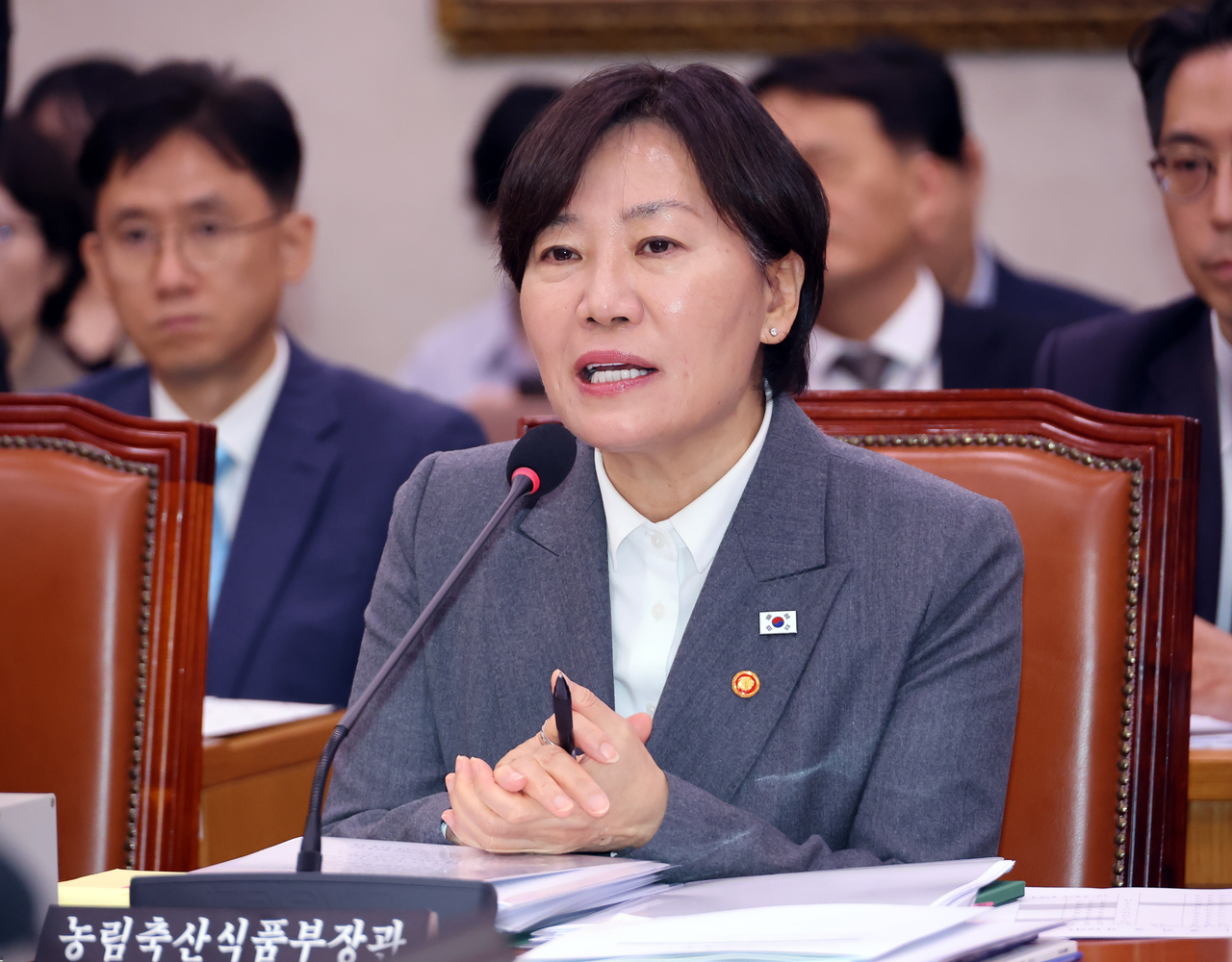
The dispute over a comprehensive farmland survey reignited Thursday at the National Assembly's national audit of the Ministry of Agriculture, Food and Rural Affairs. The opposition pressed the government over what it called inadequate preparation that has heightened anxiety among farmers, while the ruling party urged institutional reforms to address routine violations of the Farmland Act. The ministry reaffirmed its position that it would distinguish between speculative violations and customary farmland use when revising the system.
The National Assembly's Agriculture, Food, Rural Affairs, Oceans and Fisheries Committee held a comprehensive national audit of the ministry and its affiliated agencies Thursday. Key issues included the comprehensive farmland survey, proposed revisions to the Farmland Act, an overhaul of agricultural statistics, and agri-solar projects.
People Power Party lawmaker Lee Seong-gwon criticized the comprehensive farmland survey for being pushed forward without sufficient preparation. Lee said the ministry had previously expressed skepticism about the need for a full survey and had not listed it as a priority in this year's main work plan. He also took issue with the government's shifting account of the survey's scope, which changed from 1.15 million hectares to 1.36 million hectares.
Agriculture Minister Song Mi-ryeong said ownership and usage information in the farmland register had not been properly updated, making an accurate assessment of actual conditions necessary. "We will separate out and correct routine, customary violations of the Farmland Act in the field — distinguishing them from speculative ones," Song said. "We will close the gap between reality and the rules."
People Power Party lawmaker Kang Seung-gyu urged the committee to summon a presidential office official as a witness to clarify the background behind the decision to conduct the survey.
People Power Party lawmaker Lee Sang-hwi took issue with the ministry's approach to countering misinformation, presenting a National Assembly Research Service report that flagged the survey's lack of preparation and arguing that policy criticism must be distinguished from false information. Song said of the report's findings, "I do not regard this kind of thing as fake news at all."
Democratic Party of Korea lawmaker Lee Jae-gwan called on the government to draft special legislation that would allow farmland use found during the survey to be non-speculative and in violation of the Farmland Act to be reclassified as lawful. When Lee asked whether the government planned to move forward by the end of this year, Song replied, "Yes."
The need to reform the agricultural statistics system also came up. Democratic Party lawmaker Lim Mi-ae said the government was pursuing a policy shift centered on agricultural management entities while its statistics and performance indicators still relied on the household farming unit.
Lim cited figures showing that in 2025, farming income accounted for just 21 percent of farm household income, while transfer income — including subsidies and welfare payments — made up 36 percent. "In a situation where money earned from farming accounts for only one-fifth of farm household income, the farm household income figure that the ministry uses as its headline indicator is severely distorted," she said, calling for a statistics and policy evaluation framework built around agricultural management entities.
The scope of participation in agri-solar projects also emerged as a point of contention. Democratic Party lawmaker Ju Cheol-hyeon said a draft enforcement decree could unduly restrict agricultural corporations from taking part in such projects, arguing that concentrating eligible areas in certain regions could effectively shut out agricultural corporations in other parts of the country.
Song said the ministry would "look into expanding the scope of business activities for agricultural corporations" and indicated it would also consult with local governments on the matter.
The re-employment screening process for retired executives of the National Agricultural Cooperative Federation, known as Nonghyup, and the federation's submission of audit materials also drew scrutiny. Democratic Party lawmaker Yun Jun-byeong said in a procedural statement that regulations require the relevant institution to be involved in employment screening for retired executives, and demanded that the factual basis of earlier testimony by Nonghyup Chairman Kang Ho-dong be verified. He also called for action after the federation failed to submit a breakdown of its advertising spending by media outlet.
Kang said he could not have known the specific details of such matters and had simply answered based on what he knew, adding that he had not been briefed on them. Committee Chairman Seo Sam-seok said the issue would be reviewed through proper procedures and, if necessary, referred to negotiators from both parties for consultation.
In other business, lawmaker Lee Jae-gwan raised concerns about the concentration of agri-food fund investment in the Greater Seoul area and low enrollment in crop disaster insurance. He also called for improvements to pesticide safety reviews, standards for fire blight control in orchards, and the response system for pine wilt disease.
adastra@heraldcorp.com