
Ten years of Netflix in Korea
Viewing ranks second globally, trailing only the US
More than 200 titles in the global top 10
Restaurant bookings up fourfold, haenyeo museum visits up 58.9%

12.1 billion hours. That is how much time the world spent watching Korean stories on Netflix over the past year — enough, if one person watched without pause, to last 1.38 million years. No country other than the United States watched more.
The world is no longer content just to watch. Viewers are booking tables at restaurants run by chefs from Culinary Class Wars, pushing open the doors of public bathhouses to try the body-scrub experience depicted in KPop Demon Hunters, and enrolling in Korean-language classes to understand the dialogue in their favorite dramas. Ten years after Netflix arrived in Korea, Korean stories have stepped off the screen and into the daily lives of people around the world.
Netflix said Friday that it has produced or co-produced more than 200 Korean titles in partnership with over 80 domestic production companies since 2016, and that more than 200 Korean titles have reached the global top 10 since 2021. Some 25,000 cast and crew members worked in front of and behind the camera, while 122 dubbing and subtitling partners rendered Korean dialogue into languages across the globe.
To mark the milestone, Netflix launched a 10th-anniversary website titled "Netflix and Korea: 10 Years Together" and released a report by global research firm Synthesio tracking the footprint Korean content has left on everyday life worldwide.
1.4 times Japan, nearly twice the UK — this is no fluke
The survival thriller Squid Game, the science-fiction disaster film "The Great Flood," the family drama "When Life Gives You Tangerines" — Korean content has leaped across genres and pulled ahead of the global competition. The world spent 1.4 times as many hours watching Korean titles on Netflix as Japanese titles, and nearly twice as many hours as British titles. Those figures come from market research firm Omdia, which tallied Netflix viewing hours by country of production alongside Digitalei from April 2025 through March this year.

Kim Da-min, director of the Netflix series "Kkumalba," described the platform as "a giant megaphone," saying "the very fact that you can show your work to people all over the world in real time is enormously meaningful." Nam Gung-seon, director of "A History of Confessions," was equally struck by the scale of the audience that gathered across borders. "The fan base within a single country isn't that wide, but when fans from around the world come together, it's extraordinary," he said.
Numbers like these cannot be built on one or two breakout hits. Behind them is a new generation of talent. Over the past three years, at least one in three Korean originals released on Netflix came from a first-time director or writer. Park Yun-seo, who made her directorial debut with "Girigo" after serving as an assistant director on "Kingdom" Season 2, said the achievement was possible "because Netflix actively believed in new attempts rather than relying on familiar names." More than 6,500 people have received training through Netflix education programs in the five years since 2021.
The range of stories has broadened as well. Choi Kyung-suk, a producing director on "Eunjung and Sangyeon," said that before Netflix, the industry focused on "stories that as many people as possible could watch," but that the platform has since made it possible to "draw out far more diverse stories and expand the range of subject matter." Kim Min-seok, the writer of "Juvenile Justice" — which confronts juvenile crime and the legal system head-on — recalled being told from the outset to "tell our own story rather than worry too much about global performance." Han Jun-hee, director of "D.P.," which uses the eyes of a military deserter-apprehension unit to illuminate the darker side of army life, put it simply: "You have to take risks to tell interesting stories."
Tasting, learning, following along — Korea walks off the screen
When Culinary Class Wars Season 2 dropped, reservation books at the featured chefs' restaurants changed overnight. In the five weeks after the release, bookings and waitlist registrations at each participating restaurant jumped more than 303 percent — more than fourfold — compared with the five weeks before.
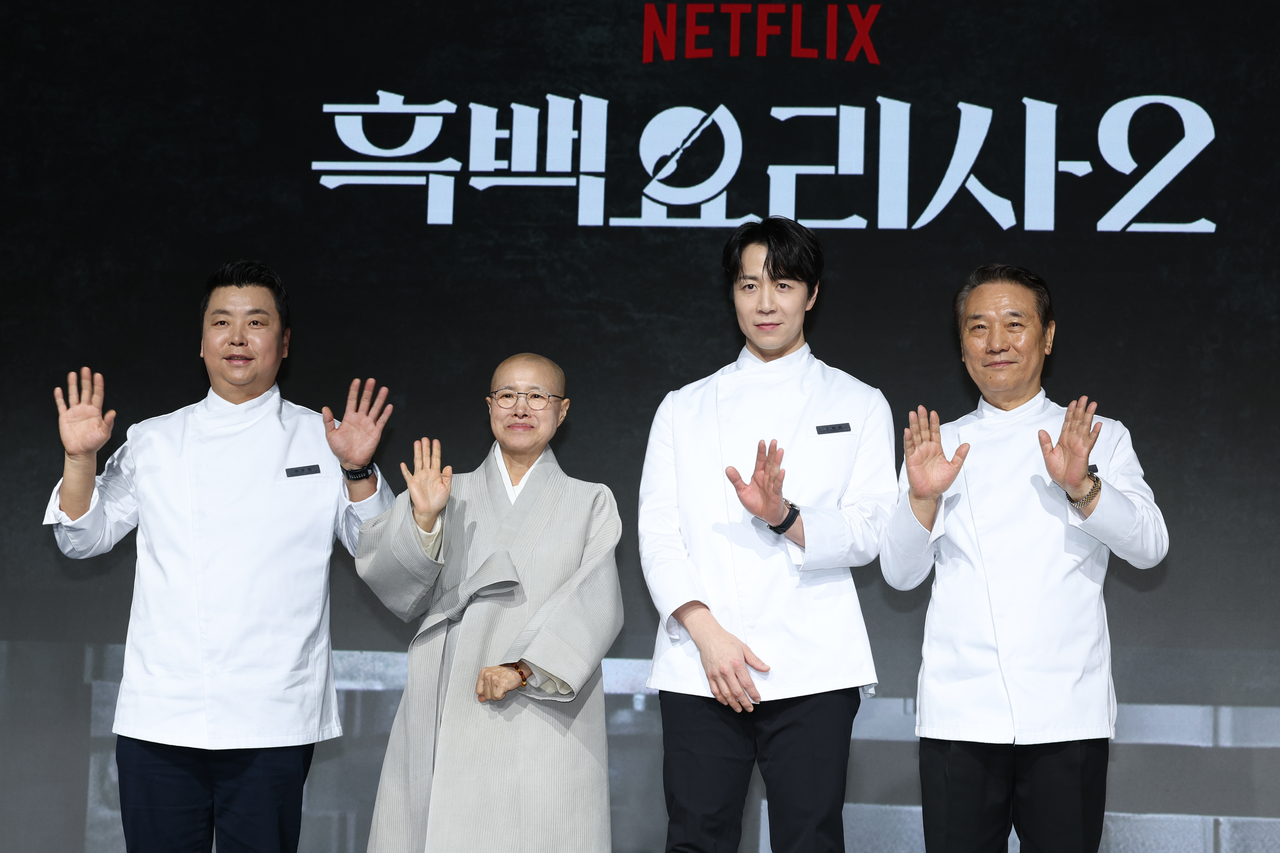
Lee Jun, chef at Seoul restaurant Swaniye and a Season 2 cast member, told The Associated Press that before the show aired, most of his customers were foreign visitors, but that Korean customers now book so quickly that foreign tourists struggle to get a seat. In response, inbound travel agencies have begun guiding foreign tourists on how to use "white spoon/black spoon" filters on booking platforms — effectively turning Netflix content into a travel itinerary. Bookshops felt the effect too: a cookbook published in 2019 by chef Woo Jeong-wook sold 227 times as many copies in the 20 days after the show aired as it had in the 20 days before.
"When Life Gives You Tangerines" redirected global travelers toward Jeju Island. Driven by the drama's popularity and an expansion of air routes, the number of foreign visitors to Jeju last year reached about 2.24 million, up 17.7 percent in a single year. The Jeju Haenyeo Museum, which documents and displays the lives of Jeju's female divers, welcomed about 49,000 foreign visitors between January and November last year — 58.9 percent more than in the same period the year before. Jeju Island attributed the surge to growing international interest in haenyeo culture fueled by the drama's global success. The word "haenyeo" was added to the Oxford English Dictionary in January this year.

KPop Demon Hunters drew foreign tourists into public bathhouses. According to travel platform Klook, in the seven weeks after the title's release, bookings for body-scrub experiences rose 11 percent over the preceding seven weeks, while ticket reservations for a sauna in Seodaemun-gu, Seoul, climbed 57 percent.
Korean words and objects have crossed borders as well. "Dalgona," introduced to the world through Squid Game, entered the Oxford English Dictionary in December 2024. The Joseon-era "gat" hat, which the series "Kingdom" brought to global attention in 2019, reappeared six years later atop the heads of the Lion Boys in KPop Demon Hunters. Attention has translated into study: TOPIK applicants already surpassed 550,000 by September 2025, exceeding the total for all of 2024.
Maria Rua Aguete, head of media and entertainment research at Omdia, said the momentum that began with a handful of global blockbusters like Squid Game "has evolved into a sustainable content ecosystem capable of achieving international success across multiple genres," adding that "that consistency is cementing Korea's position in the global streaming market."
shee@heraldcorp.com




