Incheon companies participated in 17 of 30 Phase 4 construction projects, securing 115 billion won of the total 458 billion won contract value
Local firms captured just 3.4% of service contracts and 2.5% of goods procurement by value
Community-benefit gains concentrated in construction; lawmakers call for broader economic spillover
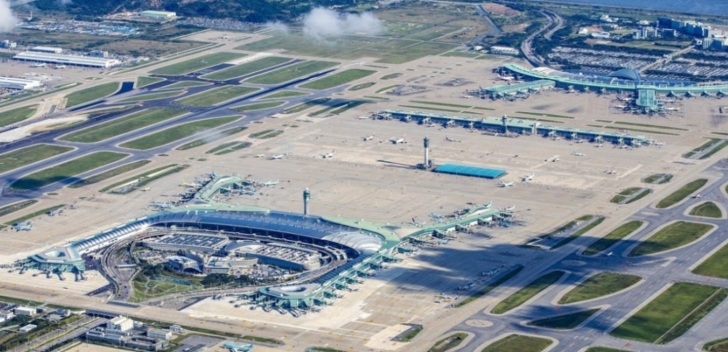
Local companies are participating in construction projects at Incheon International Airport, but their actual share of contract value amounts to only about a quarter of the total project value, data released Thursday showed.
Particularly in services and goods procurement, Incheon-based firms are capturing just 3.4 percent and 2.5 percent of contract value, respectively, prompting calls to strengthen the link between the airport's large-scale investment and the local economy.
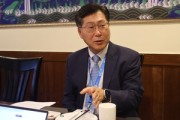
According to data submitted to Democratic Party of Korea lawmaker Jeong Il-young — a member of the National Assembly's Land and Transport Committee representing Incheon's Yeonsu-eul district — of the 30 Phase 4 construction projects launched at Incheon Airport between 2022 and September 2026, Incheon-based companies participated in 17, a participation rate of 56.7 percent.
When measured by contract value, however, the local firms' share shrinks considerably. Of the total project value of approximately 458 billion won ($345 million), contracts awarded to Incheon companies came to about 115 billion won, or 25.1 percent of the total.
Local firms took part in more than half of all projects, yet their share of the money fell well short of their participation rate.
Outside construction, local firms fared even worse in services and goods procurement.
In competitive-bid service contracts over the same period, Incheon companies were party to just 36 of 538 total contracts — a participation rate of 6.7 percent by number. By value, they secured about 17.4 billion won of the roughly 518.5 billion won in total service contract value, accounting for only 3.4 percent.
Goods procurement told a similar story. Incheon firms were involved in 53 of 529 contracts, or 10 percent by number, but the value they captured — 12.2 billion won out of approximately 486 billion won — amounted to just 2.5 percent.
The figures suggest that while the airport's large-scale construction investment has created some business opportunities for local firms, the benefits have not spread sufficiently into services and goods procurement.
In construction, the airport's mandatory local-participation requirements appear to be working: all 57 construction contracts subject to those rules saw Incheon companies either hold a minimum equity stake or win the contract outright.
In services and goods, no comparable level of local participation has materialized.
Observers say the airport authority should examine not only local firms' expertise and supply capacity but also their access to procurement information and the conditions under which they can enter bids — with the aim of lowering barriers to participation across the entire contracting process.
"The community-benefit gains built up in construction must be extended to services and goods procurement," Jeong said.
He went on to say the airport should provide advance notice of procurement opportunities, strengthen purchasing consultations and actively identify local suppliers to broaden their chances of participation, all while maintaining project-specific expertise and quality standards.
Jeong also asked the airport authority to review the difficulties local companies face during the bidding process and incorporate the findings into next year's business plan.
gilbert@heraldcorp.com