Move aims to fix mixed-collection problems with general waste
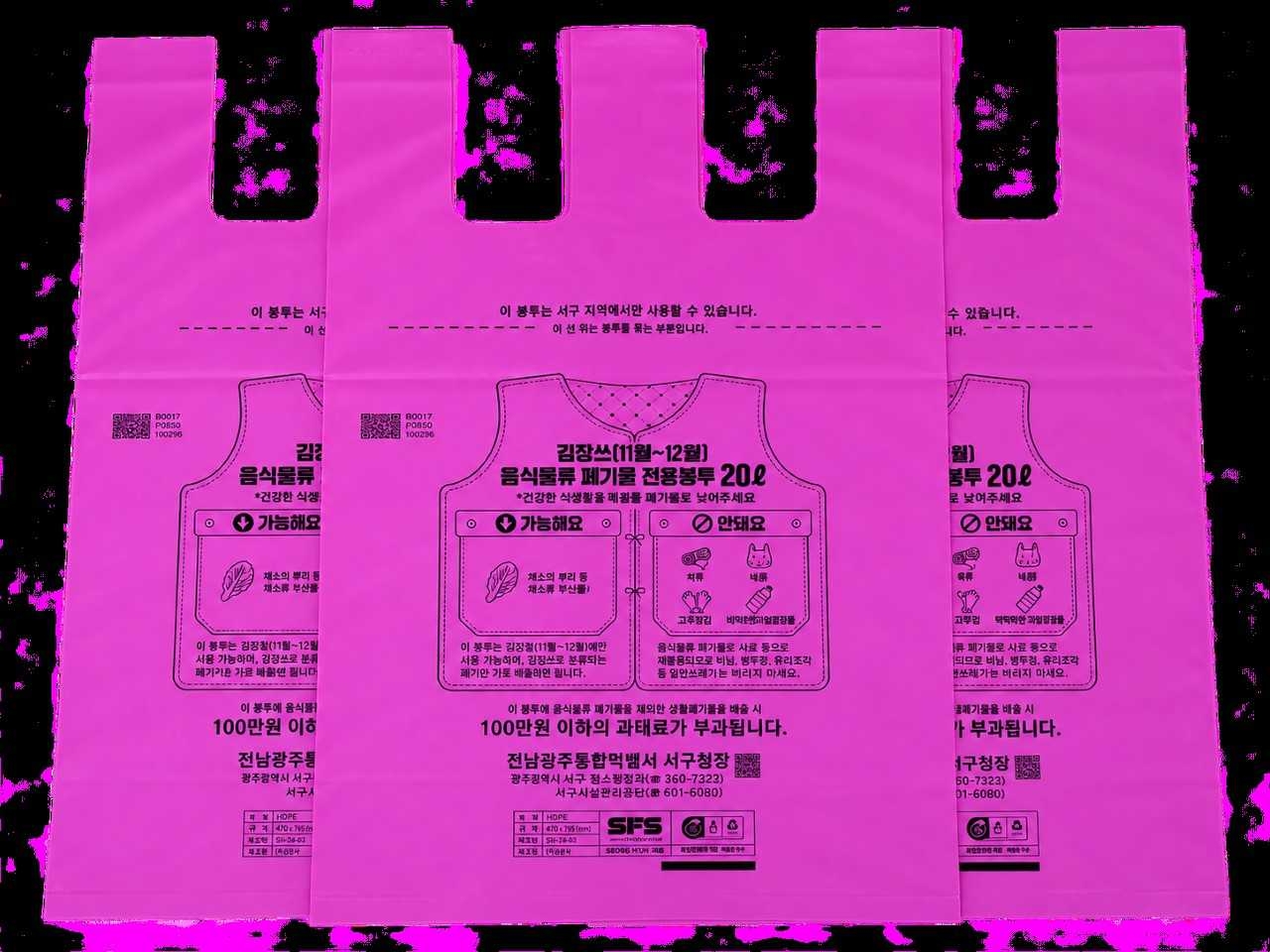
The South Jeolla-Gwangju Integrated Special City will roll out dedicated food-waste bags for kimchi-making season across Gwangju's five autonomous districts for two months, from November through December.
The bags are designed to ease the disposal of bulky food waste — such as cabbage leaves and radish greens — that accumulates in large quantities during kimchi-making season, and to address the problem of such waste being mixed with general household garbage during collection.
Under the current system, residents in single-family homes dispose of food waste by placing it in designated collection containers affixed with a payment sticker. Apartment complexes mostly operate a volume-based food-waste system using radio-frequency identification (RFID) technology, which charges fees based on the amount discarded.
During kimchi-making season, bulky food waste such as cabbage leaves is generated all at once, making it difficult to fit into existing designated containers. Residents had previously been allowed to use regular pay-per-bag garbage bags with a sticker attached during this period, but those bags were hard to distinguish from general waste, leading to mixed collection during pickup.
To address this, the South Jeolla-Gwangju Integrated Special City and the five autonomous districts decided to introduce dedicated food-waste bags for temporary use during kimchi-making season.
Use of the seasonal bags is not mandatory, and the existing RFID-based volume meters and designated food-waste containers remain available. Residents who find it difficult to dispose of bulky kimchi byproducts through existing methods may choose to use the dedicated bags instead.
The bags come in a single 20-liter size and are priced at 1,400 won per bag. Each district will use a different color from regular pay-per-bag garbage bags to make them easy to identify during collection.
The bags will be available from November through December and are intended for kimchi byproducts that qualify as food waste, including cabbage leaves and radish greens.
sij@heraldcorp.com