Parental leave violation reports rose from 219 in 2022 to 607 in 2025; 496 filed through August this year
Of 2,356 complaints filed over five years, only 57 led to indictment or fines
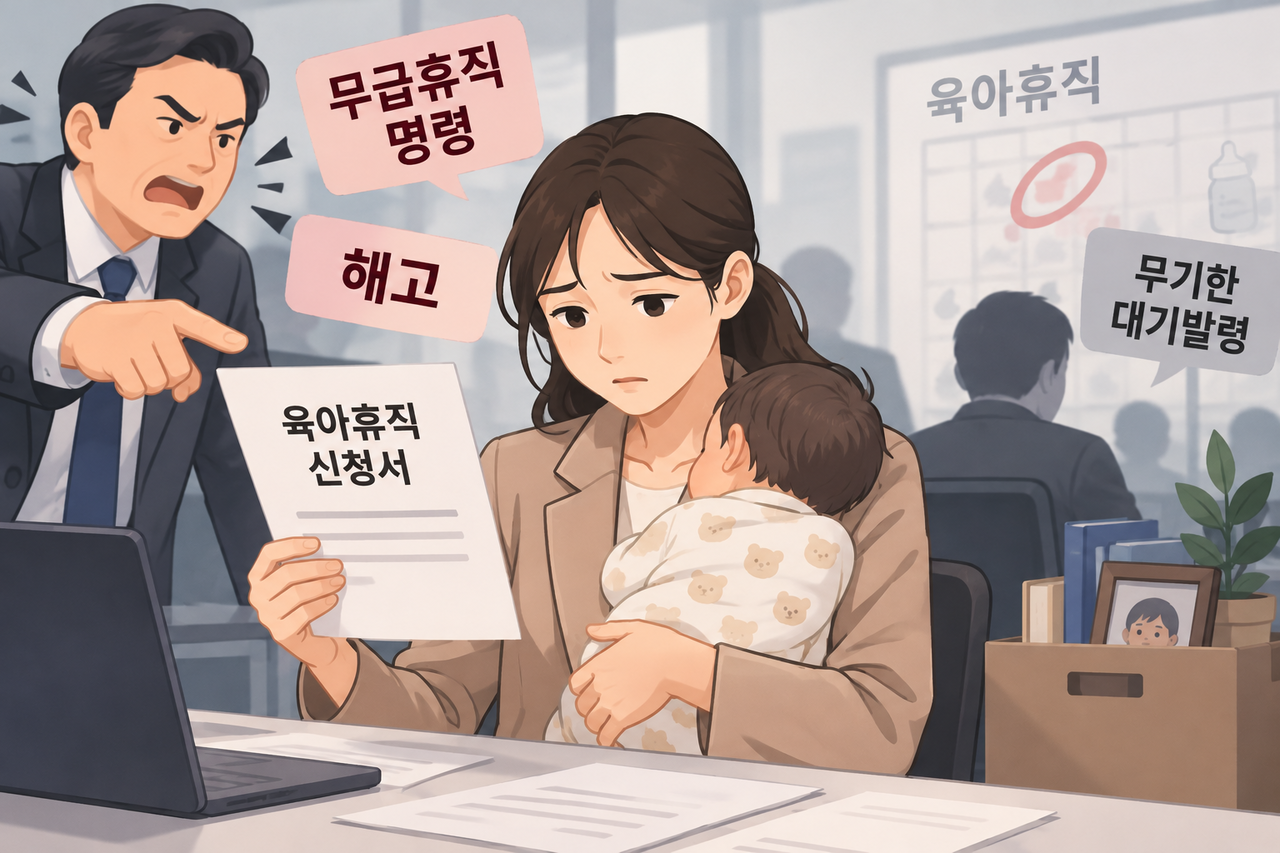
Reports of employers violating parental leave laws — by firing workers who request leave or forcing them onto unpaid leave — have nearly tripled over three years. As use of parental leave and reduced working hours for parents has expanded, so too have cases of workplace retaliation. Yet of 2,356 complaints filed over the past five years, only 57, or 2.4 percent, resulted in indictment or a fine.
According to data submitted by the Ministry of Employment and Labor to Democratic Party of Korea lawmaker Lee Geon-tae of the National Assembly's Climate, Energy, Environment and Labor Committee on Thursday, reports of parental leave violations rose from 219 in 2022 to 607 in 2025 — a 2.8-fold increase. Through August this year, 496 complaints had already been filed, putting the annual total on track to surpass last year's figure before year's end.
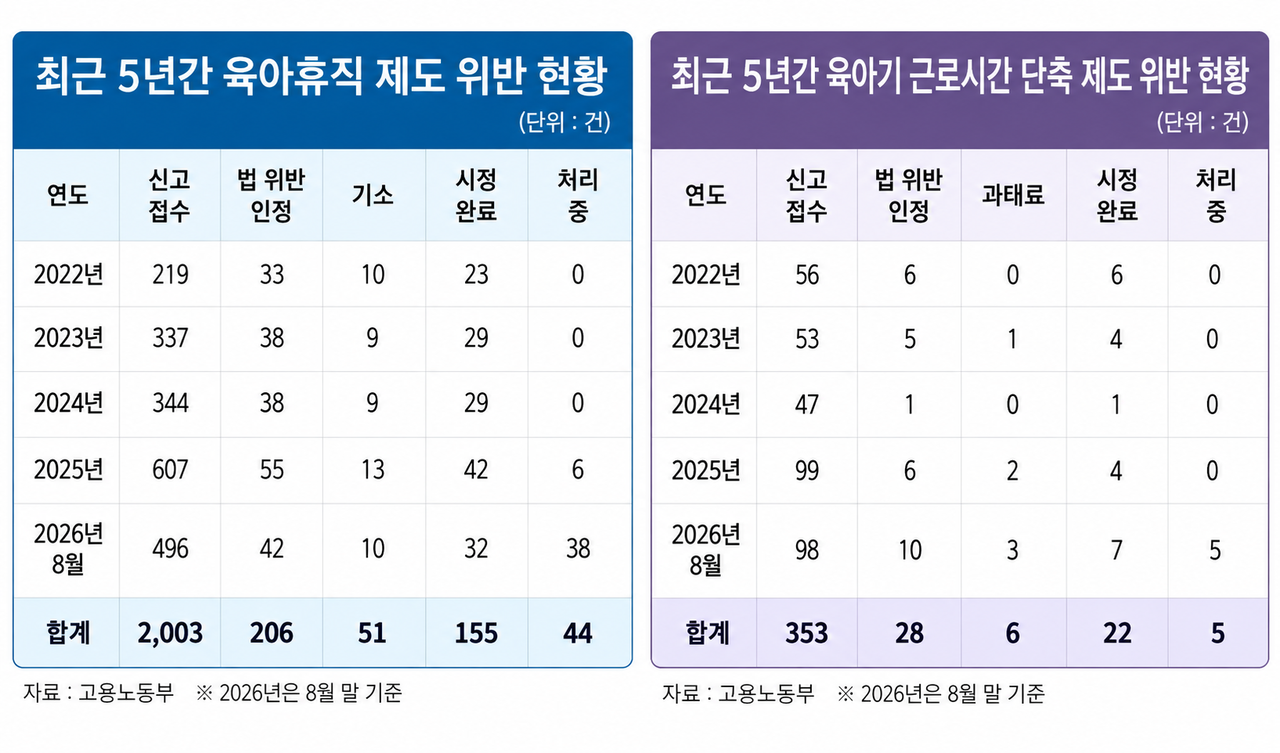
Complaints over violations of the reduced working hours system for parents rose from 56 in 2022 to 99 in 2025, a 1.8-fold increase. Through August this year, 98 cases had been filed, nearly matching last year's full-year total.
Use of both programs also grew sharply over the same period. Applications for parental leave benefits climbed 47.6 percent, from about 1.15 million in 2022 to about 1.7 million in 2025. Applications by male workers surged 88.1 percent, from 255,718 to 481,098. Applications for reduced working hours benefits rose 86.4 percent, from 183,318 to 341,707.
Dismissals, unpaid leave, indefinite standby: workplace retaliation cases mount
Among documented cases, some employers ordered workers who had applied for parental leave onto unpaid leave instead, cutting them off from parental leave benefits, while others required employees to report to work and perform duties even during their leave period.
Cases were also confirmed in which employers fired workers for applying for parental leave or effectively blocked their return to work.
In one case, an employer dismissed a worker who refused a request to delay the start of parental leave. At another workplace, an employer fired a worker who applied for parental leave after a dispute over a salary increase. In yet another case, a worker who applied to return after completing leave was ordered to remain at home on indefinite standby, with the employer citing business conditions.
Regarding the reduced working hours system, some employers refused to grant shorter hours on the grounds that the employment contract lacked the representative's signature, while others denied requests with veiled threats about contract renewal — violations that resulted in fines.
Of 234 confirmed violations, only 57 led to indictment or fines
Despite rising complaints, the rate at which cases result in actual punishment remains low.
Of 2,003 parental leave violation complaints filed over the past five years, the Ministry of Employment and Labor found legal violations in 206 cases, or 10.3 percent. Only 51 cases, or 2.5 percent, were referred for indictment. The remaining 1,753 cases, or 87.5 percent, were closed through non-prosecution, withdrawal of the complaint, a finding of no violation, or administrative closure.
Of 353 complaints filed over the same period regarding reduced working hours violations, 28 cases, or 7.9 percent, were found to involve legal violations. Of those, only six cases, or 1.7 percent, resulted in fines.
Combining both programs, 234 cases were confirmed as violations. Of those, 177, or 75.6 percent, were closed after the employer corrected the violation, while 57 resulted in indictment or a fine.
"Parental leave and reduced working hours are gradually taking root in the workplace, but the number of workers who get fired for trying to use these programs — or who suffer retaliatory gapjil — is also growing," Lee said.
Lee argued that the low prosecution and fine rate of around 2 percent, despite annual increases in reported violations, reflects lax labor inspections and lenient penalties by the Ministry of Employment and Labor. "To prevent these programs from becoming hollow in practice, the government must hold bad-faith employers strictly accountable and immediately put in place stronger labor inspections and sanctions," he said.
fact0514@heraldcorp.com