Companies verify long-distance fronthaul and network automation technology
Partnership targets AI-RAN and cloud-based next-generation network readiness
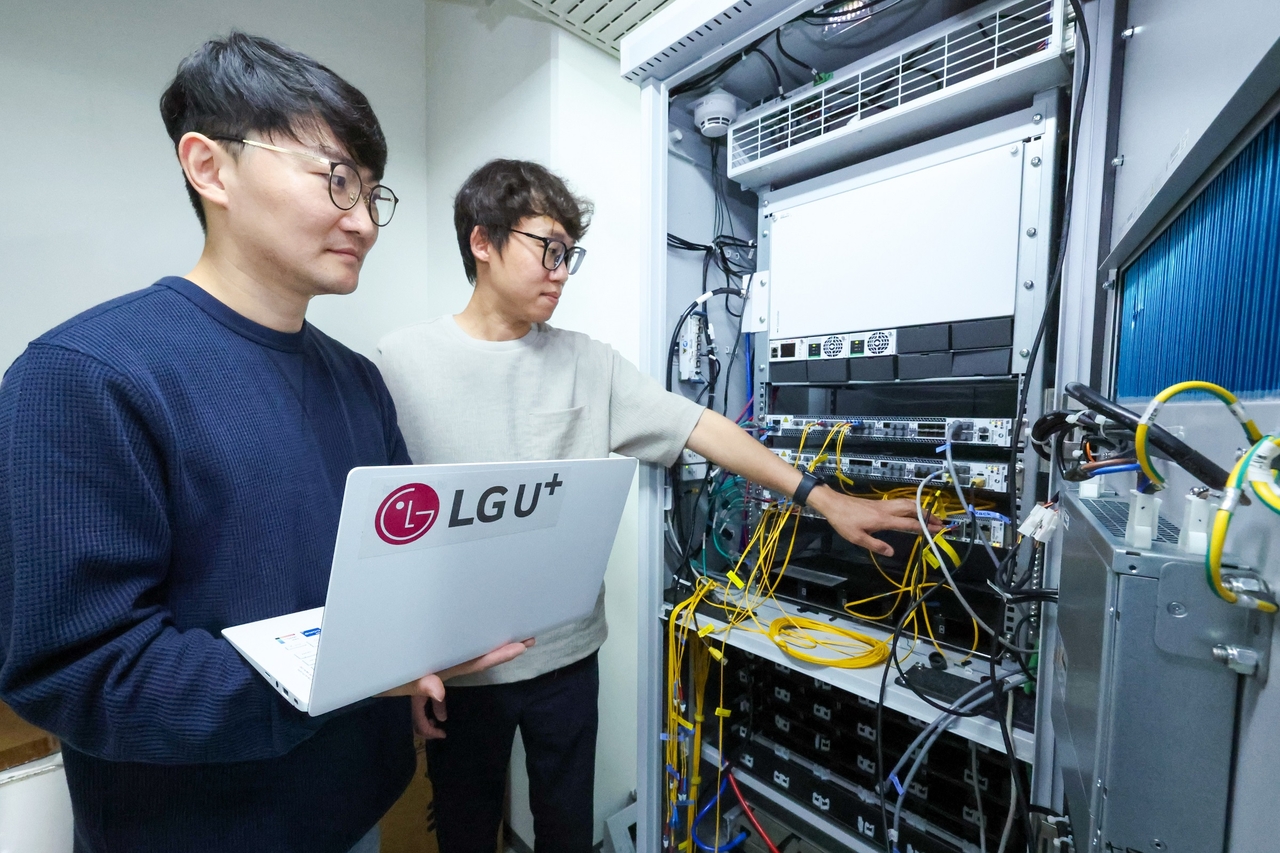
LG Uplus has teamed up with global telecommunications equipment maker Ericsson to extend the connection range between base station components by up to three times, as the South Korean carrier moves to prepare for AI-based radio access networks and cloud-based next-generation infrastructure.
LG Uplus announced Thursday that it had jointly verified with Ericsson a "long-distance fronthaul" technology capable of tripling the connection range between base station components while maintaining stable service quality.
The telecommunications industry has been paying growing attention to next-generation network architectures — including AI-RAN and cloud-based networks — that can improve equipment operational efficiency. The fronthaul is the segment connecting the radio unit, which serves as the antenna, to the distributed unit, which handles data processing. It is a critical component for building next-generation network environments.
In the verification, LG Uplus used fronthaul equipment and network automation functions provided by Ericsson to conduct tests in a long-distance fronthaul environment. The two companies also verified interoperability with LG Uplus's own base station equipment and tested network automation capabilities.
The tests confirmed that the connection range between base station components could be extended by up to three times without compromising service quality. The companies also tested "DU redundancy" technology, which automatically switches a failed unit to a backup. The results confirmed the potential to reduce human intervention and improve operational efficiency in future network management.
LG Uplus said the verification is particularly significant because it confirmed the technologies needed to introduce AI-RAN and cloud-based networks while continuing to use existing telecommunications infrastructure, offering a path to next-generation network operations without sacrificing stability.
LG Uplus plans to continue additional verification of fronthaul and network automation technologies, expanding tests in live network environments and working to secure the technologies needed to build AI-based autonomous networks.
"This verification is meaningful in that we confirmed the core technologies needed for future network environments," said Lee Sang-heon, head of network advanced development at LG Uplus. "We will continue to identify and develop new technologies required for the next-generation network era."
ko@heraldcorp.com