National Agricultural Products Quality Management Service runs pilot school meal program featuring certified traditional foods at five elementary schools nationwide; 87.8% of students say they will look for certification marks at stores
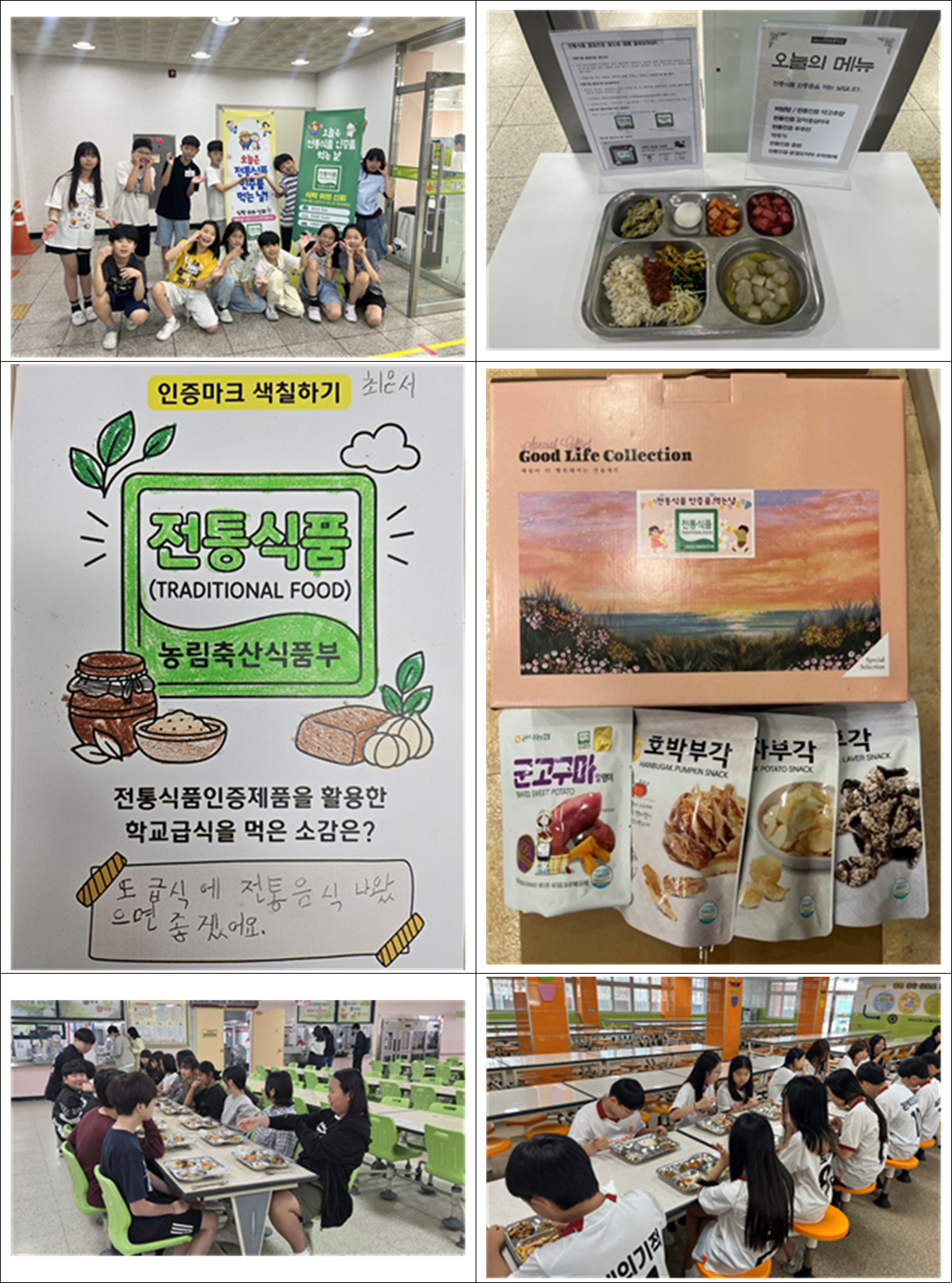
Nine out of 10 elementary school students who tried doenjang, gochujang and kimchi made from domestically grown ingredients through their school lunch program said they were satisfied with the experience. Some 91.8 percent said their positive feelings toward traditional Korean foods had grown, suggesting that school meal programs could meaningfully shape children's eating habits and food choices.
The National Agricultural Products Quality Management Service said it had completed a pilot run of a program called "Our School's Day to Eat Certified Traditional Foods," carried out in partnership with the Ministry of Education and five regional education offices at elementary schools across the country.
Five schools took part: Wangsan Elementary School in Gyeonggi Province, Bupyeongnam Elementary School in Incheon, Seongdang Elementary School in Daegu, Janggok Elementary School in North Gyeongsang Province and Gapyeong Elementary School in Busan. Students were served lunch menus featuring certified traditional foods — including doenjang, gochujang and kimchi — along with traditional snacks such as sikhye (a sweet rice drink) and hangwa (traditional Korean confections).
The traditional food quality certification is awarded to products that use 100 percent domestically grown ingredients as their primary raw material and contain no food additives, among other requirements. The program's defining feature was giving students a direct experience of traditional foods made from Korean-grown produce through the school meals they eat every day.
In a post-event survey, 91.4 percent of students said they enjoyed food cooked entirely with domestic ingredients. Some 91.8 percent said they had come to like traditional foods more, and 76.7 percent said the meals made them feel healthier.
Notably, 87.8 percent of respondents said they would look for traditional food certification marks when shopping at supermarkets — an indication that exposure to traditional foods at school could influence purchasing decisions at home.
Based on the pilot results, the agency plans to expand hands-on traditional food experiences and promotional activities targeting school-age children. It will also strengthen post-certification monitoring of certified traditional food products.
"This pilot program gave students a chance to directly experience the authentic taste and safety of traditional foods made from our own agricultural produce," National Agricultural Products Quality Management Service Commissioner Kim Cheol said. "We will expand experience-based outreach tailored to the next generation and continue to strengthen post-certification management."
adastra@heraldcorp.com