World Bank AI and Digital Summit opens in Seoul
Korea seeks to host AI cooperation centers of 6 multilateral development banks
Lee meets World Bank President Banga to discuss expanded AI, nuclear cooperation
Deputy Prime Minister and Minister of Economy and Finance Lee Hyung-il said Tuesday that South Korea aims to become a partner in helping developing countries navigate the AI transition, drawing on the country's own experience and capabilities.
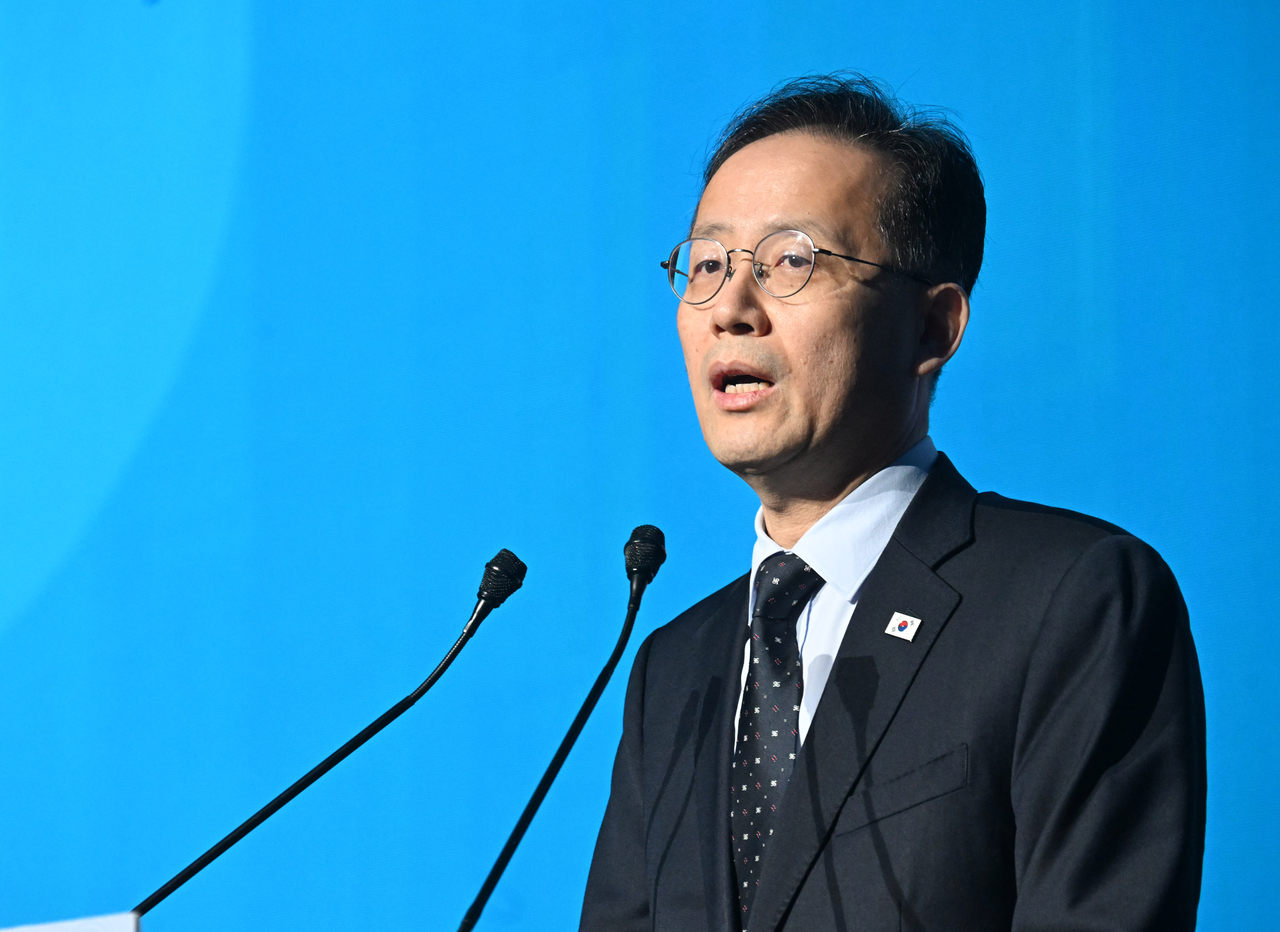
Lee made the remarks in an opening address at the Global AI and Digital Summit held at the Grand Hyatt Seoul, saying South Korea had firsthand experience of how technology can transform an economy and people's lives — having grown from a recipient of international aid into a donor nation that helps others develop.
The summit, co-hosted by the Ministry of Economy and Finance and the World Bank Group, runs Tuesday through Thursday in Seoul — the first time the World Bank Group's annual event has been held outside Washington, D.C. More than 900 participants from over 160 countries are attending. Key agenda items include job creation and productivity gains through AI and digital technology, and ways to expand growth opportunities for developing nations.
Lee said Korea is pursuing the creation of a global AI hub by bringing together AI cooperation centers from six multilateral development banks, including the World Bank, to realize what he called a "global AI basic society" — one in which no country or individual is left behind in benefiting from AI.
He said Korea is also supporting developing countries in adopting AI solutions and building sector-specific AI capabilities through the World Bank Global AI and Digital Knowledge Center, which opened last December, and an AI and digital fund contributed by the Korean government.
Lee also outlined plans to identify projects tailored to the needs and conditions of developing countries using a "K-AI package." He said these efforts are contributing to the World Bank's "@A Billion" goal of providing digital access and opportunity to 1 billion people by 2030.
Before the opening ceremony, Lee visited a promotional booth for the knowledge center and reviewed the first project approved under the digital fund — an initiative to expand a pharmaceutical tracking system across East Africa. The system, built in Mozambique using South Korean technology, is being extended to neighboring countries with AI analytics integrated.
On Monday, Lee met with World Bank President Ajay Banga to discuss ways to expand cooperation in AI and nuclear energy.
The two sides agreed to make active use of South Korea's AI innovation capabilities and practical experience in cooperation with developing nations. They also discussed how Korea's nuclear power plant development experience and technology could contribute to stable energy supply and sustainable development in those countries.
Banga praised South Korea as a country with a well-rounded set of development capabilities — spanning public finance, private capital and technology — and expressed a strong commitment to significantly expanding cooperation with Korean companies on investment in developing nations and the mobilization of private capital.
Both sides also agreed that the fruits of industrial development should translate into greater job opportunities for young people. Lee asked for the World Bank's attention and support in helping more Korean nationals advance to senior positions within the organization.
y2k@heraldcorp.com