Yeongjong-gu's repayment of 18.1 billion won is part of normalizing an abnormal situation
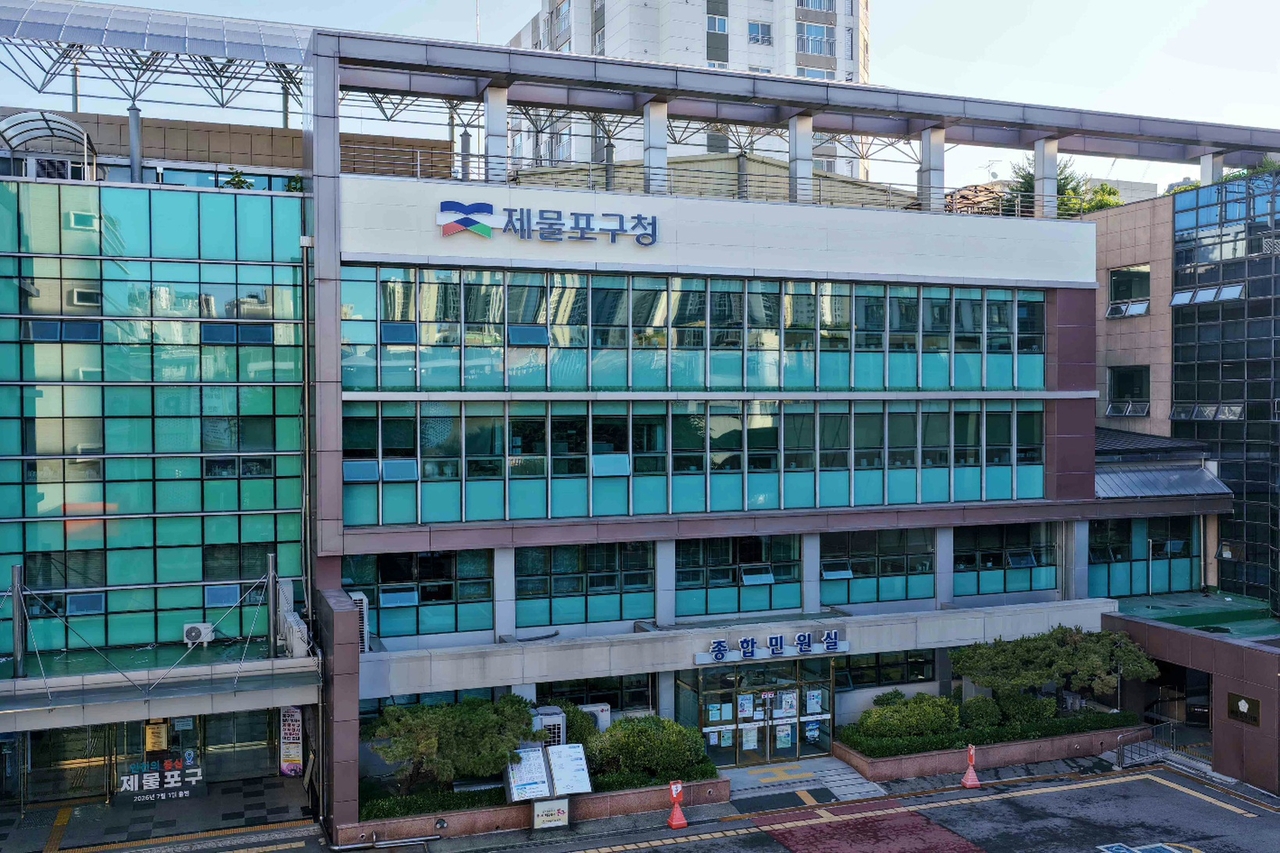
Incheon's Jeomulpo-gu has brushed off Yeongjong-gu's recent decision to repay 18.1 billion won ($13.5 million) in short-term borrowings that originated during the former Jung-gu era, calling it "nothing more than the normalization of an abnormal situation" — and is now demanding an explanation for what it describes as lopsided budget spending by the predecessor district.
Jeomulpo-gu issued an official statement Monday saying the repayment by Yeongjong-gu was not a magnanimous gesture but an obligatory discharge of debt under the principle that the party responsible for incurring a liability must bear its cost.
Earlier, in March, the Joint Working Committee for the Launch of Jeomulpo-gu established a fund-succession principle stipulating that short-term borrowings should be avoided during the administrative reorganization process and that no additional fiscal support would be provided between the newly created districts even in the event of a funding shortfall.
Jeomulpo-gu said, however, that the same agreement left it unable to receive approximately 12.3 billion won in outstanding national and city subsidy balances it was entitled to collect.
Under those circumstances, the district said, saddling Jeomulpo-gu with an additional 18.1 billion won in short-term debt would contradict the spirit of the original agreement and impose an unreasonable double fiscal burden on the district.
Before the two districts were established, the former Jung-gu concentrated spending in the Yeongjong area between January and early June this year, executing 10 of 11 large-scale projects worth more than 1 billion won each — a combined 17.4 billion won — in that zone. Among the most notable was the 2.4 billion won purchase of a site for the Unseo 2-dong Community Service Center.
By contrast, only one project was carried out in the inland area of the former Jung-gu — the 1 billion won construction of the Gaehang-dong Community Service Center — highlighting a severe geographic imbalance in budget allocation.
Jeomulpo-gu also pointed out that Jung-gu spent a combined 8.2 billion won in the first half of the year on preparations for Yeongjong-gu's launch, including 4.4 billion won to secure a temporary office building and 900 million won on workspace fit-out. That spending drained its finances and ultimately forced the issuance of 18.1 billion won in short-term borrowings.
On top of that, unresolved obligations left behind by the former Jung-gu and passed on to Jeomulpo-gu — including noise-barrier installation at Yurim Norway Forest, compensation for a fire in Inhyeon-dong, and utility bills — have already exceeded 10 billion won.
When additional liabilities yet to be identified are factored in, the fiscal pressure on Jeomulpo-gu is expected to intensify further.
"It is unacceptable to transfer debt to us simply because we inherited part of the administrative territory, while ignoring the fiscal mismanagement of the former Jung-gu and the circumstances that gave rise to the borrowings," a Jeomulpo-gu official said. "We will conduct a thorough and comprehensive review of the legal validity of the debt succession, whether the existing fund-succession principles were violated, and whether the borrowing procedures were improper."
gilbert@heraldcorp.com