Remarks made at National Assembly audit of Seoul city government
'Government must abandon obsession with owner-occupancy'
'Prices more likely to keep climbing through year-end, early next year'
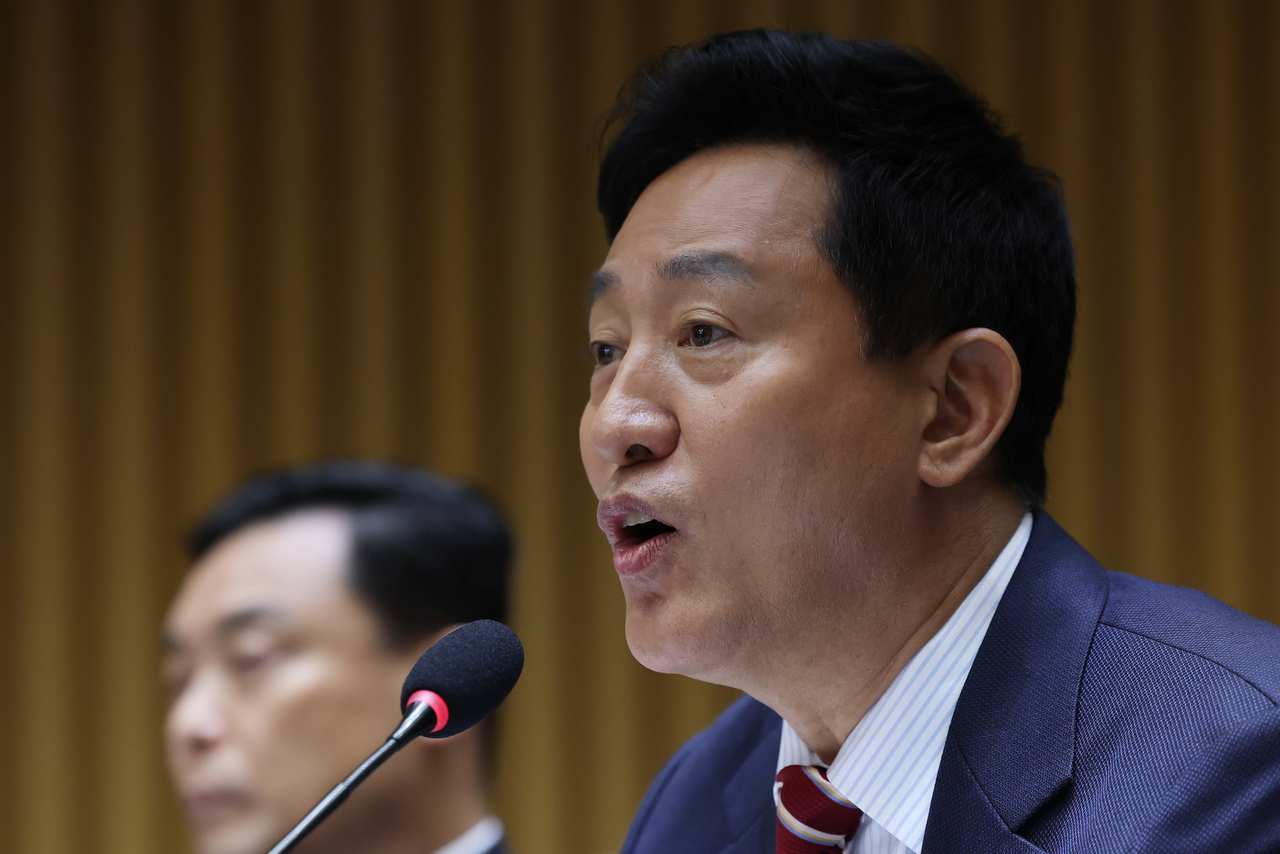
Seoul Mayor Oh Se-hoon said Monday that home prices in the capital are likely to keep rising through the end of this year and into early next year. "As long as the jeonse and monthly rent shortage continues, a rise in sale prices in Seoul's outer districts is as clear as day," Oh said.
Speaking at a National Assembly audit of the Seoul Metropolitan Government conducted by the Land, Infrastructure and Transport Committee, Oh said jeonse had "disappeared within a year and a half of the Lee Jae Myung administration," adding that he believed the president held "a critical, even hostile view" of the jeonse system.
When People Power Party lawmaker Jeong Dong-man asked whether the housing ladder — saving up, moving from monthly rent to jeonse, then buying — was not the natural path for ordinary people, Oh replied that in Seoul's outer areas, particularly the northeastern and southwestern districts, "70 to 80 percent of jeonse supply has vanished."
"The president and the Ministry of Land, Infrastructure and Transport must not turn a blind eye to this severity," Oh said. "The suffering of ordinary people is reaching the sky." He called on the government to shift away from its policy stance fixated on owner-occupancy and to present concrete measures to ease the jeonse and monthly rent crisis.
When Jeong pressed him to forecast Seoul home prices, Oh repeated that as long as the rental shortage persisted, rising sale prices in the city's outer areas were inevitable.
Responding to a separate question from PPP lawmaker Eom Tae-young about government officials' projections of price stabilization, Oh said the broad consensus among experts was that "prices are more likely to keep moving upward than to fall by year-end or early next year."
Oh also expressed concern that the government's regulations on multi-home owners and its owner-occupancy-centered policies could dampen the supply of rental housing.
"Another name for a multi-home owner can be a private rental landlord," Oh said. "While some hold multiple properties for speculative purposes, that housing stock is being provided to residents in the form of jeonse and other rental arrangements."
Oh also said Monday that the government should actively cooperate with housing supply through redevelopment and reconstruction projects. Responding to a question from PPP lawmaker Shin Seong-beom, he said Seoul had exhausted its available land, leaving roughly two-thirds of new housing supply dependent on redevelopment and reconstruction. "The housing shortage cannot be solved by ignoring that reality," he said.
Separately, in response to a question from Democratic Party of Korea lawmaker Mo Gyeong-jong about the low advance payment rate for unreturned deposits under Seoul's youth safe housing program, the city government said the program was private rental housing, and that the obligation to verify deposit insurance enrollment rested with tenants, while supervisory authority over rental operators lay with district mayors.
The city added that it was nonetheless pursuing practical protection measures to prevent harm to young tenants who lacked social experience, in the interest of residential stability for residents. It said it had already paid 100 percent of 16.1 billion won ($12 million) in unreturned deposits in advance to eligible tenants wishing to vacate, and would continue to provide the same support to applicants who met the requirements.
lucky@heraldcorp.com