Prior survey conducted at Galtimot Pond habitat
20 giant water bugs released in first phase
Follow-up activities begin under biodiversity MOU
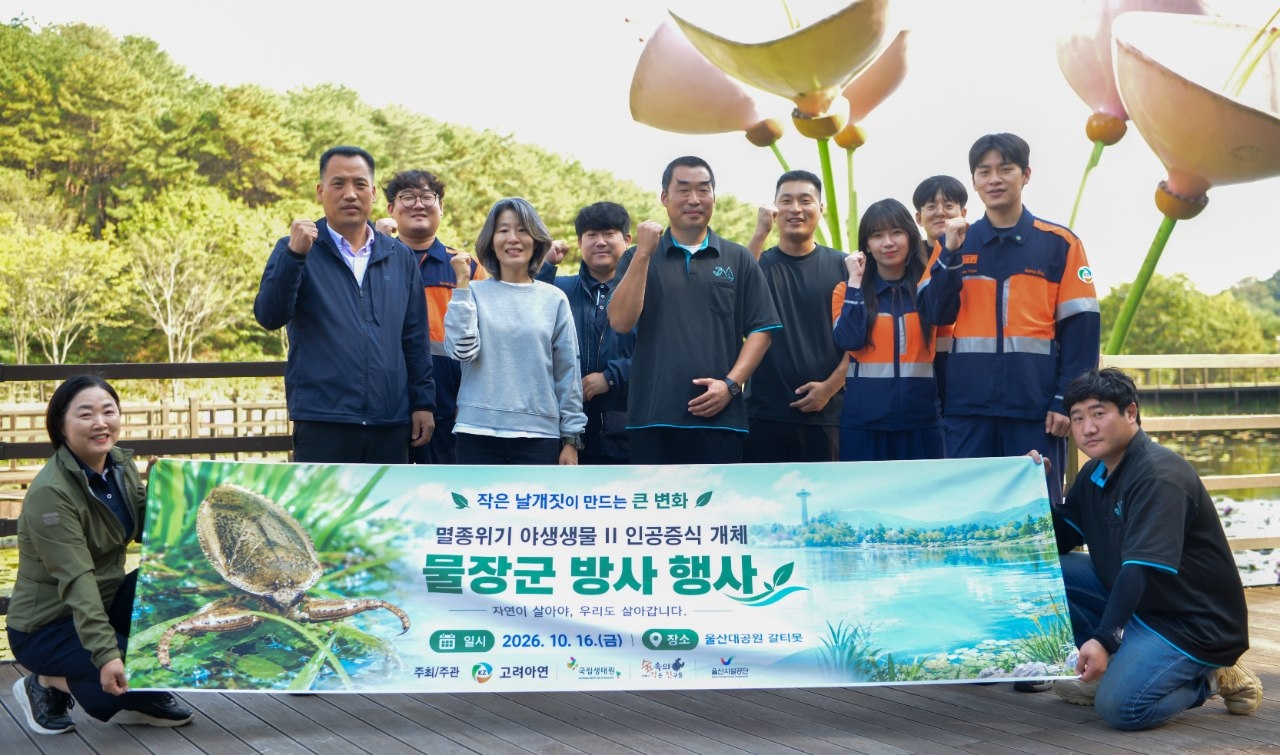
Korea Zinc's Onsan smelter released 20 giant water bugs — a critically endangered species — at Galtimot Pond in Ulsan Grand Park on Friday, in partnership with the National Institute of Ecology, Ulsan-based social enterprise Sooksok-ui Jageun Chingudeul and the Ulsan Facilities Corporation.
The giant water bug is a representative aquatic insect that inhabits freshwater ecosystems such as streams and ponds. Its population has declined due to habitat destruction and environmental changes, placing it on the list of endangered wild species in need of protection and restoration. The release was a follow-up to an MOU on endangered insect restoration and biodiversity enhancement that Korea Zinc signed with the National Institute of Ecology and Sooksok-ui Jageun Chingudeul in May.
Ahead of the event, the Onsan smelter conducted a preliminary survey of the Galtimot Pond area in late September to assess habitat conditions and ensure the site could support natural habitat restoration for endangered insects. Having released 20 giant water bugs this year, the smelter plans to release an additional 20 next year. It also intends to provide ongoing support for the phased restoration of natural habitats for endangered insects and to continue cooperating on local ecosystem conservation.
"We believe this giant water bug release is a meaningful example of collaborative efforts for endangered insect restoration translating into real on-the-ground action," an Onsan smelter official said. "We will continue working with specialist institutions and local communities to protect endangered species, advance biodiversity, and carry out a range of social contribution activities for regional ecosystem conservation."
Beyond the water bug release, Korea Zinc contributes 50 million won ($37,200) annually to its endangered insect restoration project, combining the National Institute of Ecology's expertise with Sooksok-ui Jageun Chingudeul's field experience across a range of biodiversity conservation activities.
Meanwhile, employees at Korea Zinc's Onsan smelter recently carried out their second "adopted beach" cleanup of the year at Pyeongdonghae Beach in Ulju-gun, Ulsan, as part of the company's broader social contribution efforts.
likehyo85@heraldcorp.com