SBS drama hits 18.5% ratings by episode 4, tops Netflix non-English chart
Korean remake transplants Japanese medical thriller into home-grown healthcare reality
![A scene from SBS's "Doctor X: Mafia in White" [SBS]](https://wimg.heraldcorp.com/news/cms/2026/10/18/news-p.v1.20261018.858abcbbe42d4579ab0e4213fdbacf51_P1.png)
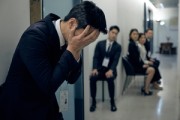
When the hospital director collapsed, the surgeons threw down their scalpels — leaving an elderly patient's abdomen open on the table. The director had pushed through an unnecessary open surgery to show off his reputation, only to go into anaphylactic shock from a latex glove allergy. Shouting erupted in the operating room, where only an intern, an anesthesiologist and nurses remained. When someone pleaded for the patient, the doctors answered "the director comes first" and walked out. Into that void stepped freelance surgeon Gye Su-jeong, played by Kim Ji-won. After finishing the operation, she turned on the doctors who had followed the director out.
"This is exactly why I can't stand you people. All you ever did was study to make money and get ahead — you're pathetic."
From its very first episode, SBS's Friday-Saturday drama series "Doctor X: Mafia in White" (hereafter "Doctor X") has trained its sights not on any single physician but on the vast system and hierarchy of medical schools and hospitals — operating rooms where no one dares question those above them, hospitals where rank outweighs patients. The show picks at the festering wounds of Korea's university hospital system and inflates them to maximum effect. Viewers have responded to this gleefully exaggerated indictment, with Kim Ji-won driving the drama's popularity. Two years after "Queen of Tears," she has done it again.
The ratings curve has been steep. According to Nielsen Korea, the show drew 11.4 percent nationally in episode 1, 14.9 percent in episode 2, 15.1 percent in episode 3, and 18.5 percent in episode 4 on Saturday — rising without exception each week. The episode 1 figure is the highest debut rating for a miniseries this year. On Netflix's official chart site Tudum, the show ranked No. 1 among non-English TV series globally for the week of Oct. 5–11. Within three days of its release it had accumulated 4.6 million views and 9.9 million hours watched, entered the top 10 in 36 countries and regions, and topped the charts in seven of them, including South Korea, the Philippines and Indonesia. Even in Japan — the home of the original — it debuted at No. 9 that same week.
![A scene from SBS's "Doctor X: Mafia in White" [SBS]](https://wimg.heraldcorp.com/news/cms/2026/10/18/news-p.v1.20261018.6898494d0a8d4fa986b6ebe6f775eb97_P1.png)
Same skeleton, different temperature: Michiko crosses the sea after 14 years
The drama is based on TV Asahi's "Doctor X: Surgeon Daimon Michiko," which ran for seven seasons and 69 episodes from 2012 to 2021. Every time Yonekura Ryoko's Daimon Michiko delivered her signature line — "I never fail" — Japanese living rooms erupted. The series averaged a 20.4 percent household rating across all seasons, according to Video Research data for the Kanto region. A theatrical film followed in 2024. The Korean version is the franchise's first overseas remake.
The skeleton has been carried over intact: a freelance surgeon dispatched by a medical staffing agency, a contract spelling out a list of things she will not do, and fixed working hours with premium pay. Japanese popular-culture critic Matsutani Soichiro, writing for Yahoo Japan, described the original as a fusion of Yamazaki Toyoko's novel "Shiroi Kyoto" and Tezuka Osamu's comic "Black Jack" — a structure that drops a solitary genius surgeon into the middle of a university hospital's power politics.
The most striking difference is one of tone. The original was punctuated throughout with comic relief — mahjong scenes, public bathhouse moments. Matsutani noted that the Korean version is "far more serious in its overall register, with almost no comedic scenes." He also observed that the original's iconic catchphrase receives comparatively less emphasis in the Korean adaptation. That aligns with how TV Asahi itself introduced the remake when announcing the licensing deal, billing it as a "social-issue suspense" and "medical noir."
Gye Su-jeong's appearance has been stripped down as well. Where heavy makeup, high heels and form-fitting clothes served as Michiko's armor, Gye fills the screen with a bob haircut, chunky boots and understated clothing. Kim Ji-won said at the production press conference that in her previous work she had leaned heavily on glamorous fashion, but this time she wanted to pare things back as much as possible.
![A scene from SBS's "Doctor X: Mafia in White" [SBS]](https://wimg.heraldcorp.com/news/cms/2026/10/18/news-p.v1.20261018.31ea48f93830475682ed6df470782a61_P1.jpg)
Strikes, CCTV, janitors: the Korean remake widens the rot
The deeper Koreanization happens at the level of narrative. Where the original targeted the long procession of attending-physician rounds and the factional infighting of academic medicine — the "Shiroi Kyoto"-style hospital politics — the Korean version pulls in the medical realities this society has just lived through: the mass walkout by doctors opposed to medical school enrollment increases, and the mandatory installation of CCTV cameras in operating rooms. The original's premise of a "mercenary doctor" unaffiliated with any hospital gains fresh plausibility when set against a hospital left shorthanded after a strike.
The patients the drama creates each week have also changed. According to Matsutani, in episode 2 — where surgeries for a powerful figure and an ordinary patient overlap — the original did not side with the ordinary patient. The Korean version puts a middle-school girl in that slot: her mother has a disability and her aunt is a worker on strike. Gye commandeers the wheelchair of a VIP patient who also happens to own the company her aunt is striking against, and uses it to move the girl. In episode 3, the patient rushed in with a cerebral aneurysm is Yeo Jeong-sun, a hospital janitor. Her story begins just as a transfer order is about to be issued because no surgeon is available in-house. The drama identifies precisely who stands at the very end of the line when healthcare collapses.
The label "white mafia" for university hospital doctors remains. Their cowardice and absurdity are portrayed not as the product of individual malice but as the outcome of hierarchy and competing interests. Doctors who fall silent before the hospital director and flee in a crisis are figures shaped by the system itself. The drama places a cross-section of that system's rot under a magnifying glass.
![A scene from SBS's "Doctor X: Mafia in White" [SBS]](https://wimg.heraldcorp.com/news/cms/2026/10/18/news-p.v1.20261018.41ec0ad51fc44ca5a4e525f191a10c2a_P1.jpg)
The protagonist's gender also reads as fresh when viewed within the genre's lineage. From "Shiroi Kyoto" (2007) through "Romantic Doctor, Teacher Kim" to "Trauma Center" (2025), the all-powerful genius physician has almost always been male. Female-doctor dramas such as "Surgeon Bong Dal-hee" (2007) and "Doctor Cha Jeong-suk" (2023) leaned toward narratives of growth and reinvention. Gye Su-jeong arrives already fully formed, shaking a male-dominated hierarchy from the start. Watching Kim Ji-won — the face of romance in "Descendants of the Sun" and "Queen of Tears" — prove herself as a solo lead in a genre piece with no love story mirrors the original's own formula: the Japanese series, too, stripped its protagonist's romantic life out entirely.
'Oversimplifying medical staff': debate over how far the exaggeration goes
The degree of exaggeration has drawn pushback. A person identifying himself as an orthopedic surgeon said on SNS on Tuesday that he had filed a review request with the Korea Communications Standards Commission. He said the show "repeatedly depicts rounds as pointless busywork, reduces medical staff to incompetent villains, and ignores the inherent uncertainty of medical practice." He acknowledged that the complaint was unlikely to result in sanctions. The story was picked up by the Japanese sports daily Daily Sports, reaching the home country of the original.
Questions about medical accuracy have also mounted. Criticism has focused on the decision in episode 1 to send an inguinal hernia patient into emergency surgery, and on a scene depicting a 300-joule defibrillation. Nam Gung-in, a professor of emergency medicine at Ewha Womans University Mokdong Hospital who served as the show's on-set medical consultant, wrote on SNS that "if a medically incorrect scene appears, you can assume the consultant and the production team argued about it and the consultant lost." The production team runs a disclaimer each episode stating that the show is fiction and contains scenes adapted differently from actual medical practice. SBS said it had no comment.
In fact, the original also portrayed its doctors in a comic light. The difference is that while the Japanese version satirized a generalized "Shiroi Kyoto"-style hospital culture, the Korean version deploys the same exaggerations in front of viewers who experienced real gaps in medical care only a few years ago. That is why an uncomfortable question lingers beneath the cathartic laughter.
shee@heraldcorp.com