
Taejong studied in Hoengseong as a prince
He later made it a military training headquarters
History set aside, the festival celebrates trekking and local food
If Yeoncheon was the military training ground favored by King Sejong — who championed the development of the Singijeon, Joseon's multiple-launch rocket system — then Hoengseong in Gangwon Province was where Sejong's father, King Taejong, dreamed of building a powerful state and led his combined military exercises and hunting rallies.
Taejong had studied at Gangnimsa Temple in Hoengseong during his years as a prince — the temple was later burned by Japanese forces during the Imjin War and never rebuilt — and after ascending to the throne he returned to the area to reconnect with the spirit of his youth. He also held gangmu, the royal military exercises and hunting competitions, throughout the Hoengseong area, and lavished support on Gangnimsa. Yet after Japanese troops destroyed it during the reign of King Seonjo, no subsequent monarch moved to rebuild it.
Records show that gangmu was held six times in the Hoengseong area during Taejong's reign alone. In modern terms, Hoengseong served as the on-site headquarters for what would be the equivalent of the Ulchi CPX.
One can easily imagine the king cutting a commanding, charismatic figure at the center of those hunting rallies — a scene that appears frequently in films — and that image was most likely played out in Hoengseong.
Taejong appears to have carried a sense of guilt over the purge of loyalists from the late Goryeo period.
Won Cheon-seok, a leading scholar of the era who had taught Taejong in his youth and was a friend of Yi Saek — a loyalist killed by the coup forces of Taejong's father, Yi Seonggye — had retreated into seclusion in Hoengseong. Taejong reportedly visited him there on several occasions and urged him to accept an official post, but Won refused each time. Taejong is said to have eventually appointed Won's son to a local governorship instead.
Historical opinion on King Taejong Yi Bang-won remains divided — some argue that Korean history would have been more glorious had General Choe Yeong not been killed and had the Yi Seonggye–Yi Bang-won coup never taken place — but Hoengseong's deep ties to Taejong have given rise to a cultural festival in his honor.
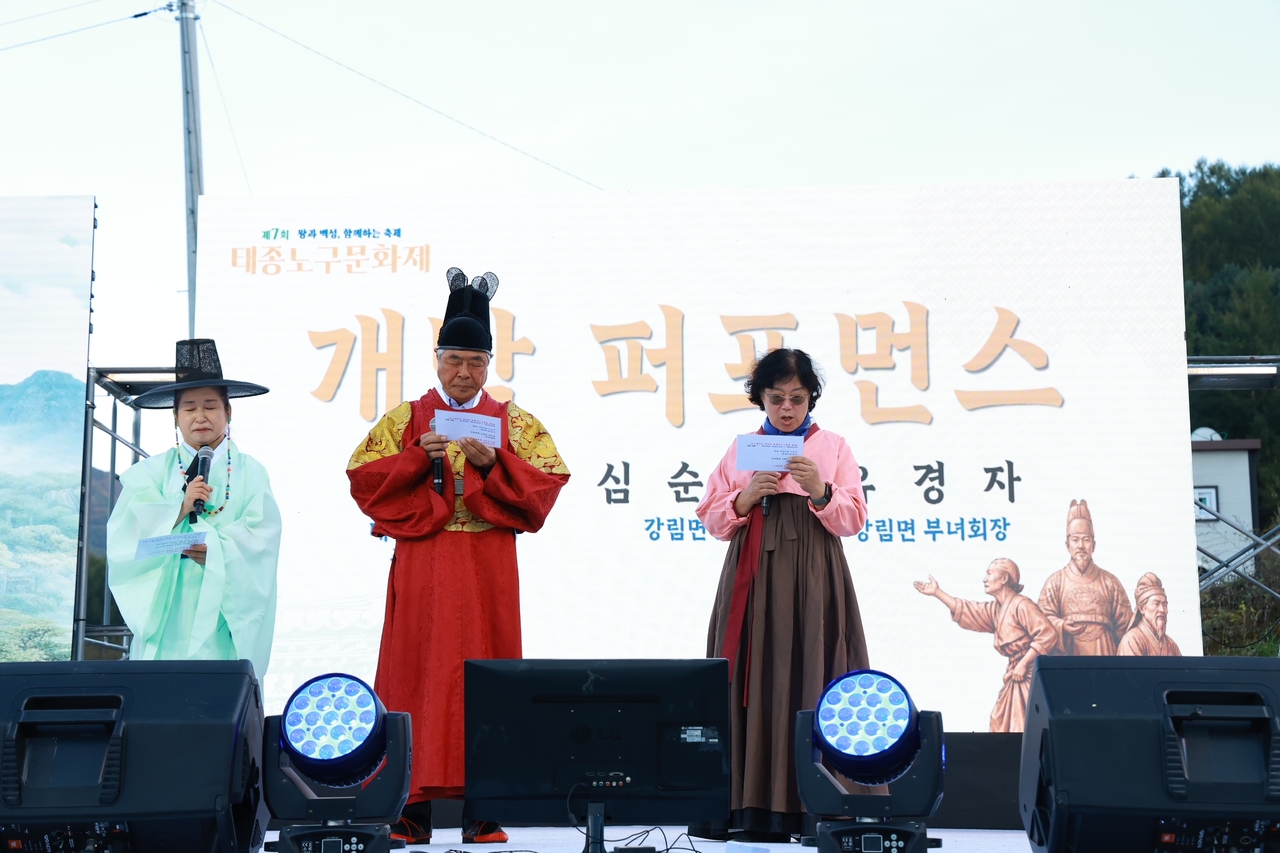
The seventh Hoengseong-gun Taejong Nogu Cultural Festival, organized by the festival's steering committee, opened Saturday evening and runs through 5 p.m. Sunday at the Nogu Shrine area in Gangnim-myeon.
This year's theme is "The King and the People, a Festival Together." While the general sentiment of the Joseon era held that Yi Bang-won was far from a ruler who shared in the joys of his people, the atmosphere in places with close ties to Taejong — including Hoengseong, Cheongju and Yeongdo-gu in Busan — tends to be more favorable toward him.
The Hoengseong Taejong Nogu Cultural Festival is pitched less as a moment for historical reflection and more as an occasion for visitors to simply come and enjoy themselves.
The festival's signature programs are two trekking routes: the "King's Path" and the "Teacher's Path." The Teacher's Path passes through a national park section open to the public for only two days a year, exclusively during this festival, offering a special experience of valleys and forest. The "King's Procession" reenactment was completed on the first day.
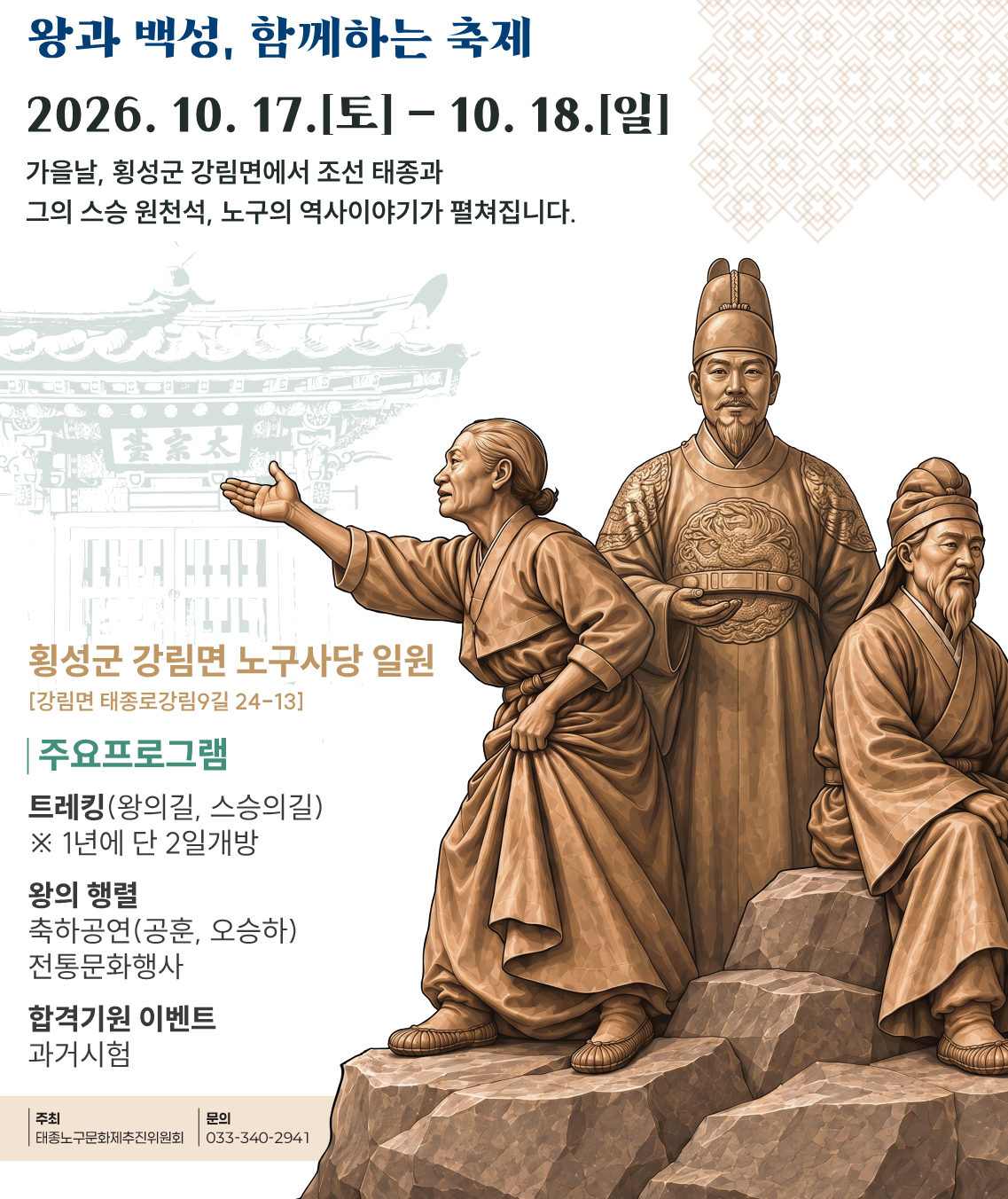
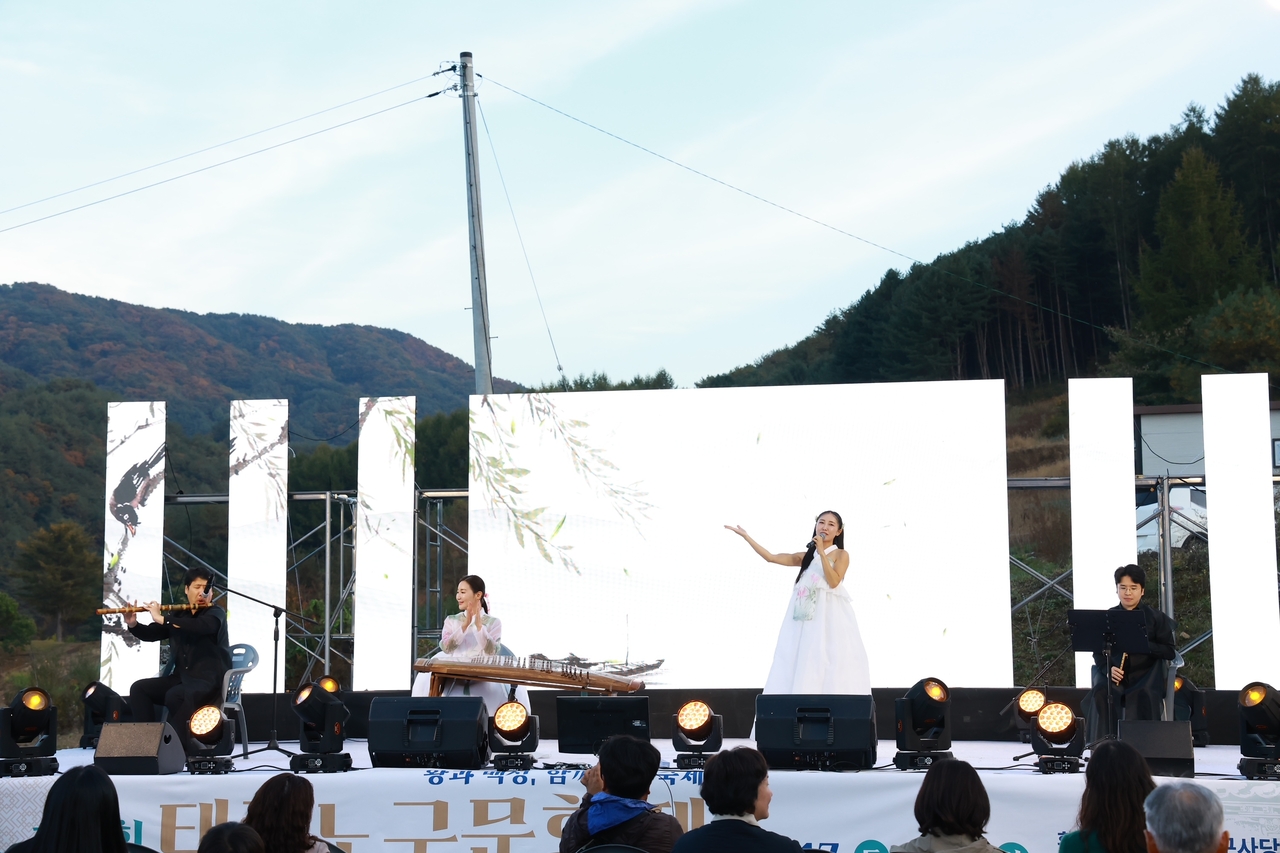
New traditional performing arts offerings include performances by the Wonju Maegi Nongak troupe and the Kim Yeong-a Traditional Arts Company. Drawing on the historical fact that Taejong studied in Gangnim-myeon as a boy before becoming king, the festival also features a special exam-success prayer event under the theme "Receive the king's energy and pass your exams."
As in last year, visitors can take part in a hands-on civil service examination experience held once daily. Exhibition halls — including a themed pavilion and a Joseon-era display — offer an accessible introduction to Joseon history, while the outdoor stage hosts a full lineup of performances, including community self-governance shows, special performances and a local singing contest.
Inside the festival grounds, a range of exhibition and activity booths offer local agricultural products, traditional tavern-style food, hanbok dress-up experiences, natural dyeing, henna-style flower fingernail staining, dalgona candy making and shooting games. Along the entrance path, visitors can write wishes on banner flags and hang them on sotdae poles, and a photo exhibition titled "Gangnim History in Pictures" showcases images of Gangnim-myeon from the 1960s through the 1990s.
abc@heraldcorp.com




