
5th Korea Agriculture Future Innovation Forum held Friday at aT Center in Seoul
Professor Min Seung-gyu outlines K-food globalization strategy combining cuisine and ceramics
Masters Lee Ha-yeon and Ko Hwa-soon share visions for kimchi industry and 10 trillion won namul market
Kimchi and namul — Korea's traditional fermented and wild-vegetable dishes — are gaining recognition not just as foods on the world's tables but as vehicles for Korean culture. A new vision was put forward Friday to sharpen the competitiveness of K-food by combining the global expansion of kimchi, the industrialization of namul as a convenience food, and the aesthetic value of traditional Korean ceramics.
Herald Media Group and the Korea Institute of Life Science and Technology held the 5th Korea Agriculture Future Innovation Forum under the theme "Kimchi and Namul: Captivating the World as K-Food" at the Grand Hall of aT Center in Seocho-gu, Seoul, on Friday.
Now in its fifth year, the forum was organized to explore new growth opportunities for Korea's agriculture and food industries. This year's edition focused on reassessing the industrial value of kimchi and namul and on strategies for making traditional Korean food culture competitive in global markets.
The forum placed particular emphasis on expanding K-food globalization beyond simply increasing food exports, framing it instead as an industry where cuisine, tableware and food culture come together.
In the keynote address, Min Seung-gyu, a special professor at Hankyong National University and former vice minister of agriculture, food and rural affairs, presented a new vision for K-food under the theme "The Aesthetics of K-Food: Where Kimchi, Namul and Ceramics Meet," exploring the possibilities that arise from pairing the flavors of Korean food with the beauty of the vessels that hold them.
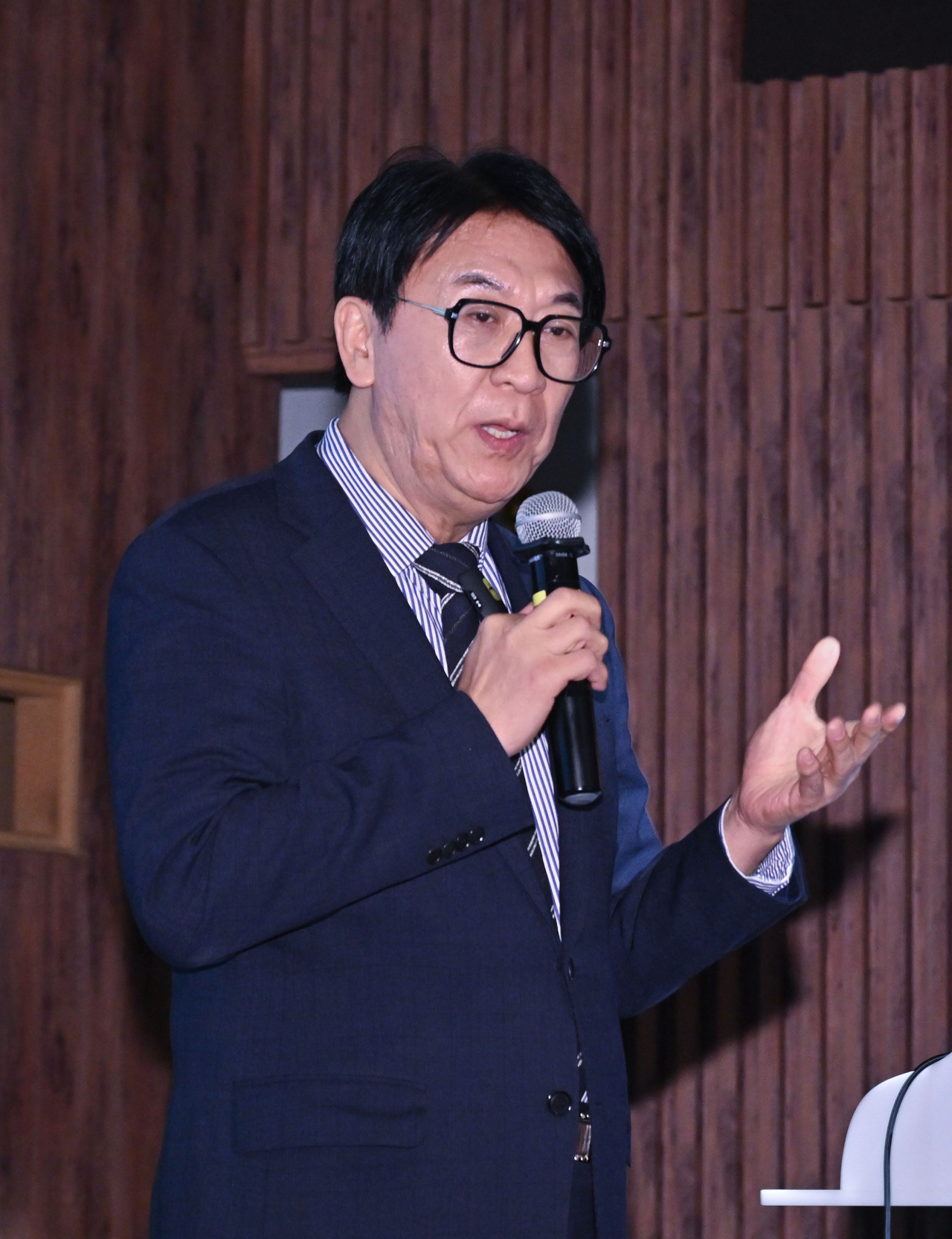
While kimchi and namul represent the distinct flavors of Korean cuisine, ceramics add a layer of cultural value to the experience of enjoying them. The approach aims to introduce global markets not only to the foods themselves but also to the way they are served and savored. The session also featured ceramic artist O Da-gam, who presented her body of work.
The globalization of kimchi was another central topic. Lee Ha-yeon, designated National Food Master No. 58 for kimchi, gave a presentation titled "Kimchi: From the Korean Table to a Global Fermented Food."
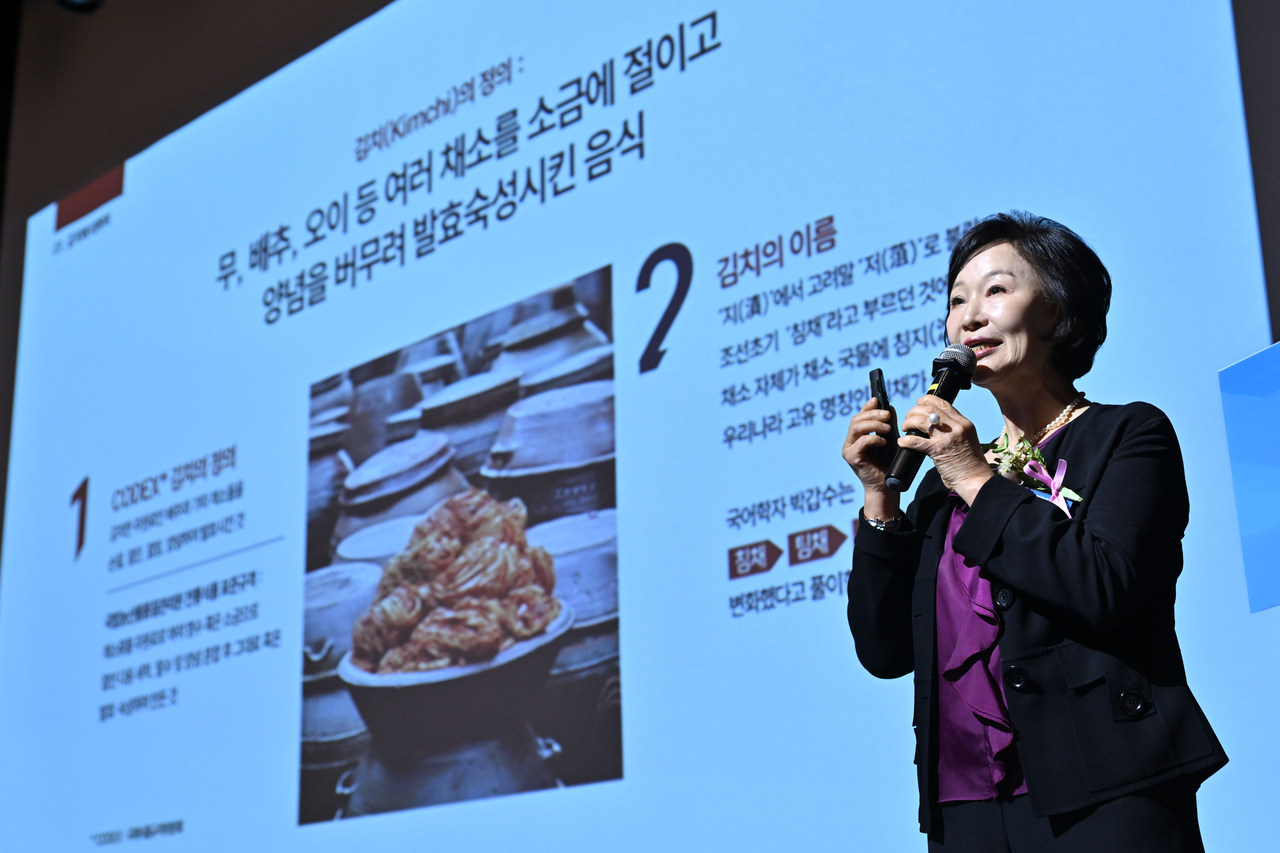
Kimchi has long been a staple of the Korean table, but it is now emerging as a key product in the global fermented food industry. Lee outlined ways to build on kimchi's traditional roots to strengthen its competitiveness in world markets.
Calls were also made to develop namul into a new pillar of the K-food industry. Ko Hwa-soon, designated National Food Master No. 90 for namul, presented on "Namul: Nature's New Face of K-Food," introducing the potential for industrializing the ingredient.
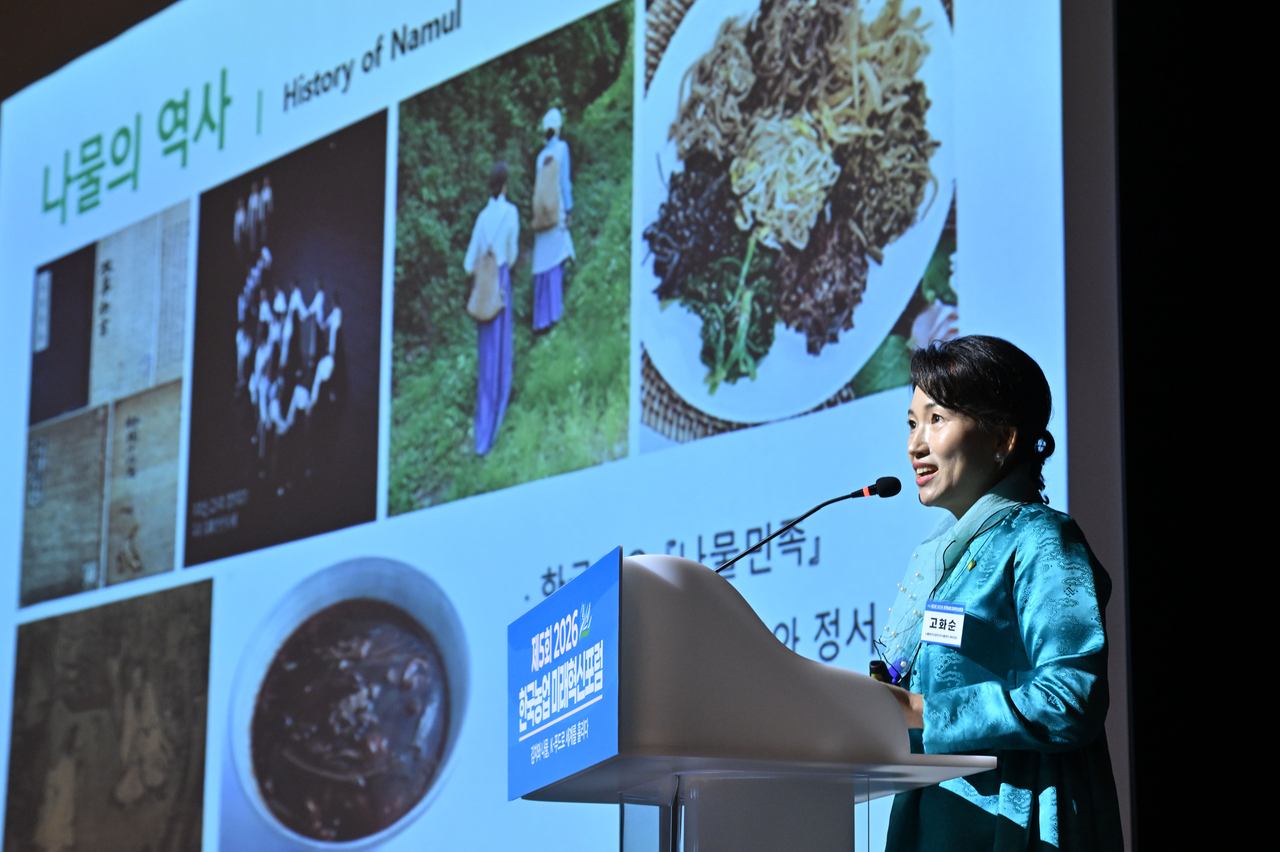
Ko laid out a vision to grow the namul market from about 2 trillion won ($1.48 billion) in 2024 to 10 trillion won by 2035. The plan calls for developing namul — long confined to its role as a banchan side dish — into a range of products including dried namul and ready-to-eat meals, while expanding overseas distribution networks to reach consumers worldwide.
The strategy matters not only for boosting exports of kimchi and namul but also for raising the added value of Korean agricultural produce and linking that growth to higher incomes for farmers.
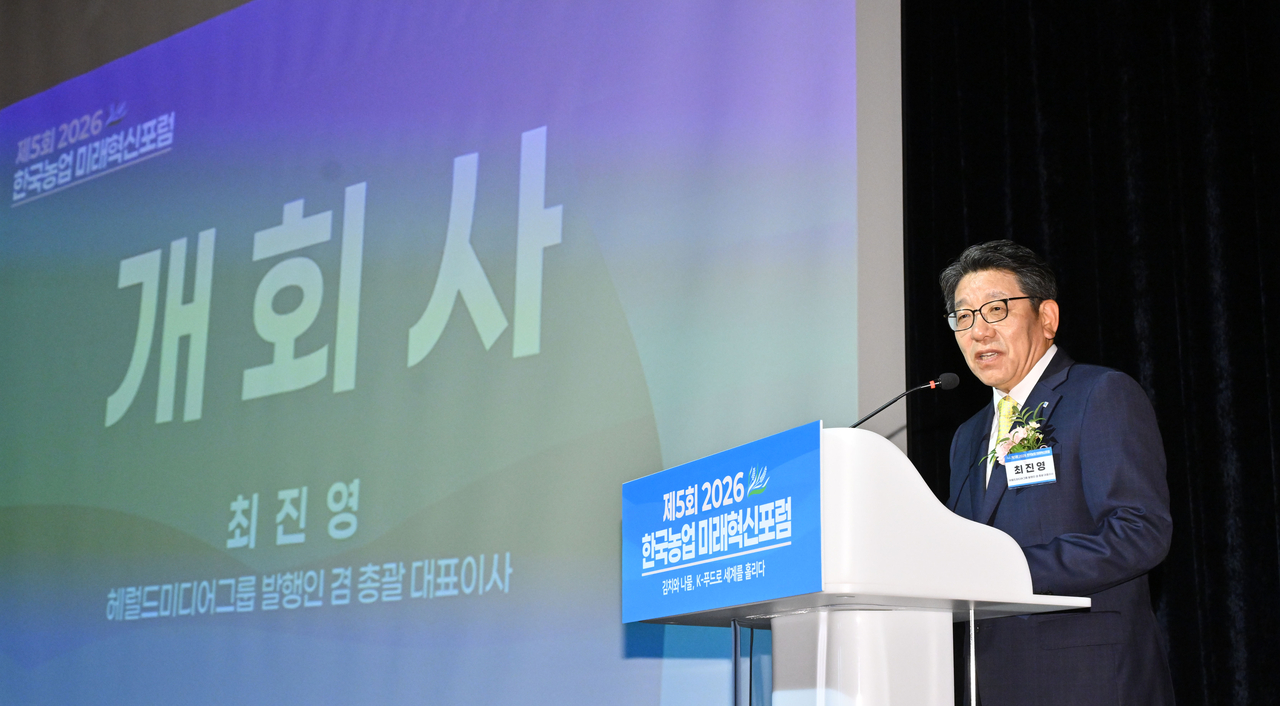
In his opening address, Choi Jin-young, publisher and CEO of Herald Media Group, said K-food exports surpassed $13.62 billion last year, setting a record high. "Korea must now move beyond the success of K-food and launch a 'K-food tech revolution,'" Choi said. "We must open an era in which Korean food and technology solve the health and food challenges facing humanity — not merely an era in which people around the world enjoy Korean cuisine."
He also called for leveraging AI, biotechnology and smart farming to enhance the value of traditional foods. "We must now give that great heritage the wings of AI, biotech and food tech," Choi said. "When the depth of tradition meets the innovation of cutting-edge technology, Korea can forge a new future for the global food industry."
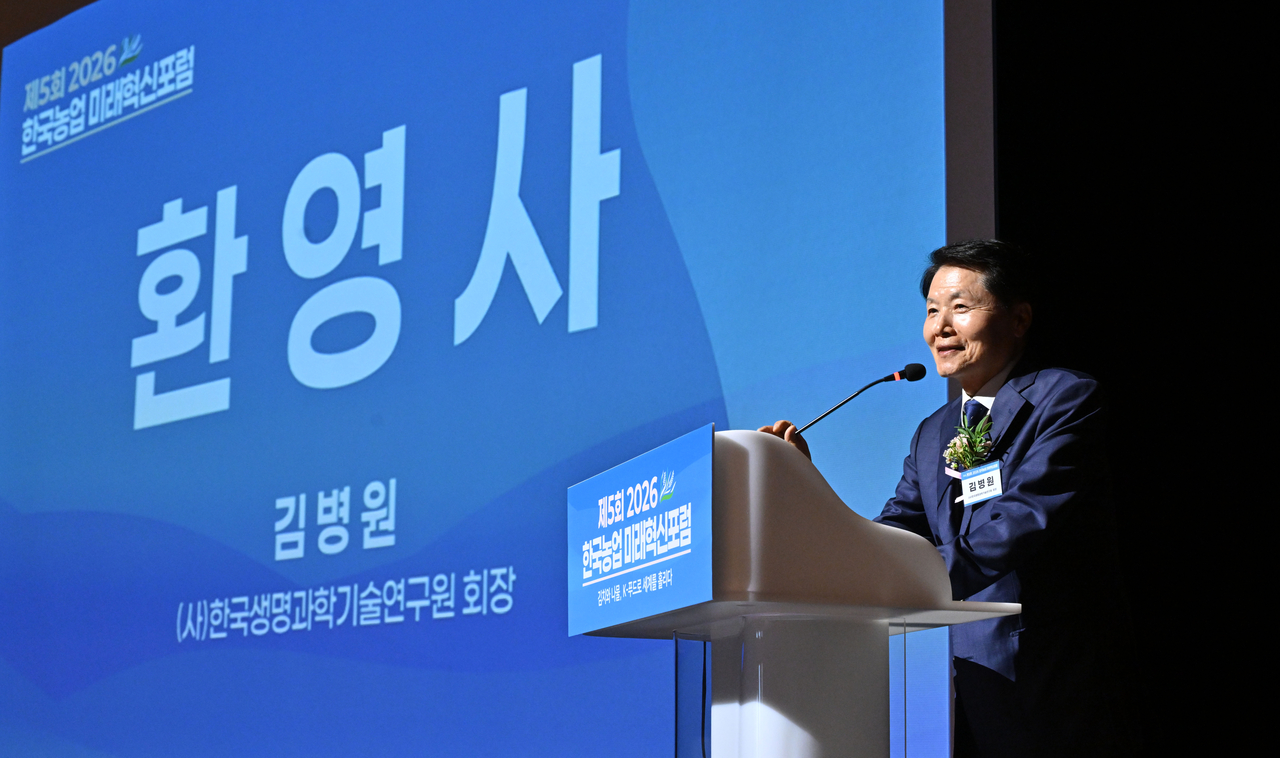
Kim Byeong-won, chairman of the Korea Institute of Life Science and Technology, said kimchi and namul are "the essence of fermented and natural foods crafted alongside nature over many centuries," adding that he hoped the forum would serve as a venue for discussing the direction Korea's food industry should take in global markets, with the two foods at its center.
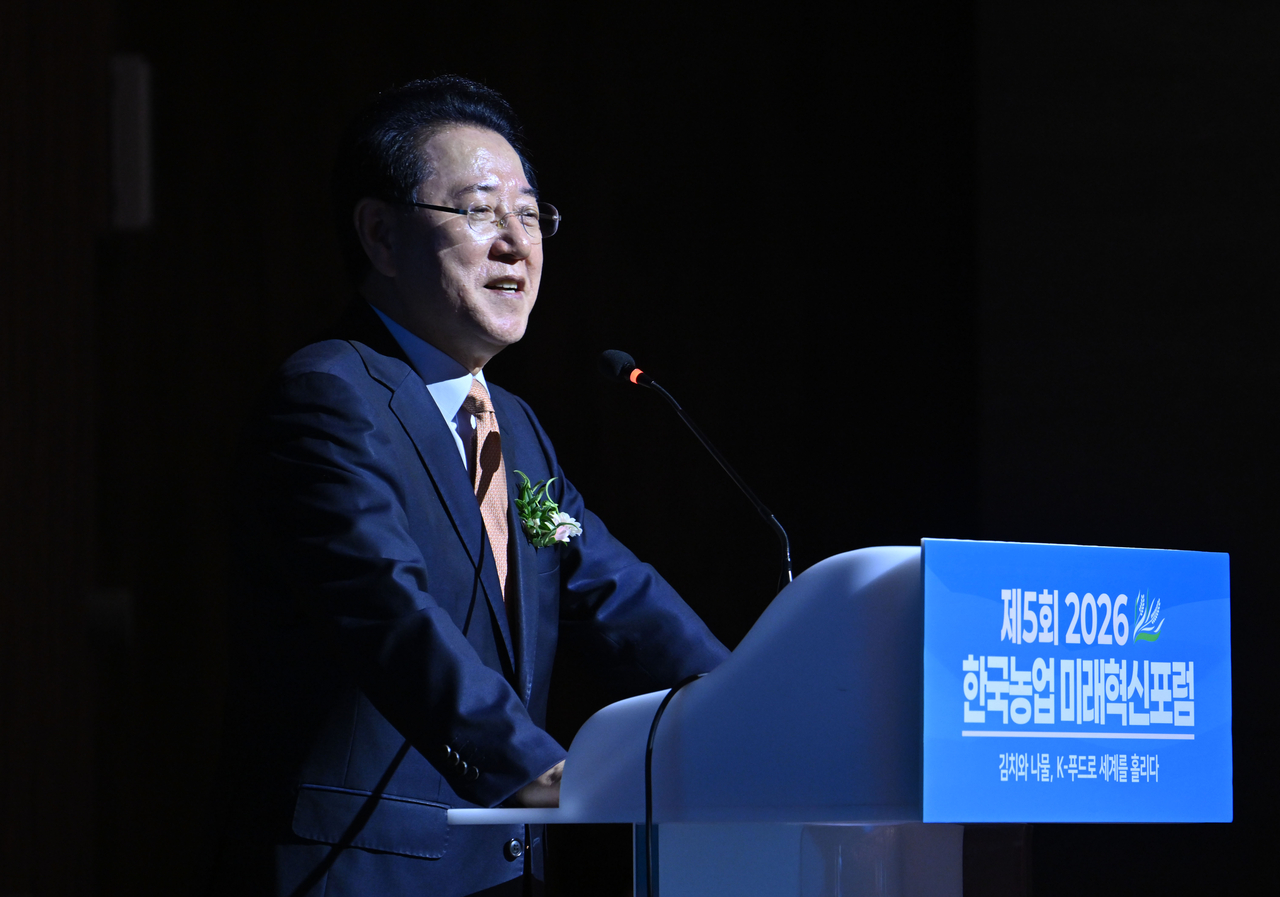
Former Minister of Agriculture, Food and Rural Affairs Kim Young-rok highlighted the significance of the forum in reassessing the value of traditional Korean foods such as kimchi and namul and in exploring new avenues for K-food globalization and agricultural growth.
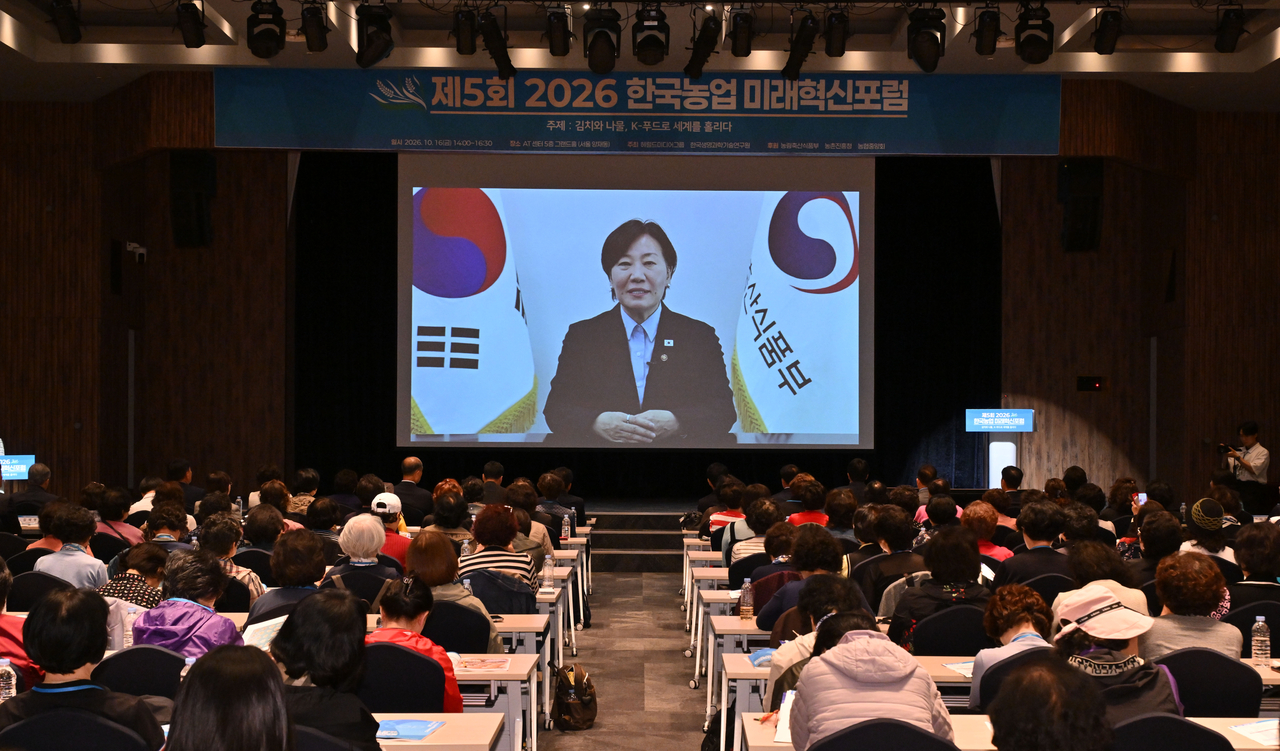
Minister of Agriculture, Food and Rural Affairs Song Mi-ryeong also delivered congratulatory remarks via video, saying the government would "support efforts to ensure that global attention to K-food translates into higher value for Korean agricultural produce and expanded exports — and that farmers can feel the benefits firsthand."
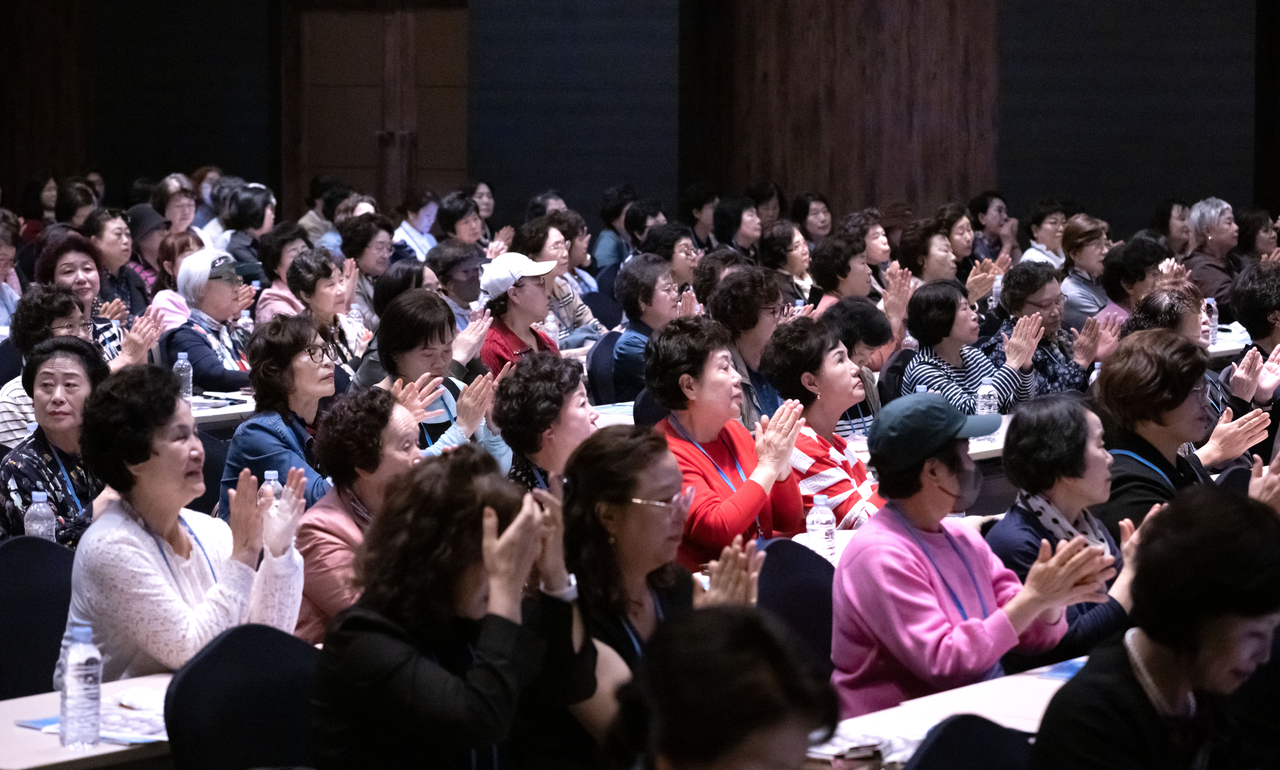
About 500 people attended the forum, including heads of agricultural institutions and organizations, farmers' groups, academics and farmers. The event featured the keynote address and presentations by the kimchi and namul masters, followed by a comprehensive set of recommendations for the future of Korean agriculture and K-food.
adastra@heraldcorp.com




