
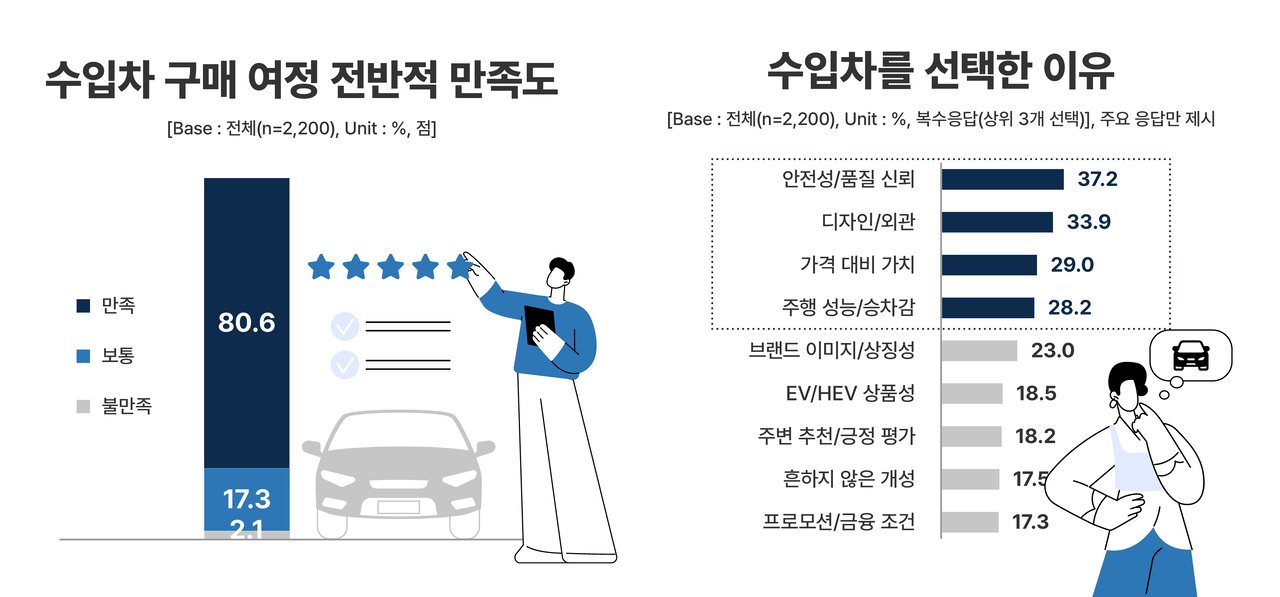
Safety, quality and trust top reasons for choosing imports
YouTube usage rate 63.1%, active engagement 79.8%
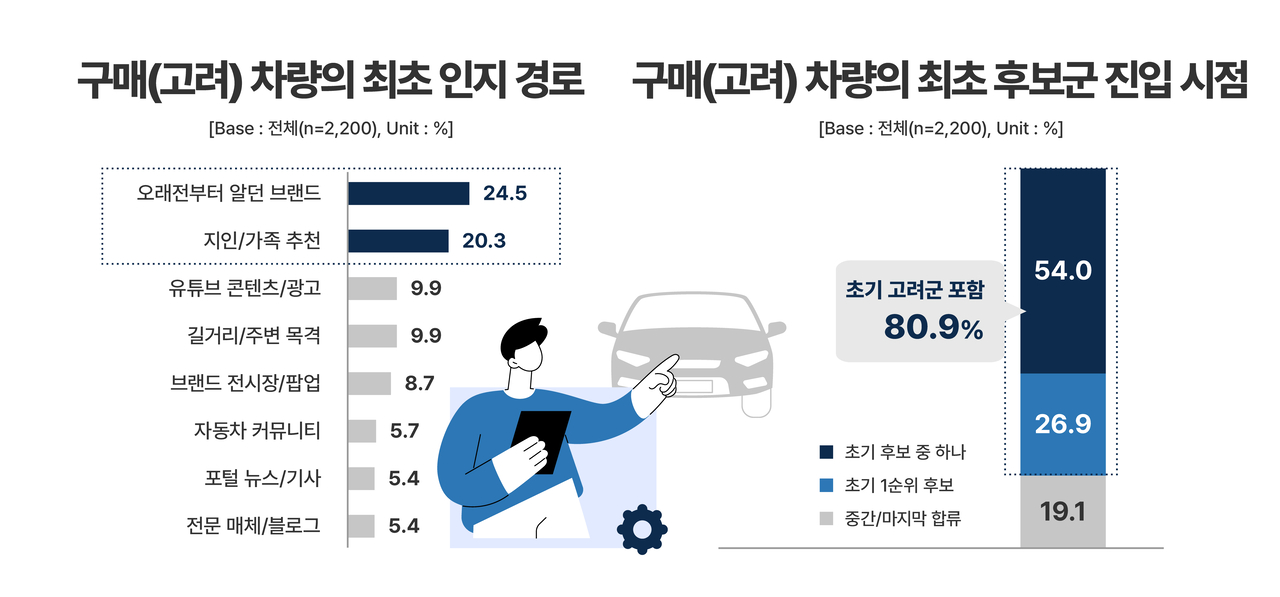
80.9% of final consideration vehicles were in initial shortlist
Consumers buying imported vehicles tend to narrow their options to two or three familiar brands and models from the outset, then complete their purchase through a relatively short decision-making journey, a new survey has found.
The Korea Automobile Importers & Distributors Association (KAIDA) released the findings Thursday from its "Import Vehicle Purchase Journey Survey," which analyzed the buying behavior and information-gathering habits of imported-car consumers. The online survey covered 2,200 consumers between the ages of 25 and 59 who had purchased or were considering purchasing an imported vehicle within the past three years.
KAIDA defined the import vehicle purchase journey as six stages: awareness, AI research, online and social media and personal network research, showroom visits and test drives, financing and quote comparisons, and purchase and delivery. On average, consumers went through 2.06 of the four middle stages, excluding awareness and purchase.
A clear pattern emerged of consumers setting a budget and identifying the vehicle class, type and specifications they needed from the outset, selecting candidates from brands and models they already knew, then verifying their choices through online research or test drives before committing to a purchase. Some 80.9% of the vehicles consumers ultimately considered for purchase had been part of their initial shortlist — suggesting the journey is less about discovering new options and more about confirming existing ones.
Some 80.6 percent of respondents said they were satisfied with the overall import vehicle purchase experience. The top reasons for choosing an imported vehicle over a domestic one were safety, quality and trust, followed by design and appearance, value for price, and driving performance and ride comfort. The most common triggers for buying a new vehicle were personal circumstances — such as an aging or damaged existing vehicle or recommendations from friends and family — though marketing factors such as brand promotions and new model launches also played a role for some.
After becoming aware of a vehicle, consumers said their first step was typically to search for information through online sources, social media or personal networks. Among the four middle stages, showroom visits and test drives had the highest participation rate at 78.1 percent, followed by online, social and personal network research at 63.0 percent, financing and quote comparisons at 45.1 percent, and AI research at 19.5 percent, based on multiple-response tallies. While digital information gathering has become routine, showroom visits and test drives still held the top spot.
Among information channels excluding AI, YouTube was the most widely used, followed by portal search engines and brand official websites. The pattern suggests consumers narrow down their shortlist through video reviews before cross-checking with search results and official sources. YouTube posted the highest scores on both usage rate at 63.1 percent and active engagement at 79.8 percent. On YouTube, 78.7 percent of users watched reviews and test-drive videos, while 53.1 percent sought out long-term ownership accounts from actual owners, pointing to a clear intent to verify real-world experience.
The AI research adoption rate stood at 19.5 percent, meaning roughly two in 10 consumers used it. AI was used mainly to compare performance specifications and competing models, and respondents rated its usefulness highest for summarizing and organizing information — indicating it is perceived more as a tool for condensing existing information than for uncovering new insights. Consumers tended to use AI for shortlisting candidates in the early stages of the purchase journey and for final verification toward the end.
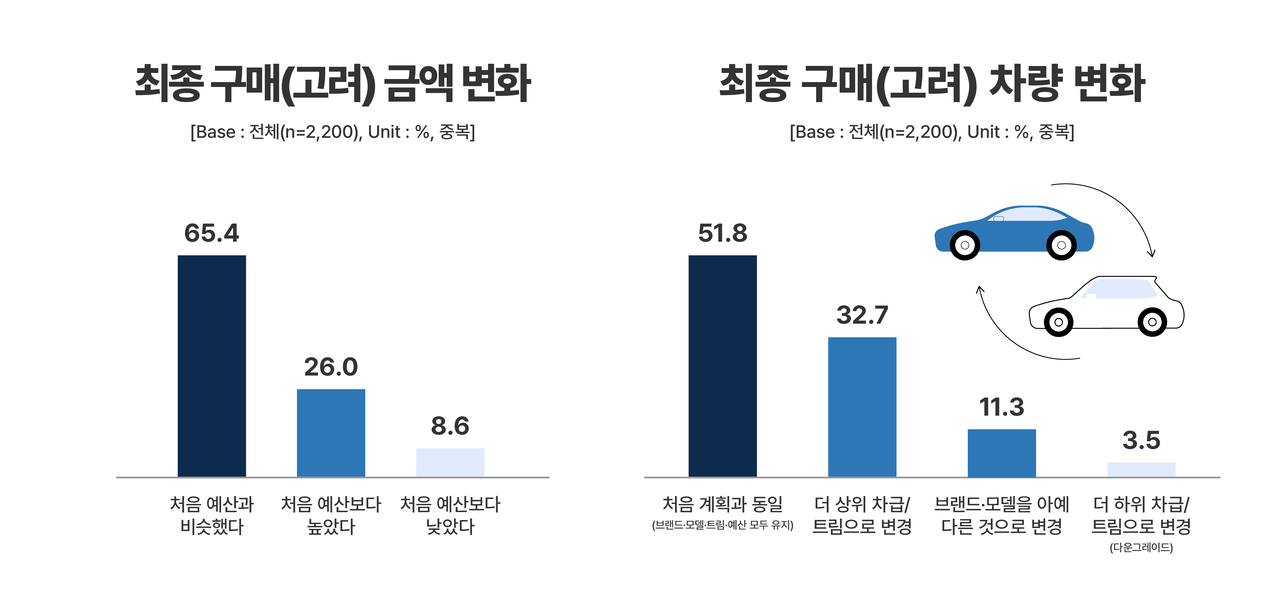
The survey also found a tendency for buyers to exceed their initial budget or upgrade their vehicle class or trim during the purchase process. Some 26.0 percent of respondents said they spent more than originally planned, and 44.0 percent said the vehicle they ultimately purchased or were considering was a higher class or trim than planned, or a different brand or model altogether. The most common reason, cited by 46.0 percent, was wanting better specifications for a vehicle they planned to keep for a long time, followed by finding a more appealing design or specifications at 44.3 percent, and realizing after a test drive or seeing the vehicle in person that a higher-grade option was needed at 35.5 percent.
KAIDA Vice Chairman Jeong Yun-young said the survey allowed the association to identify in concrete terms the characteristics of each stage of the consumer purchase journey and how buyers seek out information. "As consumers and the market environment change rapidly, we will continue to conduct research and analysis to provide useful information and insights, deepen our understanding of the market and consumers, and contribute to the development of the domestic automotive market," he said.
eyre@heraldcorp.com




