
Door closes, welcome sequence begins
Speed bumps barely felt; acoustic glass keeps cabin hushed
Driving dynamics belie the size — and the exit impresses too
Row 2 rest mode, row 3 seat heating shine; Gleaux AI falls short
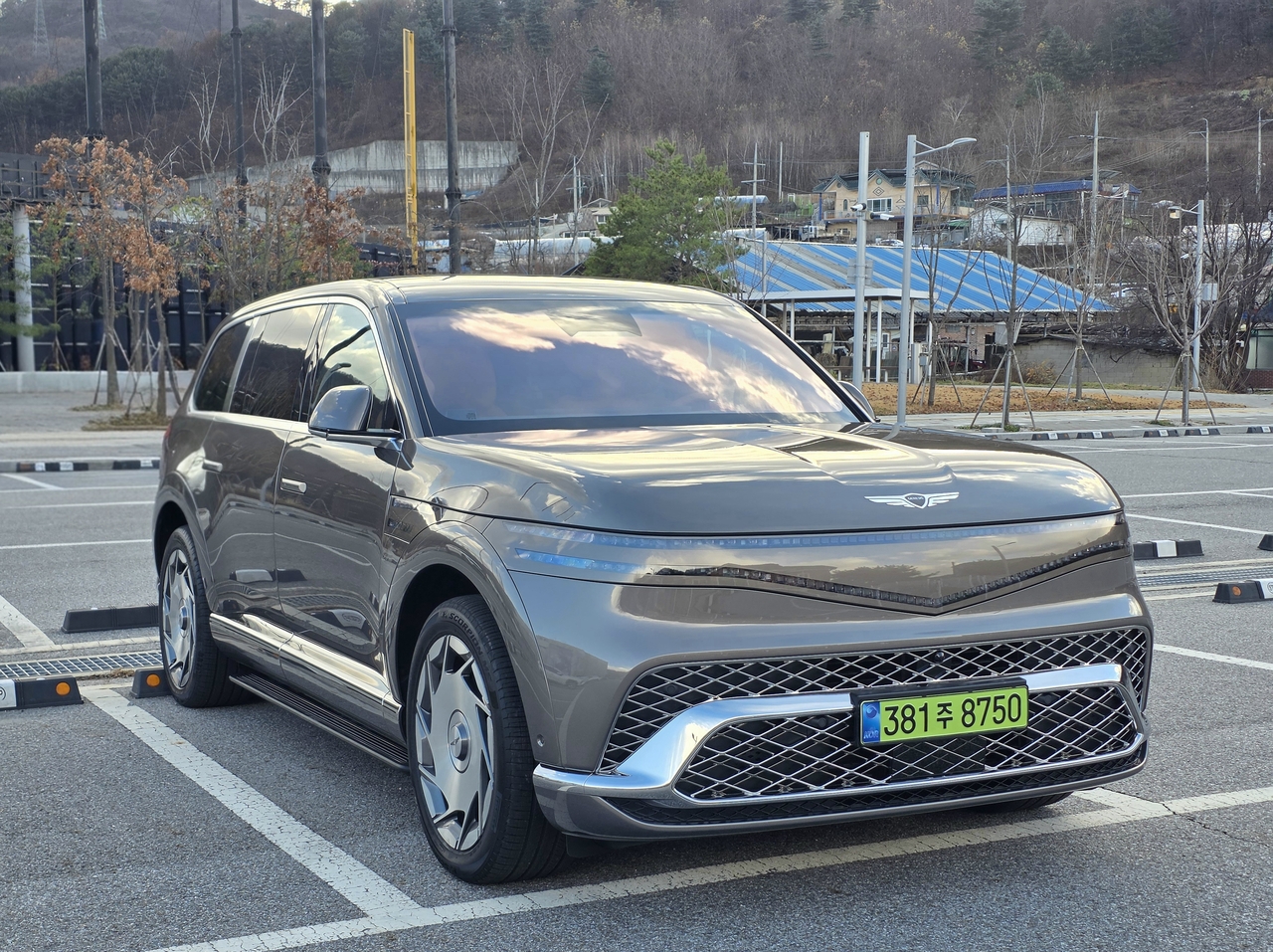
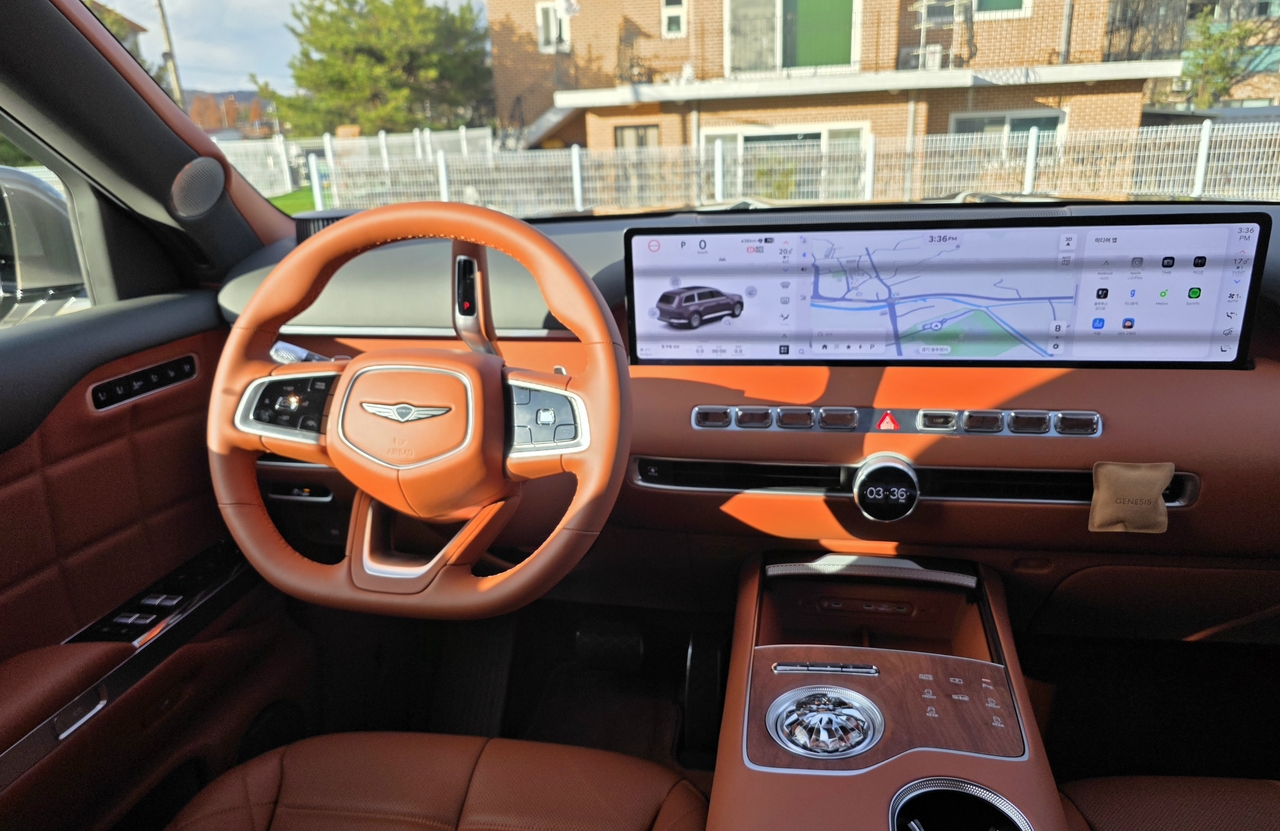
The moment the driver's door closed, the car responded. The rotary gear selector swept from the 12 o'clock to the 2 o'clock position, the Crystal Sphere integrated controller began to rotate, and the tweeter speaker covers on the dashboard fanned open to either side. Pressing the brake and turning the selector was all it took to start moving — no ignition button required.
On Thursday, this reporter drove the Genesis GV90 — the brand's first ultra-large flagship electric SUV — across roughly 110 kilometers around Seoul and Gyeonggi Province. From the driver's seat to the third row, the GV90 treated every occupant as a distinguished guest. True to Genesis's stated development philosophy of a "moving private lounge," the vehicle delivered comfort, quietness and driving performance in equal measure.
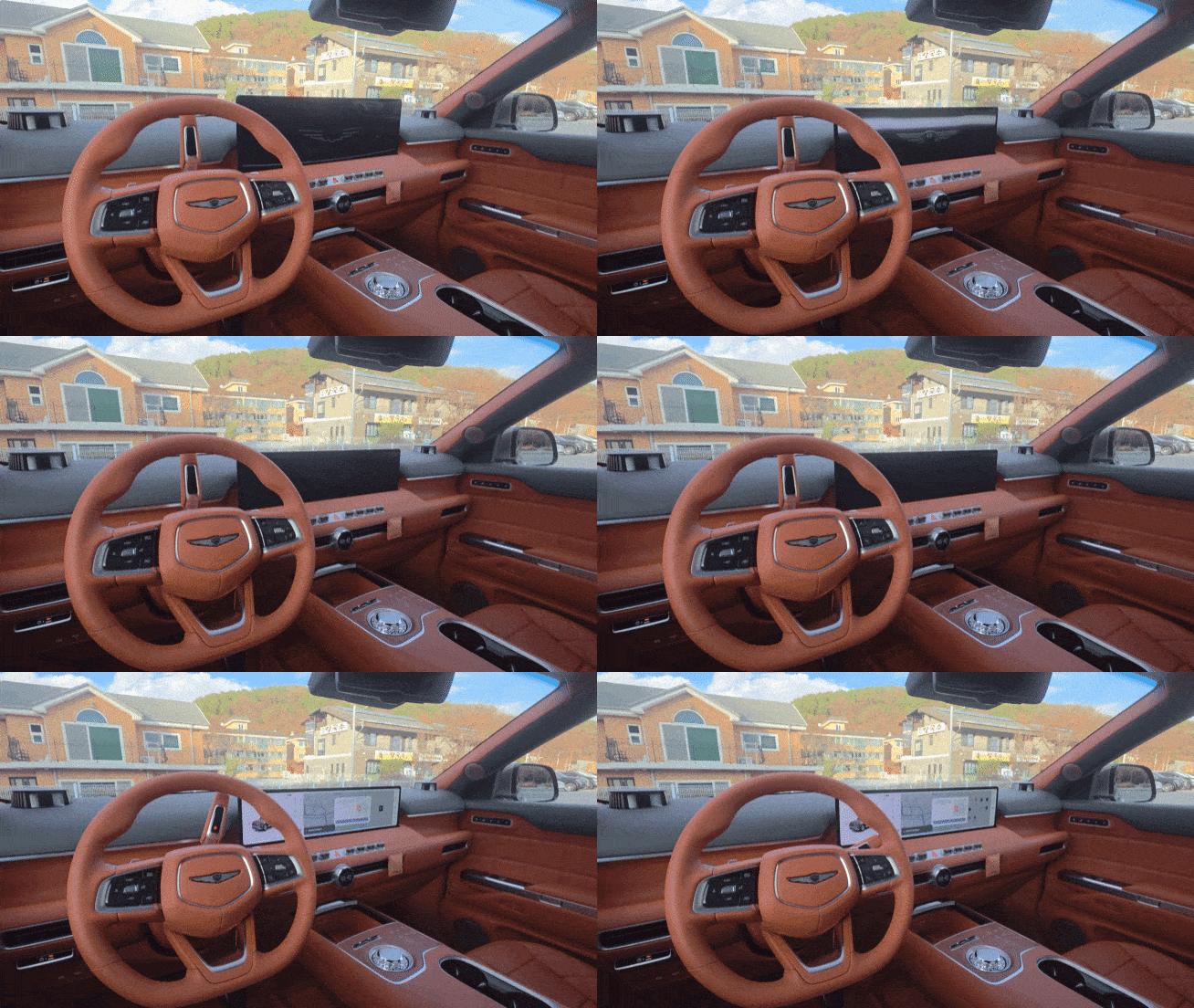
A lounge on wheels with bespoke seating and displays — third row holds its own too
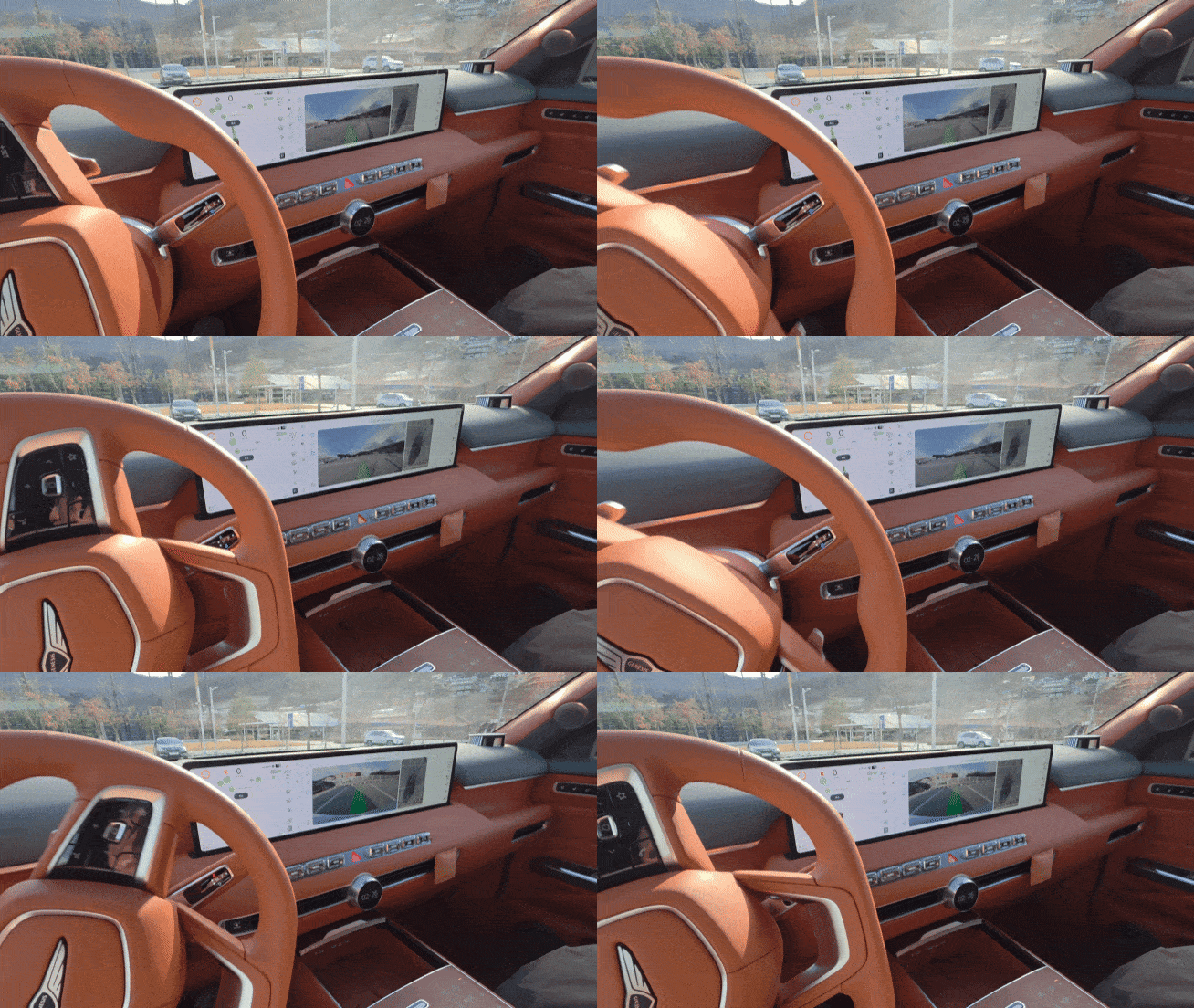
The GV90 is the first vehicle in the Hyundai Motor Group lineup to do away with a start button entirely. Carry the smart key inside, close the door and the car powers on; step out and close the door and it shuts off on its own. The simultaneous movement of the gear selector, controller and tweeters the moment the door closes is what Genesis calls its "welcome sequence" — a visual cue that the car is greeting the driver and is ready to go.
The interior felt like a lounge transplanted into a vehicle. Ambient lighting running from the dashboard to the door panels cast a warm glow over the cabin trim, where soft Nappa leather and quilted stitching came together seamlessly. The seat fit well, too. As someone on the shorter side, this reviewer has often found that even fully adjusted seats in large vehicles never quite conform to the body. The GV90's lumbar support adjusted far enough to wrap around the lower back, making it easy to find a genuinely comfortable driving position.
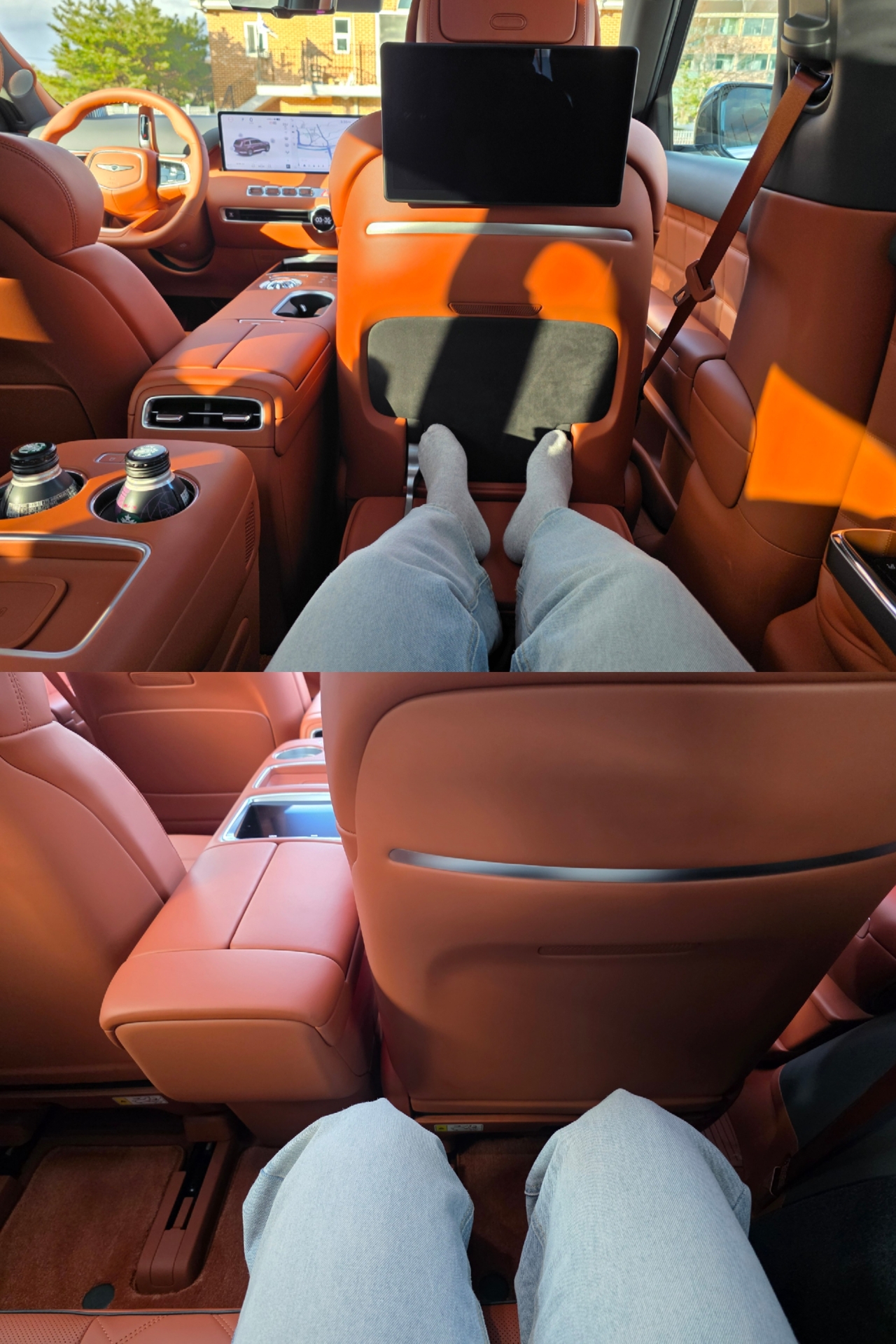
Selecting rest mode in the second row pulled the front seat forward and extended the footrest, and setting a laptop on the knees instantly turned the space into a mobile office. Fellow passengers were most impressed by the massage function. The GV90's seats incorporate 15 air bladders and a vibration (pulse) module that deliver a tapping-style massage — noticeably more intense than in other vehicles, producing a deeply satisfying sensation throughout the body.
Each occupant also gets a dedicated display. The front center display and two rear displays can be operated independently, so every seat can run its own content. The 23.6-inch center display rises 90 millimeters and expands to 24.6 inches at the touch of a button while the car is stationary. A 25-speaker Bang & Olufsen sound system complemented the hushed cabin, reinforcing the lounge atmosphere.
The third row was surprisingly livable. Legroom was comparable to what one might find on a low-cost carrier — not generous, but adequate for an adult to sit comfortably for an hour or more. Heated seats and USB ports were also on offer back there.
Folding the third row electrically opens up enough cargo space for four golf bags and four duffel bags. For heavy luggage that is difficult to lift into a tall vehicle, the air suspension can lower the ride height on demand.
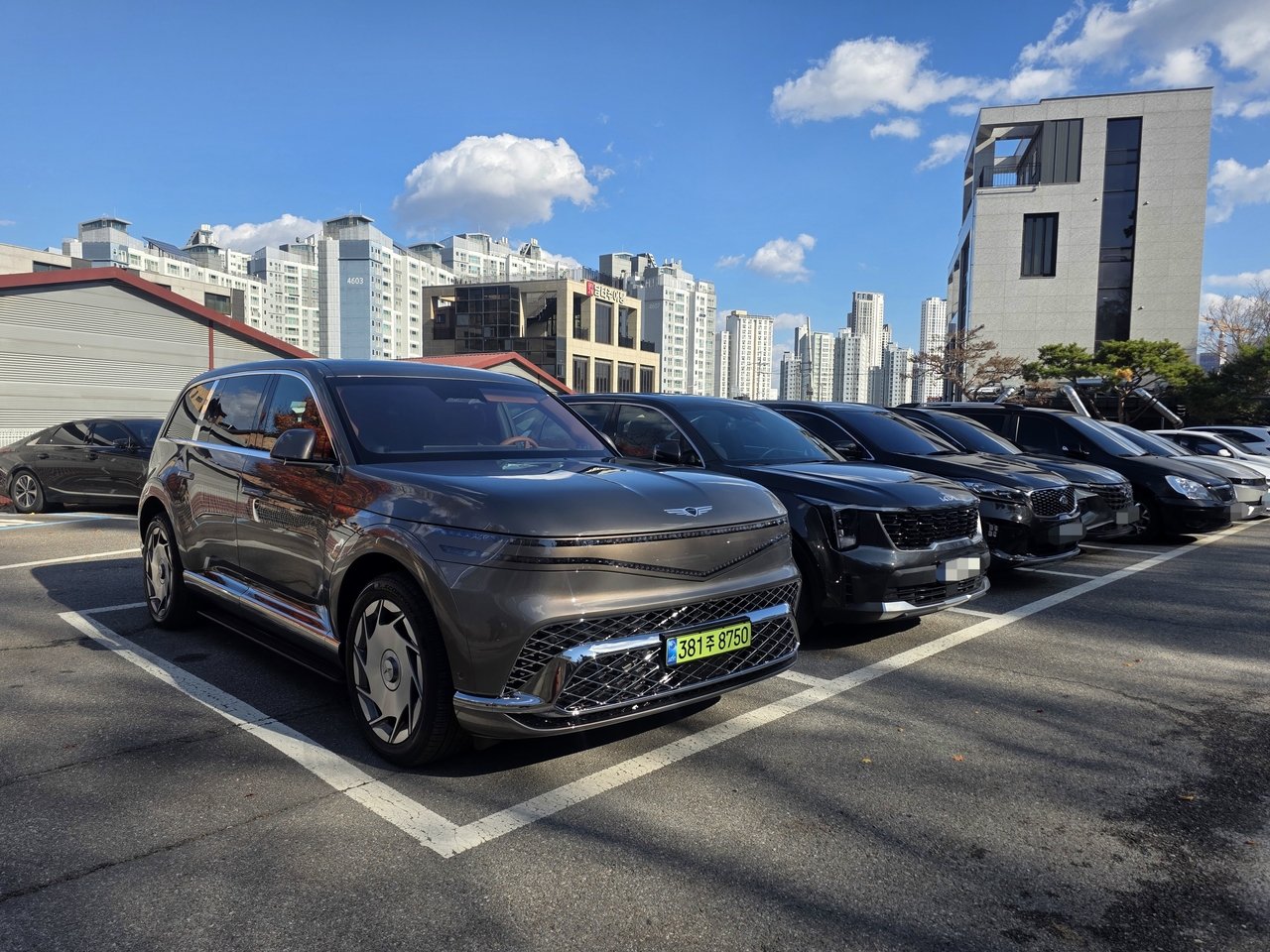
The exterior draws inspiration from Korea's moon jars, with unnecessary lines stripped away. Even the rear spoiler that typically sits atop the back glass has been eliminated, giving the tail a clean, unified look, while the Wing Face MLA headlamps — which minimize the boundary between lamp and body — glitter like cut gemstones. The body measures 5,285 millimeters in length, 2,030 millimeters in width and 3,245 millimeters in wheelbase, with a height of 1,815 millimeters on 22-inch wheels.
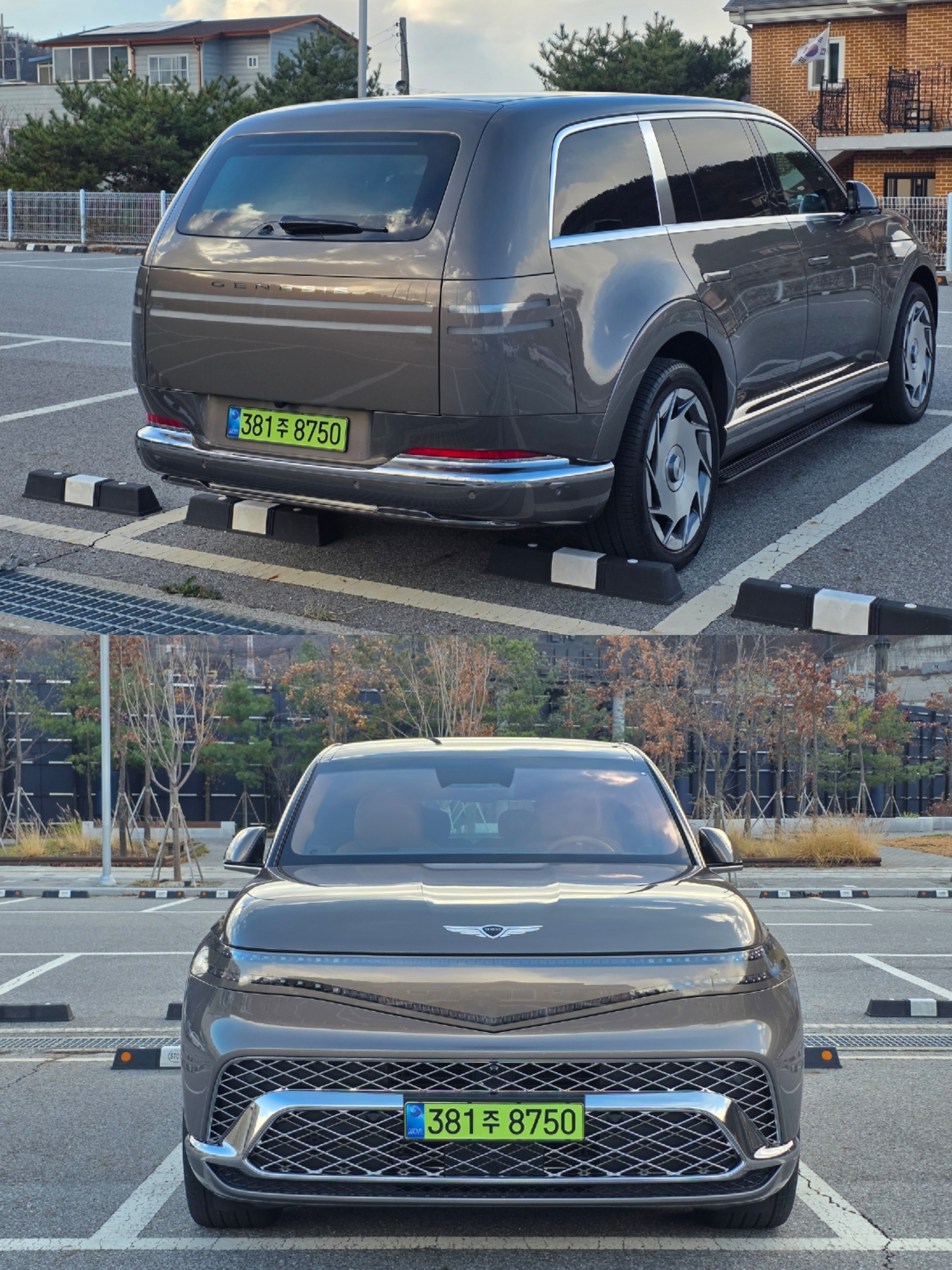
Air suspension irons out the bumps — braking and steering stay manageable despite 3-ton bulk
The ride quality is exceptional. Cresting a series of tall speed bumps felt no more jarring than rolling over a shallow parking-lot hump. Fore-and-aft pitching was particularly well controlled, though lateral body movement was somewhat more noticeable by comparison.
The GV90 rides on a multi-chamber air suspension with stiffness-adjustable air springs that absorb road impacts, paired with monotube dual-valve electronically controlled shock absorbers that modulate damping force on the fly. The test vehicle also came fitted with an optional dual electronic limited-slip differential, with e-LSD units on both the front and rear axles.
Acceleration and braking are smooth. Even when the accelerator or brake pedal was pressed sharply, the car seemed to resist any abrupt surge or lunge, building and shedding speed with equal fluidity. Combined output from the front and rear motors reaches 490 kilowatts, with peak torque of 81.6 kgf·m — the highest figures of any Hyundai Motor Group electric vehicle.
Cabin quietness also stood out. Wind noise only began to creep in above 100 kilometers per hour, and even then it was not intrusive. Genesis said it applied acoustic glass more than 5 millimeters thick to every pane from the windshield to the tailgate, and filled hollow sections of the body structure with sound-deadening material.
This is not a car built solely for pampered rear-seat passengers. Despite a curb weight exceeding 3 metric tons, it was comfortable to drive. It pulls away smoothly for its size, stops smoothly and turns the wheel with ease. Genesis said rear-wheel steering — which turns the rear wheels up to 5 degrees in concert with the fronts — reduces the turning radius to that of a mid-size sedan. Once accustomed to the sheer dimensions, the driving burden is not great.
The impression the car makes on exit exceeded expectations as well. While parked and photographing the vehicle, three or four passersby stopped to look. On narrow city streets, other drivers frequently gave way. Part of that is novelty — the GV90 is still a rare sight on Korean roads — but the sheer presence of the body ensures it commands attention from everyone around it. The hospitality that begins inside the cabin extends, in its own way, to the world outside.
Physical buttons and touchscreen coexist in an awkward digital transition
There were shortcomings. The in-car AI agent Gleaux AI understood voice commands well enough but could not execute many of them. It handled seat-temperature adjustments based on the speaker's location with ease, but when asked to close the roof blind it replied that the function was not supported, and for the window curtains it could only navigate to the settings screen rather than act directly. Toggling the massage function on and off was also beyond its reach. The GV90 offers so many features that learning them all is no small task, and the ability to control more of them by voice alone would significantly raise the system's usefulness.
The control layout felt like a snapshot of the industry's awkward transition to digital. Key functions — climate, drive mode, media — are preserved as physical buttons alongside the center display's touchscreen interface, but the combination of a large screen and an abundance of physical controls around it makes the cockpit feel cluttered. The Crystal Sphere integrated controller, faceted like a cut gemstone, drew the eye, but reaching for the touchscreen proved far more intuitive in practice.
The test vehicle was the GV90 Individual Lounge Seat (six-seat) variant, with a base price of 145.5 million won ($109,000). With optional equipment added, the as-tested price came to 185.2 million won after applicable tax incentives. The GV90 lineup starts at 139.5 million won, while the top-of-the-range GV90 Neolun Executive Suite (four-seat) reaches 239.5 million won.
eyre@heraldcorp.com




