
![A kitchen scrubber. [123rf]](https://wimg.heraldcorp.com/news/cms/2026/10/14/news-p.v1.20261014.3e3c3515a0a548ceaeae204790108c49_P1.png)
"All I wanted was clean dishes..."
Washing the dishes after a meal is one of the most routine household chores — a daily ritual to scrub away grease and food residue.
But while people work to get their plates spotless, research has revealed that an invisible substance is being created in the process.
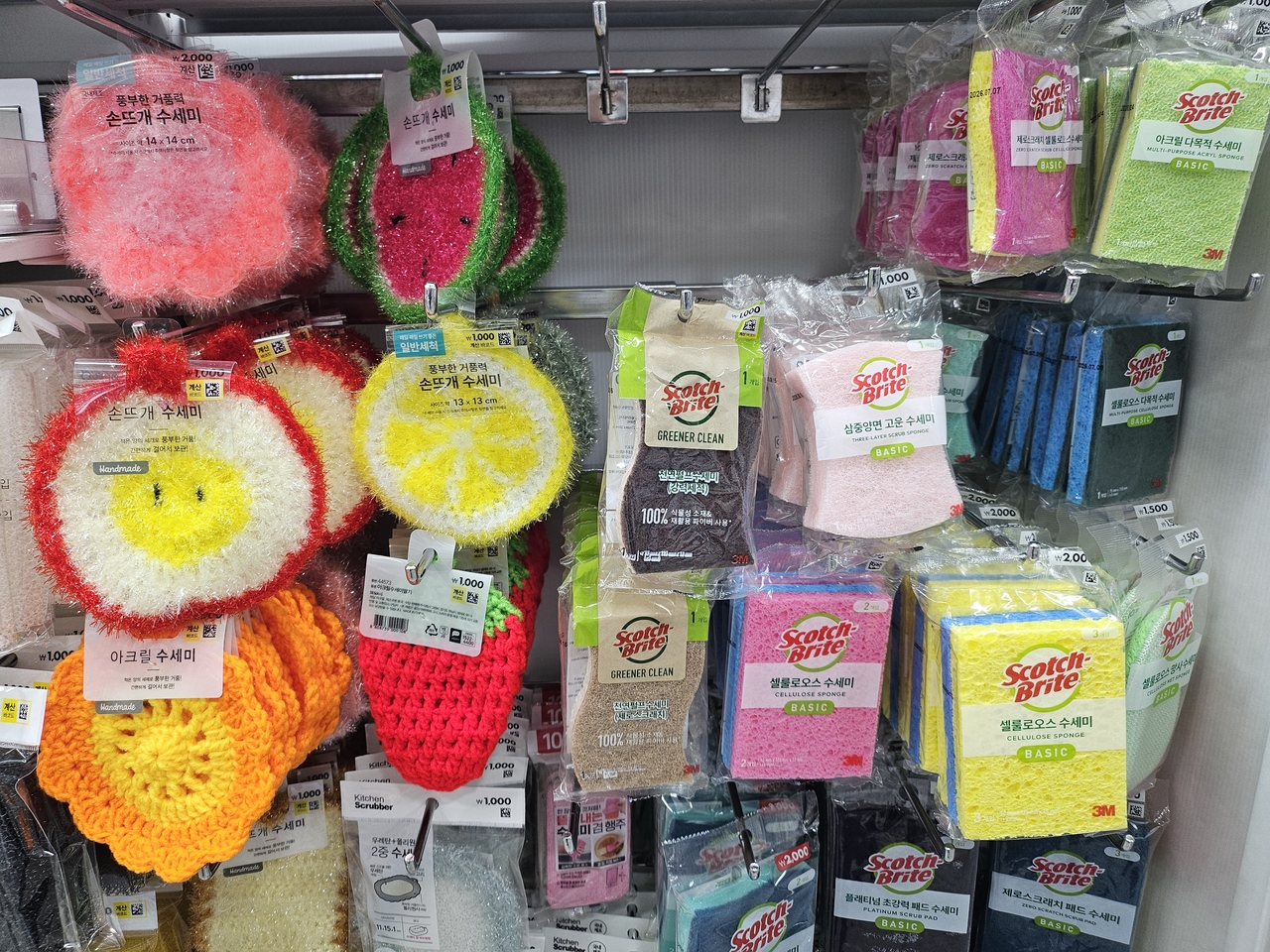
That substance is microplastics — and the culprit is the kitchen scrubber used every day.
Each time a scrubber is rubbed against a dish, its surface gradually wears down. The microplastic particles that break off flow into the drain.
Recent research suggests that scrubbers used in South Korea alone release more than 200 metric tons of microplastics into the environment each year, depending on the type.
Experts are now advising households to consider the plastic content of a scrubber before buying one.
A joint research team from the University of Bonn, the Fraunhofer Institute and Leiden University in the Netherlands published findings in the international journal Environmental Advances in April, analyzing the microplastic emissions and environmental impact of kitchen scrubbers.
The study found that friction generated during dishwashing produces microplastics, particularly from scrubbers containing plastic materials, which shed particles as they wear down.
The researchers tested three types of scrubbers: a standard synthetic scrubber widely used in Europe, a general-purpose scrubber popular in North America and a scrubber labeled "organic." A total of 68 scrubbers were used in the final analysis.
![A kitchen scrubber. [Getty Images Bank]](https://wimg.heraldcorp.com/news/cms/2026/10/14/news-p.v1.20250324.b7379a76abd84ecbb8736dccf37857e5_P1.jpg)
The standard European-style scrubber, which has a plastic content of 59.3 percent, released an average of 4.212 grams of microplastics per person per year during dishwashing. The North American-style scrubber released 1.171 grams per year.
Four grams is roughly the weight of a teaspoon of sugar — a seemingly small amount. But the particles are released not as a single lump but as tiny plastic fragments and fibers, making the figure far from trivial. Extrapolated across South Korea's entire population, the per-person average translates to an estimated 217 metric tons of microplastics released through dishwashing each year.
![Microplastic fragments. [Getty Images Bank]](https://wimg.heraldcorp.com/news/cms/2026/10/14/news-p.v1.20251214.1de68d127b0b4101b0396d9e13942006_P1.jpg)
Notably, the problem is not confined to conventional scrubbers with high plastic content. Even scrubbers labeled "organic" were found to release 0.682 grams of microplastics per year through dishwashing.
As environmental awareness has grown, more consumers have been reaching for scrubbers marketed as eco-friendly or organic, often assuming they are made entirely from plant-based materials. Such labels, however, do not guarantee the product is free of plastic.
The "organic"-labeled scrubbers examined in the study contained a significant amount of plastic — 15.9 percent of total weight. The soft side used cellulose, a plant-based material, while the abrasive scrubbing side contained sisal fiber mixed with recycled PET.
Once microplastics are generated during dishwashing, most flow down the drain with the wastewater. Sewage treatment facilities filter out the majority, but not all microplastics are removed.
A domestic study published in the international journal Environmental Pollution in 2024 analyzed microplastic removal at 22 wastewater treatment plants across South Korea and found that the facilities removed an average of 99 percent of microplastics.
![Microplastics. [Getty Images Bank]](https://wimg.heraldcorp.com/news/cms/2026/10/14/news-p.v1.20260531.d4a742a9dd5e4ca4b3ab817bc9db0ebb_P1.jpg)
However, microplastics were still detected in treated effluent. No matter how high the removal rate, if large volumes of microplastics enter the sewage system, some will ultimately reach rivers and other natural environments.
Once microplastics escape into waterways, they can affect aquatic life and disrupt ecosystems. Their small size makes them easy for marine and freshwater organisms to ingest along with food, and cases of microplastics being found in fish, shellfish and other aquatic animals are on the rise.
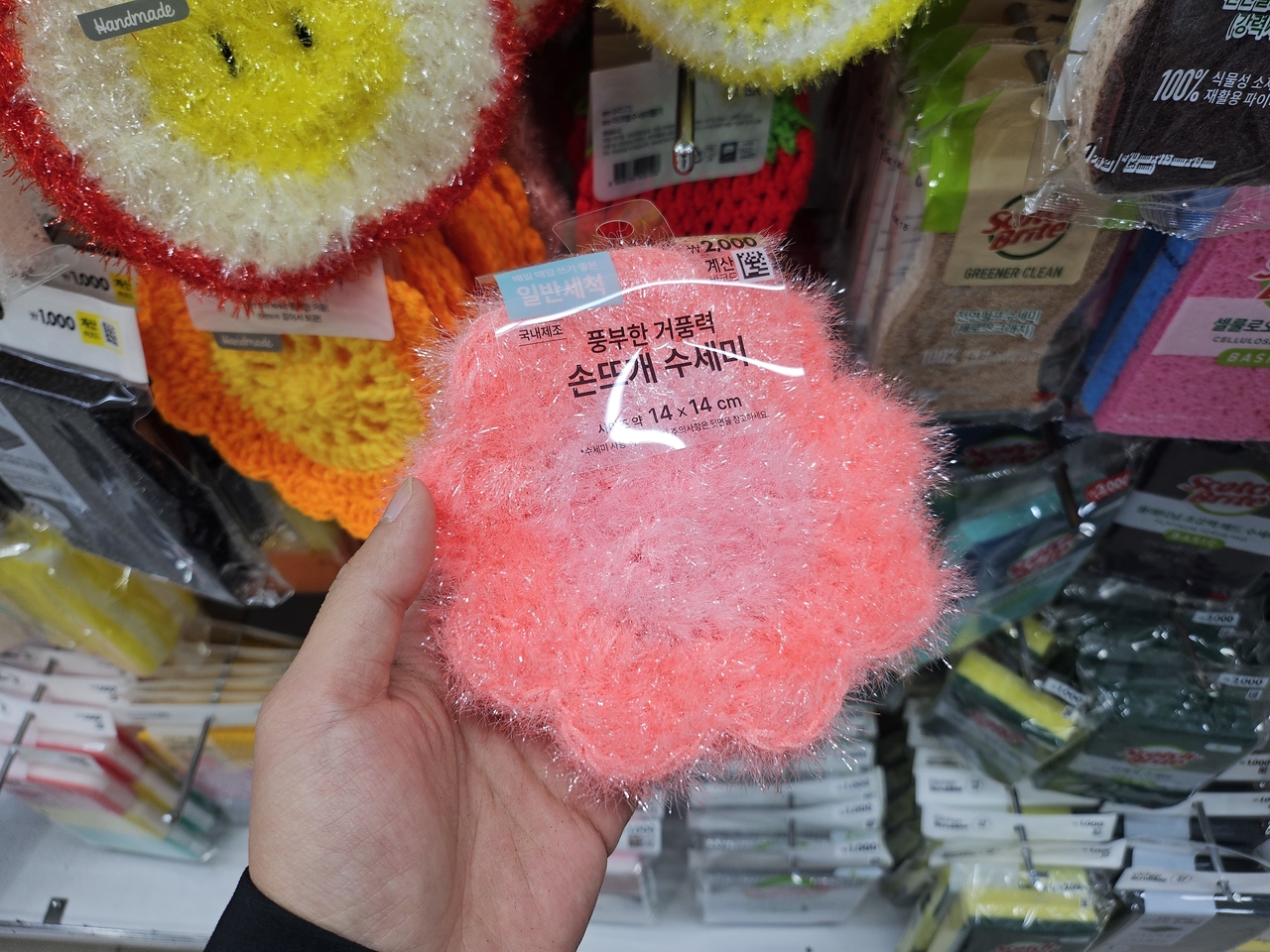
The issue is not limited to findings abroad. In South Korea, concerns have repeatedly been raised about microplastic emissions from scrubbers — particularly acrylic scrubbers, which come in bright colors and various shapes.
![An acrylic scrubber. [Image generated with ChatGPT]](https://wimg.heraldcorp.com/news/cms/2026/10/14/news-p.v1.20261014.22d076ba0c984badbcdc2f4d21d9985e_P1.png)
Acrylic is itself a synthetic plastic fiber. A 2022 study by the Korea Institute of Industrial Technology found that acrylic generates more microplastics than any other synthetic fiber derived from plastic.
So what kind of scrubber should consumers choose to reduce microplastic emissions? The first thing to check is plastic content — the study found that scrubbers with the lowest plastic content also released the fewest microplastics.

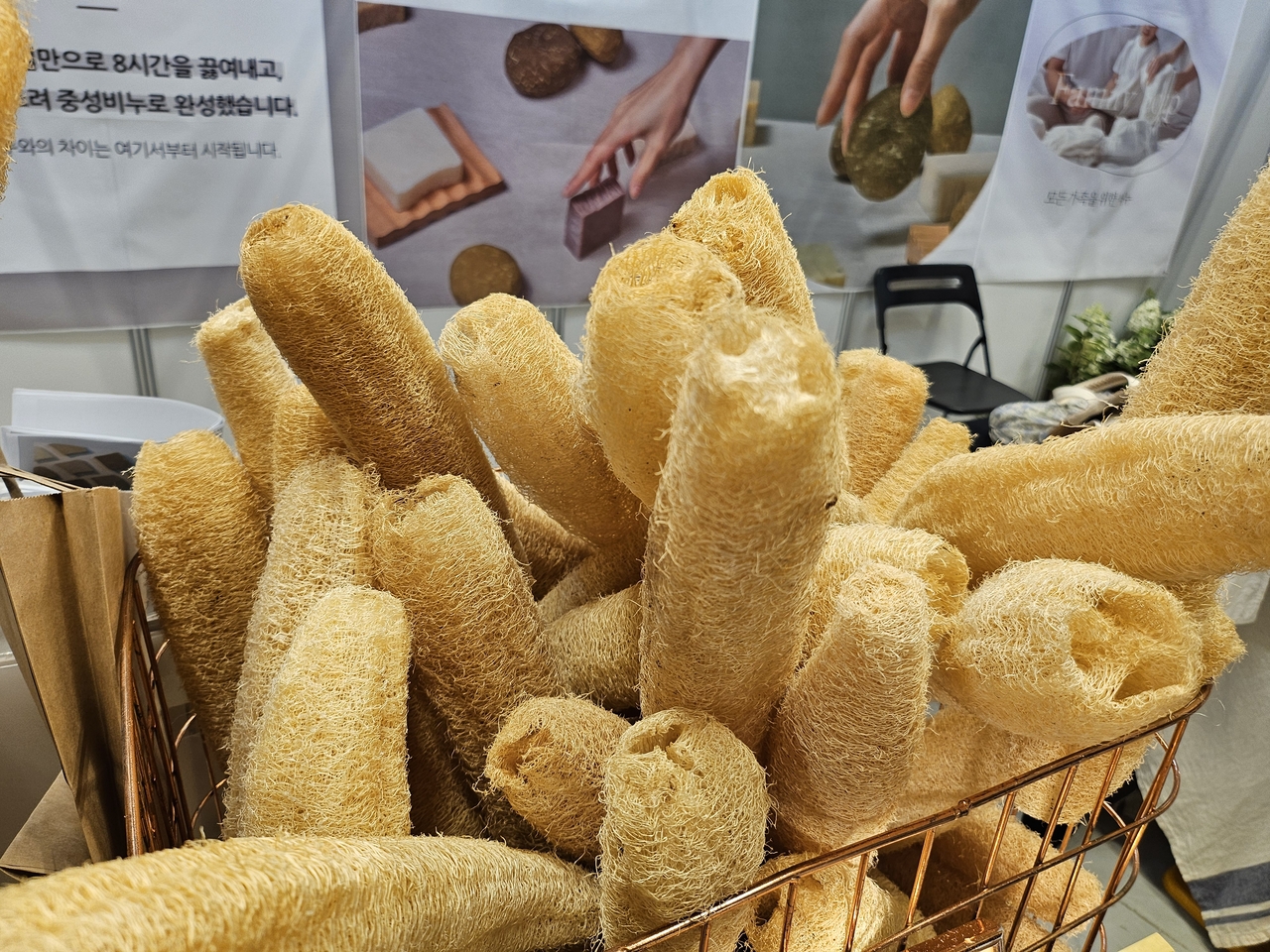
Choosing a scrubber made entirely without plastic is another option. Natural scrubbers — including those made from hemp and dried loofah — are among the most commonly cited alternatives.
Natural loofah scrubbers are made by harvesting the fruit of the loofah plant, a member of the cucumber family, then peeling and drying it. Because they rely on the plant's own fibers, products free of synthetic fiber blends avoid the problem of plastic particles wearing off during use.
Hemp scrubbers are also made from plant-based fiber derived from hemp stalks and offer a plastic-free alternative to synthetic scrubbers. The National Institute of Ecology ran a campaign in 2024 to replace the acrylic scrubbers used at its facilities with natural loofah scrubbers.
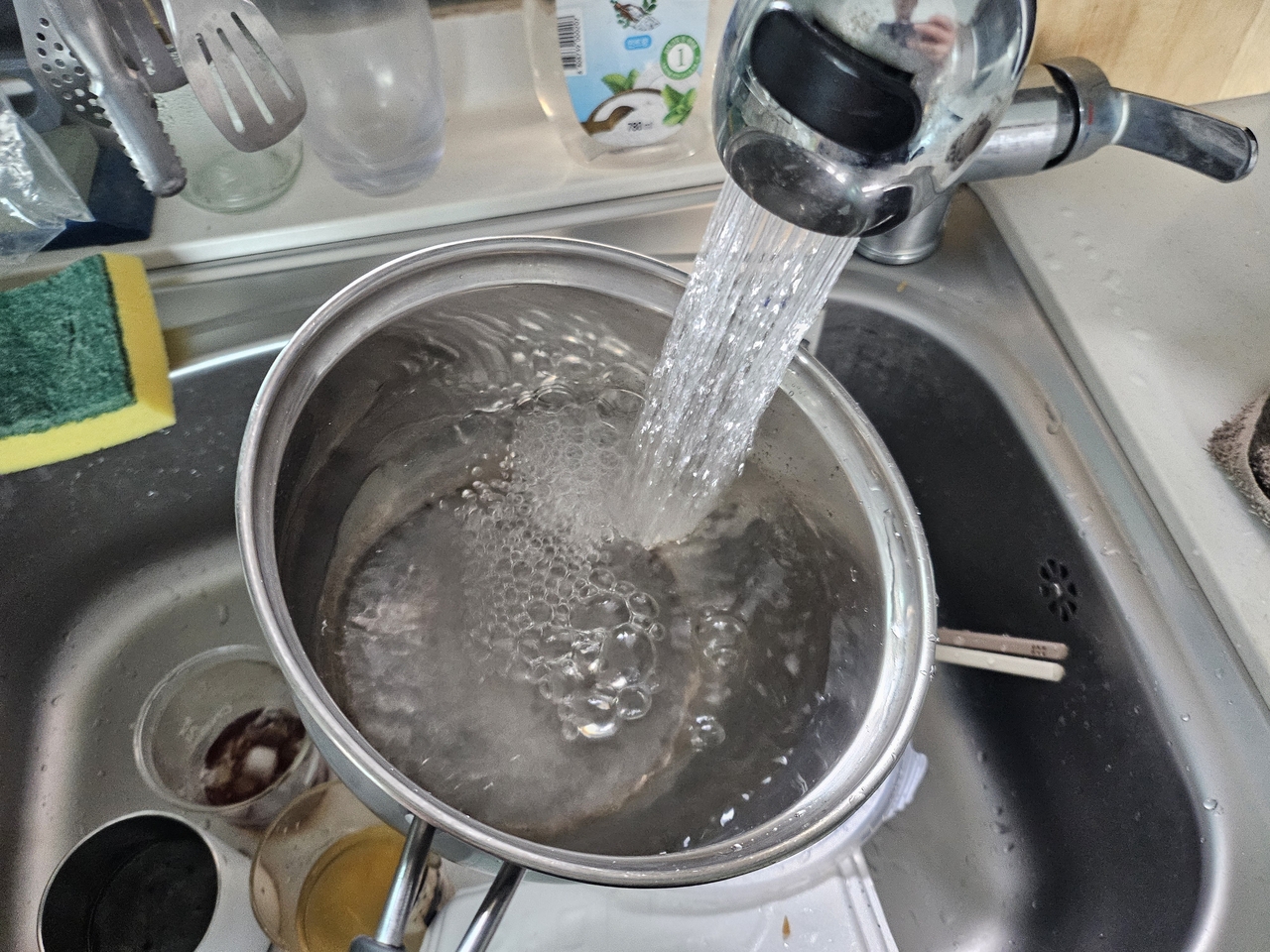
The environmental impact of dishwashing extends beyond the scrubber itself. The study found that between 85 and 97 percent of the environmental footprint of hand-washing dishes is linked to water use. Choosing the right scrubber matters, but cutting back on unnecessary water use can also make a meaningful difference.
"Reducing the plastic content of kitchen scrubbers can significantly lower microplastic emissions and their negative environmental impact," the research team said. "A similarly comprehensive approach should be applied to other emission sources to identify them and quantitatively assess their emissions and environmental effects."

woo@heraldcorp.com




