
Kim Ji-yong vows no 'targeted or dragnet investigations'
Ruling party grills nominee over past record, including assault case and Kim Hak-eui affair
'Don't become Prosecutors' Office Season 2,' lawmakers warn over document failures
Opposition criticizes delayed hearing as 'mere formality'
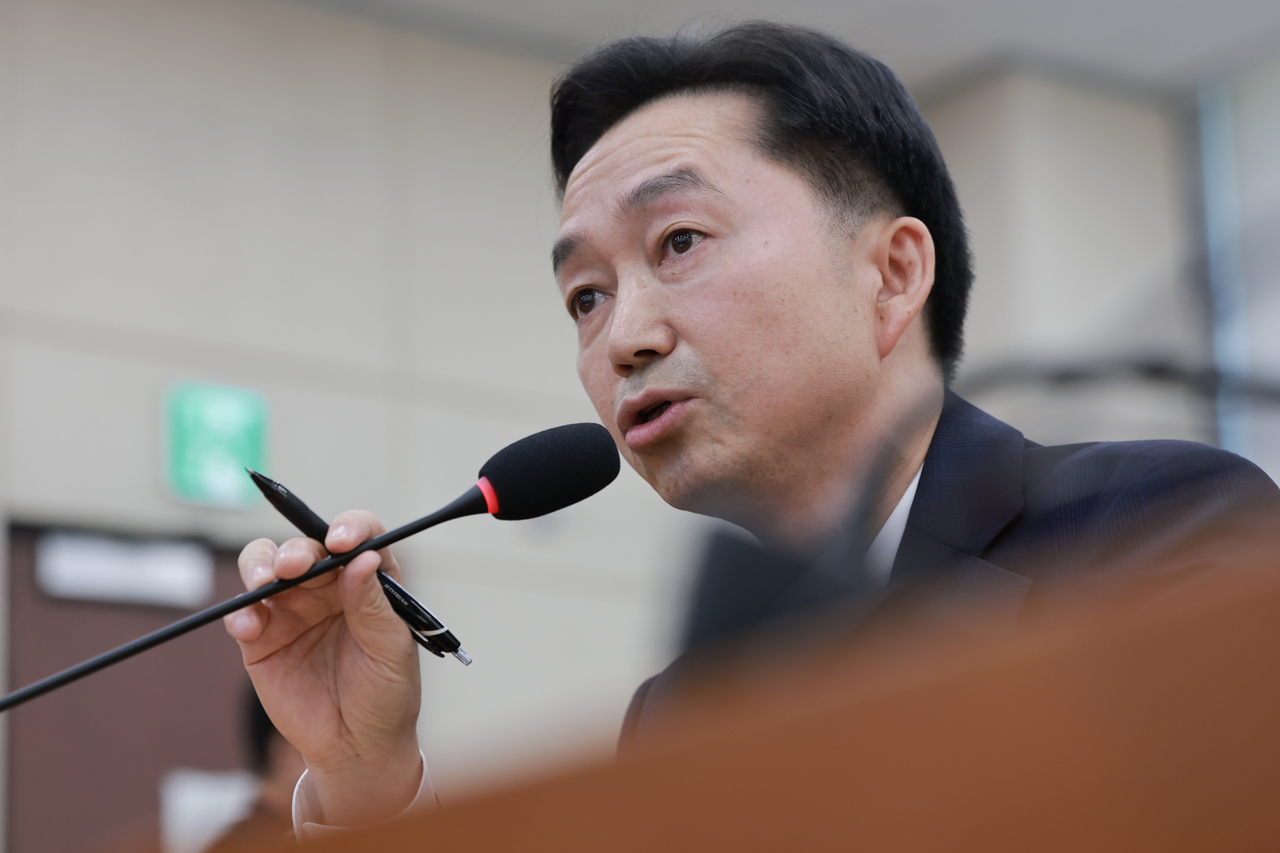
The National Assembly opened a confirmation hearing Wednesday for Kim Ji-yong, nominee for inaugural director of the Serious Crimes Investigation Agency, with scrutiny coming from both sides of the aisle. Amid lingering doubts within the ruling camp over Kim's past opposition to prosecution reform and his ties to former President Yoon Suk Yeol, the nominee pledged he would not repeat what he called "targeted or dragnet investigations."
Speaking at the full session of the National Assembly's Public Administration and Security Committee, Kim said the agency — established through the separation of investigative and indictment powers as part of criminal justice reform — must take firm root in Korean society and fulfill its role in delivering judicial justice and protecting citizens' daily lives. "I will ensure the agency conducts investigations fairly, guided solely by law and principle, without bending to outside pressure," he said.
Kim added that investigations would be driven strictly by evidence and legal reasoning, and that he would not hesitate to close a case if the evidence did not support a criminal finding. "I will supervise and direct the agency so that the rights of those involved in investigations are fully protected, and I will do my utmost to ensure not a single person suffers an unjust outcome," he said.
The central issues at the hearing were Kim's past conduct and the sincerity of his commitment to prosecution reform. Kim previously opposed legislation to curtail the prosecution's investigative powers and joined a statement by senior prosecutors opposing disciplinary action against then-Prosecutor General Yoon Suk Yeol. Those positions have led some within the ruling bloc to question whether he can genuinely carry out the spirit of prosecution reform.
Democratic Party lawmaker Yoon Geon-young pressed Kim hard on his record, characterizing the assault case involving prosecutor Jeong Jin-woong as "a case of political prosecutors shielding Han Dong-hoon." Yoon claimed Kim had opposed the indictment at the time but could not clearly state whether he had formally approved it. Kim maintained his earlier position that he had expressed opposition to the indictment.
Yoon also raised the illegal travel ban imposed on former Vice Justice Minister Kim Hak-eui, questioning why Kim Ji-yong had not filed a formal objection to the indictment in that case. When Kim replied that he had not submitted such an objection, Yoon shot back, "Does opposing something only in your heart count as opposition?"
Rebuilding Korea Party lawmaker Jeong Chun-saeng also questioned Kim's suitability for the post. "I could not find an answer to why it had to be Kim Ji-yong," Jeong said, adding that the inaugural director holds a critical position that must fulfill the public's long-held aspirations for prosecution reform. When asked whether he was aware of public opposition to his nomination, Kim said he knew "some such sentiment exists."
Criticism also mounted over Kim's failure to submit requested documents. Democratic Party lawmaker Park Ju-min said Kim had publicly promised twice during the hearing process to provide full disclosure, yet almost no materials had been submitted. Park demanded documents related to the Jeong Jin-woong assault case, the Kim Hak-eui illegal travel ban case and the perjury case involving Choi Eun-soon, and urged thorough scrutiny. "This hearing is not a formality simply to rubber-stamp the nominee," Park said.
Democratic Party lawmaker Park Jeong-hyeon took aim at the agency's overall attitude toward document requests, warning that if the situation were overlooked, "the Serious Crimes Investigation Agency will be nothing more than the Prosecutors' Office Season 2." Park said the agency had failed to provide concrete answers on its early operational guidelines and criteria for transferring unsolved cases, and criticized it for "replicating the exact way the Supreme Prosecutors' Office used to treat the National Assembly."
The opposition also took issue with the delay in scheduling the hearing. People Power Party lawmaker Kang Myeong-gu noted that 37 days had passed between Kim's nomination and the hearing, calling it "truly unprecedented since the introduction of confirmation hearings." Pointing to internal disagreements within the ruling camp over the nomination, Kang demanded to know whether the appointment had already been decided regardless of the hearing's outcome. "Is this all just a formality?" he asked.
In response, Democratic Party lawmaker Lee Hae-sik rebuffed the criticism, citing past precedents in which confirmation hearings were held during the national audit period. Lee pointed to the cases of former Prime Minister Kim Seok-su, former Foreign Affairs and Trade Minister Kim Sung-hwan and former Environment Minister nominee Cho Myeong-rae as evidence that holding a hearing during the national audit was not without precedent.
thanks@heraldcorp.com
raining@heraldcorp.com




