
Rice output forecast at 3.46 million tons, 1.9% above demand
Government to reclaim 120,000 tons of loaned grain stocks
Public reserve purchases of 400,000 tons; interim payment raised to 60,000 won per 40 kg
![Stock image unrelated to article [Getty Images Bank]](https://wimg.heraldcorp.com/news/cms/2026/10/13/news-p.v1.20261013.348b89262114422cb133543bbbac9cab_P1.jpg)
South Korea expects to produce about 66,000 tons more rice than demand this year, prompting the government to announce plans to remove the surplus from the market. Authorities will use a grain loan-return scheme — reclaiming previously lent government rice stocks in the form of newly harvested grain — to stabilize prices during the harvest season. The interim payment to farmers for public reserve rice purchases will also rise from 40,000 won to 60,000 won ($45) per 40 kilograms.
The Ministry of Agriculture, Food and Rural Affairs said Tuesday it had finalized a "2026 rice supply-and-demand stabilization plan" following a review by the Grain Supply and Demand Management Committee on Monday.
Total rice output this year is projected at 3.46 million tons, leaving an estimated surplus of 66,000 tons after accounting for demand — equivalent to about 1.9 percent of total production.
The figure was calculated by combining rice cultivation area data released by the Ministry of Statistics in August, the area registered under the new supply-adjustment paddy scheme, and projected yield per unit area.
Total paddy cultivation area this year stands at 670,000 hectares. However, excluding the 11,000 hectares enrolled in the government's newly introduced supply-adjustment paddy program — which restricts harvested grain to processing use and removes it from the market in advance — the area reflected in general rice supply-and-demand calculations comes to about 659,000 hectares.
The government's primary measure will be to isolate as much of the surplus as possible by reclaiming loaned government grain stocks in the form of this year's newly harvested rice.
The Ministry of Agriculture, Food and Rural Affairs lent a total of 155,000 tons of government grain to stabilize rice supply — 55,000 tons last year and 100,000 tons this year. After partial returns, the remaining balance to be repaid in this year's rice stands at about 120,000 tons.
The government said it will maintain its original plan to reclaim the full 120,000-ton balance, but will review the actual volume and timing of returns based on final production figures and carry-over inventory. The full 120,000 tons has not been confirmed for immediate isolation.
The government will also expand support to ease the burden on farming households during the harvest season.
From October through December, the government will purchase 400,000 tons of this year's rice for public reserves. The interim payment for public reserve rice will rise to 60,000 won per 40 kilograms, up 20,000 won from last year — a further increase following a rise from 30,000 won to 40,000 won in 2024.
The government and the National Agricultural Cooperative Federation will together provide 3.9 trillion won ($2.91 billion) in grain purchase financing — 1.4 trillion won from the government and 2.5 trillion won from the cooperative. The government will also ensure that local distributors that signed advance contracts for supply-adjustment paddy, introduced for the first time this year, carry out purchases as planned.
Authorities will also step up monitoring of rice distribution during the harvest season. Inspections will target suppliers of government-owned processing-grade rice and importers of table rice to check whether processing-grade grain is being sold on the open market, and will look for violations such as mixing newly harvested rice with older stocks or blending rice from different crop years.
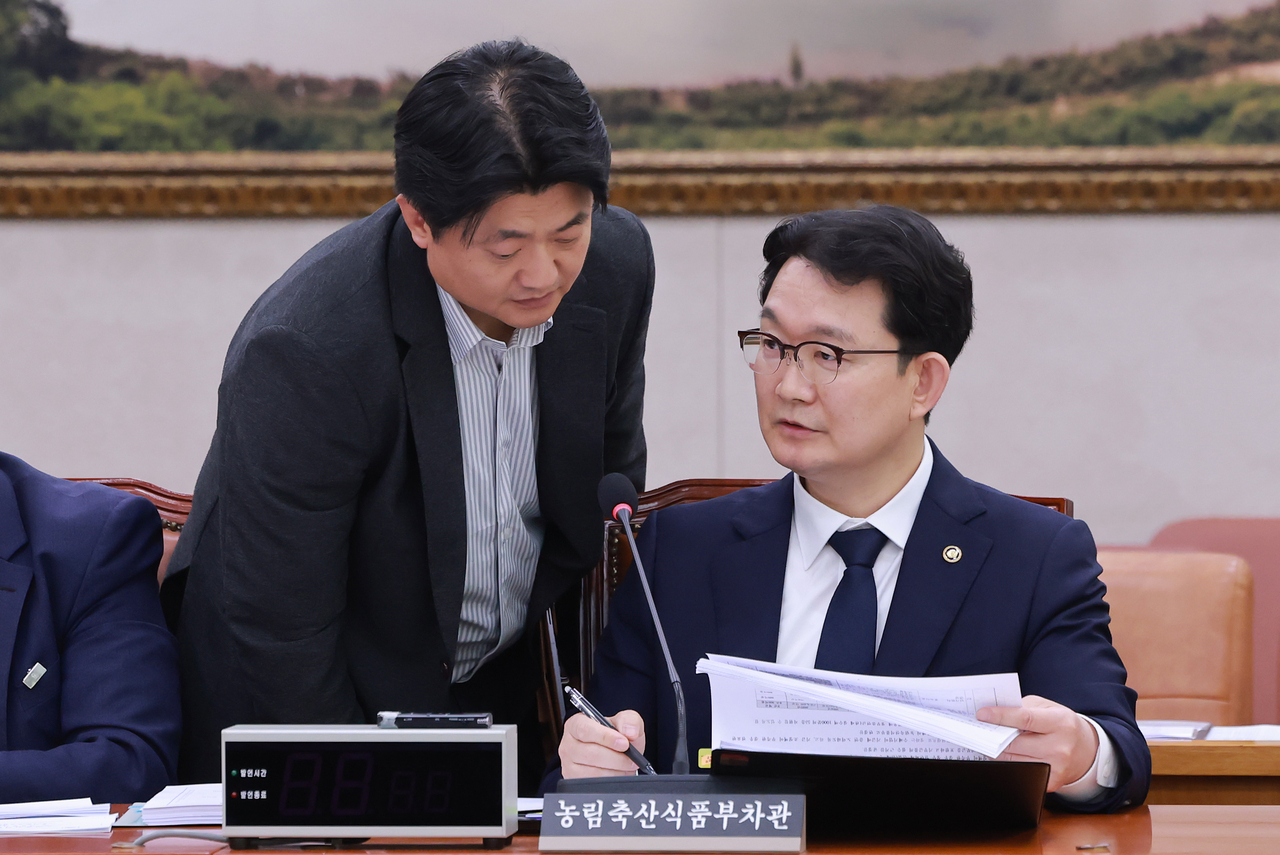
Vice Minister of Agriculture, Food and Rural Affairs Kim Jong-gu said the plan marks "the first rice harvest-season supply stabilization measures drawn up since the revised Grain Management Act took effect," adding that the government would "seek to isolate as much of the surplus as possible through the return of loaned government grain stocks and stabilize supply and demand during the harvest season."
Kim added that the government would "establish measures in stages, taking into account the possibility of changes in final output, and swiftly put in place additional supply stabilization steps if necessary."
adastra@heraldcorp.com




