A 40-something investor who started with about 100 million won ($73,600) in seed capital and grew it to roughly 450 million won in just over a year has drawn wide attention. Through a dividend-focused portfolio, he now collects about 5 million won in dividends every month.
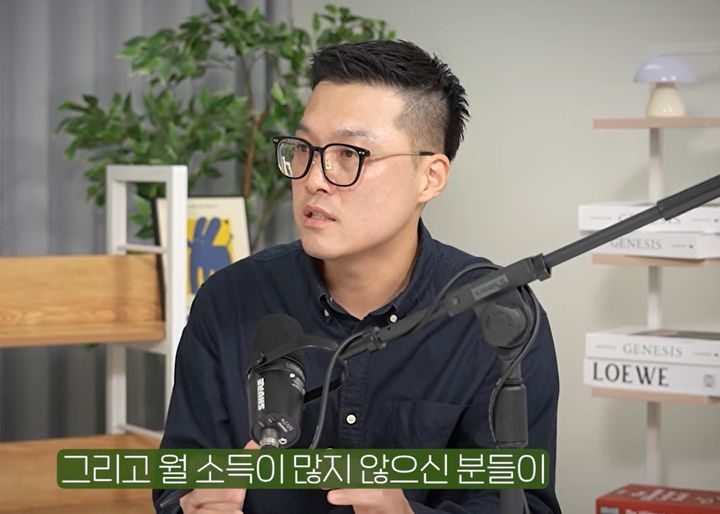
On Wednesday, a YouTube channel called Money Inside featured an investor known as "Park Cha-jang," who said he quit his job last year after achieving financial independence through dividend stock investing and has since lived as a FIRE (Financial Independence, Retire Early) adherent.
Park said he spent 15 years working as a salaried employee and running his own business before deciding to leave his job once his dividend income surpassed his monthly salary. His monthly dividends exceeded 7 million won at one point last year, but after rebalancing away from the highest-yielding holdings to reduce risk, he now receives roughly 4.5 million to 5 million won per month.
'Not cut out for individual stocks' — why he switched to dividends
Park first ventured into stock investing around late 2019, as the COVID-19 pandemic was beginning. At the time he was running his own business and said he decided to try investing after watching economics channels on YouTube during slow periods.
He initially invested in domestic individual stocks, including Samsung Electronics, but found it difficult to anticipate the external variables affecting the Korean market and shifted his attention to US individual stocks. The burden of late-night monitoring and severe psychological stress eventually led him to pivot to a dividend-centered strategy at the end of 2024.
"I bought Palantir in 2021 and traded in and out several times, then held part of the position through 2025 and made a large profit," he said. "But I realized I'm not cut out for individual stocks. The people who hold on and reap big rewards are impressive — I just knew I couldn't do that."
When he made the switch to dividend stocks, his total seed capital was just over 100 million won. Rather than putting that money into SCHD — the dividend ETF popular among Korean retail investors in US markets — he invested in high-yield and ultra-high-yield dividend ETFs. "I collected large distributions and reinvested them into other index or dividend products with upward momentum, which is how I grew the asset base," Park said.
Seed capital tripled in a year
The strategy paid off: by the end of 2025, roughly a year after he began, his principal had grown more than threefold. "I was also lucky," he said. "The ultra-high-yield products I bought early on were YieldMax products — a series of ultra-high-yield covered-call ETFs from US asset manager Tidal Financial Group — and the underlying indexes they tracked performed extremely well. MSTY, which tracks Strategy stock, had a distribution rate that exceeded 100 percent."
He was candid about the risks. "Ultra-high-yield products carry a very high chance of eroding your principal — quite a few of the holdings in my own portfolio are like that," he said. "But if you fully understand the characteristics of each product and pair it with a reinvestment strategy, it's not a bad approach."
His current portfolio is roughly 70 percent dividend stocks and 30 percent index-tracking products. Within the dividend portion, YieldMax covered-call ETF series — including NVDY, ULTY and MSTY — account for about 11 percent; Korea-listed US index covered-call ETFs make up about 40 percent; and US-listed high-yield and covered-call ETFs account for 30 to 40 percent.
With his total assets now well into the mid-400 million won range, he plans to gradually unwind his ultra-high-yield positions and shift toward more stable dividend stocks with lower price volatility, such as SCHD.
Park said his approach is better suited to young workers or small investors with modest monthly incomes than to those who already hold assets exceeding 1 billion won ($736,000). "If you invest short-term or put away just 100,000 won a month, it's hard to feel the power of compounding," he said. "Build cash flow quickly at the start, diversify your income streams, and then use those streams to invest in financial products — that's how you grow your assets."
bbo@heraldcorp.com