100th anniversary of Hangul Day designation draws 13,000 runners, 2,000 staff; families and foreign participants join festival; Black Eagles perform celebratory flyover
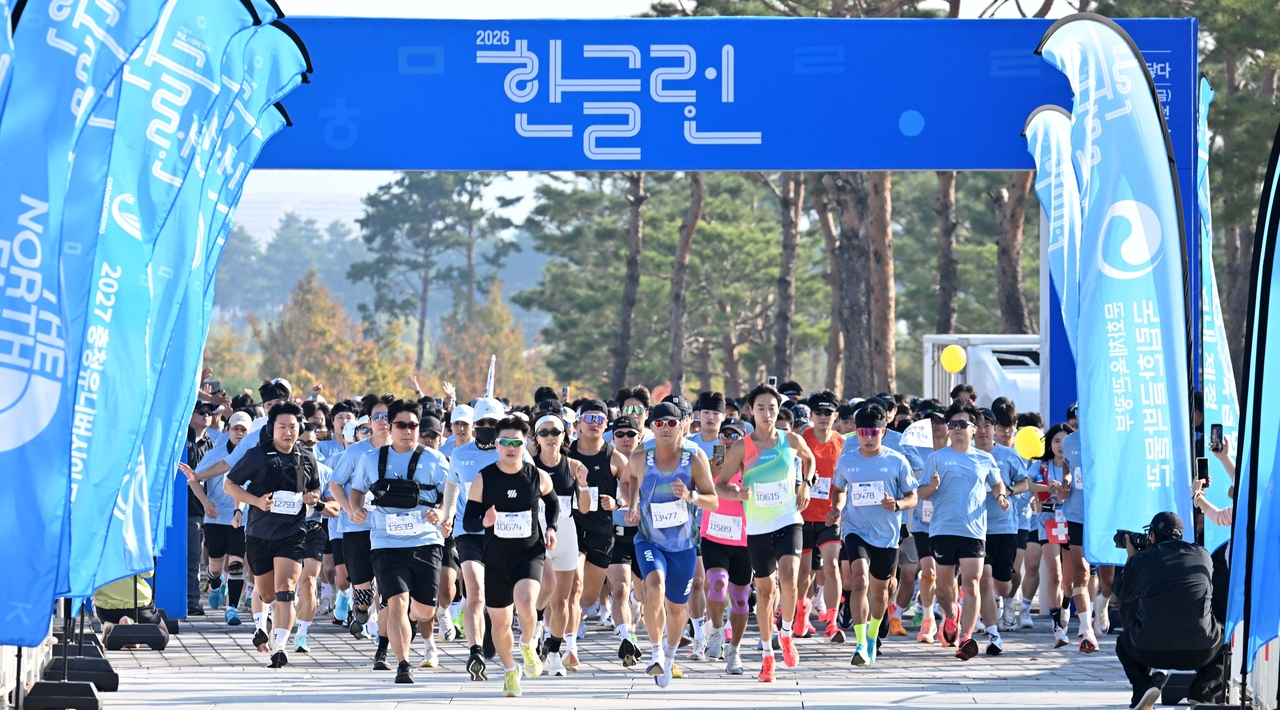
Residents in athletic wear streamed into Sejong Central Park on Friday morning. Families, friends and colleagues gathered to prepare for the start, and parents arrived hand in hand with young children. Runners from across the country lined up at the starting line, each with their own goal in mind. It was the scene of the 2026 Hangul Run, held to mark the 100th anniversary of the official designation of Hangul Day.
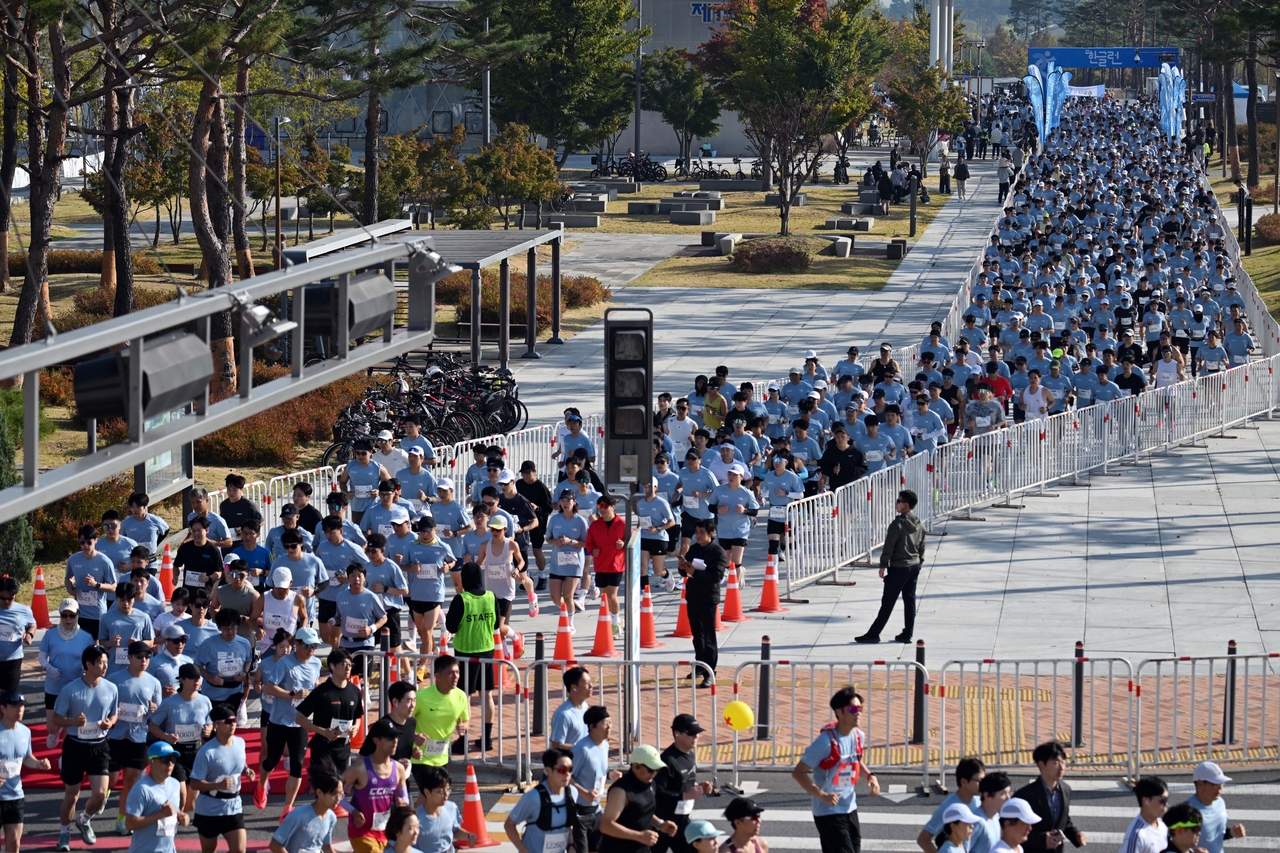
This year's Hangul Run drew about 15,000 participants in total — 13,000 runners and roughly 2,000 staff and volunteers. Including family spectators and general visitors who did not take part in the run, the crowd reached about 20,000. Sejong Central Park and its surroundings buzzed with residents out to celebrate Hangul Day.
Co-organized by Herald Media Group and the Sejong Special Autonomous City, the Hangul Run is in its third year. The event started with about 7,000 participants in 2024 and has grown each year into a festival that draws runners from across the country. This year carried added historical significance as the 100th anniversary of the official designation of Hangul Day.
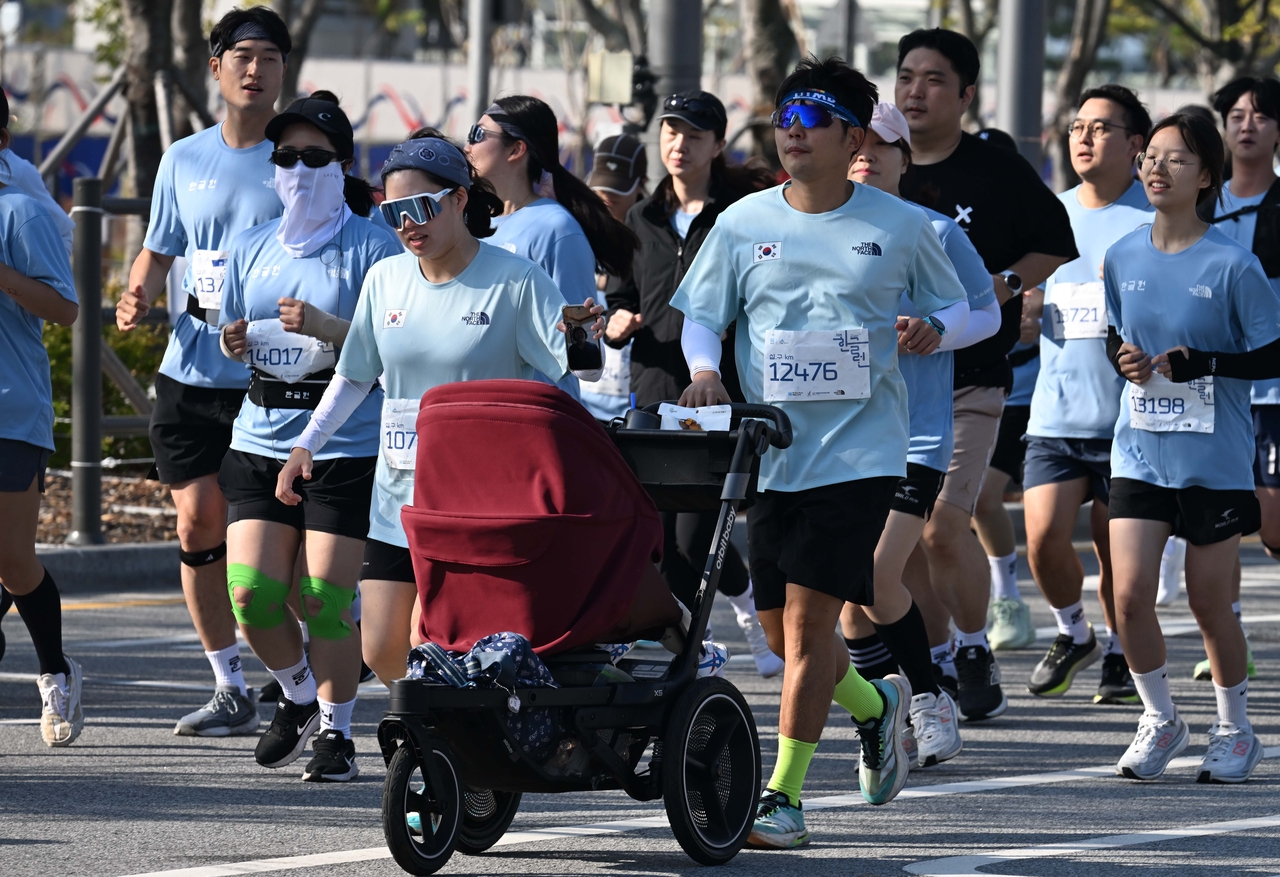
Participants chose between two courses — 10.9 kilometers and 5.15 kilometers — both starting from Sejong Central Park and passing landmarks including Ieung Bridge and the National Sejong Arboretum. Runners selected their distance based on fitness and personal goals. The field ranged from those chasing personal records to participants simply enjoying a run with family or friends.
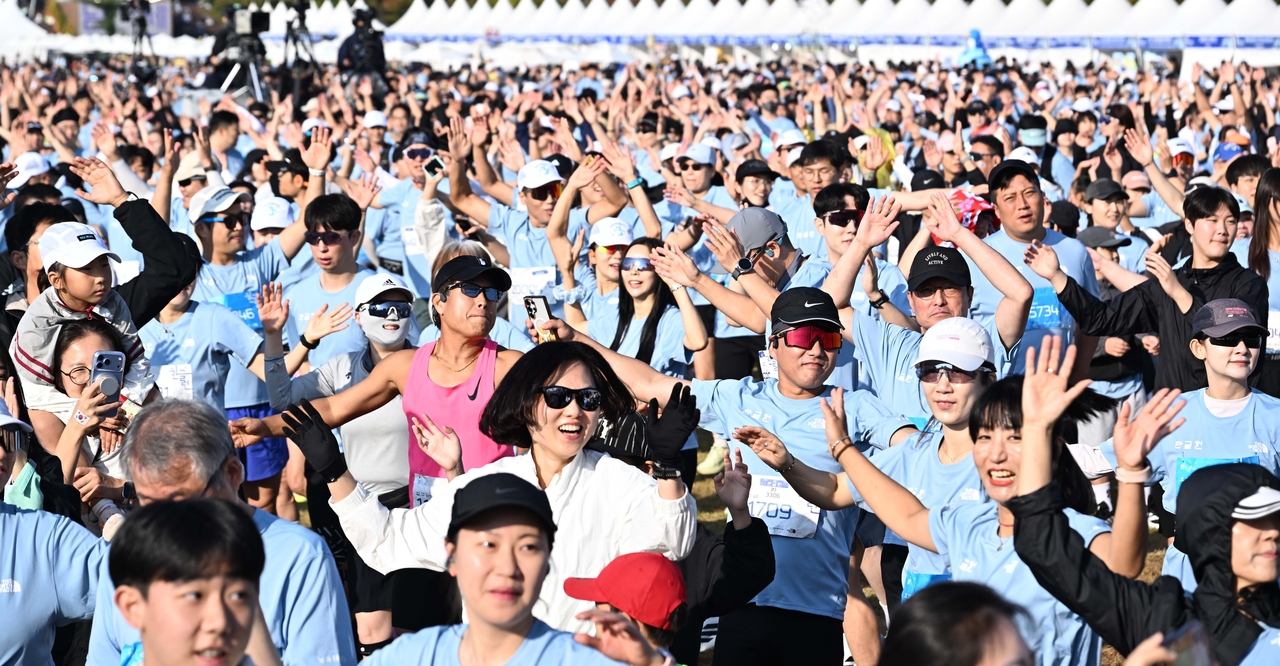
For Lee Won-jin, 35, an office worker living in Sejong's Jochiwon area, the Hangul Run was another milestone in a consistent exercise routine. "At first I couldn't even run three kilometers, but by keeping at it I worked my way up to five and then ten," he said. "The fact that it's held here in Sejong makes it all the more meaningful."
An office worker in his 30s who traveled from Seoul also expressed satisfaction with the course. "It felt great to get out of the busy city and run while taking in nature," he said. "I drew energy from seeing people of all ages running together and cheering each other on."
Foreign participants also joined the Hangul Day festival. Runners in their 20s through 40s came to Sejong from Malaysia, Indonesia, the United States, Canada and other countries. Though they came from different nations and spoke different languages, their presence at an event celebrating hangul added to the spirit of the day.
![Jung Ji-won (far right) poses for a photo with her father, who completed the run, and her younger sibling at the 2026 Hangul Run at Sejong Central Park on Friday. [Provided by Jung Ji-won's mother]](https://wimg.heraldcorp.com/news/cms/2026/10/09/news-p.v1.20261009.86eeff063d7f4b1896e1f27196f178e4_P1.jpg)
Families who did not run also soaked up the festival atmosphere. Eight-year-old Jung Ji-won came with her mother and younger sibling to cheer on her father, who was competing in the run. Though she did not run herself, she spent the time exploring the various activity booths. Many other residents similarly turned out to support participants or take part in the cultural programs on offer.
The theme of this year's event was "Samoochda — Hangul Reaches People," a phrase conveying the idea of hearts connecting deeply with one another. Organizers printed the calligraphy style of "Worin Cheongang Jigok," a work composed by King Sejong, on participants' T-shirts — bringing the appearance of hangul from more than 600 years ago into modern running apparel as a way to reflect on the script's historical value.

In his opening remarks, Herald Media Group Chief Executive Choi Jin-young said the Hangul Run had grown from an event of 7,000 people into a festival shared by some 20,000. "I hope it continues to be a festival that carries the value of hangul to the world and to future generations," he said.
Sejong Mayor Jo Sang-ho called the Hangul Run "Sejong's signature cultural and sports festival, one that people from across the country come together to enjoy." He urged participants to "finish at your own pace without pushing too hard, and stay healthy."
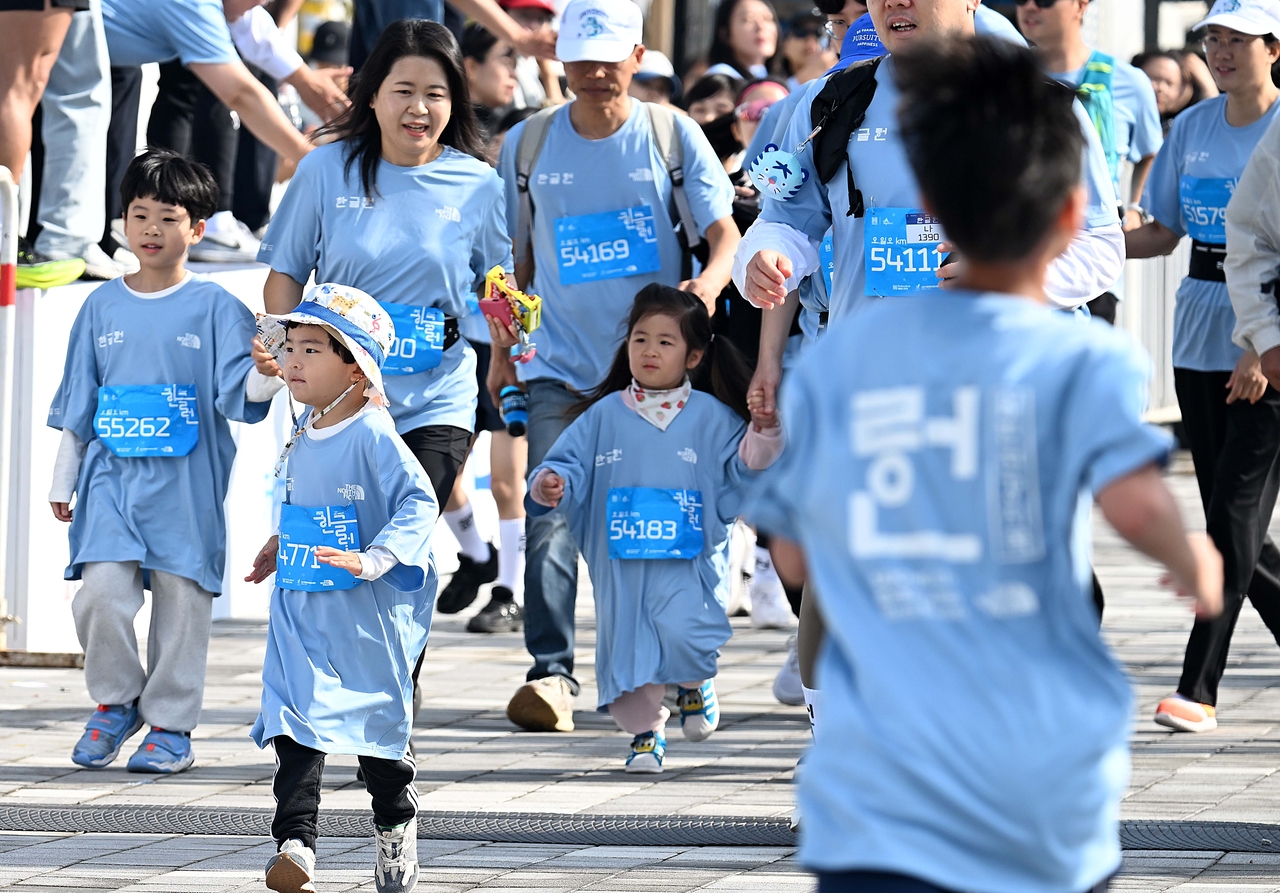
Celebrities joined the public on the course. Singer Kim Chang-yeol performed at the opening ceremony before taking part in the 5.15-kilometer course himself and completing it — going beyond simply cheering from the stage to running alongside participants.
"I'm proud to be running on the 100th anniversary of Hangul Day," Kim said. "It's a day I'm grateful for and happy about — I got to perform on stage and connect with everyone here." He added: "Running is about constantly challenging yourself. Don't be afraid to try, but I hope everyone finishes without getting hurt and takes home a happy memory."
Comedian Kim Hye-seon led a pre-race stretching session to help participants warm up. "I've been to many marathon events, but I was genuinely surprised to see so many people here," she said. "It's an honor to be part of such a meaningful day, and honestly I had the most fun of anyone."
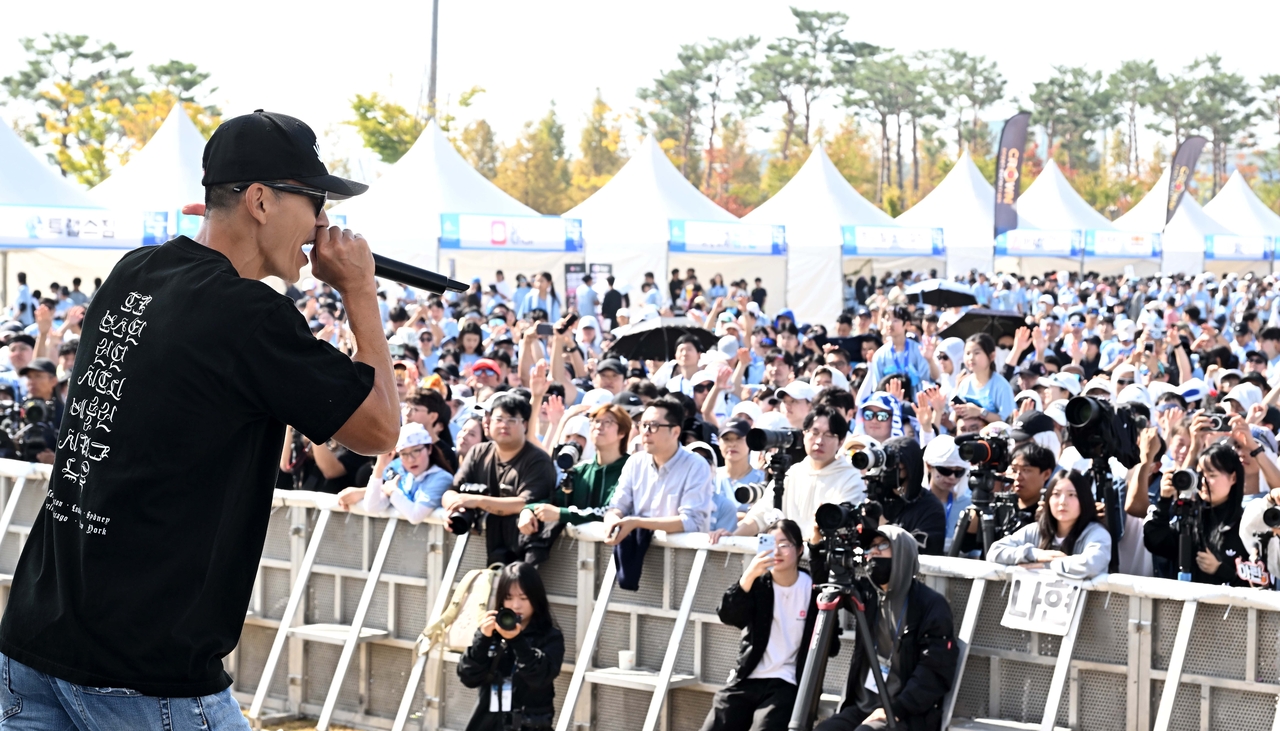
Singer Shawn highlighted the event's value as a place for families to reflect on the meaning of Hangul Day together. "It was meaningful because families could run together and talk to their children about how remarkable King Sejong and hangul are," he said.
Shawn, who has participated since the inaugural event, said he intends to return next year, provided his overseas schedule does not conflict. He also expressed hope that running would take root as a healthy and enjoyable activity that causes no inconvenience to others.
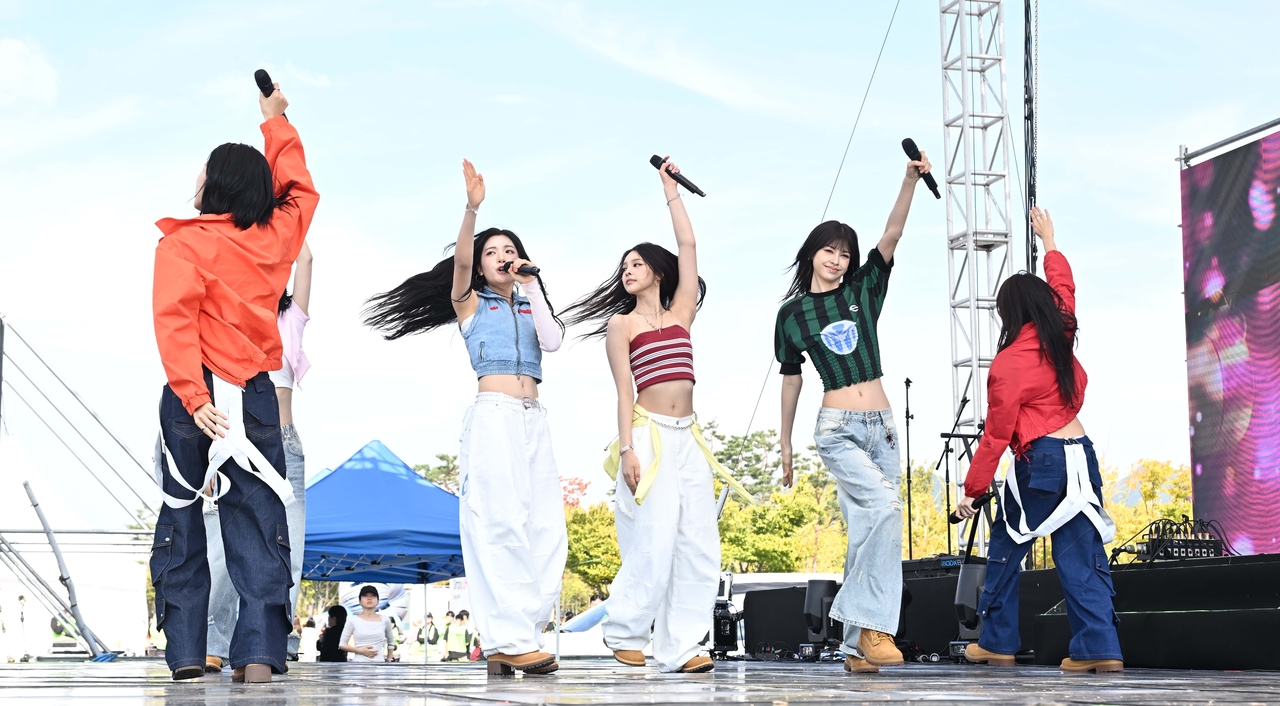
Girl group At:Heart also took the stage for a celebratory performance. Members who spoke with reporters noted the strong turnout of foreign participants. "Not only Koreans but many people from other countries came to celebrate Hangul Day," the group said. "As a global group, we want to spread awareness of Hangul Day further and become a group that truly loves hangul."
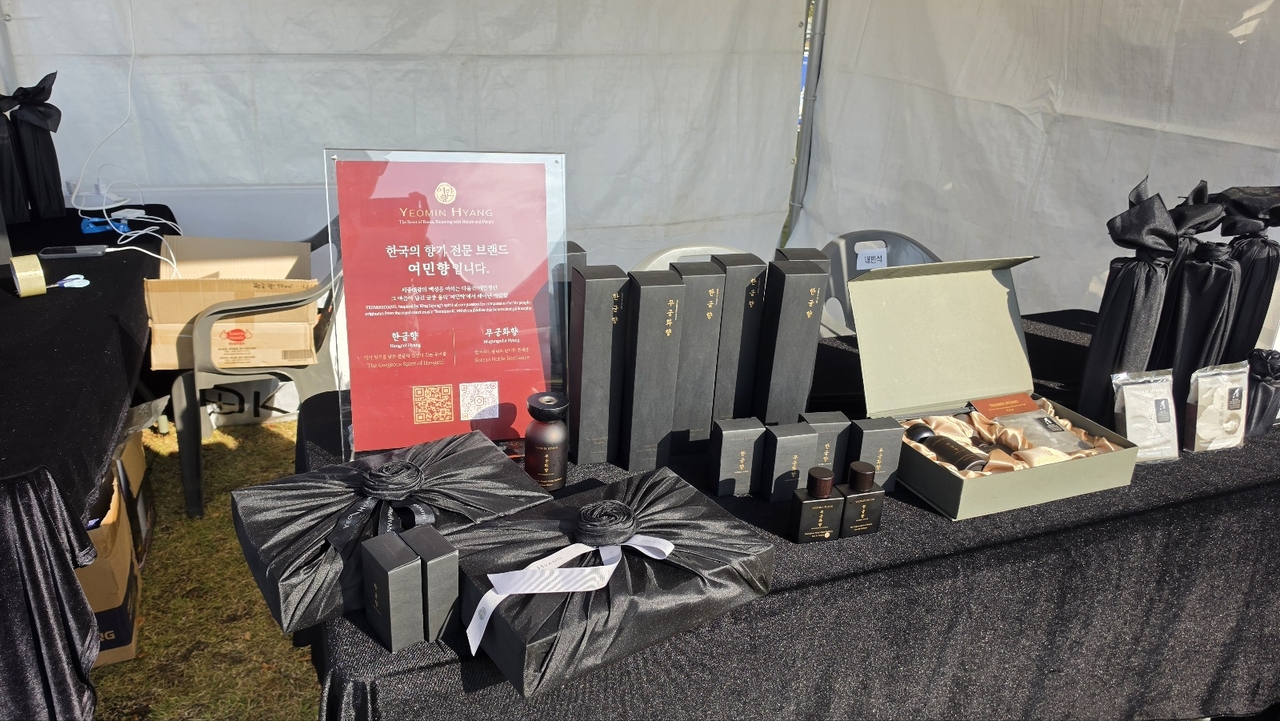
The venue remained packed even after the run ended. A hangul products fair showcased everyday goods, crafts and character merchandise incorporating the Korean script. The Hangeulla booth displayed spoons and chopsticks shaped after hangul consonants, while Yeominhyang presented fragrance products inspired by Korean culture, including hangul-themed and mugunghwa-themed scents.
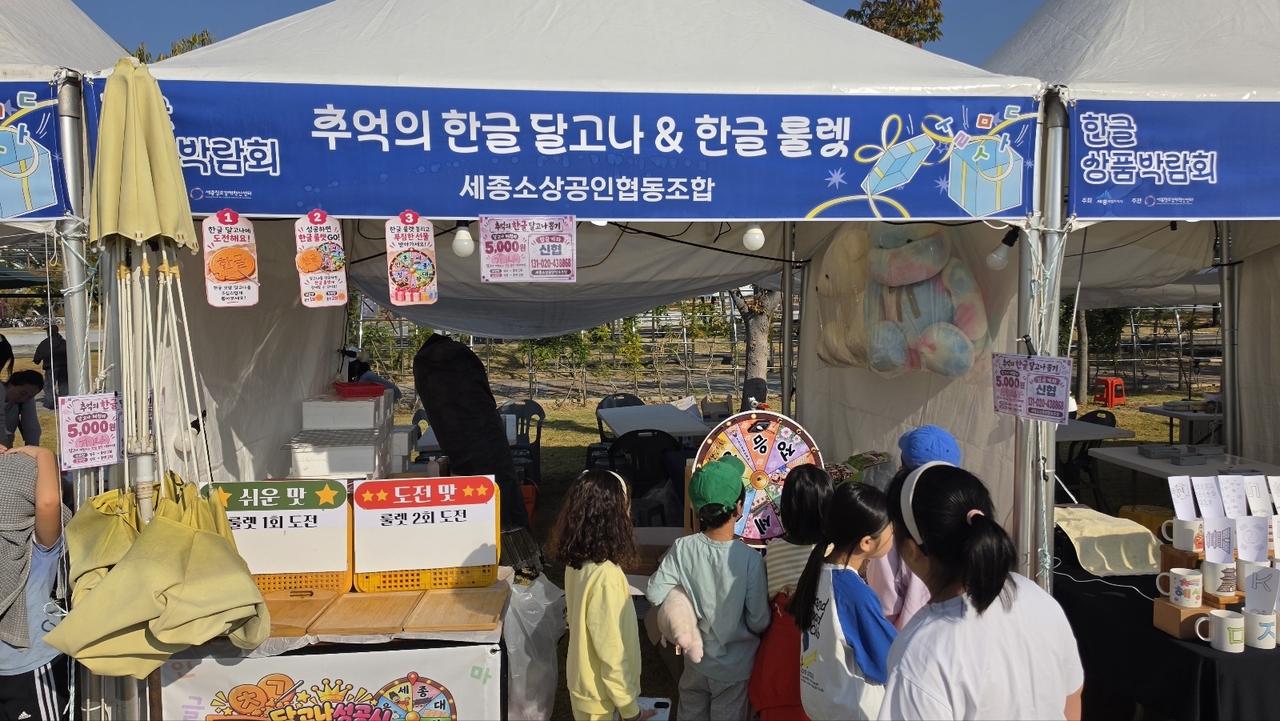
Children gravitated toward the hands-on activity booths. A retro dalgona candy and hangul roulette booth drew crowds of young visitors. Other activities included making hangul-themed keyboard keycaps, keychains, mother-of-pearl whistles and plaster air fresheners.
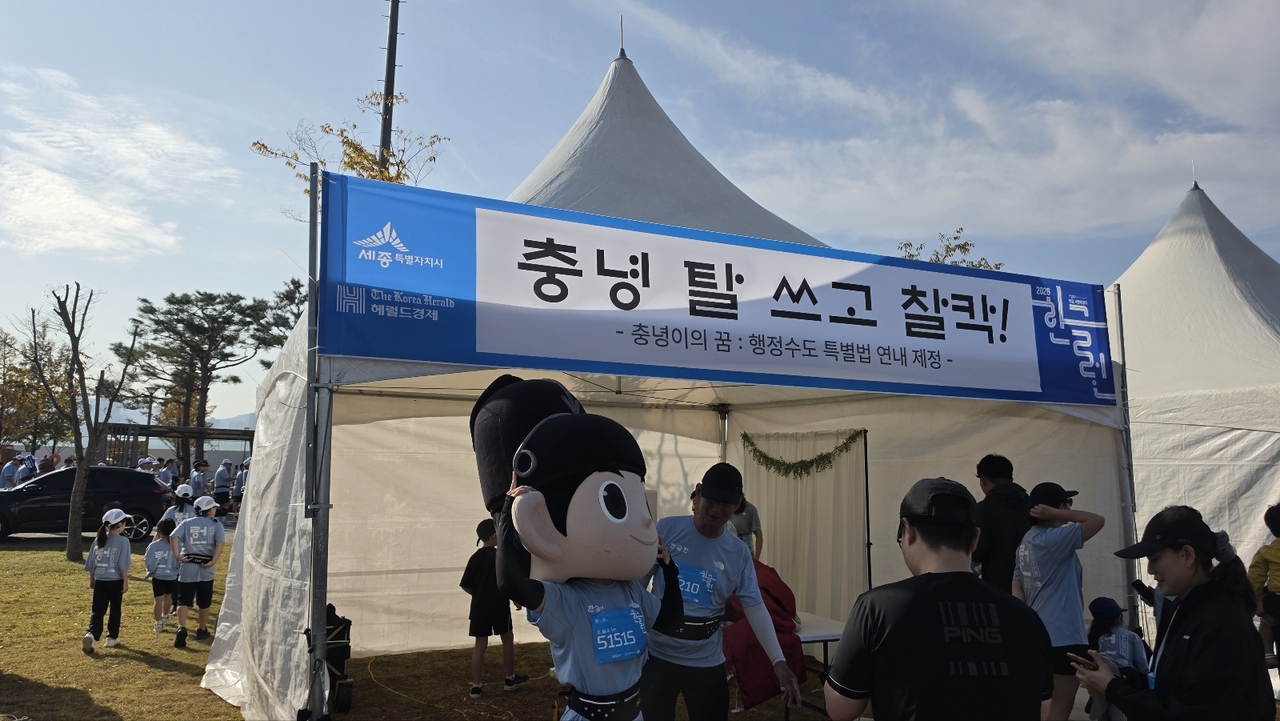
A traveling hangul shop sold souvenirs featuring Chungnyeongi, Sejong city's mascot character. A photo booth where visitors could pose with a costumed Chungnyeongi character gave families a chance to create lasting memories of Hangul Day.
Running brand Newrun showcased its running watches at the event. With sports goods, hangul cultural products and children's activity programs all sharing the same space, the venue felt less like a road race and more like a full family festival.
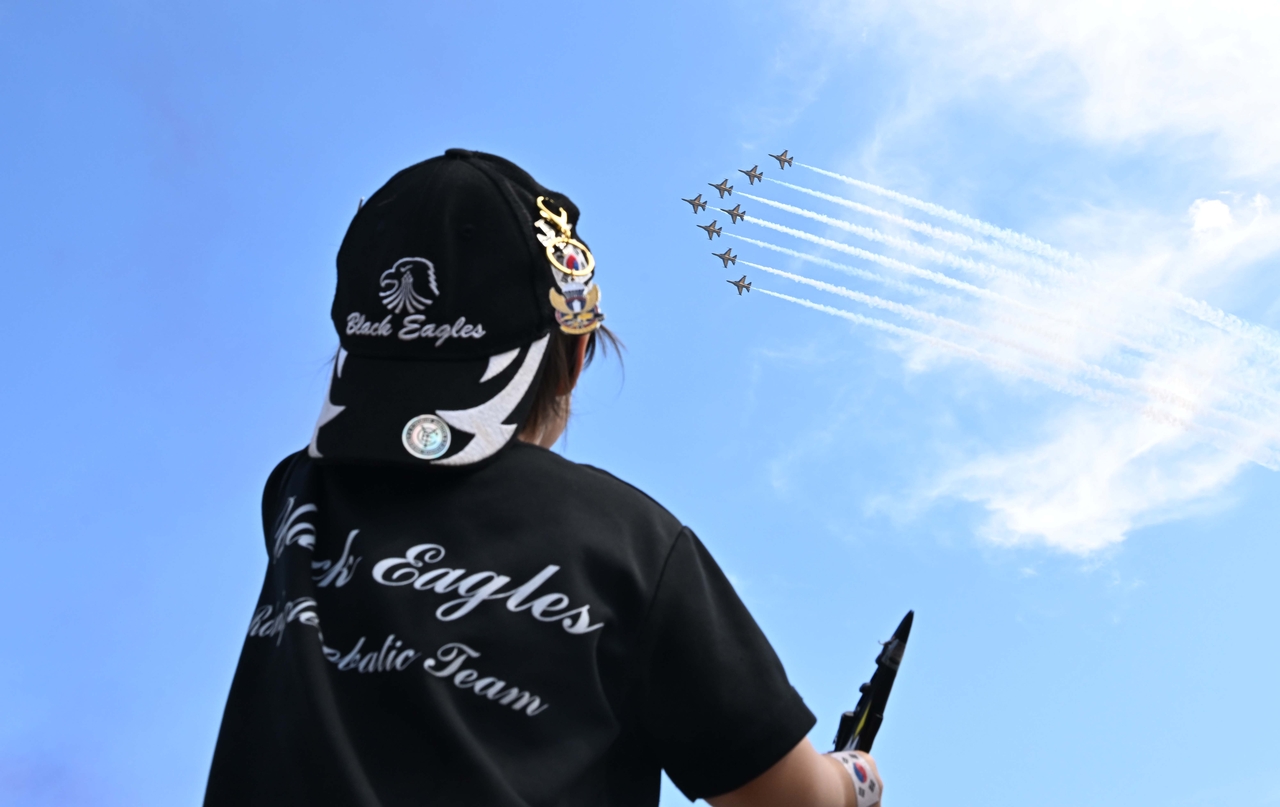
The event closed with a celebratory flyover by the Black Eagles, the Air Force's aerobatic display team. As the jets traced red and blue vapor trails across Sejong's autumn sky, participants and spectators alike turned their eyes upward. "The air show was the most impressive part," one participant said. "It was a perfect finale for the autumn sky."
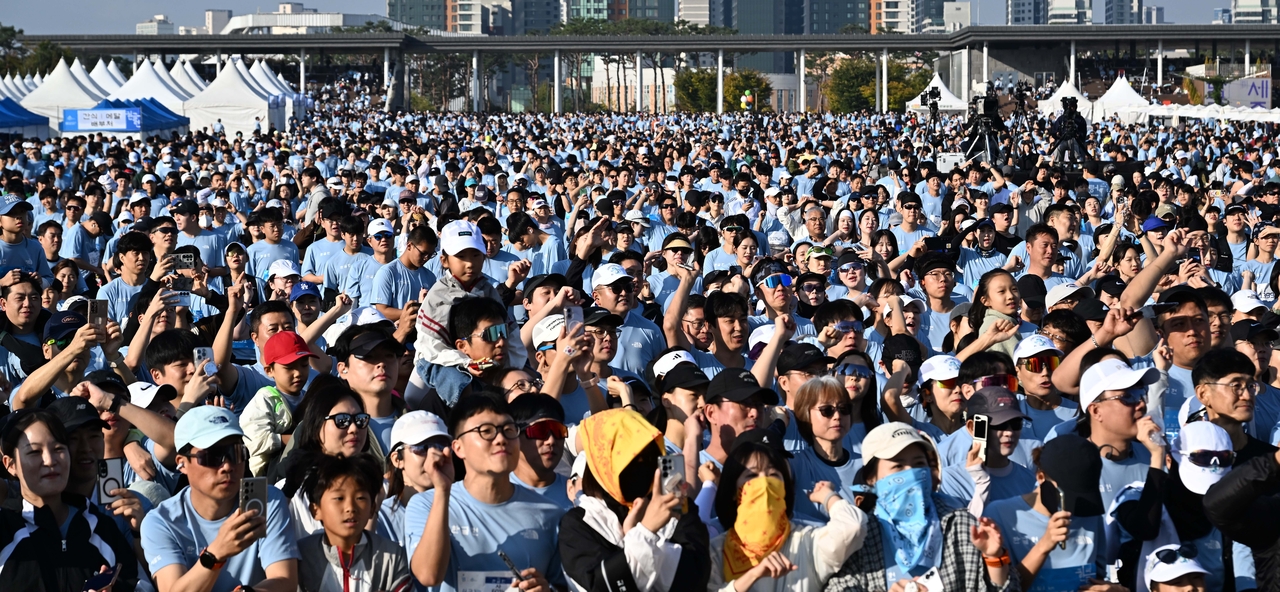
As the event grows in scale, some participants called for operational improvements. Several said the wait for commemorative photo opportunities was too long. "Some of my friends waited an hour to get a photo and still couldn't get one," one participant said, suggesting the organizers introduce QR code or automatic recognition systems. Others said more portable restrooms and other amenities were needed.
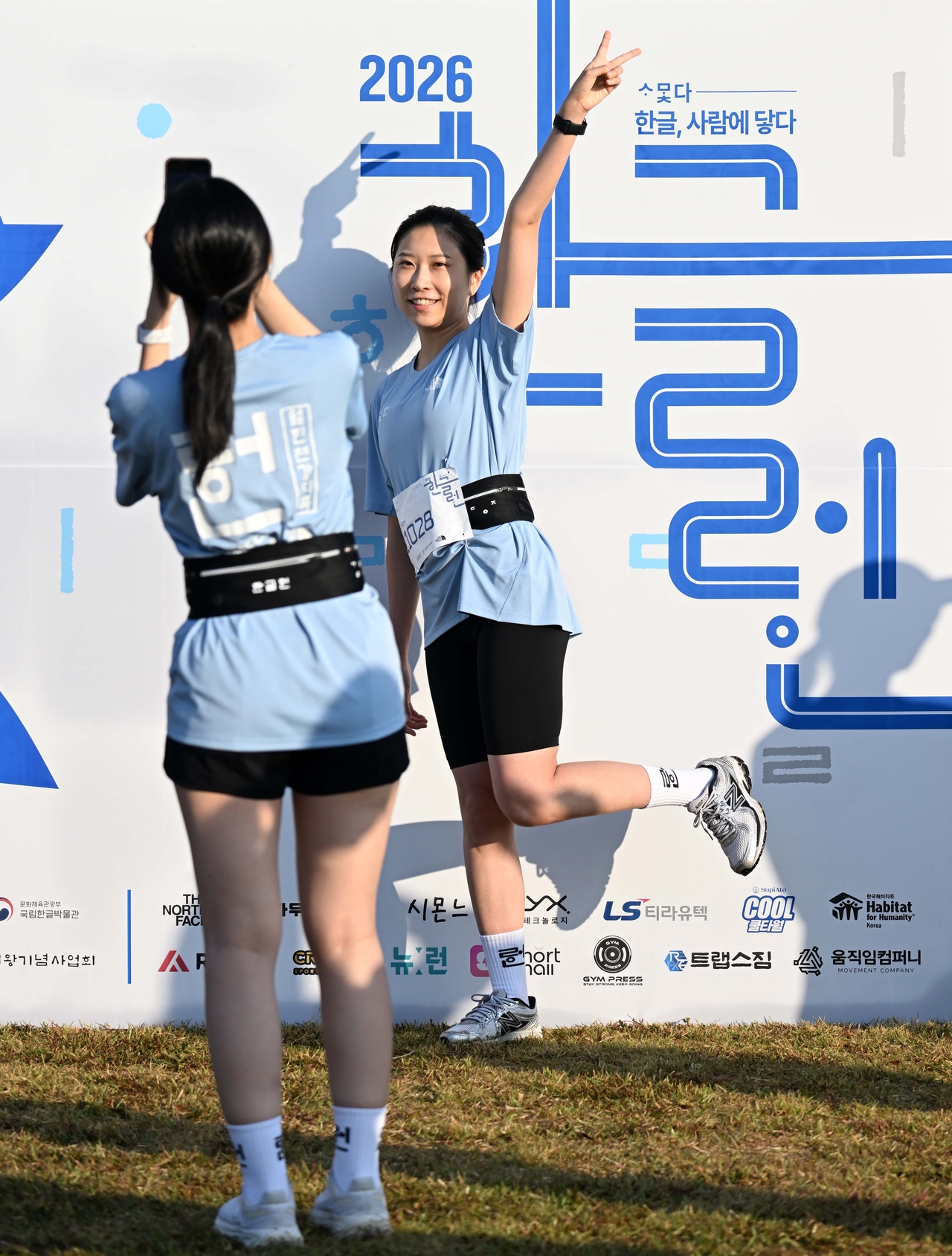
This year's Hangul Run, held on the 100th anniversary of the holiday's official designation, showed how varied the ways of celebrating hangul can be. Participants ran through Sejong's landmarks in T-shirts bearing the script's centuries-old calligraphy. Children played games built around hangul, while families and foreign visitors joined in marking the day together.
The Hangul Run started with about 7,000 participants in 2024 and has grown into a festival drawing some 20,000 people, including family spectators. At Sejong Central Park on Friday, Hangul Day was more than a commemorative occasion — it was a day of running, cheering, cultural discovery and shared meaning.
adastra@heraldcorp.com