Jeju-origin hando supplies 105.6 tons to Singapore in 9 months after first export
Domestic pork exports up 162 percent year-on-year through August
Industry balances consumption drives and heat-wave response while eyeing productivity gains
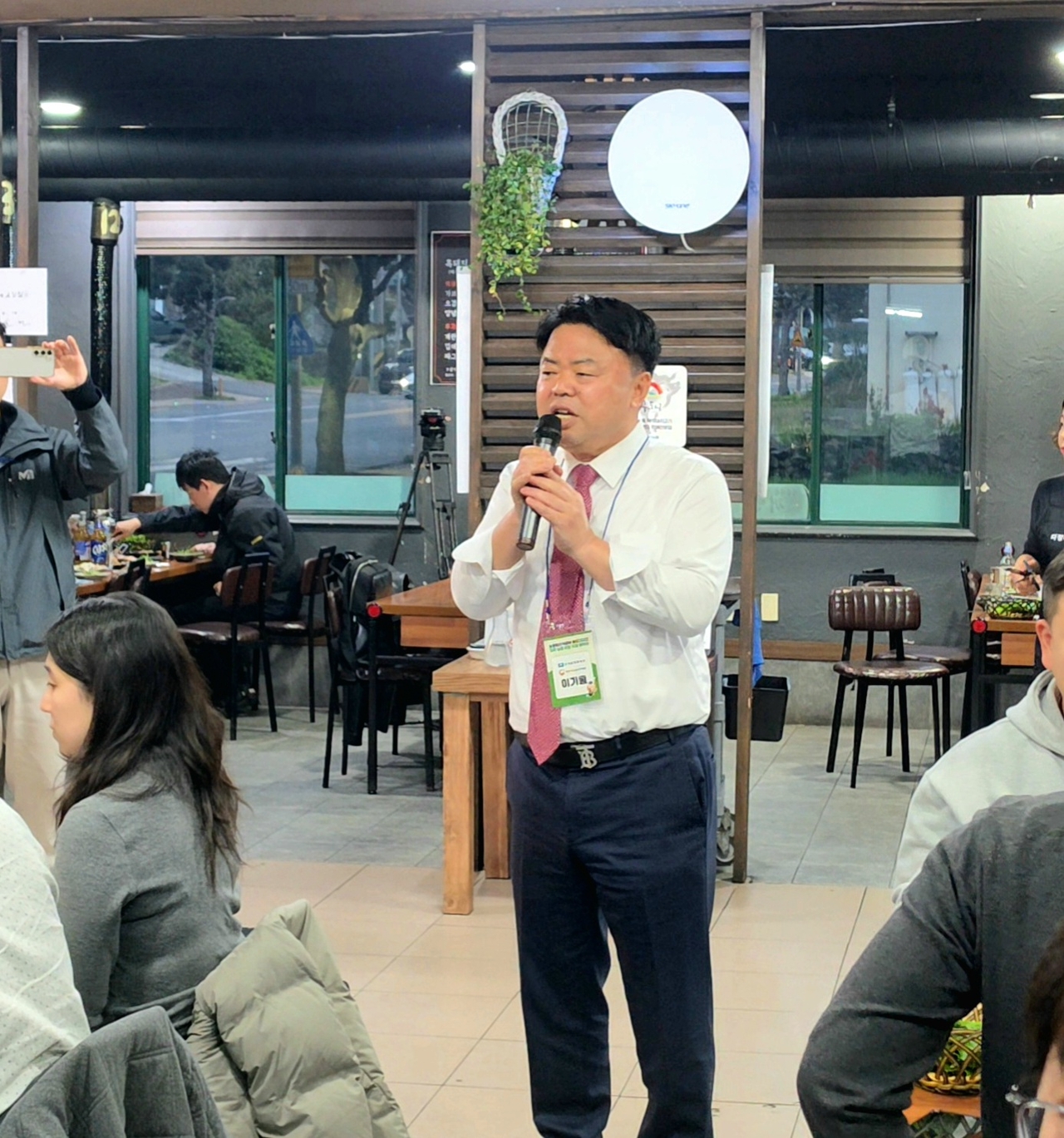
South Korea's domestically raised pork, known as "hando," surpassed 100 tons in exports to Singapore just nine months after entering the market. The hando industry, which has been pushing into overseas markets, is also working to boost domestic consumption and improve farm productivity. Lee Ki-hong, chairman of both the Korea Hando Association and the Hando Self-Sufficiency Fund Management Committee, has spent his first year in office focused on expanding export markets and stabilizing farm management.
According to the Hando Self-Sufficiency Fund Management Committee, a total of 105.6 tons of Jeju-origin hando had been exported to Singapore from the first shipment in December last year through August this year. Total domestic pork exports for the January–August period also rose 162 percent compared with the same period last year.
The Singapore exports became possible after bilateral quarantine negotiations that began in 2018 were finally concluded at the Asia-Pacific Economic Cooperation summit held in Gyeongju last November. The Hando Self-Sufficiency Fund held a local launch event for hando and hanwoo beef in Singapore in January to kick off market development.
The industry is also accelerating its push into other overseas markets. In July, it held hando tasting events and a K-barbecue promotion in Mongolia. Local GS25 convenience stores there featured hando-based dosirak, kimbap and triangle rice balls. Export marketing campaigns and programs to invite overseas buyers are also being supported for Hong Kong, Mongolia, Singapore and the Philippines.
Stable production and price competitiveness remain the key challenges for export growth. At a field briefing held at Jeju Dream Pork on Wednesday, participants were introduced to the production and distribution structure of Nanchuk Matdon — a breed developed from Jeju's native black pig — and its export potential.
Nanchuk Matdon preserves the meat quality of Jeju's native black pig but yields lower productivity than conventional breeds. It is currently raised on 12 farms in Jeju, and two farms in Sancheong, South Gyeongsang Province, have also begun raising the breed. Jeju Dream Pork said supply falls short of demand and the company plans to focus on small-volume exports for now.
On Wednesday, Lee met with Ministry of Agriculture, Food and Rural Affairs press corps members visiting Jeju agricultural sites at a dinner, where he discussed the efforts of hando farms and the processing and retail sectors to develop overseas markets, along with key industry issues and the path to expanding exports.
"I hope this field visit has given journalists a firsthand look at hando's outstanding quality and its production, processing and export operations, and served as an opportunity to showcase the competitiveness of the hando industry," Lee said. "We will work together to expand exports and strengthen quality competitiveness so that hando can grow into an ingredient recognized not only by domestic consumers but also in global markets."
On the domestic front, the industry pursued both price stabilization and consumption growth. The Hando Self-Sufficiency Fund ran discount events tied to the Lunar New Year holiday, Samgyeopsal Day (a pork-promotion day), Family Month, the summer vacation season and Chuseok. Total promotional volume tallied in materials marking Lee's first anniversary in office came to 3,945.2 tons.
Support was also expanded to prevent pig deaths and productivity losses caused by summer heat waves. A heat-damage prevention program totaling 1.75 billion won ($1.31 million) was carried out, combining 1.57 billion won in government funding and 180 million won from the self-sufficiency fund. Farms received a total of 3,094 items of support, including 2,851 cases of nutritional supplements and 243 cases of heat-blocking roof coating for livestock facilities.
The industry is also pursuing regulatory reforms to ease the management burden on farms. The Korea Hando Association has identified as priorities the improvement of standards for using liquid livestock manure as fertilizer, an overhaul of the culling compensation system, and more realistic requirements for biosecurity facility installation. Some liquid manure standards have been revised, but compensation criteria and related legislative amendments still require further discussion.
The hando industry plans to expand its overseas export destinations while working to improve productivity and address biosecurity and environmental regulations.
adastra@heraldcorp.com