Na Kyung-won: 'Unprecedented double embarrassment' after NIS chief snub
Ahn Cheol-soo: 'US rejected entry of Lee Jae Myung government'
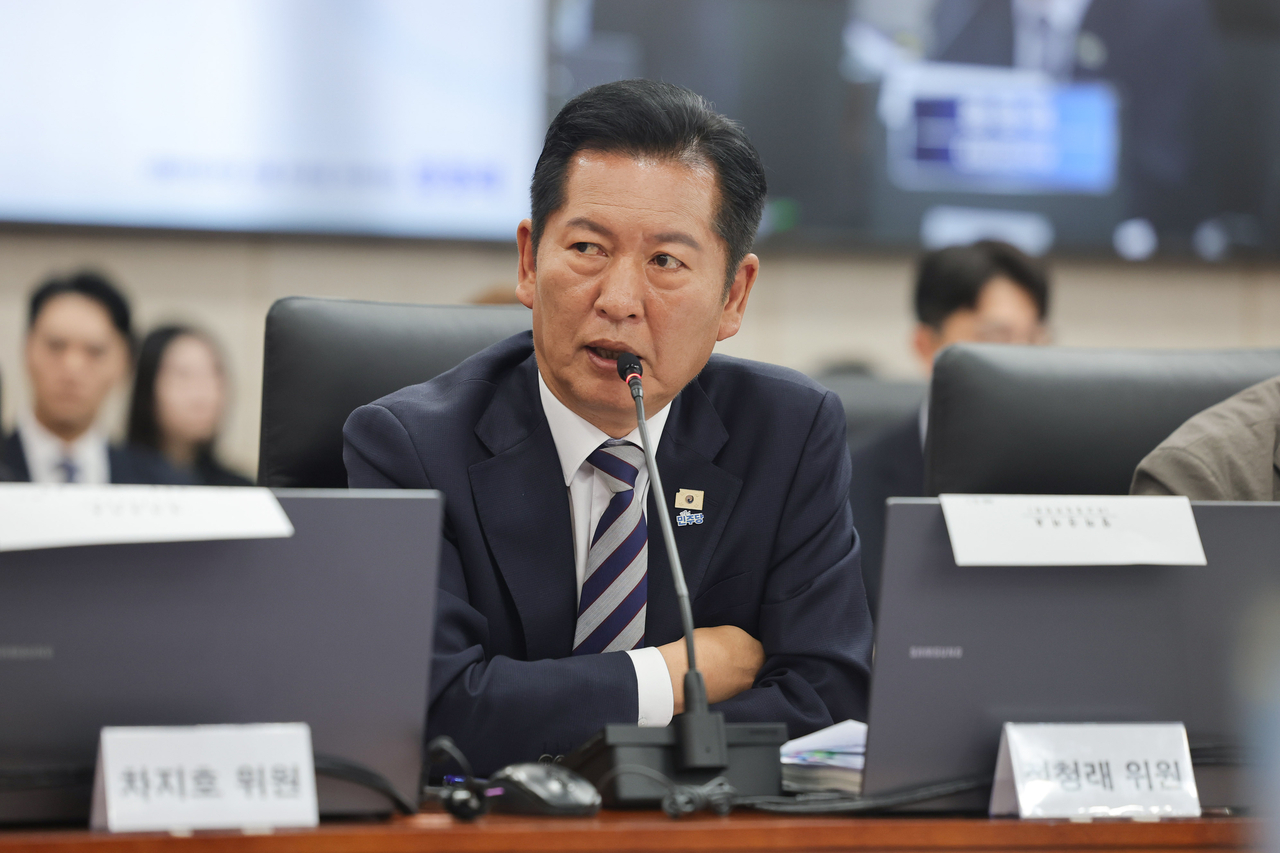
Both the ruling and opposition parties expressed deep regret Friday after Democratic Party of Korea lawmaker Jung Chung-rae had yet to receive a US visa as of Friday — three days before his scheduled departure for an overseas national audit of South Korean diplomatic missions. The opposition mounted a particularly sharp offensive, calling the episode a failure of the government's diplomacy toward Washington and a sign of fractures in the trust underpinning the South Korea-US alliance.
Democratic Party Chief Spokesperson Park Sung-joon said in a written briefing Friday that the party expressed "deep regret that legitimate legislative activity has been blocked." He said Jung's visa application had remained in an "under review" status — neither approved nor denied — forcing Jung to switch his itinerary from the Americas subcommittee to the Europe subcommittee of the Foreign Affairs and Unification Committee.
Park noted that Jung is a four-term senior lawmaker and a former leader of the ruling party. "He has consistently engaged with the United States more than anyone, including conducting a US national audit as part of the foreign affairs committee in 2012," Park said. "Restricting the national audit activities of an allied nation's legislature runs counter to the forward-looking values of the alliance."
Park urged South Korean and US diplomatic authorities to "move swiftly and proactively to resolve the matter," adding that he hoped the incident would not leave "unnecessary misunderstandings that could cloud the solid trust between the two countries."
People Power Party floor spokesperson Choi Eun-seok pushed back, saying it was difficult to dismiss questions about whether Jung's past anti-American activities, combined with what he called the government's failures in US diplomacy and cracks in alliance trust, had contributed to the situation. He noted that the specific reason for the visa delay had not yet been confirmed.
Choi also pointed to earlier reports that National Intelligence Service Director Lee Jong-seok's planned meetings with US intelligence officials in March had fallen through, and that the US had put on hold visa issuance and diplomatic status approval for NIS personnel set to be posted to the South Korean Embassy in Washington.
"If such warning signs keep appearing across diplomacy, intelligence and security, the government must first thoroughly examine whether there are problems with communication and trust between Seoul and Washington," Choi said.
He also took a swipe at President Lee Jae Myung, saying he had heard that Lee was putting effort into practicing golf with an eye toward a round with US President Donald Trump. "The South Korea-US alliance does not become stronger just by playing one round of golf with President Trump," Choi said.
Five-term lawmaker Na Kyung-won wrote on Facebook that it was "an unprecedented double embarrassment" — the country's top intelligence official had been thoroughly sidelined from the United States' core intelligence network, while a former ruling party leader serving on the foreign affairs committee could not even set foot on allied soil.
Na said the United States was "expressing its most resolute disapproval of the Lee Jae Myung administration's view on security," and warned that pro-China, pro-North Korea ideological politics may win applause from a base but that "collapsed alliance trust shakes the very foundation of the nation's existence."
Four-term lawmaker Ahn Cheol-soo said Jung's failed entry into the United States amounted to "the allied nation of America rejecting the entry of the Lee Jae Myung government," and asked whether South Korea still qualified as a US ally. He called on the government to explain why Washington was refusing entry to key figures of the Lee administration and on what grounds it had deemed them a security risk.
Lawmaker Seong Il-jong also said "the South Korea-US relationship is heading toward a complete breakdown."
Jung had not received his US visa as of Thursday, three days before the committee's scheduled departure, and was reassigned from the Americas subcommittee — which oversees South Korean diplomatic missions in the United States — to the Europe subcommittee.
The Americas subcommittee is set to visit the United States, Brazil, Colombia and Canada from Oct. 11 through Oct. 22, a 12-day, nine-night trip to conduct audits of overseas diplomatic missions. A committee official said that Democratic Party lawmaker Han Jeong-ae and People Power Party lawmaker Park Chung-kwon, who had originally been assigned to the Europe subcommittee, decided not to participate in the European audit due to party business and other scheduling conflicts, opening a spot for Jung to transfer to that group.
killpass@heraldcorp.com