Chey makes first visit to Gwangju military airfield site earmarked for Honam fab
Planned facility expected to reach about two-thirds the scale of Yongin complex
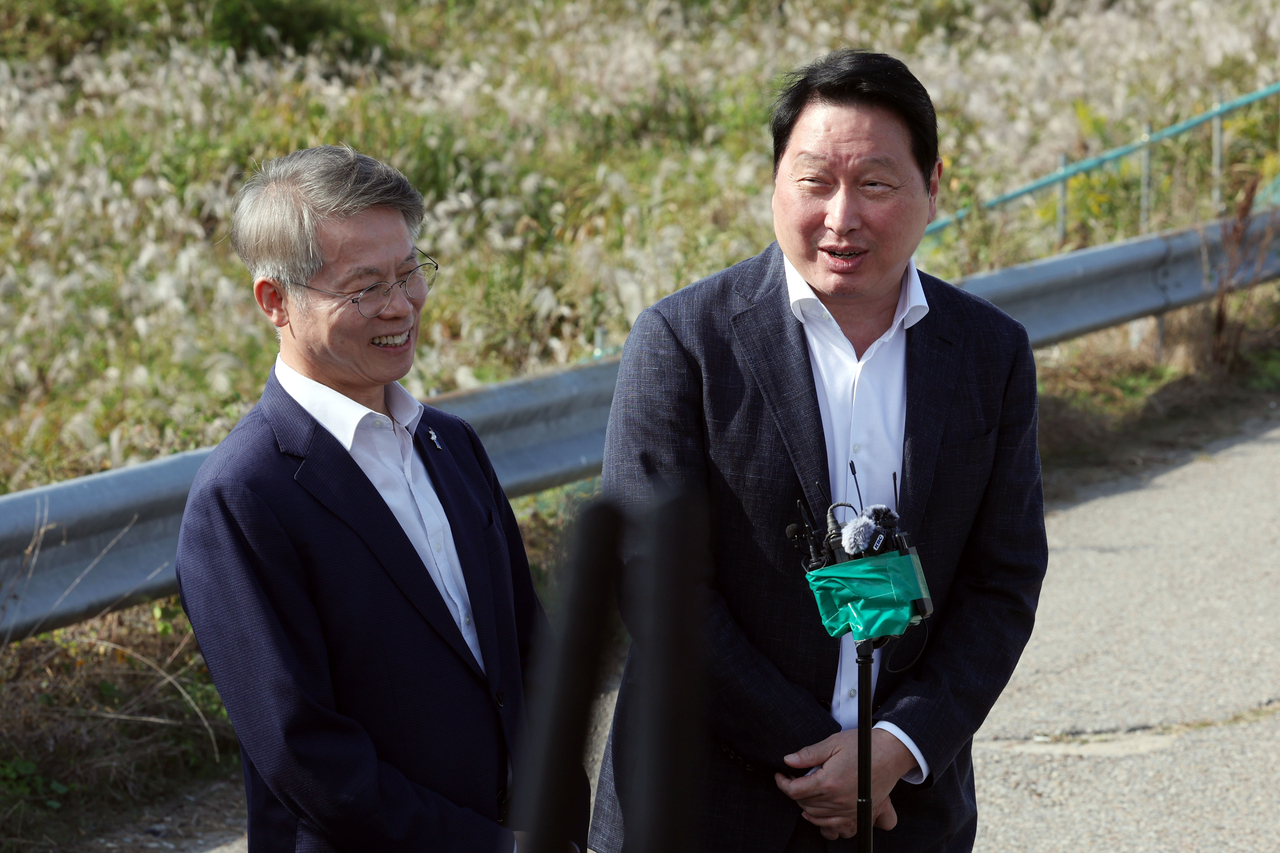
SK Group Chairman Chey Tae-won said Friday that the company will break ground on the Honam semiconductor cluster as soon as possible, stressing the need to accelerate supply to keep pace with surging chip demand.
Speaking to reporters at the former military airfield site in Seo-gu, Gwangju — the designated location for the Honam semiconductor cluster — Chey said semiconductor demand is growing rapidly and that supply must be ramped up to match it. "I cannot give you an answer today because we still need to study the timing a bit more, but we will move as fast as we can," he said.
It was Chey's first visit to the Gwangju military airfield site and the surrounding ammunition depot area — a key candidate location for the factory — since SK hynix announced its investment plan for the Honam region in June. Gwangju Mayor Min Hyeong-bae and SK hynix executives accompanied him on the visit.
Chey said he came to assess how quickly the Gwangju fab could be built. "The mayor has been working hard on preparations, and the government is getting utilities such as water and electricity in place," he said. "Once we recalculate how our construction timeline can align with all of that, I think an announcement on the ground-breaking date will probably come soon."
Chey added that semiconductor demand is expected to continue growing at a considerable pace. "We will need additional sites and more fab construction," he said. "If necessary, it looks like we may have to build here in parallel with the Yongin semiconductor cluster."
SK hynix earlier moved up the target completion date for the Yongin semiconductor cluster by 12 years, from 2045 to 2033.
Chey said the company was prepared to begin construction ahead of schedule even if utilities were delayed. "Even if water and power come later, I think we should go in first if we can lock in the timing," he said. "Right now we are planning a scale of about two-thirds of Yongin. If there is more land and more demand, I fully expect this Gwangju fab could grow even larger."
Mayor Min expressed gratitude to Chey on behalf of the city's 3.2 million residents for his clear commitment to the semiconductor cluster. "We will provide solid support — not only for the core infrastructure such as the site, power and water, but also for talent development and living conditions — so that SK hynix can stably build and operate a world-class semiconductor factory in the best possible environment," Min said.
The government announced in June, through a public briefing on three major mega-projects, a long-term investment plan under which SK hynix and Samsung Electronics would each build two memory chip fabs in the Honam region, for a total of four. In July, the area around the Gwangju military airfield was confirmed as the site and designated a candidate for a national industrial complex. The government and Gwangju are targeting the start of first-phase mass production in June 2030.
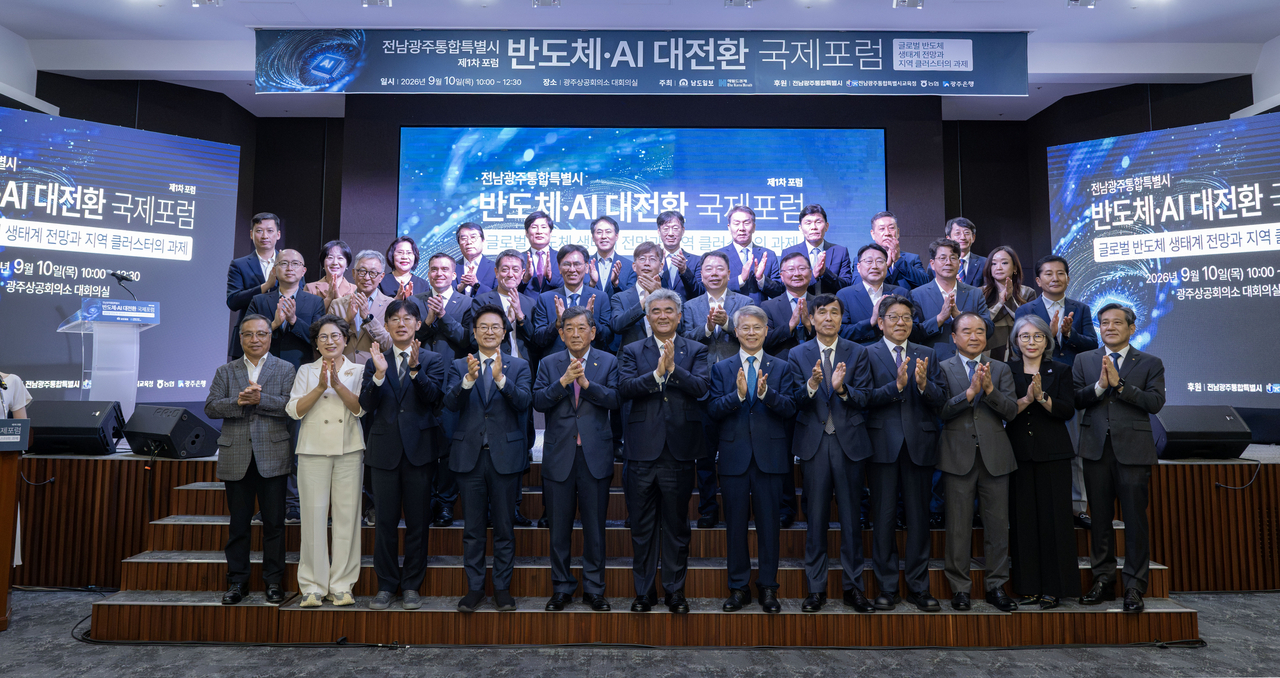
At an international forum on semiconductor and AI transformation held at the Gwangju Chamber of Commerce and Industry on Sept. 10, Lee Min-woo, director general for industrial growth at the Ministry of Trade, Industry and Energy, delivered a keynote address. "Domestic companies have said they will double semiconductor production capacity by 2030, but experts forecast the semiconductor market will quadruple by then," he said. "Expanding production bases into the Honam region to steadily consolidate market share is the core of our industrial strategy."
killpass@heraldcorp.com