A Seoul woman heads to Mapo-gu each fall to stock up on salted shrimp paste — and turns it into a festival outing with friends
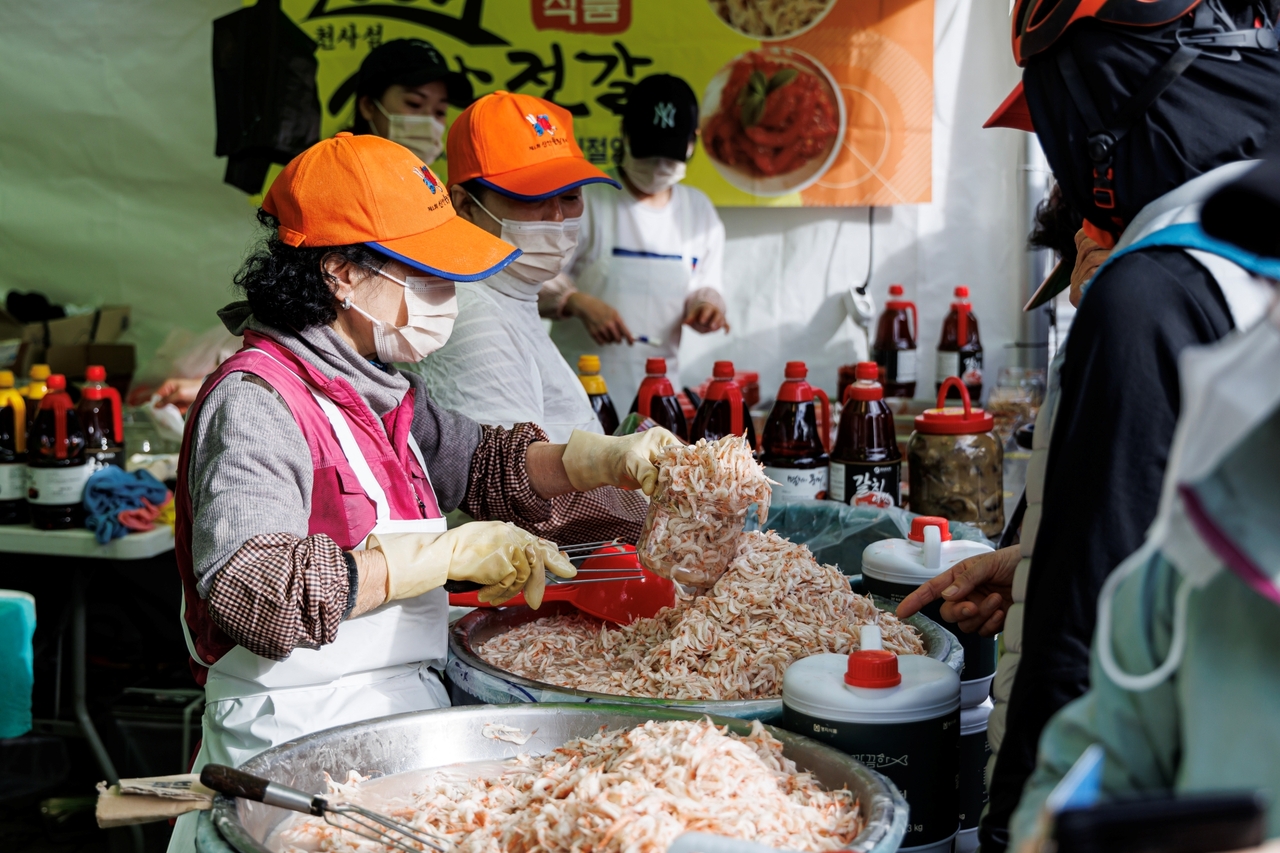
"I don't make that much kimchi anymore, but I still want to pick out good salted shrimp paste. I come to browse with friends, eat good food and buy what I need."
For a 67-year-old resident of Geoyeo-dong in Songpa-gu — identified only as A — there is one event she looks forward to every year at this time: the Maponaru Saeujeot Festival, organized by Mapo-gu.
As kimchi-making season approaches, she and her neighbors take the subway to Mapo. Buying salted shrimp paste is the main purpose, but browsing the festival grounds and sampling food along the way is half the fun.
"The amount of kimchi I make has dropped a lot compared to the old days," she said, "but I still feel better going into winter if I've put up at least a little."
When it comes to salted shrimp paste, she believes it is worth comparing origins and quality in person rather than buying just anywhere.
The event she and her friends plan to visit again this year is the 19th Maponaru Saeujeot Festival, running for three days from Oct. 16 to Oct. 18 at Peace Plaza in World Cup Park, Mapo-gu.
The Maponaru Saeujeot Festival revives the historical significance of Maponaru, the riverside port where salted shrimp paste and goods from across the country converged during the Joseon era. It has grown into one of Seoul's signature autumn food festivals, drawing crowds eager to stock up on quality salted shrimp paste ahead of kimchi-making season.
This year's festival slogan is "Come taste the saeujeot — Mapo-gu has it ready for you!" The organizing theme is to make the event a platform for cultural exchange that connects history and tradition with people and communities.
Salted shrimp paste from Ganggyeong, Gwangcheon, Sinan, Buan and Sorae — all under one roof
The undisputed highlight of the festival is the salted shrimp paste itself.
This year, four more vendors have been added compared to last year, bringing the total to 12 salted shrimp paste booths. Visitors can compare products side by side from the country's major producing regions — Ganggyeong, Gwangcheon, Sinan, Buan and Sorae, among others.
Shoppers can also examine and choose among different varieties — yukjeot, ojeot and chujeot — depending on their intended use and taste preferences.
Prices are set 10 to 15 percent below regular retail, and all products are labeled with their place of origin so buyers can shop with confidence.
For older residents preparing kimchi, like A, that is welcome news.
"Seeing it in person and tasting it before you buy is reassuring. And when you go with friends, you can compare notes on which one is best."
The offerings go well beyond salted shrimp paste. Fourteen specialty-product markets will also be set up, with participation from Mapo-gu's sister cities — including Gochang, Sinan, Yecheon, Namhae, Cheongyang and Ongjin — as well as local agricultural cooperatives.
Food options are plentiful.
A shrimp food booth making its debut this year will serve shrimp pasta, shrimp fried rice and other shrimp-based dishes. Festival staples such as barbecue, janchi-guksu noodle soup and bindaetteok savory pancakes will also be on hand.
Hands-on shrimp experiences round out the program.
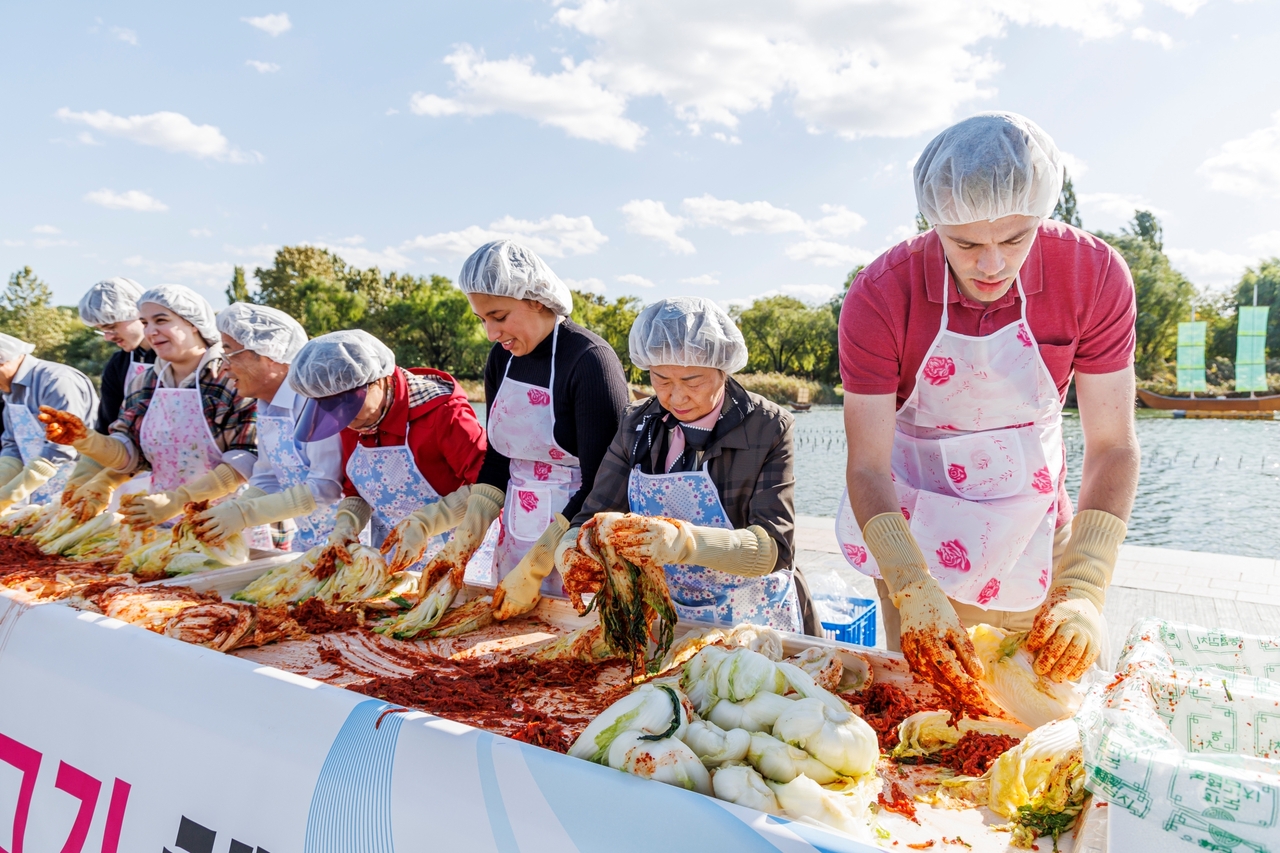
On Saturday, about 20 foreign visitors will join roughly 50 members of the West Seoul Agricultural Cooperative Women's Association and others for a kimchi-making session using salted shrimp paste.
On Sunday, culinary researcher Lee Hye-jeong — known by the nickname "Big Mama" — will lead a challenge to roll a 19-meter shrimp kimbap. Thirty-eight child participants will be divided into two teams for the attempt.
On the final day, about 200 visitors will take part in a pork-and-kimchi bossam feast, where they can taste firsthand the classic pairing of salted shrimp paste, kimchi and pork belly.
Throughout the festival, shrimp-catching, salted shrimp paste-making and a salted shrimp paste auction will run as regular activities.
Jeong Dong-ha, Hong Gyeong-min, Ali and Maya — plus fireworks and a laser show
Live performances are another draw.
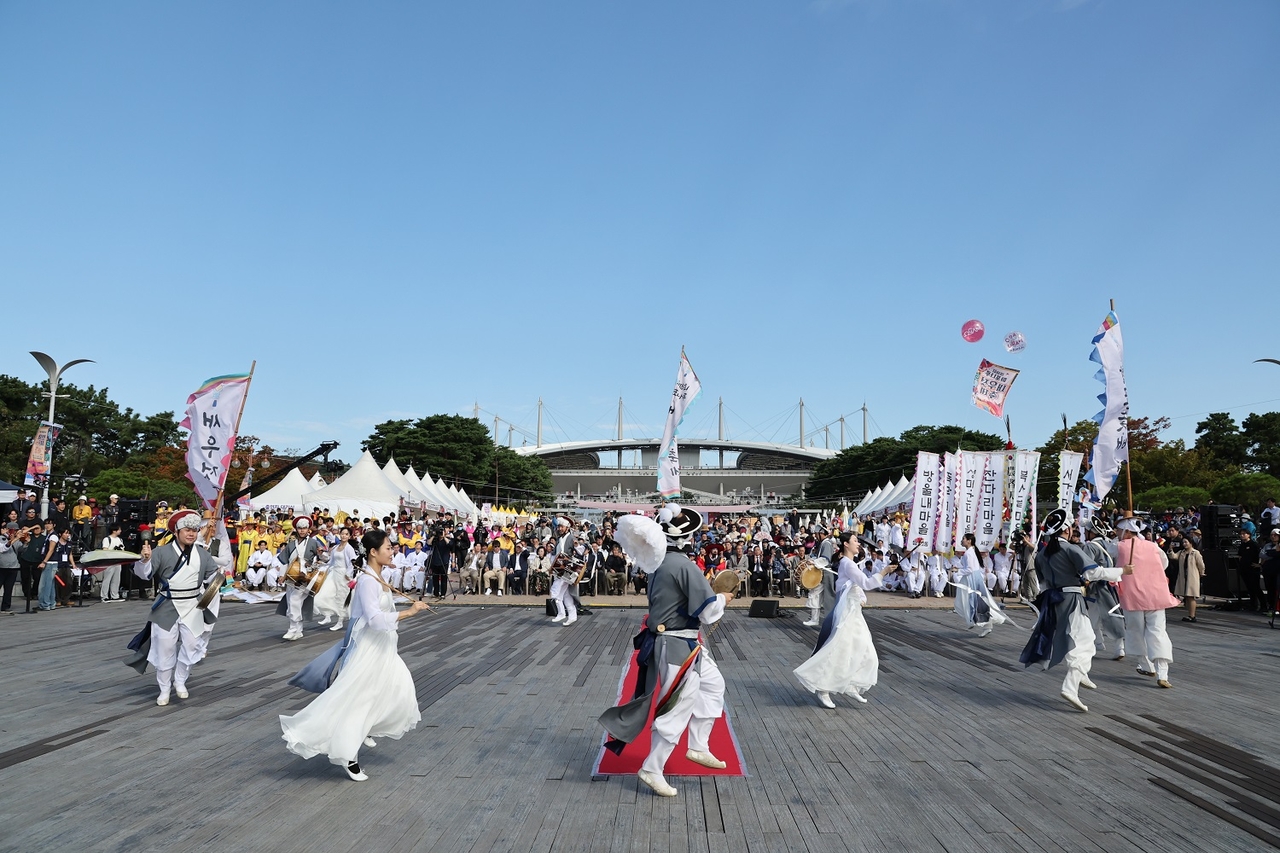
The opening ceremony on Saturday will feature singers Jeong Dong-ha, the Hong Gyeong-min Band, Ali and Maya, followed by an autumn concert titled "Gaeurae: Rest," with performances by Jeong Su-ra, Hyeon-suk, Mokbi, Hyeondang and Ilmin.
On the second day, a nationwide parents' singing competition will take the stage, with 21 finalists competing. Guest singers Kim Sung-hwan, Jadu and Yun Su-hyeon are also scheduled to appear.
On the closing day, Park Hyeon-bin, Hong Jin-young, Kim Yong-pil, Jeon Mi-gyeong, Park U-cheol and Seo Gabi will perform at the finale concert, with the festival's final night capped by fireworks and a laser show.
Mapo-gu District Mayor Yu Dong-gyun said the festival has established itself as a signature event for the district thanks to the steady support and interest of residents and visitors alike. "We have done our best to prepare quality salted shrimp paste, diverse food and a full range of entertainment," he said. "We hope many people will come and make the festival shine."
For residents of Songpa-gu's Geoyeo-dong and beyond, the Maponaru Saeujeot Festival offers something rare: a single autumn outing where kimchi-season shopping and a full-blown fall festival come together in one place.
seouldream01@heraldcorp.com