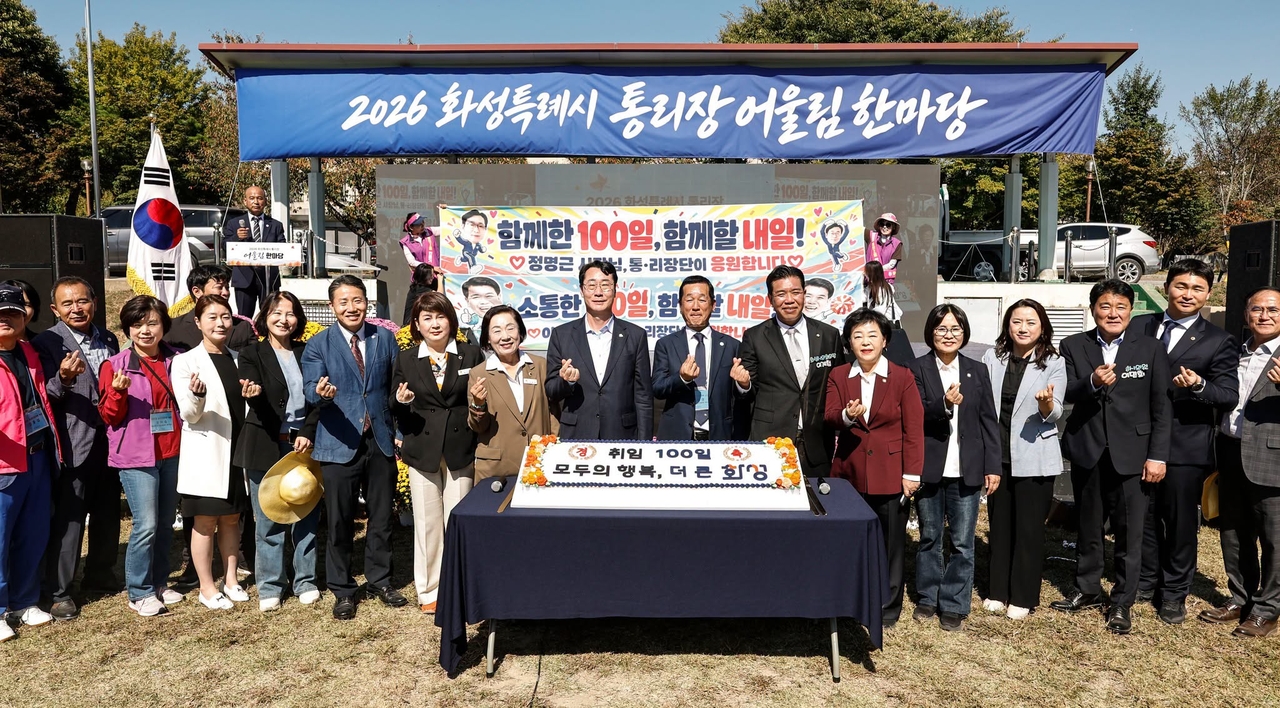
Hwaseong Mayor Jeong Myeong-geun marked his 100th day in office Thursday, having rolled out a series of policies that have drawn national attention — from a one-hour response guarantee for traffic and road complaints to free sanitary pads in public restrooms and a traditional medicine home-visit program.
Jeong reflected on the milestone in a social media post, writing: "I still vividly remember the inauguration ceremony on July 1, when I pledged to build a greater Hwaseong where everyone can be happy. Time has flown by, and today marks 100 days since I took office as the popularly elected ninth-term mayor of Hwaseong Special City."
He said he had spent every one of those days listening to residents and visiting sites across the city. "Of the 332 large and small quality-of-life complaints residents shared with me during the campaign, 263 have been resolved or are actively being addressed," he wrote.
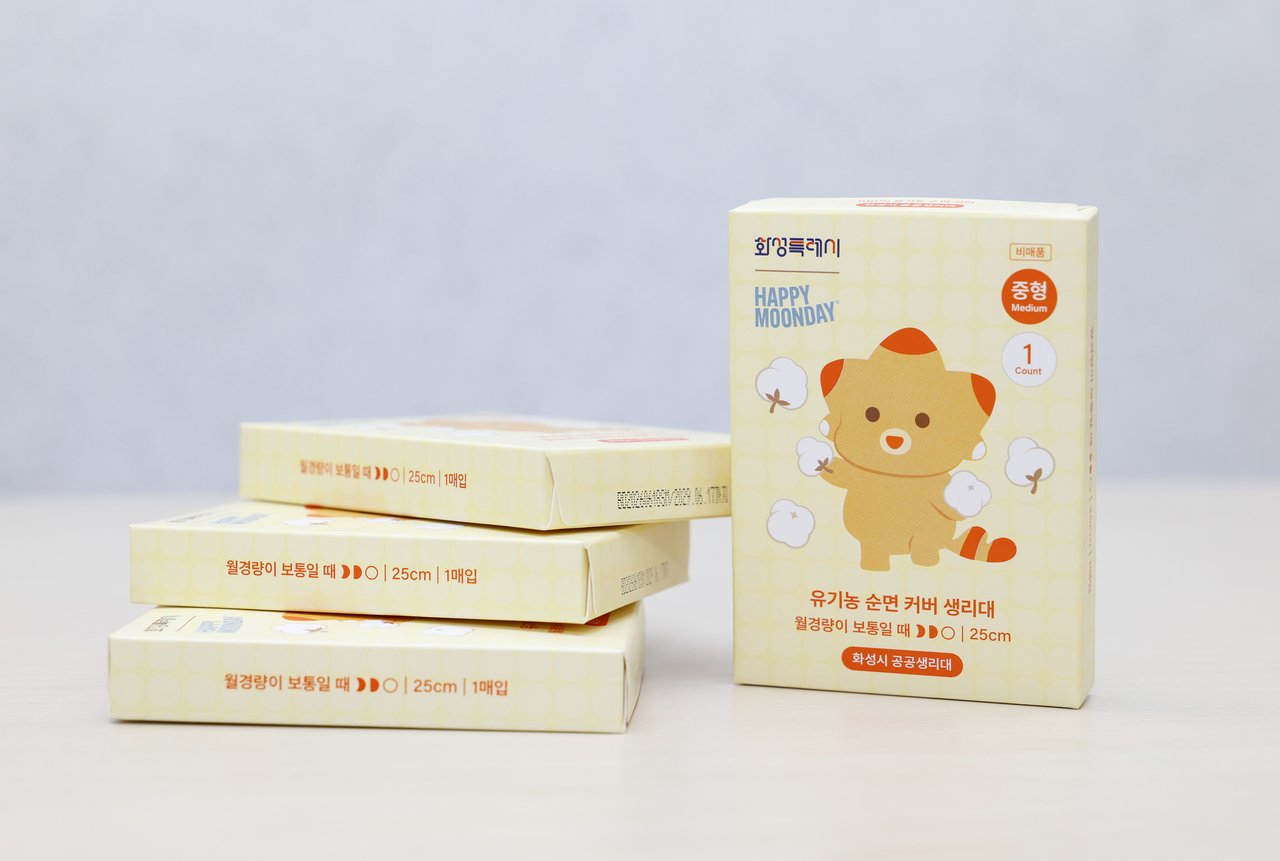
Jeong said the city had set up a rapid-response unit within the transportation department to handle traffic and road complaints within one hour of receipt, and had installed free sanitary pad dispensers in public restrooms at government offices and public institutions. "We are working to make sure not even the smallest inconvenience goes unaddressed," he said.
"Looking back, the past 100 days were a time of turning what residents told me into action," he said. "Believing that the answers lie in the field, I listened closely to people's lives and resolved issues one by one. I will continue building a greater Hwaseong — where everyone is happy — together with our residents."
The ninth elected-term administration of Hwaseong Special City, now home to 1.08 million residents, marked 100 days of pursuing its core agenda of "happiness for all, a greater Hwaseong."
The city has made improving residents' tangible quality of life its top priority, alongside physical growth and urban expansion. Officials say the policy foundations built across various sectors over the past 100 days are laying the groundwork for sustainable urban development that will guide the city for the next century.
An era of 1.08 million residents, built on fairness, inclusion and growth
Hwaseong Special City's ninth elected-term administration is pursuing its governing vision of "happiness for all, a greater Hwaseong."
"Happiness for all" means translating the fruits of growth into real changes in individual residents' lives, while "a greater Hwaseong" captures the city's future vision of continuous advancement across the economy, culture and welfare.
The three core values underpinning that vision are fairness, inclusion and growth. Fairness means earning residents' trust through transparent governance and giving young people equal opportunity. Inclusion means building a warm, basic society where vulnerable groups are not left behind and can live with dignity. Growth means achieving development that every resident can feel through advanced industry and transportation innovation.
In line with those values, the city is pursuing improvements to unreasonable administrative practices and support for youth entrepreneurship and job training under the fairness pillar; laying the groundwork to attract AI companies, preparing to foster the aerospace industry, and introducing a late-night autonomous driving circular bus service in Dongtan under the growth pillar; and expanding family doctor services, care-assured housing, integrated care centers at each district office, and financial welfare counseling centers under the inclusion pillar.
From a one-hour rapid-response unit to wide-area buses and a circular railway
To respond more quickly to traffic and road complaints, the city established a rapid-response unit within its transportation department, which has been in operation since September.
The unit, composed of a team leader and specialist staff at the seventh civil-service grade or above, assigns a dedicated officer to each district office and handles cases from intake to resolution in one place. The standard is to notify the complainant of a resolution plan within one hour of receipt, covering complaints related to signal systems, traffic safety facilities, road infrastructure and traffic congestion. The city plans to run a pilot through December, analyze resident satisfaction and operational results, and then expand the unit into a permanent dedicated organization.
Over the past 100 days, the city also concentrated its administrative resources on expanding the transportation network to ease commuting difficulties for Greater Seoul-area residents and address mobility gaps in underserved areas. It added two new wide-area bus routes — the P9303 and P9304 — connecting major metropolitan transit hubs, and extended the on-demand "Ddokbus" service in Paltan-myeon from Gicheon 1-ri to Gicheon 3-ri, significantly broadening residents' mobility options.
Preparations for a "30-minute city" are also under way. A late-night autonomous driving circular bus linking Dongtan Station with Dongtan new towns 1 and 2 will be developed in stages from this July through December next year — covering operator selection, precision mapping and control system construction, and a pilot service. The plan calls for four vehicles, three circular routes and at least 20 stops. A broader circular railway concept connecting the entire city will be developed further, beginning with an internal feasibility review.
Hwaseong-style inclusive welfare
In the welfare sector, the city is building a tighter social safety net by significantly expanding its "Geunyang Deurim" program, open to any resident facing financial hardship.
The program — currently operating at 41 locations, comprising three national-model sites and 38 Hwaseong-model sites — is the centerpiece of the city's inclusive welfare approach, designed to proactively identify residents who fall through the cracks of the existing welfare system. The city is also rolling out a mobile version that travels directly to towns and villages, so that residents who have difficulty getting around or live far from a fixed location are not left behind.
The city is also actively running a free public sanitary pad distribution program to protect residents' health rights. It has installed free dispensers in public restrooms at 68 public institutions and government offices across the city. A user satisfaction survey conducted via vending machine QR codes will run through this month, and the results will be reflected in the program going forward. The city plans to expand the number of distribution points to 75 by 2027 to establish a stable supply system.
Traditional medicine home visits and care-assured housing 'Hwaseong On Eumsae' now in full operation
The city is also accelerating the expansion of lifelong, integrated care infrastructure that combines medical services with housing.
The city runs a traditional medicine home-visit program for elderly residents and people with disabilities who have difficulty traveling to medical facilities, and plans to broaden its scope to include family doctor and dental doctor services, building a more advanced community medical and care system.
Alongside this, the care-assured housing complex known as "Hwaseong On Eumsae," a 24-unit development in Jinan-dong, provides stable housing and care simultaneously to households in crisis who receive basic livelihood benefits or fall just above that threshold. Nurses, social workers and other professionals are stationed full time in the building's community center, operating a 24-hour smart care system that comprehensively supports vulnerable residents in regaining their independence and returning to healthy daily lives.

Hwanggeum Coastal Trail and eco-farm theme park open in quick succession
The city has unveiled a series of coastal attractions and eco-friendly leisure facilities along the West Sea, drawing visitors from across the region.
The Hwanggeum Coastal Trail, which opened on a temporary basis in June, stretches 17 kilometers from Gungpyeong Port to Jebu Marina Port and features three sections of coastal boardwalks and scenic roads: the Sunset Scenery Trail (5.0 km), the Salt Sea Trail (4.5 km) and the Gungpyeong Tourism Trail (7.5 km). Since opening, the trail recorded a cumulative 186,611 visitors through Sept. 29, with a single-day peak of 11,518, quickly establishing itself as a leading wellness destination on the West Sea coast.
The Hwaseong Eco-Farm Theme Park, which began full operation in July, sits on a 14.6-hectare site and offers an auto-camping ground with 106 pitches, an observation deck, a children's playground, hands-on garden plots, an outdoor performance stage, a farmhouse restaurant and a local food direct-sales outlet. It has drawn attention as a tailored leisure destination for families and a new hub for extended-stay tourism along the West Sea corridor.
Hwaseong's sunshine basic income village initiative and administrative reform
The city is scaling up a resident-led solar energy initiative into a "Hwaseong-style sunshine basic income village" program by linking it with a national government project. Each village receives a loan of 150 million won ($112,000) from the city's social economy fund at an annual interest rate of 2.2 percent for systems ranging from 0.3 MW to 1 MW, reducing the financial burden on participating communities. The first pilot site, Seokpo 6-ri, is using a government-owned embankment and is projected to generate annual electricity sales revenue of around 100 million won, with a net profit of around 70 million won.
The city is also pursuing wide-ranging administrative reforms to continuously improve work practices and procedures and incorporate diverse policy proposals into city governance, with the aim of raising citizen-centered administrative efficiency.
From July 1 through Aug. 24, the city solicited proposals from public officials on unreasonable practices and areas for improvement, then held departmental reviews and two rounds of department-head-level feasibility meetings. Of 122 proposals received, 117 were reviewed after removing duplicates, and 73 were selected as final improvement tasks based on their effectiveness and urgency. The city plans to implement those tasks in stages going forward.
Hwaseong Special City completes 100-day policy foundation
Building on the policy groundwork laid over the past 100 days, Hwaseong Special City will further strengthen its field-oriented, community-centered approach to governance.
The city plans to complete a reorganization of its administrative structure in line with the transfer of special-city functions, maximizing convenience for residents, and will accelerate balanced development projects tailored to each area to address the disparity between the city's eastern and western regions.
The city will significantly expand online and offline communication channels to incorporate residents' voices throughout the entire process of policy planning and implementation. Through these efforts, it aims to further enhance administrative transparency and public trust, and to steadily complete its vision of inclusive, citizen-centered governance.
fob140@heraldcorp.com