'Spend boldly where it matters, scrutinize routine budgets strictly'
Deputy chair of budget committee sets 'livelihoods and results' as guiding principles for 2027 budget review
Welfare and education spending to be assessed on actual use and tangible impact
Gwangjin-gu development and everyday infrastructure to advance together — 'I will be judged by results'
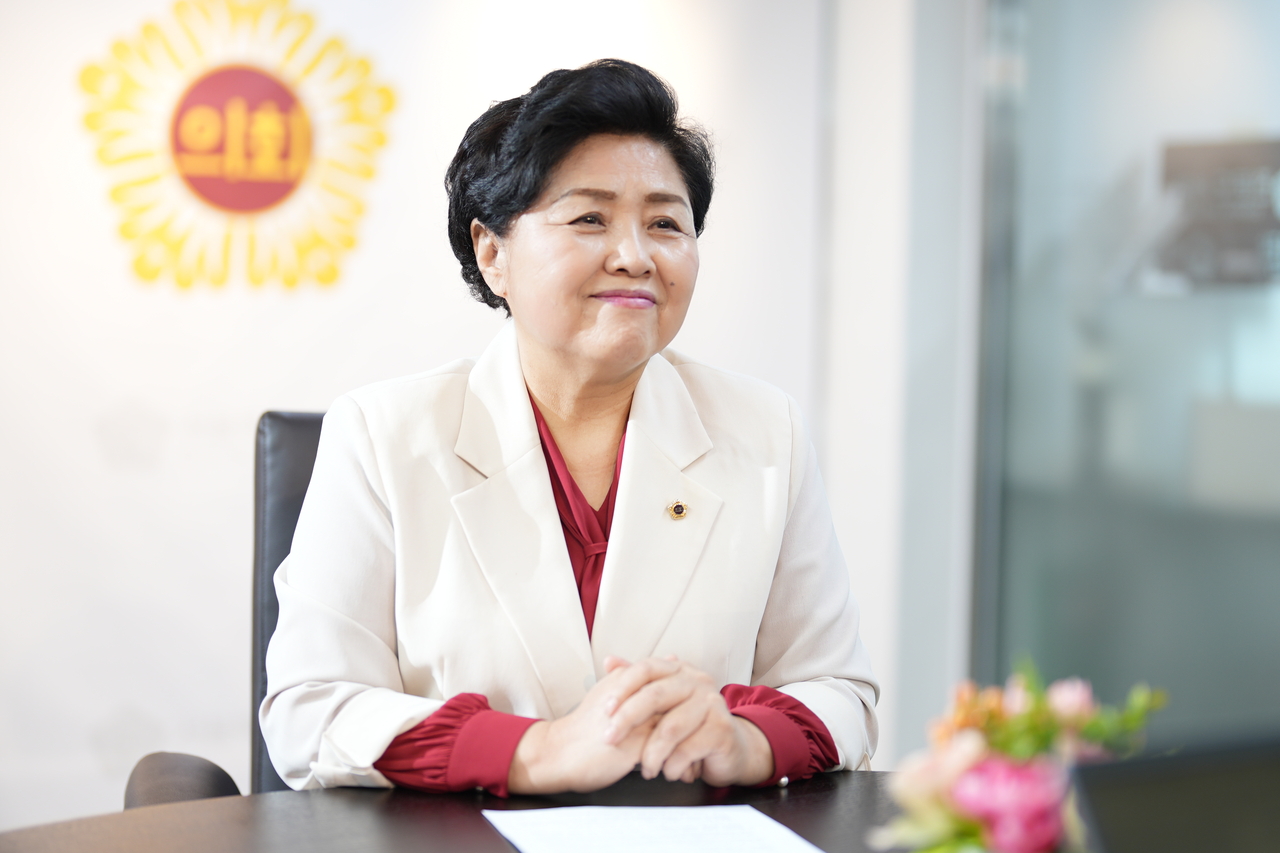
Kim Young-ok, deputy chair of the Seoul Metropolitan Council's Budget and Accounts Special Committee and a People Power Party member representing Gwangjin District 3, has laid out "livelihoods" and "results" as her core criteria ahead of the review of the 2027 budgets for the Seoul Metropolitan Government and the Seoul Metropolitan Office of Education. She said funding should flow actively into areas directly tied to residents' daily lives — youth employment, housing, small businesses, welfare and educational inequality — while projects that are routinely repeated or yield little impact will face stricter scrutiny.
"We must invest boldly where the need is most urgent, but be strict about projects that are repeated out of habit or fall short on results," Kim said in an interview Thursday. "I will use livelihoods as the standard for deciding where limited resources should go first."
For new projects, she plans to examine necessity, urgency, overlap with existing programs and feasibility of actual implementation. For ongoing projects, she will assess resident utilization rates, outcomes and whether the budget size is appropriate.
Kim said projects that fall short of expectations should not simply face budget cuts — the underlying causes must first be examined. She argued that the direction of any budget adjustment or program fix should depend on whether the problem lies in the policy design itself or in inadequate outreach and operations.
'Audit findings must feed into the next budget'
Kim also stressed the importance of linking budget audits to the budget-drafting process.
She said that when project funds are repeatedly carried over or left unspent, the causes must be analyzed so that project timelines and budget sizes can be made more realistic the following year. Where multiple departments are running similar programs, she said functions should be consolidated or roles clearly divided.
"If the same problems keep coming up in audits but the next year's budget comes in unchanged, there is no point in conducting audits at all," Kim said. "An audit should not end with evaluating last year's spending — it should be the process that corrects the next budget."
She also plans to draw on her experience as chair of the Health and Welfare Committee during the second half of the 11th council term.
Kim reviewed major Seoul welfare policies including the "Seoul Without Loneliness" initiative and the Sonmok Doctor 9988 program, and has focused on closing gaps in the welfare safety net — supporting youth facing financial difficulties, expanding the coverage of children's meal card programs, protecting childcare workers and strengthening support for senior citizens.
She said that for welfare policy, what matters more than the size of the budget is whether it actually reaches the people who need it. Even when a program exists, she said, its impact is inevitably diminished if residents who need it are unaware of it or find the application process too complicated.
Accordingly, her review of welfare spending will look at the number of eligible recipients, actual users, utilization rates, application procedures and policy accessibility — not just whether a program was created, but whether it is genuinely reaching the residents who need it.
Kim said the Seoul Metropolitan Office of Education's budget should not be cut across the board simply because student enrollment is declining. She argued that the public sector must compensate for educational opportunities that vary by home environment or neighborhood — including foundational learning support, educational welfare, after-school and childcare programs, and mentoring.
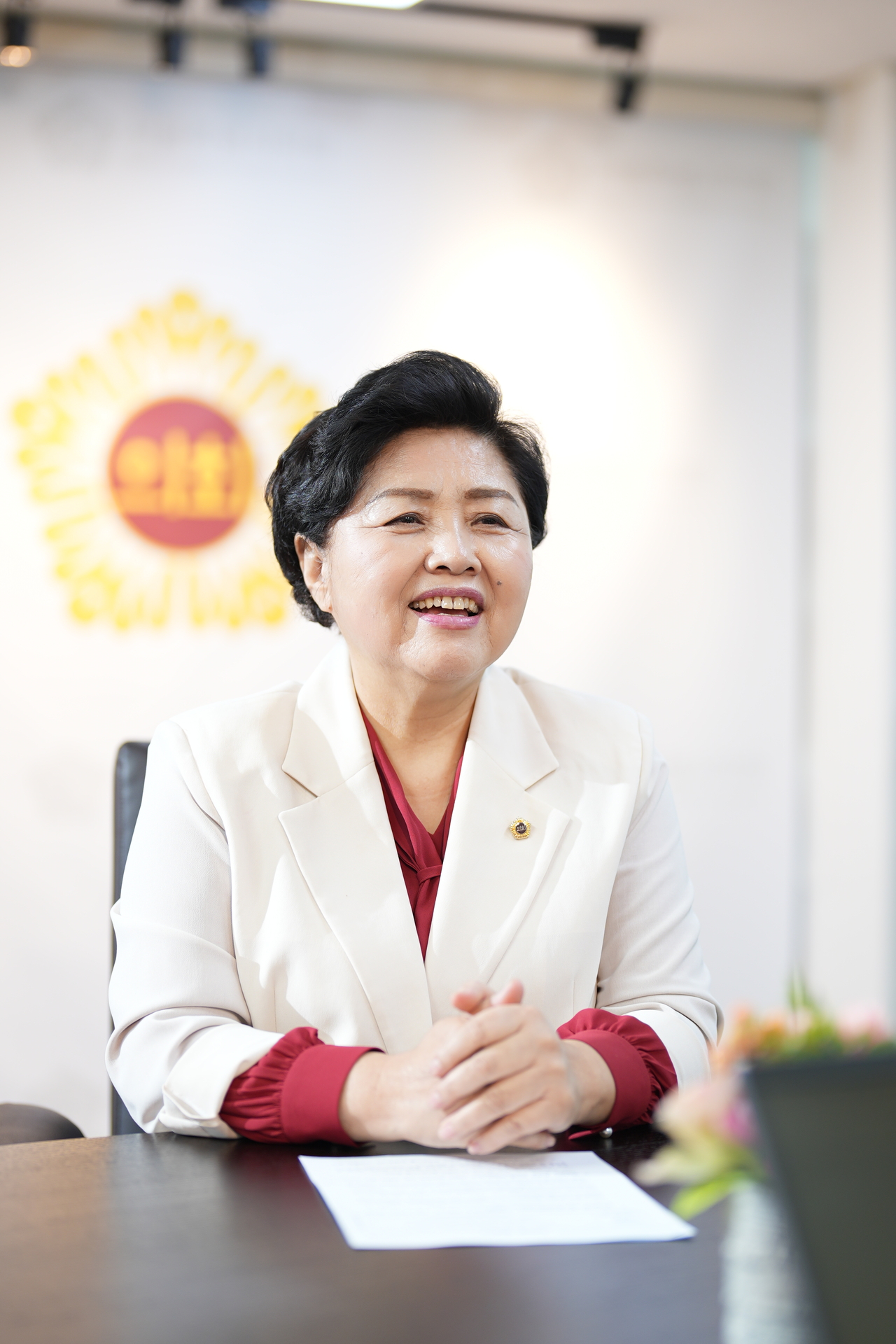
Two-track push: Gwangjin-gu development and quality-of-life upgrades
For her home district of Gwangjin-gu, Kim said large-scale development and improvements to everyday infrastructure must be pursued simultaneously.
She said medium- and long-term projects — modernizing the East Seoul Bus Terminal, expanding the rail network, putting Line 2 underground, developing transit-oriented areas and upgrading residential neighborhoods — must stay on track, while the everyday infrastructure residents rely on, including parking, pedestrian environments, schools and childcare facilities, must be tended to at the same time.
Gwangjin-gu has a large stock of low-rise housing, and resident demand for redevelopment schemes such as the Moa Town and Moa Housing programs is high. However, Kim said that because residents who want development coexist with those who have different views based on property rights or living conditions, sufficient communication and coordination are needed throughout the process.
She also identified Ttukseom Hangang Park as a key asset for strengthening Gwangjin-gu's competitiveness. Her vision is to develop the Han River beyond a simple recreational space into a cultural and leisure destination that draws both residents and tourists year-round.
She said signature local events — such as a college song festival and seasonal programs — should not be one-off occasions but should be built up consistently over time to forge a distinct identity for Gwangjin-gu and Ttukseom.
On policies to revitalize neighborhood commercial districts, Kim said the key is not one-time subsidies but a structure that encourages repeat visits. She argued that small business owners benefit in a meaningful way only when residents return to local commercial areas repeatedly, not just once.
Kim said she has also noticed a shift in how residents evaluate politicians. She said there is a growing tendency to look past party affiliation and slogans, and instead ask what was actually done in the district and what results were delivered.
"During this election, I heard many times, 'You did the work, so go back and do it again,'" she said. "In an era where you are judged by what you deliver, I will repay this opportunity with responsible legislative work and tangible results."
7toy7@heraldcorp.com